|
|
The graduates of Adult Recovery Court will tell you the program isn’t easy, but it’s worth it. By balancing accountability and compassion, this therapeutic court helps participants break cycles and change their lives.
On June 12, Adult Recovery Court hit a milestone: a total of 1,000 people have now graduated.
“That’s hundreds of lives changed, potentially hundreds of lives saved,” said Snohomish County Executive Dave Somers. “I am proud and grateful for the work the Adult Recovery Court does, and of the many graduates who have put in the effort to overcome the challenges facing them. They have improved not only their own lives, but the lives of their loved ones, friends, and neighbors. This kind of program makes our community a better place.”
For more than 25 years, Adult Recovery Court has provided therapeutic and legal services for people affected by substance use disorder and involved with the criminal justice system. More than 2,000 people have participated in the program and since 2001 have paid over $455,000 in restitution.
“This is a rigorous program to complete. Evidence-based tools allow for us to screen high-risk, high-needs participants into the program,” said Snohomish County Superior Court Judge Joseph Wilson. “We require participants to show up, be honest, and accept accountability. Adherence to these principals allows our participants to interrupt criminal behavior and begin the process of rebuilding new lives and becoming citizens we can all be proud of. Without this program, these folks would continue to cycle in and out of the criminal justice system. We are immensely grateful for the support from the community and our partners in developing and maintaining the program.”
Two people graduated from the program June 12. Rather than naming one of them the 1,000th graduate, they shared the honor and together celebrated reaching 1,000 total graduations. Court staff, local leaders, the graduates, and other guests gathered to recognize the program and celebrate recovery.
“I could have gone to prison and done my time. The last time I got arrested was April 16, 2023, the officer that arrested me saved my life,” said Adult Recovery Court graduate Michael Camacho. “Just one day, and I won’t lie, sometimes, it was 30 minutes at a time. But if you work the program and you really do it, you will be up here and say, ‘Today I celebrate 787 days of clean time.’”
The program has a lasting impact for graduates and for the community. Of the graduates who entered the program in 2019, 92% have not had a new felony conviction since. And for those who completed Adult Recovery Court in 2024, they’d achieved a combined total of 12,455 days of sobriety at the time of their graduation.
To learn more about Adult Recovery Court, visit https://snohomishcountywa.gov/6106/Adult-Recovery-Court.
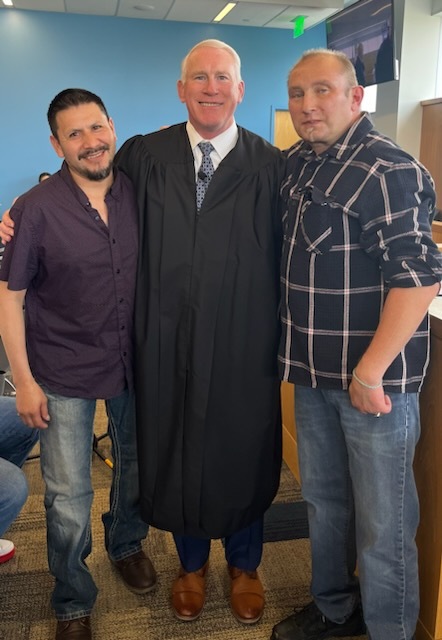 Superior Court Judge Joseph Wilson with graduates Leonel Garcia Villasenor and Michael Camacho.
|
|
|
Washington Recovery Alliance was proud to join over 90 service providers June 13 at Funko Field for Spring Into Recovery 2, a day dedicated to connection, care, and community. From mobile health services to housing resources, this free public event reminded participants of the power of recovery when people come together.
“So many people were served today. The food, drinks, haircuts, medical, dental, detox, veterinary care, phones, and so much more were freely given. We are super humbled by the outcome and everyone's generosity. Community matters,” Snohomish County Recovery Coalition said in a June 13 Facebook post.
Everett Recovery Café had this to add in a June 17th Facebook post: “It was another successful Spring into Recovery at #funkofield. It was fun to see familiar faces and new people. Our booth was pretty busy with visitors, and we loved seeing the recovery community come out in a show of support. Thanks to Snohomish County Recovery Coalition for organizing this again!!”
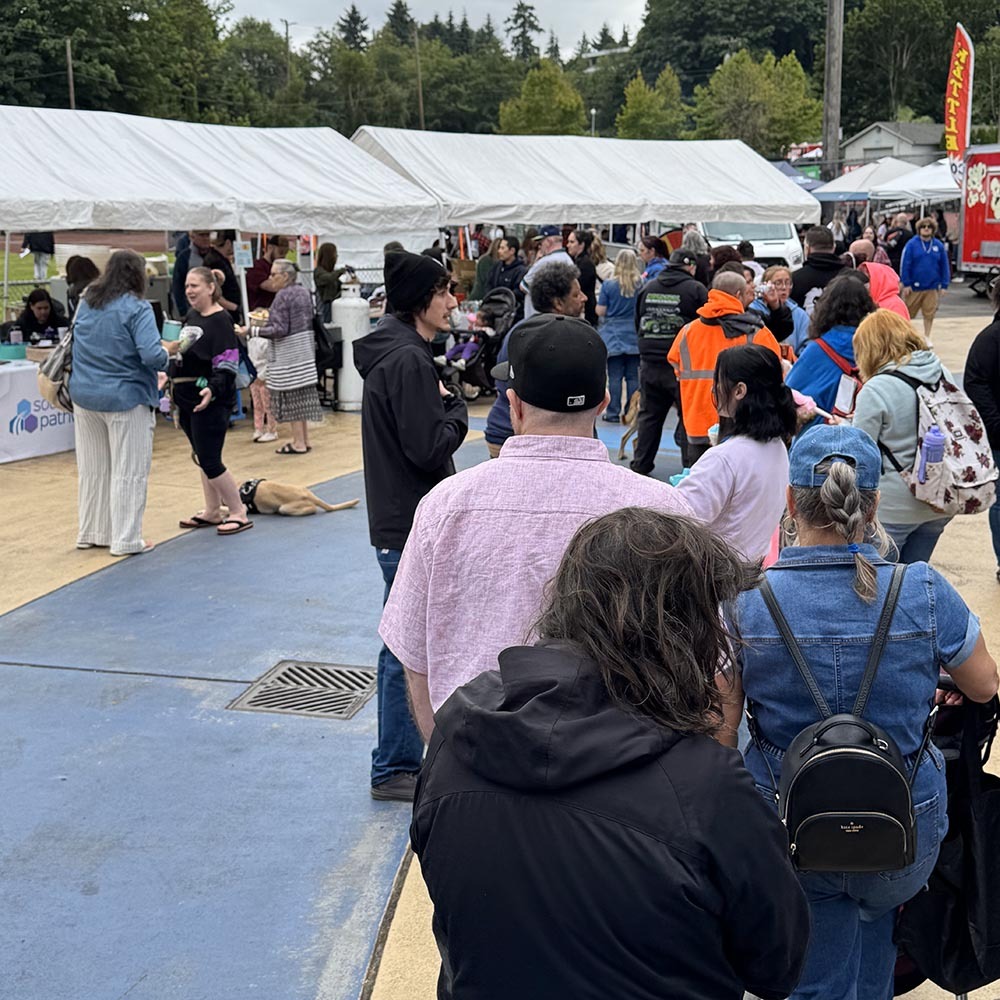 People lining up to access services at Spring Into Recovery 2.
|
|
|
A South County Fire program working to break the cycle of addiction is also saving taxpayer dollars.
Coordinated Overdose Response by EMS, known as CORE, allows paramedics to administer the prescription drug buprenorphine to overdose patients -- lessening opioid withdrawal symptoms.
That means fewer ambulance transports, emergency visits and 911 calls. It also means reducing risk of deaths from opioid overdoses in Snohomish County.
Watch the video to learn more.
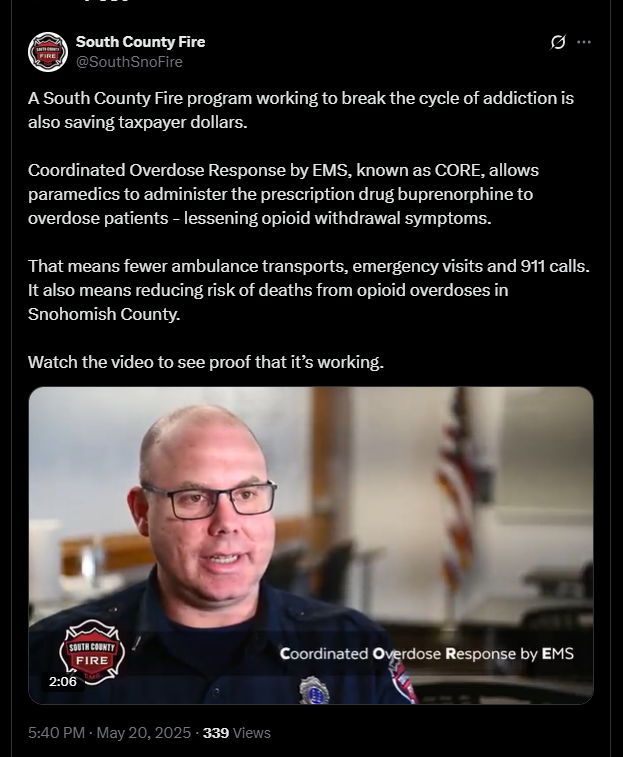 Click the image to view the South County Fire video on Facebook.
|
|
|
Snohomish County conducted its annual Point-in-Time Count on Jan. 22, 2025. This year’s count identified 1,140 individuals experiencing homelessness, reflecting a slight overall decrease from last year. A full press release with detailed findings and data insights was published June 25 by Snohomish County Human Services. Learn more at the links:
Press release
Point-In-Time Resources
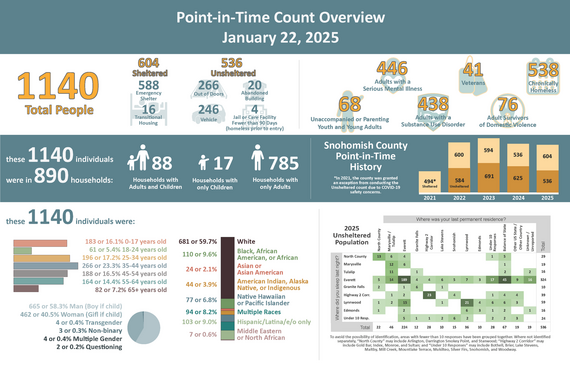 2025 Point-In-Time overview. Click image to view as .pdf.
|
|
|
The latest iteration of the Snohomish County Health Department’s outreach campaign is focused on recovery resources for youth and families. This outreach continues to build on the "Small Steps" campaign that was developed to provide non-judgmental, strength-based messaging around opioids, overdose, and mental health for a variety of communities in Snohomish County.
Digital adverting points to a new webpage featuring resources and information. If your family has been impacted by substance use, addiction, or overdose—know that there is hope. Whether you’re a parent, caregiver, or young person, this site connects you to tools, local resources, and support to help you navigate substance use prevention, intervention, and recovery. More information: Snohomish County Substance Use Recovery Resources for Youth & Families - Snohomish Overdose Prevention
The Health Department has been developing awareness and prevention campaigns in partnership with representatives from Sea Mar Community Health Centers, the Latino Educational Training Institute (LETI), Everett Recovery Café, Sound Pathways, and the Community Equity Advisory Board at the Snohomish County Health Department. If you are interested in collaborating, please contact shd-opioids@snoco.org
 Click image to view recovery resources for youth and families.
|
|
|
U.S. Senator Patty Murray (D-WA), Vice Chair of the Senate Appropriations Committee, held a roundtable discussion in Everett on May 29 focused on White House decisions that are hazarding Continuum of Care grants that help people experiencing homelessness.
Snohomish County already had been allocated $16.7 million for 2025, but that funding is jeopardized by new, potentially unlawful conditions imposed by the White House, including those related to immigration status, abortion and reproductive care, “gender ideology,” and Diversity, Equity and Inclusion programs. The grants have gone toward 23 programs that offer housing and supportive services for homeless people and families, and the County is among a coalition of local governments mounting a legal challenge to the conditions.
“Continuum of Care grant funding helps local organizations provide really important services for people experiencing homelessness—these are proven, effective investments that actually save communities money in the long run,” Senator Murray said.
“Snohomish County has created one of the most successful Continuum of Care networks in the nation, and the federal support is essential to save lives and reduce human suffering,” said Snohomish County Department of Human Services Director Mary Jane Brell Vujovic. “There are no additional resources at the local or state level to make up for the federal funding, and the lives of people literally hang in the balance.”
“If the most vulnerable members of our community—domestic violence victims, people with disabilities, unhoused youth and veterans—cannot receive basic life-saving support from the federal government, they will suffer and possibly die,” said Snohomish County Executive Dave Somers. “The programs funded by the Continuum of Care are some of the most powerful tools to keep people off the streets and safe. We are very grateful for Senator Murray’s compassionate advocacy for these fundamental responsibilities of the federal government.”
Others participating in the roundtable were: Joe Alonzo, CEO of Cocoon House; Kathryn Opina, Interim CEO of Housing Hope; Mary Anne Dillon, Vice President of Permanent Housing for the YWCA Seattle|King| Snohomish; Becky Megard, Chief Operations Officer of Domestic Violence Services of Snohomish County; and Theresa Jones, a single mother of three whose family has benefitted from Housing Hope’s programs and who is now working toward obtaining her associate’s degree in Family and Social Services.
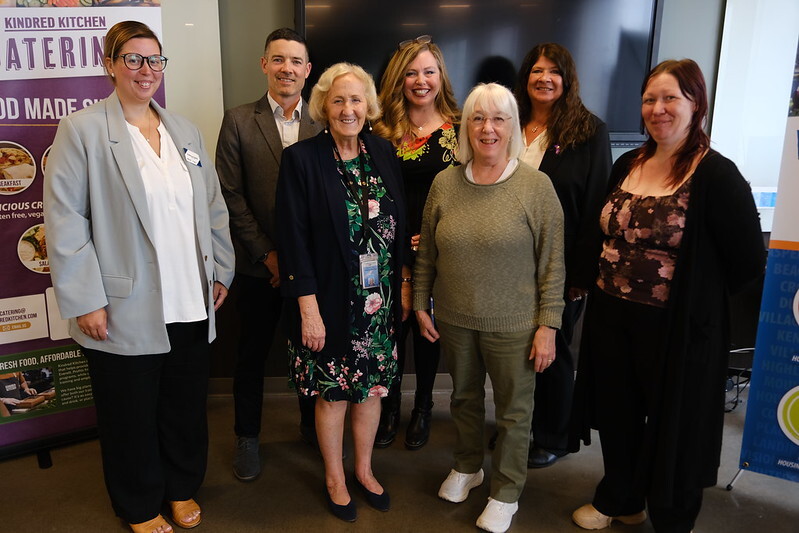 U.S. Senator Patty Murray hosted a roundtable discussion May 29 on potential loss of Continuum of Care grants.
|
|
|
|
|