|
|
Protecting vulnerable family members from illness remains important this Thanksgiving as the COVID-19 pandemic continues, Snohomish Health District Health Officer Dr. Chris Spitters said during a media briefing Tuesday morning.
There has been some good news lately, including a gradual decline in COVID cases and hospitalizations in Snohomish County. More people are getting vaccinated, as well, with doses now available for younger ages along with boosters for those previously vaccinated.
More than 16% of kids ages 5 to 11 in Snohomish County have received a dose of COVID vaccine over the last couple of weeks, since vaccine became available for that age group. Meanwhile, more than 90,000 booster doses have been administered to people who are at least six months out from their second dose of Pfizer or Moderna, or at least two months past their single-dose Johnson & Johnson vaccine. The quick uptake on pediatric vaccinations as well as boosters means there has been a surge in demand, and people may need to schedule their appointment a few weeks ahead of time due to limited slots for vaccinations at pharmacies, clinics and other providers, Spitters said.
A decline in cases doesn’t mean people can ease up on safety during the holidays.
“For the foreseeable future, we’re still at a relatively high level of transmission,” Spitters said. “…We still have hospitals that are relatively full, and a healthcare system that’s stressed.”
He urged people to take steps to keep family and friends safe during Thanksgiving and other gatherings. These include keeping groups small, gathering with fully vaccinated individuals, masking up in public or crowded spaces, and having good ventilation when meeting indoors during the winter months. Vaccination prior to travel, distancing and masking during travel, and testing after returning from a trip also are important steps.
Watch the full briefing here: https://youtu.be/ZUEEgXe4-00

|
|
|
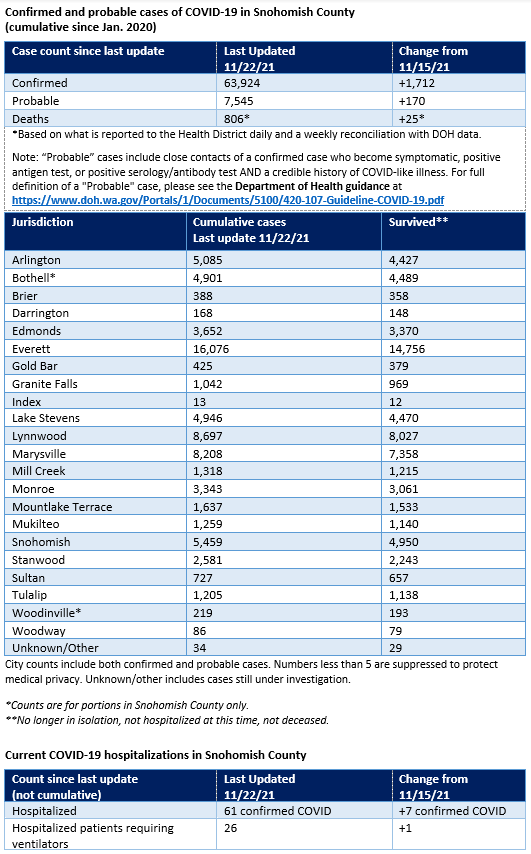
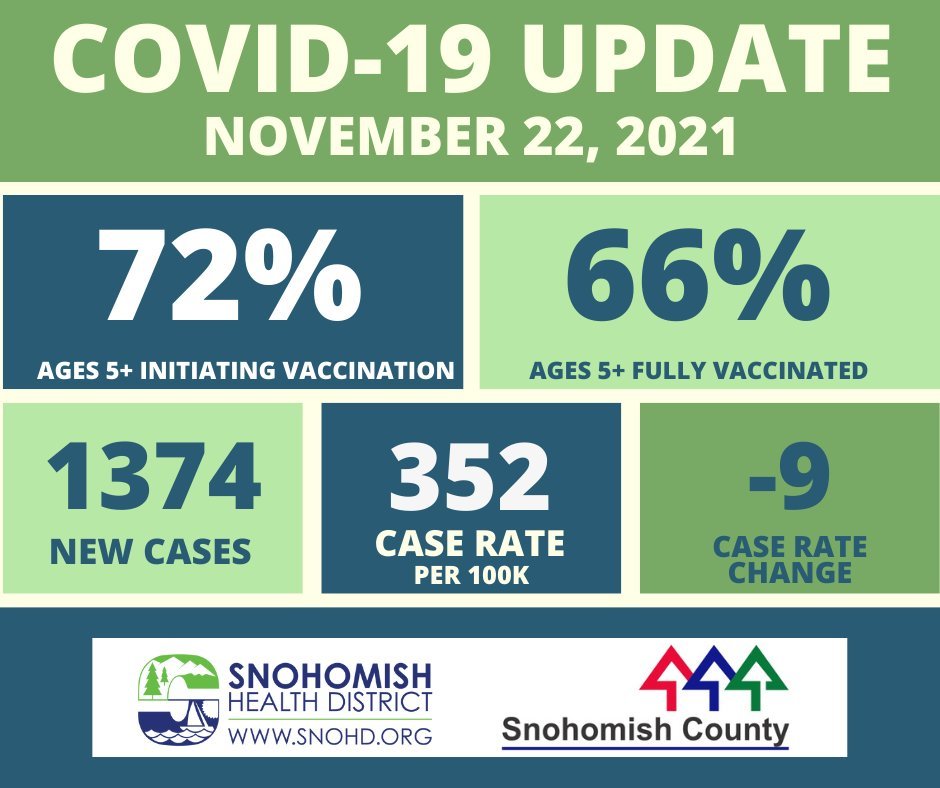
Snohomish Health District will now be releasing both updated vaccination progress and case rates every Monday. The rolling two-week case rate through Nov. 20 was 352 per 100k. For more local COVID-19 data, visit http://snohd.org/casecounts. Please note that the updated numbers below show the reconciliation with state data and lab backlogs. While the total numbers in recent weeks increased, the trend remains the same.
|
|
|
Holiday traditions are important for families, friends, and children. Because many generations tend to gather to celebrate holidays, the best way to minimize COVID-19 risk and keep your family and friends safer is to get vaccinated if you’re eligible. With a little advanced planning, there are several ways to enjoy holiday traditions and protect your health.
Before your event, review your guest list, do a health check, and get tested.
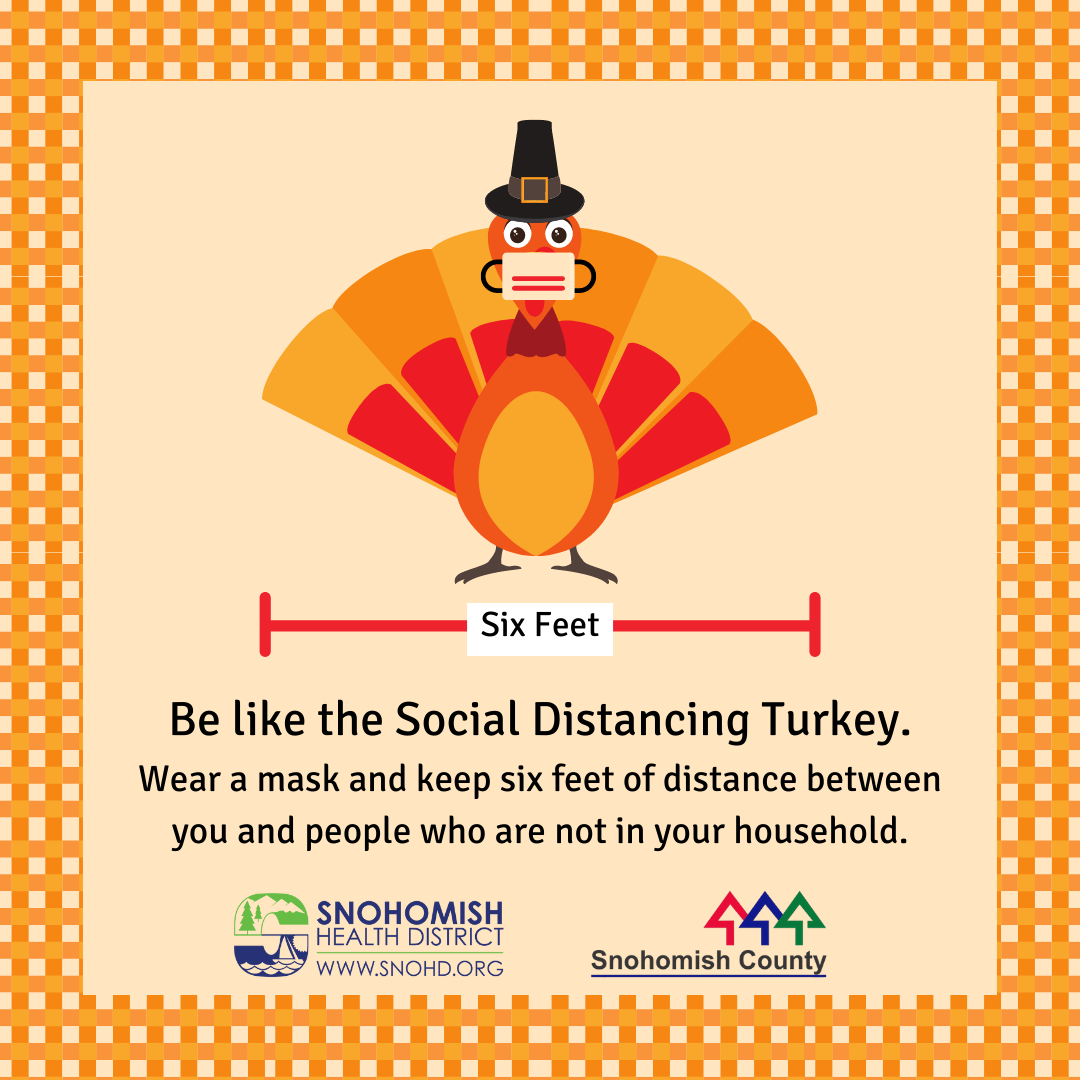
During your gathering, the three W’s apply: wear a mask, wash your hands, and watch your distance.
After your event: clean and sanitize all surfaces, get tested, and wash your hands.
Read the full release.
|
|
|
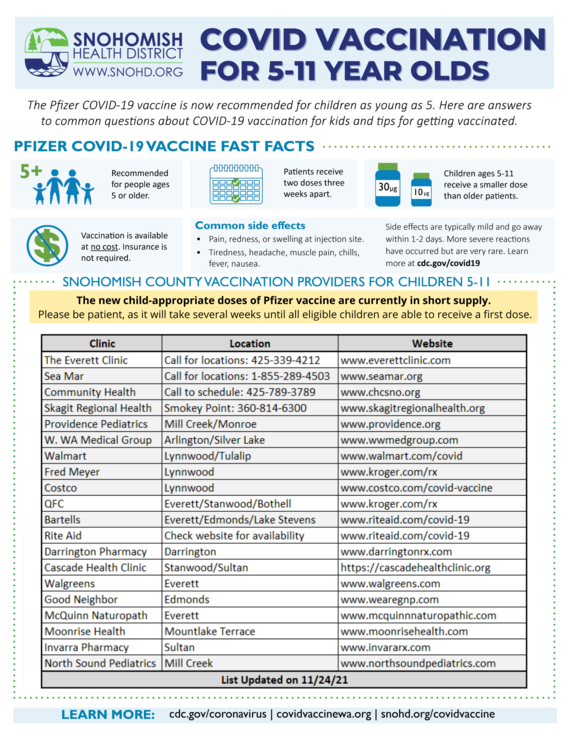
Looking for a COVID-19 vaccine for your 5-11 year old? The flyer below lists several resources and will be updated weekly. Thank you for being patient as vaccine is currently in short supply. More info at https://www.snohd.org/587/How-to-Get-Your-Shot.
|
|
CDC has expanded recommendations for booster shots to include all adults ages 18 years and older who received a Pfizer-BioNTech or Moderna vaccine at least six months after their second dose.
“Booster shots have demonstrated the ability to safely increase people’s protection against infection and severe outcomes and are an important public health tool to strengthen our defenses against the virus as we enter the winter holidays,” said CDC Director Rochelle P. Walensky, M.D., M.P.H. “Based on the compelling evidence, all adults over 18 should now have equitable access to a COVID-19 booster dose.”
Anyone can find available vaccines near them at vaccines.gov and can consult their health care provider or local pharmacist if they have questions about vaccines or boosters.
|
|
|

The Washington State Department of Health (DOH) is making changes to the COVID-19 data dashboard, in part to improve how race and ethnicity data is analyzed and shared. Additional improvements will include new metrics regarding children’s vaccines and booster shots.
The state’s COVID-19 dashboard will provide statewide case, hospitalization, and testing trends by race and ethnicity. DOH acknowledges many challenges in collecting race and ethnicity information for COVID patients. Currently, this information for COVID cases is 60% complete. DOH is working to improve the data quality and completeness from 60% to 80% by the end of the year.
Until now, race and ethnicity data for COVID-19 cases has been provided by public health investigators using patient interviews or medical records. Soon, DOH will also use race and ethnicity data submitted in COVID-19 lab reports for the statewide dashboard. This will help create a clearer picture of where more work needs to be done to close the gap regarding the state’s ongoing health disparities.
DOH will also add two new sets of vaccination data to the DOH COVID-19 dashboard: vaccination data for children 5 to 11, and data around both third doses and booster doses.
Improving both the ethnic and racial data and adding vaccine metrics is critical to creating better understanding about vaccine uptake across the state and addressing the unique social and structural challenges that various racial and ethnic populations face.
|
|
|
|
The impacts of COVID-19 morbidity and mortality have not been felt equally by all populations in Washington state. The pandemic has exacerbated the underlying and persistent inequities among historically marginalized communities and those disproportionately impacted due to structural racism and other forms of systemic oppression.
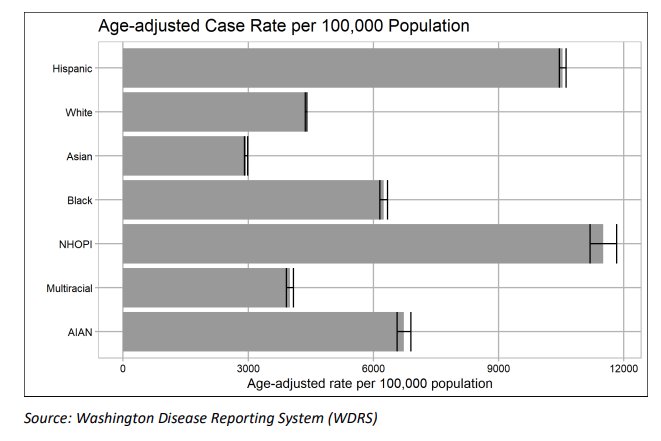
New data from Washington state Department of Health show that communities of color are disproportionately impacted by COVID-19 in significant ways, including:
- Native Hawaiian and Other Pacific Islander (NHOPI) and Hispanic populations have the highest age-adjusted confirmed or probable COVID-19 case rates while Asian and multiracial populations have the lowest case rates.
- Hospitalization rates among confirmed or probable COVID-19 cases are the highest for NHOPI populations and lowest for white populations.
- White populations have the lowest death rates among confirmed or probable COVID-19 cases of all race/ethnicity groups.
Read the full report.
|
|
|
SeaMar’s Dr. Sibani Das urges you to get the vaccine and says, "Please have your questions answered by healthcare providers. Please let us help you be informed so that you know. Together, let’s stop COVID." Watch the video.
Why do you vax?

|
|
|
Meet WA Verify – your personal vaccination SMART Health Card QR Code. Keep it in your phone, scan it wherever proof of vaccination is required and stop worrying about grabbing your vaccine card on the way out the door.
|
|
|
Cumulative from January 2020 to present.
|
|
|
ESSENTIAL LINKS AND PHONE NUMBERS FOR UP-TO-DATE INFORMATION
|
|
|
|
|