|
|
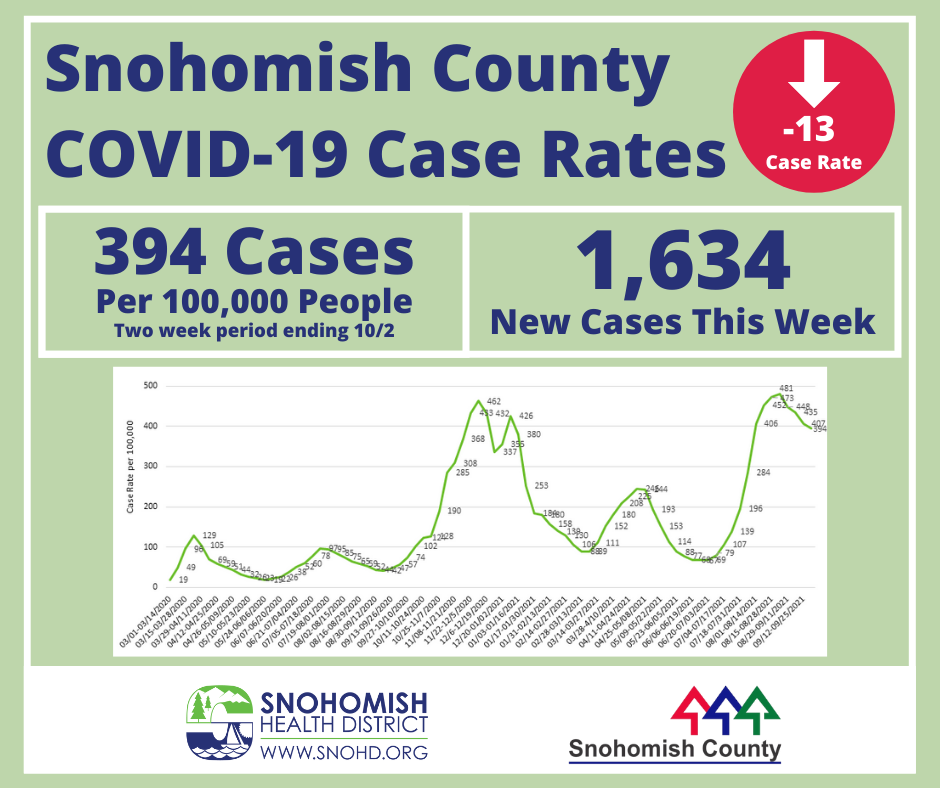
The number of COVID-19 cases in Snohomish County continues to slowly decline, but there are growing concerns about another wave of infection arriving as the community grapples with seasonal flu, a virtual press conference was told Tuesday.
To keep the already stressed healthcare system functional, everyone should get vaccinated now against flu and – if eligible – against the virus that causes COVID as well, said Dr. Chris Spitters, Health Officer with the Snohomish Health District.
This year’s flu season is likely to be worse than what was seen the past two winters when people were largely staying clear of school and work, limiting travel, and engaging in other COVID-fighting measures.
The strain on hospitals from a combination of COVID and flu could drive up admissions to previous pandemic highs.
“We could go right back there or beyond,” Dr. Spitters said.
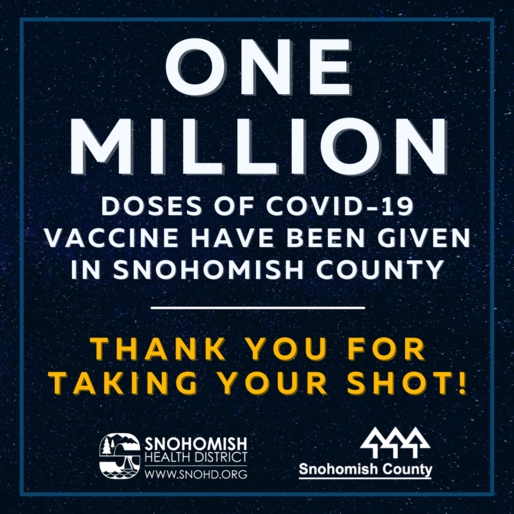
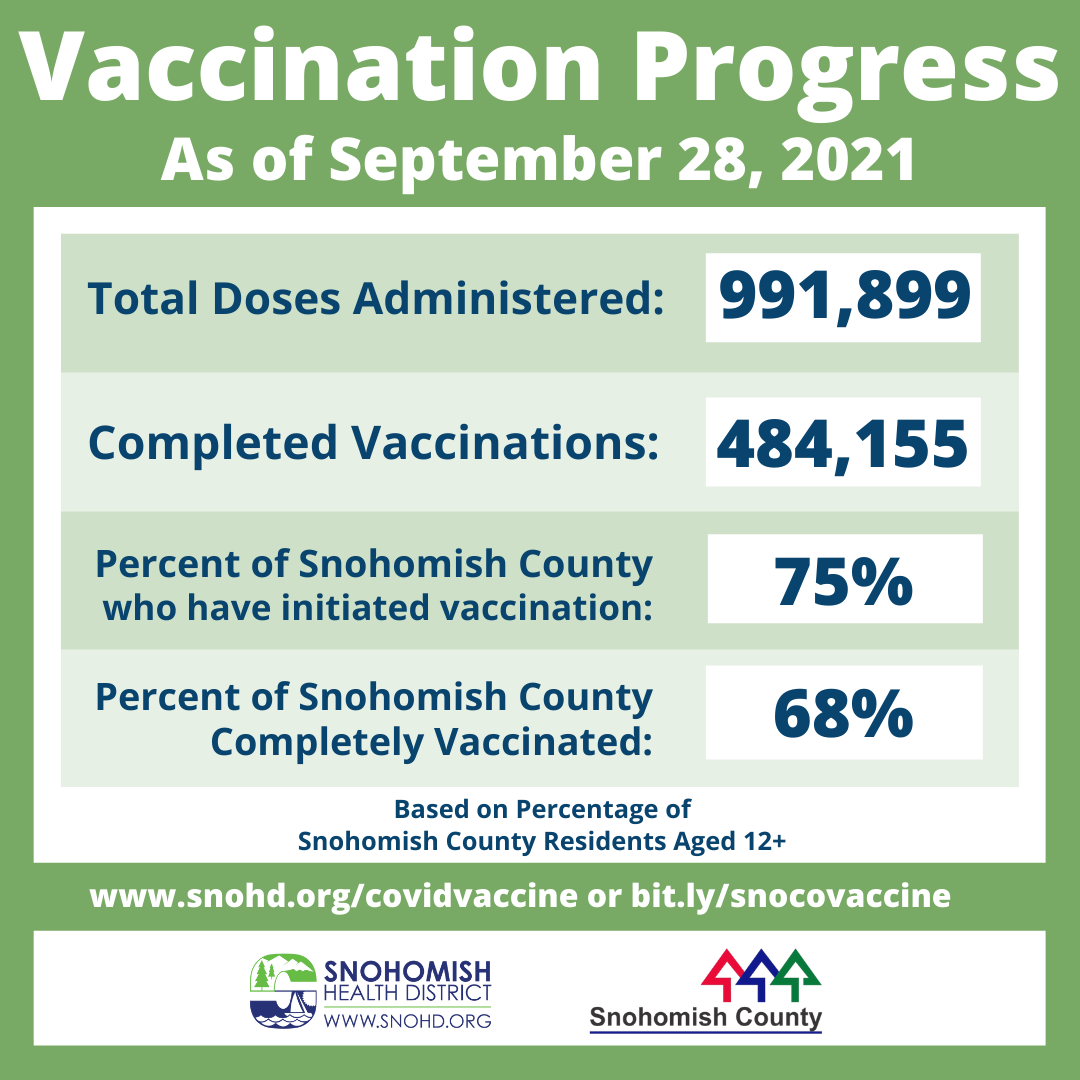
He also offered some good news about the community’s ongoing success in getting people vaccinated against COVID. Last week saw a total of more than 1 million doses of vaccine having been distributed here, bringing to more than 75% the number of eligible people aged 12 and up who have at least begun the series.
“Snohomish County should be pleased and proud that we have one of the highest vaccination rates in the state,” Dr. Spitters said, but work remains.
The briefing also featured presentations from Jason Biermann, the county’s emergency management director, and Mike Fong, the county’s new Chief Recovery and Resilience Officer.
Biermann spoke about the ongoing COVID response, which now has stretched across more than 580 days and has included more than 83,000 hours worked in the county’s Emergency Operations Center. People there, representing 18 different local agencies and departments, continue to make sure the community has access to vaccines, food, personal protective equipment, and other critical support. Efforts also are focused in preparing for emerging challenges as the pandemic lingers.
Fong, who previously was the senior deputy mayor for the City of Seattle and helped lead that community’s COVID response, briefly outlined some of the Snohomish County recovery efforts he now directs. The focus includes retaining and supporting business recovery, investments in childcare, housing, and behavioral health, and promoting equity.
“I really believe we have an opportunity to make significant and transformative investments to ensure that everyone in the county can fully recover from the pandemic,” Fong said.
Watch a video of the full briefing: https://youtu.be/5t_PSpCXz-0
|
|
|
The millionth dose of COVID vaccine was administered in Snohomish County this weekend and nearly 490,000 people are now fully vaccinated, without major complications. “It is a testament to the safety and efficacy of these vaccines,” says Dr. Chris Spitters of the Snohomish Health District. To get your shot, go to www.snohd.org/587/How-to-Get-Your-Shot.
|
|
|
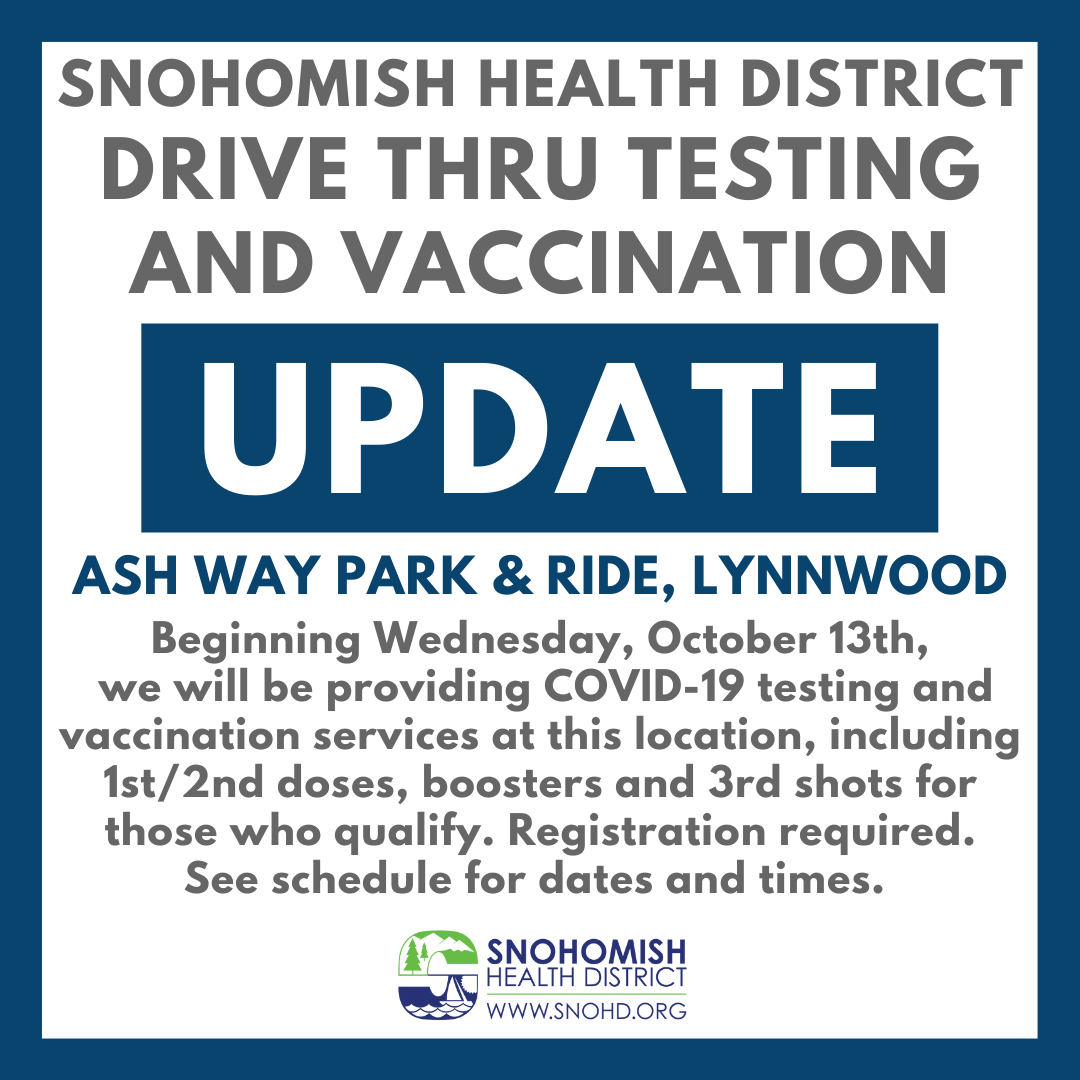
Snohomish Health District will be offering COVID-19 testing and vaccination services at the Ash Way Park & Ride (Lynnwood) beginning Wednesday, October 13. Vaccine is offered only on Wednesdays and Thursdays. The site offers testing only on Fridays, Saturdays and Sundays. Registration is required. More information: http://www.snohd.org/drivethru
|
|
|
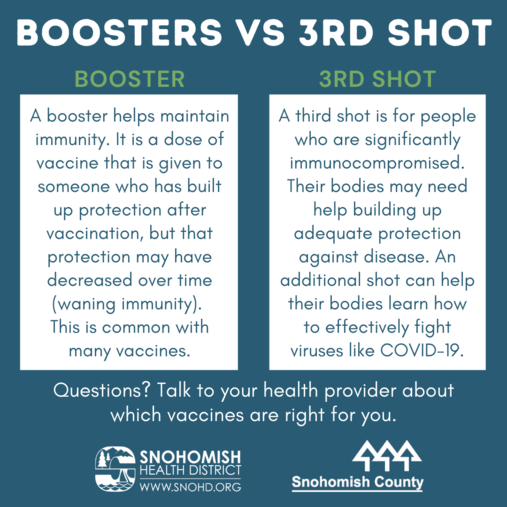
Did you know that there’s a difference between a booster and a third shot of COVID-19 vaccine? Both are common in the world of vaccinations. Learn which one may be right for you by going to https://bit.ly/BoosterorThird.
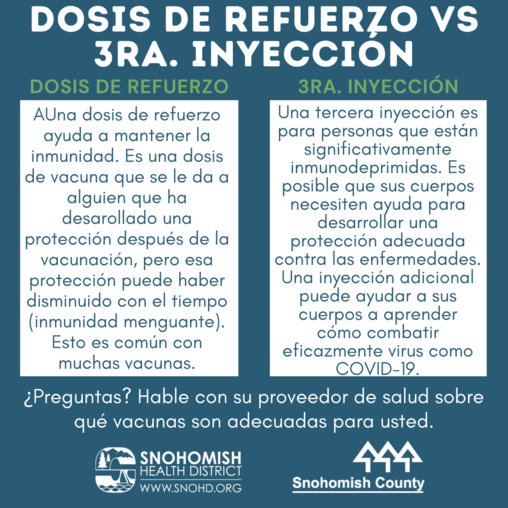
¿Sabías que hay una diferencia entre una dosis de refuerzo y una 3ra. inyección? Ambos son communes en el mundo de las vacunas. Aprenda cuál puede ser adecuado para usted yendo a https://bit.ly/BoosterorThird.
|
|
|
We reached a milestone last week in Snohomish County as nearly 5,000 more people 12 and up started COVID-19 vaccination, bringing us to 75% of the eligible population with at least one shot. Meanwhile, another 4,600 completed the series. Take your shot: https://www.snohd.org/587/How-to-Get-Your-Shot.
|
|
|
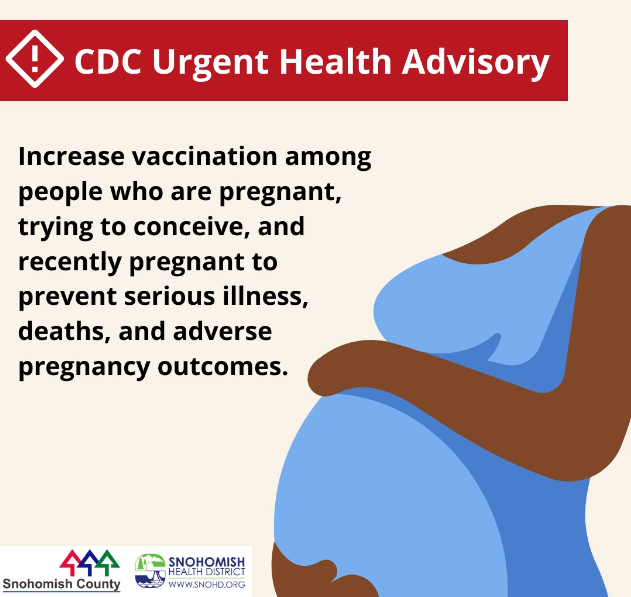
The Centers for Disease Control and Prevention (CDC) has issued an urgent health advisory to increase COVID-19 vaccination among people who are pregnant, recently pregnant (including those who are lactating), who are trying to become pregnant now, or who might become pregnant in the future. This is needed to prevent serious illness, deaths, and adverse pregnancy outcomes.
The CDC health advisory strongly recommends COVID-19 vaccination either before or during pregnancy because the benefits of vaccination for both pregnant persons and their fetus or infant outweigh known or potential risks. Additionally, the advisory calls on health departments and clinicians to educate pregnant people on the benefits of vaccination and the safety of recommended vaccines.
According to CDC data, only 31 percent of pregnant people have been vaccinated against COVID-19 and vaccination rates vary markedly by race and ethnicity. Vaccination coverage is highest among Asian people who are pregnant (45.7 percent), but lower among Hispanic or Latino pregnant people (25 percent), and lowest among Black pregnant people (15.6 percent).
National data through September 27 shows there were more than 125,000 confirmed cases of COVID-19 in pregnant people. This included more than 22,000 hospitalized and 161 deaths; of which, 22 deaths occurred in the month of August alone. Cases of COVID-19 in symptomatic, pregnant people have a two-fold risk of admission into intensive care and a 70 percent increased risk of death.
Although the overall risk of severe illness is low, pregnant and recently pregnant people are at an increased risk for severe illness from COVID-19 when compared with non-pregnant people. Severe illness includes illness that requires hospitalization, intensive care, need for a ventilator or special equipment to breathe, or illness that results in death. Additionally, pregnant people with COVID-19 are at increased risk of preterm birth and might be at increased risk of other adverse pregnancy outcomes, compared with pregnant people without COVID-19. That could include preterm birth, stillbirth, or a newborn also infected with COVID-19 needing admission into the ICU.
Evidence about the safety and effectiveness of COVID-19 vaccination during pregnancy, although limited, has been growing. These data suggest that the benefits of receiving a COVID-19 vaccine outweigh any known or potential risks of vaccination during pregnancy.
See the full press release or this video for more information.
|
|
|
A key leader of the team fighting COVID-19 in Snohomish County has completed FEMA’s national executive management academy.
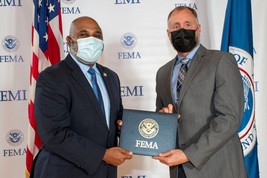
Jason Biermann, director of the Snohomish County Department of Emergency Management, graduated Sept. 16 from the academy at the Emergency Management Institute in Emmitsburg, Maryland. He is one of roughly 300 emergency management professionals nationwide to have completed the three-part federal emergency management professional program. The training focuses on contemporary and emerging emergency management issues as well as public policy, and it provides opportunities for leaders to share field-tested best practices. Biermann also serves as faculty to FEMA’s advanced academy.
“Jason Biermann has saved thousands of lives over the last 20 months, and he never stops trying to do more, looking around the next corner, preparing for the next surprise, leading our response efforts,” Snohomish County Executive Dave Somers said. “As a member of one of the most selective Army units and later a firefighter, he has learned how to get things done and bring people together to solve complex challenges.”
Biermann is a veteran of nearly three decades of military service, which included assignment to the Honor Guard at the Tomb of the Unknown Soldier.
|
|
|
|
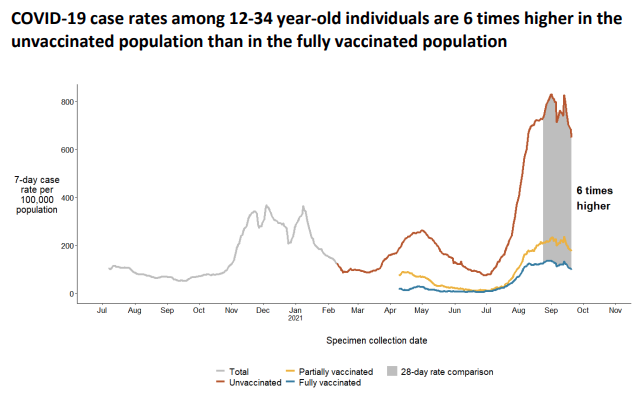
The Department of Health’s Sept. 29 statewide report on COVID-19 cases, hospitalizations and deaths provides clear data detailing how vaccination status relates to the spread of the virus in Washington, regardless of age. The report notes:
There is a large difference in cases and hospitalizations between unvaccinated and fully vaccinated populations across all age groups. This difference has become greater since July of this year. The rapid increase in cases in July 2021 correlates to several events that occurred in a close time frame from the end of June to the beginning of July, including:
- The Delta variant became the predominant strain in Washington state
- Statewide recommendations were relaxed for gatherings and mask use in public places, and
- Gatherings increased in size and number because of the heat wave and summer holiday celebrations.
See the full report for more details.
|
|
|
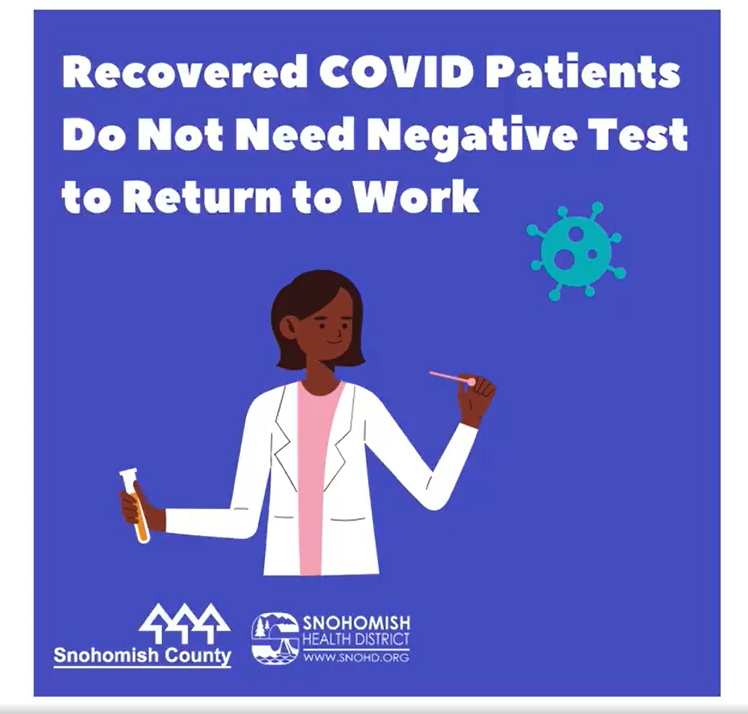
Recovered COVID patients do not need negative test to return to work. After testing positive for COVID, a negative test is not necessary to return to work for persons who are not severely ill or severely immunocompromised. This guidance applies if isolation and precautions are maintained for at least 10 days.
Facebook
Twitter
|
|
|
There’s been a lot of talk about vaccine requirements over the last several weeks. You may even have some conversations about it at your workplace. With the FDA approval of the Pfizer vaccine (now known as Comirnaty), we can expect these conversations to continue for some time.

Chances are, you know someone whose employer has vaccination requirements in place (or soon will).
It’s not often that conversations about health care get brought into the workplace — so these conversations may feel unsettling. That’s why it’s always OK to ask questions along the way. The state Department of Health in this blog post dives into a few commonly asked questions.
|
|
|
|
Best protection is still a flu vaccine: Washington had its first recorded death-free flu season last year mostly due to COVID-19 safety measures like masking, staying home, and limiting gatherings. This year, many COVID-19 safety measures are lifted, and people are active again which means we have a much higher risk of exposure to the flu virus. That's why it's more important than ever to get vaccinated! Read more. Read more.
¿Se acuerda de la última temporada de influenza, también conocida como la gripe? La actividad de la influenza (gripe) fue inusualmente baja el año pasado. Eso se debe en parte a que los habitantes de Washington hicieron un buen trabajo al vacunarse contra esta enfermedad el año pasado; pero también fue el resultado de las medidas de seguridad y protección contra el COVID-19 como el uso de mascarillas, quedarse en casa y limitar las reuniones sociales. Leer más
|
|
|
|
The U.S. Department of Health and Human Services' Office for Civil Rights last week issued guidance to help the public understand when the Health Insurance Portability and Accountability Act of 1996 (HIPAA) Privacy Rule applies to disclosures and requests for information about whether a person has received a COVID-19 vaccine.
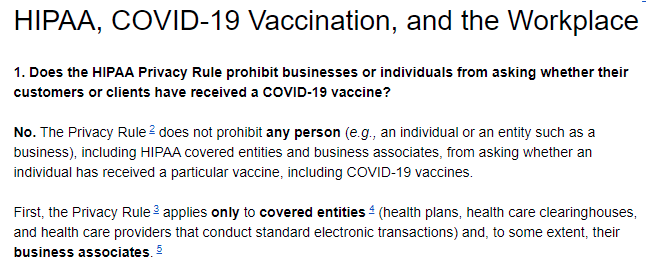
"We are issuing this guidance to help consumers, businesses, and health care entities understand when HIPAA applies to disclosures about COVID-19 vaccination status and to ensure that they have the information they need to make informed decisions about protecting themselves and others from COVID-19," said OCR Director Lisa Pino.
The guidance reminds the public that the HIPAA Privacy Rule does not apply to employers or employment records. This is because the HIPAA Privacy Rule only applies to HIPAA covered entities (health plans, health care clearinghouses, and health care providers that conduct standard electronic transactions), and, in some cases, to their business associates.
The guidance addresses common workplace scenarios and answers questions about whether and how the HIPAA Privacy Rule applies. This information will be helpful to the public as we continue to navigate the COVID-19 pandemic.
See the full press release for more information.
|
|
|
|
There was a mislabeled column in a table published Sept. 29 along with an article about data showing 93% of COVID-19 deaths in Snohomish County this year occurring among unvaccinated people. The table is published correctly below.
COVID-19 deaths in Snohomish County January through August, 2021
| Month |
Total COVID-19 deaths |
COVID-19 vaccine breakthrough deaths |
Percent unvaccinated |
| February |
27 |
0 |
100% |
| March |
18 |
0 |
100% |
| April |
13 |
0 |
100% |
| May |
21 |
0 |
100% |
| June |
17 |
<5 |
94% |
| July |
14 |
<5 |
71% |
| August |
27 |
5 |
81% |
| Total |
137 |
10 |
93% |
|
|
|
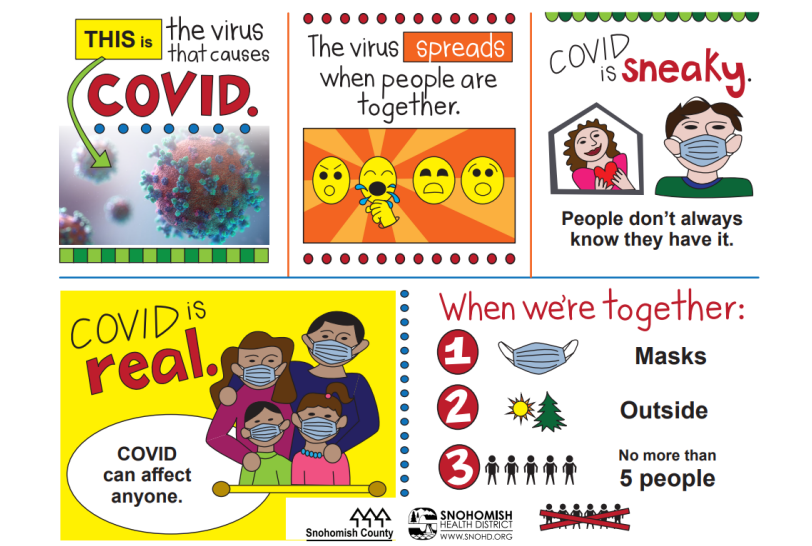
COVID spreads when people are together. The virus is sneaky. People might not always know if they have it and can infect others. It is better to be safe than sorry. Remember, when we’re together: wear a mask; take it outside; limit gatherings to five people or less.
For more info on kids and COVID, check out Snohomish Health District’s new 2021-2022 Back to School COVID-19 Information Toolkit at https://bit.ly/SnoCoSchoolToolkit.
|
|
|
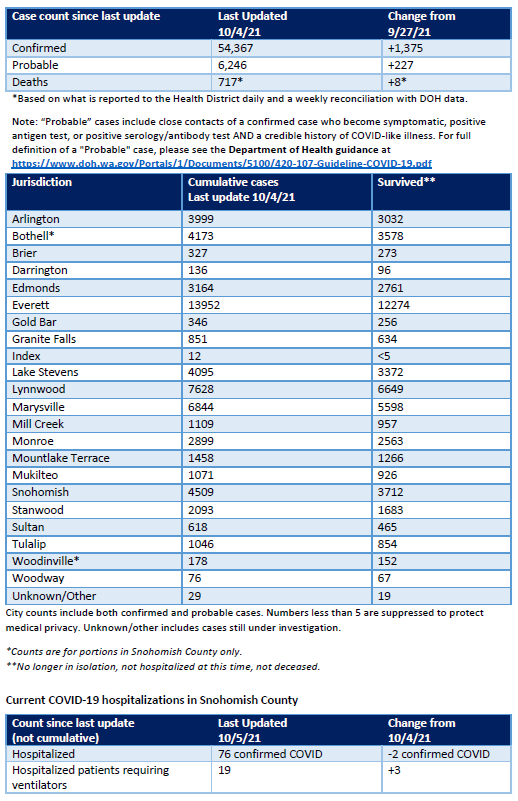
Cumulative from January 2020 to present.
|
|
|
ESSENTIAL LINKS AND PHONE NUMBERS FOR UP-TO-DATE INFORMATION
|
|
|
|
|