|
Photo of the Month
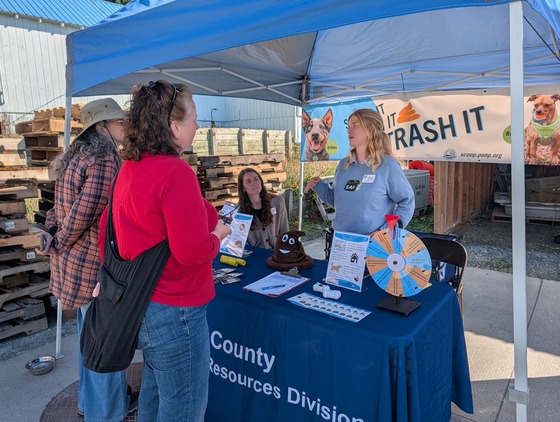 Skagit County staff members talked to Festival of Family Farms attendees last weekend about the importance of scooping pet waste for the health of our water. // Photo credit: Lynne Wenberg
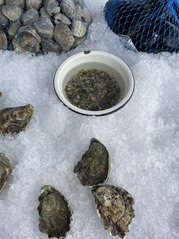
Another year, another great weekend at Taylor Shellfish for Festival of Family Farms!
We had a great time talking to everyone who visited about how we can protect water quality, human health, and local shellfish harvesting. Hello to those of you who we saw there!
Festival of Family Farms is an annual event where local farms open their doors to the public. It's a great opportunity for Skagit residents and visitors to connect with where our food comes from and how farming in Skagit County works.
Taylor Shellfish is a unique stop on the festival route. Unlike most farms in the county, Taylor Shellfish grows their product underwater in Samish Bay! But, high bacteria levels in the water can shut down shellfish harvesting. This means that their business depends a lot on water quality— and explains why were were there talking about dog poop during the event!
Dog poop is a HUGE source of water pollution in Skagit County. When people don't pick up their dogs' poop, whether it's in their back yards, in parks, or even way out in the woods, that poop eventually gets washed into our water by rain. The bacteria in poop can take months, or even YEARS to die off, so even dog poop that starts way up river can lead to dangerous bacteria in our bays.
The solution? Scoop it, bag it, trash it! Scoop poop on your property at least weekly, and poop on walks and hikes right away, and make sure it gets into a trash can!
|
|
|
|
Fall has arrived, bringing foggy mornings, colorful leaves, and, of course, rain! The Mount Vernon WSU AgWeatherNet station recorded 2.1 inches of rain in September, which is about normal. The temperature was slightly cooler than normal with an average temperature of 57.5°F, which is about 0.6°F cooler than usual.
We found relatively low to moderate bacteria results during our routine sampling in September compared to the rest of summer. The couple of hotspots with higher concentrations were at upper Thomas Creek and middle Nookachamps Creek.
Here in the Natural Resources Division, we’re watching the forecasts and waiting for those first few storms that produce runoff. These early fall downpours rinse accumulated bacteria and pollutants from the land into our rivers and streams, making it a key time for water sampling. The fall rains are also a great reminder to tidy up outside. Small actions like picking up and trashing any dog waste, disposing of trash properly, and avoiding fertilizers before it rains can all make a difference in our local water quality.
We upload all our bacteria results to our water quality map. Check it out if you’re interested in more!
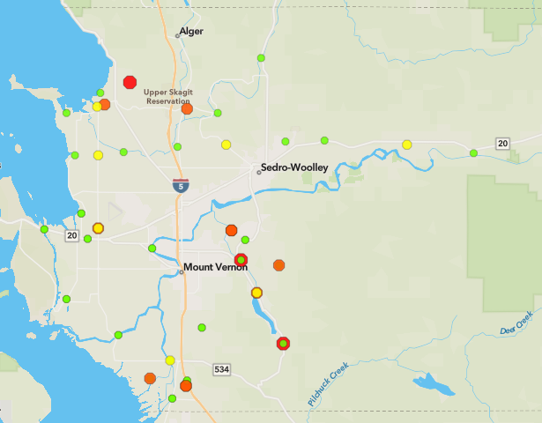 September's water quality results. Red dots represent sites with high levels of fecal bacteria, yellow represents sites with moderate levels of fecal bacteria, and green dots represent sites with low fecal bacteria levels. Click on the map to go to the online water quality map, where you can explore sites in Skagit, Whatcom, and Snohomish Counties.
|
|
Home Tip of the Month
Did you know you could reduce your neighborhood's chance of flooding in about 10 minutes? Whether or not you live by water or in the floodplain, your street could flood during heavy rains if nearby storm drains are blocked. Luckily, it's easy to keep your local storm drains working properly!
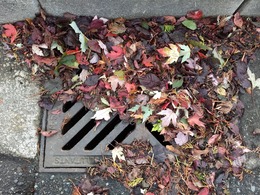
What are storm drains?
The grates that you see along curbs and in parking lots are usually storm drains.
Storm drains are meant to drain rain water away from streets, parking lots, and other paved areas. This is really important for stopping large puddles, or even flooding.
Why are clogged storm drains bad?
Clogged storm drains mean water can build up. Standing water, like puddles, on roads can be dangerous, because they can cause cars to hydroplane. This water can also damage your and your neighbors' property if it flows into your yard or, worse, your home.
How do drains get clogged?
In autumn, most of the risk of storm drain blockage comes from fallen leaves. Leaves create a mat over the storm drain that stops most water from getting through and draining away.
Drains can also be clogged by trash, lawn clippings, gravel, or other debris.
What can I do?
The answer is easy: Keep the storm drains near your house clear of leaves and other debris! Rake your yard regularly to keep leaves out of the street, and remove mats of leaves around drains.
Once you have gathered your leaves, you can:
- Contact Northwest Waste Management about yard waste hauling (if you live west of Highway 9).
- Bring the leaves to a commercial composter.
-
Compost the leaves at home (Check out some tips for home composting at www.skagitcounty.net/compost)
- Use a mulching lawn mower to turn the leaves into fertilizer for your yard.
|
|
|
Farm Tip of the Month
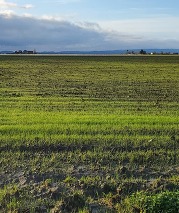
Growers, it's time to plant your cover crops!
What are cover crops, and why do they matter?
Cover crops are crops planted in the off season to protect soil quality. They have many benefits, including:
-
Protecting soil: Having plants in the ground during the rainy months helps stop rain water from washing your soil away. This also stops rain from leaching nutrients out of your soil.
-
Increasing soil quality: Along with reducing leaching, cover crops can add nutrients and organic matter to the soil. Tilling the cover crop into your field when the season is over lets all of the nutrients return the soil. The organic matter helps increase water retention, keeping your soil moist for longer.
-
Reducing mud: Cover crops stop fields from getting as muddy by soaking up water and stabilizing soil. This will make planting much easier when spring comes!
-
Protecting water: By keeping soil and nutrients in your field, cover crops are keeping these things out of our water. Extra nutrients in the water can feed algae blooms that make our waterways harder for people to use, and soil can suffocate fish. Planting cover crops to keep soil and nutrients out of the water helps protect important resources.
What should I plant?
According to Ryan Gelwicks, Farm Planner for Skagit Conservation District, there is no "one size fits all" for cover crops.
"Generally, the cover crops people plant are pretty site specific and based on crops being grown," Ryan said. "A good rule of thumb is legumes, like clover, vetch, trefoil, are great nitrogen fixers for the soil. I have a lot of farmers plant ryegrass because its cheap, effective and provides decent cover quickly."
Whatever crops you decide on, Ryan suggests planting before October 31st to avoid frost risk.
Photo courtesy of Skagit Conservation District.
|
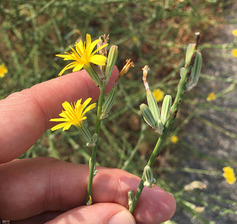
You just KNOW we had to pick something thematic for October's Noxious Weed of the Month! This time around, we're talking about rush skeletonweed!
Rush skeletonweed has only recently been found in Skagit County, which means we have a good chance of eliminating current infestations and keeping it out. This noxious weed is known to grow in wheat fields and pastures, making it a threat to Skagit agriculture.
Here's what to look out for to protect the county from this invasive plant:
Description: Rush skeletonweed has thin, branching stems that can grow one to five feet tall. The stems are green with brown, downward-pointing hairs near the base. The plant has a circular rosette of green, lobed leaves at its base, but few leaves along its stems. Leaves on the stems may not have lobes.
Rush skeletonweed flowers are yellow and about half an inch across. They have narrow yellow petals. Flowers can grow individually or in clusters, and grow along stems and at the ends of stems. Flowers will be starting to die back around this time of year, but keep your eye out!
Flowers give way to seeds with white bristles on the end, like dandelion seeds.
Toxicity: Rush skeletonweed is not known to be toxic.
Control: You can pull small infestations of rush skeletonweed by hand, but may need to do so several times a year for up to 10 years to control it fully. Mowing, especially before flowers go to seed, can also help slow the spread of infestations.
Using herbicide and planting competitive plants together can also help control this weed.
For more information or for help identifying and controlling rush skeletonweed, including by using herbicide, please reach out to our Noxious Weed Coordinator, Evan Emrick, at (360) 707-1502 evane@co.skagit.wa.us.
Learn more about how to identify rush skeletonweed from the Washington State Noxious Weed Control Board.
Photos courtesy of the Washington State Noxious Weed Control Board.
|

|
|
Classes and Events
Community Hikes and Walks with Friends of the ACFL, October 15, 17, 18, and 29: Join Friends of the Anacortes Community Forest Lands for local walks and hikes.
Baker Dam and Hatchery Tour, October 17, 10 AM to 12 PM, Baker Dam Hatchery, 47256 Baker Dam Rd., Concrete: Join Skagit Conservation District to tour Baker Dam hatchery and learn about what Puget Sound Energy is doing to maintain healthy salmon runs while maintaining a clean supply of electricity.
Stormwater Workshop - Shellfish Farming, October 21, 5:30 PM to 7:30 PM, Taylor Shellfish Farms: Join Skagit Conservation District to learn about the history and progress of shellfish farming in Samish Bay with Bill Dewey at Taylor Shellfish Farm in Bow.
Wild and Scenic Film Festival, October 22, 6 PM, Lincoln Theater: A curated lineup of short films that captivate the senses and spark curiosity that deepens our appreciation for the natural world and our community’s efforts to protect it. Hosted by Skagit Fisheries Enhancement Group.
Salmon Sighting at Clark Creek, October 31, 11 AM to 2 PM, 8319 Fish Hatchery Lane, Marblemount: Join Skagit Fisheries Enhancement Group to watch spawning chum salmon at Clark Creek in Marblemount. Knowledgeable staff from SFEG will be on hand to answer questions and share insights on the salmon life cycle and local habitat restoration work.
Salmon Sighting at Oyster Creek, November 7, 11 AM to 2 PM: Join Skagit Fisheries Enhancement Group to watch spawning chum salmon at Oyster Creek along the entrance drive to Taylor Shellfish in Bow. Knowledgeable staff from SFEG will be on hand to answer questions and share insights on the salmon life cycle and local habitat restoration work.
Fun for all at Padilla Bay: Check out upcoming events at Padilla Bay National Estuarine Research Reserve!
Volunteer Opportunities
Skagit Land Trust work parties, October 16 and November 14 and 21: Volunteer with Skagit Land Trust to remove invasives, plant native shrubs and trees, and maintain important work tools! You can also learn about volunteering through community engagement and community science on the Skagit Land Trust website.
Spawner Survey Volunteer Workshop, October 1, 6 PM to 8 PM and October 3, 9 AM to 12 PM: Skagit Fisheries Enhancement Group is hosting a Spawner Survey Workshop to teach the protocol for identifying and documenting spawning salmon at restoration sites. This Program helps Skagit Fisheries Enhancement Group measure project success and track salmon recovery.
Planting Parties with Skagit Fisheries Enhancement Group, October 10, 17, & 24 November 14 & 21, and December 5: Join Skagit Fisheries Enhancement Group in planting native plants to restore habitiat.
Skagit Land Trust Volunteer Opportunities: Skagit Land Trust has opportunities like becoming a land steward, helping with community engagement, doing community science, and serving on committees.
Salish Sea School Volunteer Opportunities: Whether you’re helping with educational programs, community events, marine conservation projects, or daily operations, your time and talents directly support a thriving Salish Sea where people and nature flourish.
Stream Team: Citizen Water Quality Monitoring: Skagit Conservation District's Stream Team is a network of citizens concerned about the health of local streams. Members are trained to work in teams to collect water quality data on stream reaches located in our priority watersheds: Nookachamps Creek Watershed; Padilla Bay Watershed; and Samish Watershed, as well as sampling stormwater runoff in the cities of Anacortes, Burlington and Mount Vernon. Each team tests for temperature, fecal coliform, turbidity, depth, and dissolved oxygen and averages around 4-6 hours per month.
|
|
Contact Us
For questions or more details, please contact Karen DuBose at kdubose@co.skagit.wa.us or 360-416-1460.
This project has been funded wholly or in part by the United States Environmental Protection Agency under assistance agreement PC01J18001-0 to the Washington Department of Health. The contents of this document do not necessarily reflect the views and policies of the Environmental Protection Agency, nor does mention of trade names or commercial products constitute endorsement or recommendation for use.
|
|
|
|
|