|
Photo of the Month
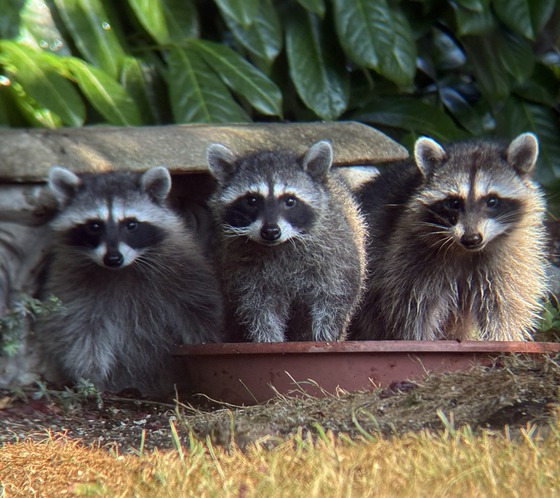 Backyard visitors are cute, but can bring trouble. // Photo by Taylor Scott

Look at those faces! Our Voluntary Stewardship Program Coordinator, Taylor, caught these little furballs in her yard and captured some amazing shots.
Raccoons and their woodland friends can be exciting to see, but that's no reason to turn your backyard into a cafeteria! Sorry, Jimothy!
Attracting wild animals to your property can put your health at risk, can contribute to pollution, and can even harm the animals you're feeding!
Health Risks
Animals frequenting your yard means lots of poop in your yard. This poop is full of bacteria, diseases, and even parasites. Wildlife can also bite and scratch if you get too close. Raccoons alone carry rabies, roundworm, leptospirosis, and tularemia— NOT things you want to come into contact with. The more animals you attract to your property, the higher the risk that you, your family, or your pets could be exposed and get sick.
Water Pollution
If you live by a stream, a high concentration of wildlife poop in your yard also means a lot of pollution coming off your property and going into our water. Just like dog poop, rain picks up wildlife poop (and all its bacteria and parasites) and carries it into our water.
Risks to Animals
Attracting wildlife to populated places is also harmful to animals— pets, livestock, and the wild animals themselves. Raccoons and coyotes are known to attack pets and chickens, so bringing them into your neighborhood could put your or your neighbors' animals in harm's way.
The wild animals that venture into populated areas are also at a much higher risk of getting hit by cars. Their next trip to your garden could easily be their last.
Solutions
Luckily, the solution to these risks is simple: Don't feed the wildlife. Yes, even when they give you that look!
If you have bushes or trees in your yard that produce fruit, you might be feeding wildlife without even knowing it. Make sure to harvest fruits when they're ripe. If you have too much to use yourself, offer some to your neighbors and friends!
|
|
|
|
The first hints of fall are starting to show, with some rain sneaking into the forecast over the past couple weeks. The Mount Vernon WSU AgWeatherNet station recorded 0.7 inches of rain in August, which is about 0.7 inches drier than normal. The average temperature was 62.0°F, which is about 0.5°F cooler than average.
Routine sampling in August showed high bacteria levels at a few scattered locations throughout the county. Fisher Creek, Colony Creek, Big Indian Slough, and lower Nookachamps Creek all had elevated bacteria levels. Bacteria levels can vary quite a bit from one sampling event to the next, so we’ll continue monitoring these locations to see how conditions change as we head into fall.
Now is the time to get ready for more rain! Scoop and trash any dog waste, cover up any manure piles, and clear any other materials that could flow into waterways once the rain returns. These small steps can help keep pollutants out of our local waterways all fall and winter.
Interested in more recent bacteria results? Check out our water quality map!
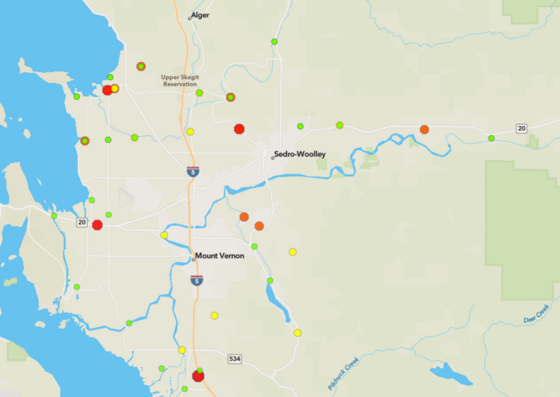 August's water quality results. Red dots represent sites with high levels of fecal bacteria, yellow represents sites with moderate levels of fecal bacteria, and green dots represent sites with low fecal bacteria levels. Click on the map to go to the online water quality map, where you can explore sites in Skagit, Whatcom, and Snohomish Counties.
|
|
Home Tip of the Month
It's— drumroll, please— SEPTIC SEPTEMBER!
Did we make Septic September up? Maybe. Is it going to be a month full of quick and easy septic education? YES!
We've made bite-sized septic videos introducing you to each part of your septic system and going over some DIY septic maintenance for each component. Find our all our videos on Skagit County Clean Water’s YouTube, or follow along as we post them on Facebook and Instagram! The videos feature septic professional Jeremiah Gunia from A Advanced Septic in Puyallup. Our other star performer? Washington On-Site Sewage Association's above-ground septic system! This display system lets us show you what each part of your system really looks like so we can better explain how it works.
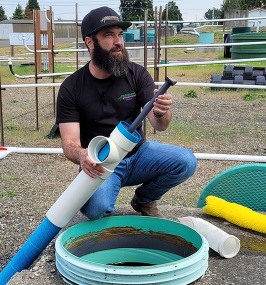
In our video series, you'll learn about your risers, baffle, septic tank, pump tank, distribution boxes and drain field, and why it's so important to keep each of these components inspected and maintained. Getting your system inspected regularly lets you fix any issues before your system fails. A failed system costs a lot more than a quick fix, and it can mean raw sewage in your house, in your lawn, and even downstream.
If you want to dive deeper into your septic system (not literally, please), check out our Septic 101 and 201 online courses. Through these courses you could even become certified to inspect your own system! Visit SkagitCounty.net/Septic to find your system, find a list of certified inspectors and learn about our rebate and financial assistance programs.
|
|
|
Farm Tip of the Month
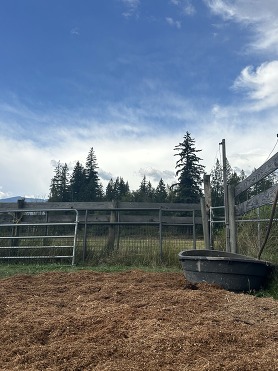
Fall is in the air, and there’s no better time to start getting ready for the rainy season! Right now is a great time to give your sacrifice area or heavy use area a “test run” for a week or two. This can help you be more efficient this winter and give your pastures the break they need to regrow for one more round of grazing.
Making the most of your test run
A test run of your heavy use area will let you see what needs tweaking before the grazing season ends and animals move in. It will allow you to see if there are weak spots in fencing, areas that will get muddy, or any issues with your feeding and watering setup.
Your pasture’s last push
Having your animals off your pasture for a couple of weeks will give your grass a chance to rest after a long summer. The grass can take full advantage of the early fall rains for a last burst of growing. A rest and a growing period will help stop your pasture from getting overgrazed, which will help it come back healthy and productive in the spring.
When your animals are off your pasture, you can assess what care it will need before the next growing season. Take note of places that will need reseeding and get a soil sample to see if you should add lime. This is also your last chance to spread manure until the growing season starts back up.
A fall feast!
After your heavy use area test period, you can put your animals back out to pasture to graze on the new growth. This gives you the chance to make your tweaks to your heavy use area before winter.
Learn more about heavy use areas on the Skagit Conservation District farm page.
|
Yellow nutsedge drives us nuts!
According to Washington State Noxious Weed Control Board, yellow nutsedge is considered "one of the world's worst weeds."
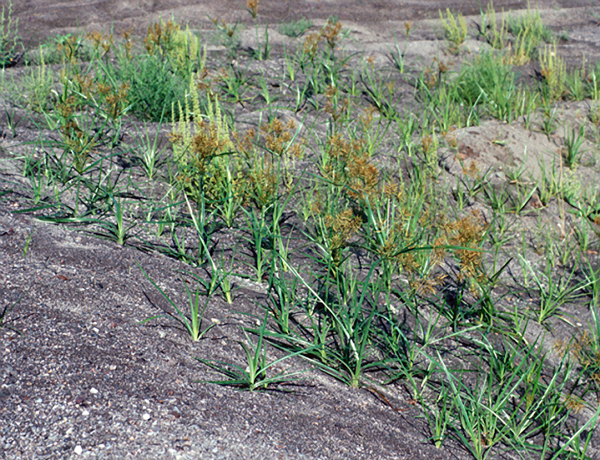
It often grows in irrigated crop fields, where it can take water and other resources away from crops. Some research has even shown that it might release chemicals that harm crops.
Here's what to look out for and how to treat yellow nutsedge if you find it.
Description: Yellow nutsedge is a grass-like plant that can grow between 1 and 3 feet tall.
If you've heard the saying "sedges have edges," you can probably guess that yellow nutsedge has sharp edges along its stem. The stem has 3 sides, so it has a triangle cross section.
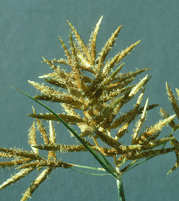
Green, grass-like leaves grow straight up from the bottom of the stem. At the top of the stem are long, leaf-like structures called "bracts."
In the middle of the bracts is the flowering part of the plant, made up of several short, spike-covered shoots. The spikes range from green, to brown, to yellow depending on the stage of flowering the plant is in.
Below ground, yellow nutsedge has round tubers among its roots. These tubers help it spread.
Toxicity: Although it is not known to be toxic to people or animals, yellow nutsedge can harm crops. Research shows that it might put out a chemical that is toxic to other plants.
Control: You can control yellow nutsedge by tilling it every four weeks. This uses up the energy it stores in its tubers.
You can also try dense plantings of fast growing crops to outcompete the yellow nutsedge.
For more information or for help identifying and controlling yellow nutsedge, including by using herbicide, please reach out to our Noxious Weed Coordinator, Evan Emrick, at (360) 707-1502 evane@co.skagit.wa.us.
Learn more about how to identify yellow nutsedge from the Washington State Noxious Weed Control Board.
Photos courtesy of the Washington State Noxious Weed Control Board.
|
|
|

Program News
We're hiring!
We currently have an opening for a Stormwater Permit Manager!
The Stormwater Permit Manager provides planning and program implementation for stormwater activities and serves as technical expert with unique skills in the areas of research, planning, and program implementation. This full-time position works in the Public Works Natural Resource Division’s Stormwater Program.
Work includes short-term and long-term stormwater planning, project management for stormwater retrofit projects, grant writing support, asset mapping and monitoring, coordinating with Ecology around permit compliance, advising on direction of stormwater strategic planning, and serving on interdisciplinary teams.
Salary starts at $7,456.17 per month. Learn more and apply online!
|
Classes and Events
Salmon Day at the Market, September 12, 9 AM to 2 PM, Riverwalk Plaza, Mount Vernon: Join the Skagit Watershed Council and Skagit Fisheries Enhancement Group at Salmon Day at the Market! Come and learn all about salmon, play interactive games, get a glitter tattoo from Glitt3r Lyfe, and listen to live music at the Riverwalk Plaza during the Mount Vernon Farmers Market.
Washington Native Plant Society Native Plant Sale, September 18: The online fall native plant sale will open on September 18 for online purchases. The Washington Native Plant Society will have some plants for sale in person on September 25 and 26 from 10 AM to 2 PM.
Farm Tour with Skagit Conservation District, September 24, 5 PM to 7 PM, Mount Vernon: Join Skagit Conservation District for a tour of a small family nut, horse, and chicken farm (including historic filberts)! You will have the opportunity to get to know the farmers and ask questions about practices including heavy use area protection, manure storage/composting, chore efficiency, and how to utilize Skagit Conservation District's cost share program to improve your operation.
Fidalgo Bay Day, September 26, 11 AM to 3 PM, Fidalgo Bay RV Resort, 4701 Fidalgo Bay Rd, Anacortes: Join The Salish Sea School and friends for a FREE, fun, family outing at Fidalgo Bay Day! There will be educational displays from marine conservation groups across the region and activities such as a beach seining demonstration, Forage Fish egg survey, Shannon Point Marine Center portable touch tanks, and FREE samples of local seafood.
Festival of Family Farms, October 3 & 4, 10 AM to 4 PM: The family farms of Skagit Valley welcome and open their barns and lifestyles to you and your family for this one-of-a-kind event. Get hands-on-experience learning what it takes to run a farm, from growing crops to feeding animals.
Stormwater Workshop - Shellfish Farming, October 21, 5:30 PM to 7:30 PM, Taylor Shellfish Farms: Join Skagit Conservation District to learn about the history and progress of shellfish farming in Samish Bay with Bill Dewey at Taylor Shellfish Farm in Bow.
Wild and Scenic Film Festival, October 22, 6 PM, Lincoln Theater: A curated lineup of short films that captivate the senses and spark curiosity that deepens our appreciation for the natural world and our community’s efforts to protect it. Hosted by Skagit Fisheries Enhancement Group.
Volunteer Opportunities
Skagit Land Trust work parties, September 25 and October 16: Volunteer with Skagit Land Trust to remove invasives, plant native shrubs and trees, and maintain important work tools! You can also learn about volunteering through community engagement and community science on the Skagit Land Trust website.
Volunteer at Fidalgo Bay Day, September 26, 11 AM to 3 PM, Fidalgo Bay RV Resort, 4701 Fidalgo Bay Rd, Anacortes: Help The Salish Sea School and friends host Anacortes' annual Fidalgo Bay Day! This free community event fosters public awareness and presents a wonderful opportunity for the Skagit County community to connect and learn about local conservation and stewardship.
Spawner Survey Volunteer Workshop, October 1, 6 PM to 8 PM and October 3, 9 AM to 12 PM: Skagit Fisheries Enhancement Group is hosting a Spawner Survey Workshop to teach the protocol for identifying and documenting spawning salmon at restoration sites. This Program helps Skagit Fisheries Enhancement Group measure project success and track salmon recovery.
Planting Parties with Skagit Fisheries Enhancement Group, October 10, 17, & 24 November 14 & 21, and December 5: Join Skagit Fisheries Enhancement Group in planting native plants to restore habitiat.
Skagit Land Trust Volunteer Opportunities: Skagit Land Trust has opportunities like becoming a land steward, helping with community engagement, doing community science, and serving on committees.
Salish Sea School Volunteer Opportunities: Whether you’re helping with educational programs, community events, marine conservation projects, or daily operations, your time and talents directly support a thriving Salish Sea where people and nature flourish.
Stream Team: Citizen Water Quality Monitoring: Skagit Conservation District's Stream Team is a network of citizens concerned about the health of local streams. Members are trained to work in teams to collect water quality data on stream reaches located in our priority watersheds: Nookachamps Creek Watershed; Padilla Bay Watershed; and Samish Watershed, as well as sampling stormwater runoff in the cities of Anacortes, Burlington and Mount Vernon. Each team tests for temperature, fecal coliform, turbidity, depth, and dissolved oxygen and averages around 4-6 hours per month.
|
|
Contact Us
For questions or more details, please contact Karen DuBose at kdubose@co.skagit.wa.us or 360-416-1460.
This project has been funded wholly or in part by the United States Environmental Protection Agency under assistance agreement PC01J18001-0 to the Washington Department of Health. The contents of this document do not necessarily reflect the views and policies of the Environmental Protection Agency, nor does mention of trade names or commercial products constitute endorsement or recommendation for use.
|
|
|
|
|