Connecting with Fairgoers at the Skagit County Fair
We had a great time bringing recycling and waste reduction education to the Skagit County Fair last week! Our outreach booth was set up in Barn D, alongside the Noxious Weed Coordinators, beautiful flower and Grange displays, bees, photography, and display trains.
Being part of Barn D each year gives us a wonderful opportunity to connect with fairgoers as they explored the exhibits. We answered questions, talked about what belongs in the recycling and compost bins, and shared practical ideas for reducing waste at home and in the community.
One of the best parts of outreach events like the Fair is the chance to have those quick, informal conversations—whether someone stopped by with a recycling question, wanted to double-check an item they weren't sure about, or simply wanted to learn more about waste reduction.
Thank you to everyone who stopped by to say hello, ask a question, or chat about how we can all reduce waste and recycle right here in Skagit County. We loved being part of this year's Fair!
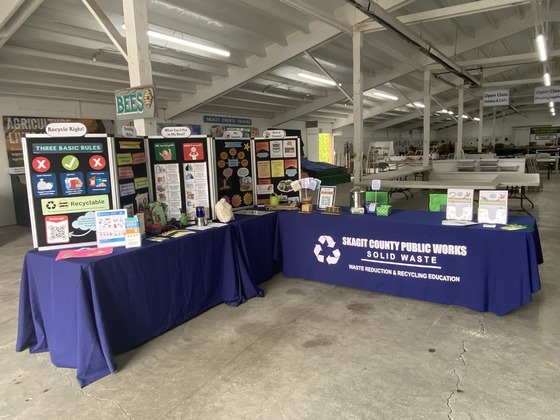 Photo: Skagit County Solid Waste’s recycling and waste reduction outreach display at the Skagit County Fair earlier this month.
Ask a Master Recycler
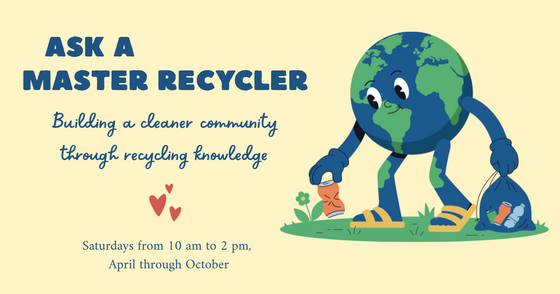 Get your recycling questions answered
|
Skagit County Master Composter Recyclers will be available one Saturday each month from April through October, 10 a.m. to 2 p.m., at the Skagit County Transfer & Recycling Center (14104 Ovenell Rd, Mount Vernon). Stationed in the recycling area staff shed, they’ll answer residents’ questions while you drop off materials at the free recycling drop-off area. Stop by to pick up helpful tips, learn what belongs in your recycling bin, and make your recycling routine easier and more effective!
Upcoming Summer Dates to Ask a Master Recycler:
- Saturday, August 22
- Saturday, September 19
- Saturday, October 17
|
|
 |
Save the Date: Skagit County Annual Clothing Swap
Refresh your wardrobe while helping reduce textile waste at the Skagit County Solid Waste Division’s free Fall Clothing Swap!
Clothing Swap: Tuesday, September 29, 2026, 3:00–6:00 p.m. at the Skagit County Fairgrounds in Mount Vernon.
Clothing Donation Day: Saturday, September 19, 2026, 10:00 a.m.–4:00 p.m. at the Skagit County Transfer Station.
No donation is required to participate. All Skagit County residents are welcome!
For full event details and clothing donation guidelines, visit the Skagit County Solid Waste Division’s event page.
Reduction, Reuse & Repair Tip of the Month
Small actions that reduce waste, with ideas for reusing and repairing along the way.
Upcycle Old School Supplies
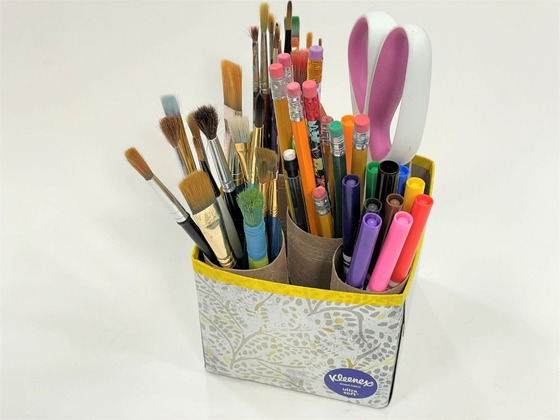 Photo: Easy upcycling. Toilet paper rolls and tissue boxes turned into holders for markers, pens, and paintbrushes.
A new school year does not have to mean buying everything new. Before heading to the store, take a look around your home and see what you already have. Reusing and upcycling school supplies can save money and keep useful items out of the trash.
Give Old Notebooks a Fresh Start
Have a notebook with only a few pages used? Tear out the filled pages and reuse the rest for a new class, homework, or notes. You can also combine leftover pages from several notebooks to make a new notebook. Add a piece of cardboard from a shipping box for a sturdy cover.
Turn Containers into Desk Organizers
Before recycling an empty plastic container, think about how you could use it again. Clean yogurt cups, food containers, jars, and other small containers can become holders for pencils, markers, scissors, or art supplies. Decorate them with scrap paper, stickers, or leftover craft materials to give them a new look.
Pack a Lower-Waste Lunch
Skip single-use plastic bags and disposable containers when you can. Pack lunches in reusable containers, use washable utensils, and choose a reusable water bottle. Small changes each day can add up to a lot less waste over the school year.
Host a Summer-to-Fall Gear Swap with Friends
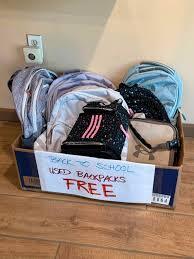
Before buying new school supplies, get together with friends or neighbors for a summer-to-fall gear swap. Gather gently used backpacks, lunchboxes, folders, notebooks, art supplies, and other school essentials that are no longer needed. One family’s extras could be exactly what another family needs for the new school year. Swapping gives useful items a second life, reduces waste, and can help everyone save money.
Back-to-School Resources in Skagit County
Looking for local back-to-school events, school supplies, clothing, and other resources? Check the Skagit County Back to School Events guide from Skagit Kid Insider for upcoming community events and opportunities for local families.
A little creativity can go a long way. This school year, try using what you have, reusing what you can, and buying only what you need.
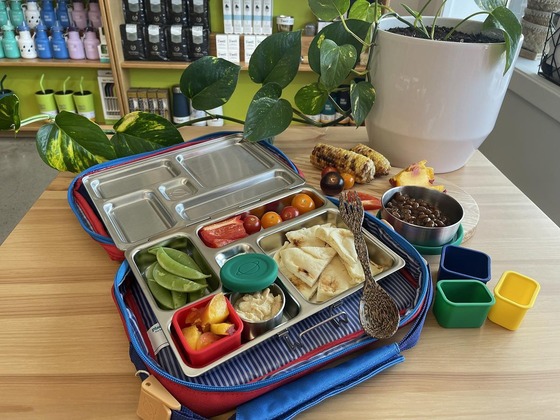 Photo: Example of a low-waste school lunchbox
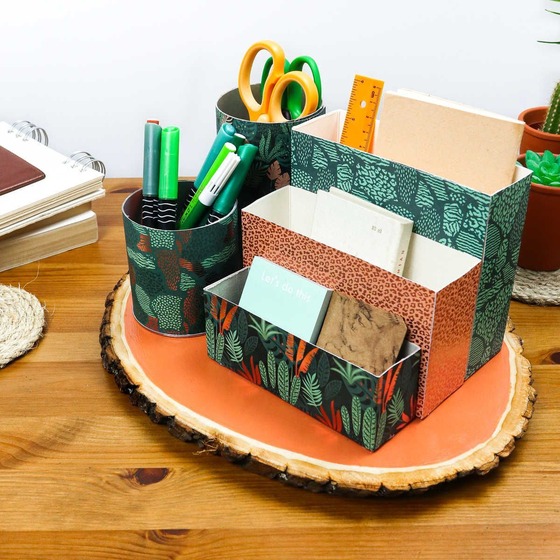 Photo: Old packaging materials upcycled into office and school supply holders.
Simple tips to help you recycle the right way and stay informed about upcoming changes.
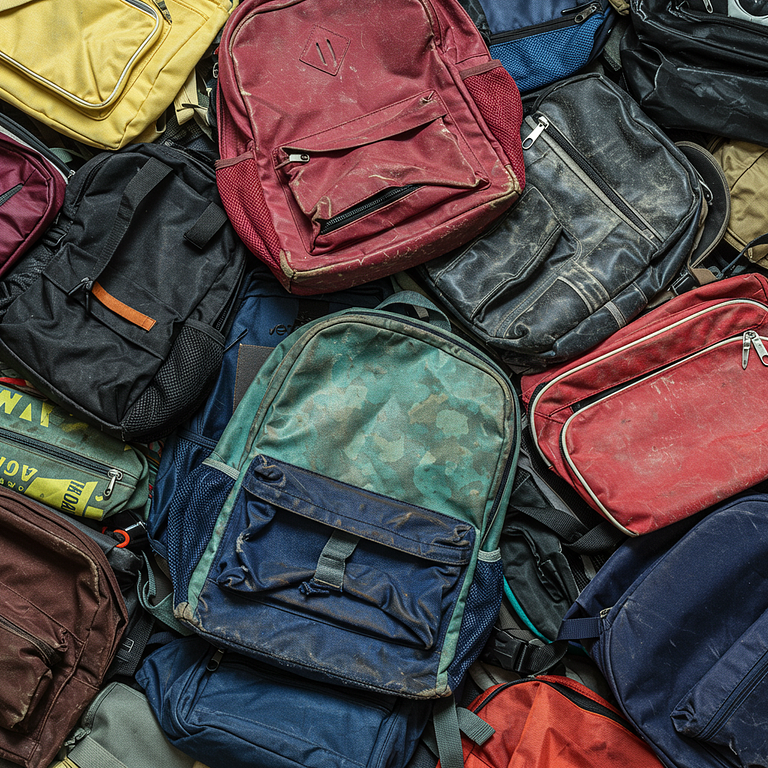
Give an Old Backpack a Second Life
Before buying a new backpack this school year, take a look at the one you already have. A quick clean or simple repair may be all it needs for another year of use.
Give It a Tune-Up
Sometimes a backpack just needs a good cleaning to feel new again. Start by emptying every pocket and shaking out crumbs and dirt. Check the care label before washing, since materials and cleaning instructions can vary. For backpacks that can be washed, spot-treat stains and use a gentle cleaning method recommended by the manufacturer. After washing, let the backpack air-dry completely before using it again.
While you’re cleaning it, check the zippers, straps, seams, and bottom of the bag for signs of wear. A clean backpack with a few small repairs may be ready for another school year.
Learn more about how to wash a backpack from Whirlpool
Repair What You Can
A loose seam, small tear, or broken zipper does not always mean a backpack is ready for the trash. Try sewing a loose seam, patching a small hole, or replacing a zipper pull. These simple repairs can help extend the life of a backpack and keep it in use for another school year.
Watch and learn:
For bigger repairs, professional services may be able to give your backpack a second life. Rainy Pass Repair and Phenix Threads specialize in repairing outdoor gear and technical clothing. Shoe and luggage repair companies, such as Cobblers Direct, may also be able to repair zippers, straps, seams, and other worn parts.
Pass It Along or Check for Take-Backs
If your backpack is clean and still usable, give it to a friend, family member, or local organization. Some manufacturers also offer take-back, trade-in, or repair programs. Check with the brand before sending in your backpack, since programs and accepted items vary.
Several outdoor brands have programs that may accept used gear:
-
The North Face: Its Renewed Take-Back program accepts eligible used clothing and gear and offers a $10 credit for qualifying items.
-
REI: Its trade-in program accepts eligible used gear in good condition.
-
Patagonia: Its Worn Wear program offers options for eligible Patagonia gear.
-
Timbuk2: Its Break Up With Your Bag program provides options for returning used Timbuk2 bags.
-
Cotopaxi: Check with Cotopaxi for current options for giving used gear a second life.
Know When It’s Worn Out
Not every backpack can be saved. If it has lots of large tears or holes, badly damaged straps or zippers, or fabric that is falling apart, it may be time to let it go. The same goes for a backpack that is extremely dirty, stained, or cannot be cleaned enough to pass along.
Ask yourself: Would you feel comfortable giving this backpack to a friend or buying it secondhand? If not, it may have reached the end of its useful life.
If a backpack cannot be repaired, reused, or returned through a take-back program, TerraCycle offers a paid Backpacks Zero Waste Box for mail-in recycling.
Before you replace your backpack, clean it, repair it, reuse it—and replace it only when it’s truly worn out.
Organics Tip of the Month
A quick guide to new organics rules, with tips for everyday composting.
Food Waste Prevention Week: Get Ready to Waste Less!
It’s time to start thinking about Food Waste Prevention Week, September 28–October 4! Skagit County Solid Waste is proud to be a partner in this national awareness event, and we’re looking forward to celebrating with our community.
Why celebrate food waste prevention? Because a lot of good food—and money—is going to waste. About 40% of all food in the United States is wasted, while many people struggle to put enough food on the table. Here in Washington, food makes up about 17% of the garbage sent to landfills, and up to 8% of that food was still edible when it was thrown away.
Preventing food waste can also help your household budget. A family of four could save an average of $1,800 a year by preventing food waste!
While preventing food waste is something we can practice all year long, Food Waste Prevention Week is a great time to set a goal, try a new habit, and pay a little more attention to the food we buy, cook, and toss.
As we get closer to September, start thinking about what you could change at home. Could you plan meals around food you already have? Give leftovers a second chance? Freeze food before it goes bad? Or get creative with ingredients that might otherwise end up in the trash?
You can also look for inspiration right here in Skagit County. WSU Extension and the Skagit County Master Gardeners offer local food waste tips, and WSU Extension’s upcoming Bread to Beer event is a fun example of how food that might otherwise be wasted can be given a new life.
Follow Skagit County Solid Waste on social media during Food Waste Prevention Week for tips, ideas, and local activities. We’ll also share information about ways to participate in our community.
You don’t have to wait until September to start. Choose one small food-waste goal now, put it into practice, and then celebrate your progress during Food Waste Prevention Week! Whether you prevent waste, rescue edible food, or compost what can’t be saved, every action helps.
Let’s make every bite count!
A curated mix of what we’re loving, learning, and paying attention to.
By World Wildlife Fund
This Nature Breaking episode from World Wildlife Fund offers practical ideas for parents, teachers, and students looking to reduce waste and care for the environment.
We’re following the development of new statewide collection lists under Washington’s Recycling Reform Act. The Department of Ecology is developing four lists to identify materials suitable for residential recycling, residential composting, public-place collection, and alternative collection across the state.
Ecology has released preliminary lists for public review, and the public comment period is open through August 19, 2026. Anyone interested can review the proposed lists and submit comments through Ecology’s online comment form. The final lists are expected to be completed by October 1, 2026.
You can find a summary memo and the draft workbooks here: Summary of the Preliminary Statewide Collections Lists | Preliminary Statewide Collection Lists (workbook)
These lists could help create more consistent recycling and composting guidance across Washington, so we’ll be watching this process closely as the state moves toward finalizing the new standards.
A potential recycling refund program is getting another look in Washington. The Washington Department of Ecology has released a draft Recycling Refund Community Engagement Study Report, which looks at community input and potential impacts of a recycling refund program across the state.
The public comment period is open through August 10, 2026. Community members can review the draft report and submit a public comment.
This is the second report in the study. The first report examined convenient access to bottle redemption services in Spokane, Yakima, and King County.
We’ll continue monitoring this work as Washington explores how a recycling refund system could work across the state.
By reFED
ReFED partnered with YouGov, with support from the Ida & Robert Gordon Family Foundation, to survey 1,000 U.S. households in January 2026 about how rising food prices influence food waste reduction behaviors.
By Brendan Pierce for reFED
Confusing food date labels contribute to more than 3.5 million tons of food waste annually in the U.S., costing consumers over $19 billion. California’s new food date label law, effective July 1, standardizes terms such as “Best if Used By” and “Use By” and could serve as a model for reducing food waste nationwide.
Upcoming Events
Ask a Master Recycler, August 22, 10 am to 2 pm, Skagit County Recycling & Transfer Station, Mount Vernon
Stationed in the recycling area staff shed, they’ll answer residents’ questions while you drop off materials at the free recycling drop-off area. Stop by to pick up helpful tips, learn what belongs in your recycling bin, and make your recycling routine easier and more effective!
Fix-It Days, August 29, 9 am to 2 pm, Anacortes Farmers Market, 611 R Ave, Anacortes
Help avoid throwing out and replacing broken items! Bring them in and the Transition Fidalgo repair team will evaluate and fix your item, if possible. Examples: appliances, tools, lamps, clothing, and more. When in doubt, bring it in and they’ll gladly assess. Donations to Transition Fidalgo community group for the repairs, are welcome.
Have clothing to donate before the annual Skagit County Clothing Swap? Drop it off early and help us get ready for the main event!
Please note: This is a donation-only day—no swapping. You may also donate at the Clothing Swap on Tuesday, September 29.
Donation Guidelines:
- Adult and children’s clothing, all sizes
- Gently used items only—no heavy stains or damage
- Maximum 2 large bags per person
- No underwear or socks
Fidalgo Bay Day, September 26, 11 am to 3 pm, Fidalgo Bay RV Resort Cabins & Events, 4701 Fidalgo Bay Road, Anacortes
Join the Salish Sea School for Fidalgo Bay Day, a free, family-friendly event celebrating the Salish Sea and local marine life. Explore educational displays from regional conservation groups and enjoy hands-on activities, including beach seining, a forage fish egg survey, portable touch tanks from Shannon Point Marine Center, and free samples of local seafood.
Free to attend. No registration required.
Annual Skagit County Clothing Swap, September 29, 3 pm to 6 pm, Skagit County Fairgrounds North Entrance Barn A/B, 1410 Virginia St, Mount Vernon
Give your clothes a second life at the Skagit County Solid Waste Division’s free Fall Clothing Swap! Bring clean, gently used clothing and find new-to-you favorites while helping reduce textile waste and promote reuse.
Clothing Swap Event
Tuesday, September 29, 2026
3:00–6:00 p.m.
Skagit County Fairgrounds, North Entrance, Building A/B
1410 Virginia St., Mount Vernon
Special Donation Day — Not the Swap!
Saturday, September 19, 2026
10:00 a.m.–4:00 p.m.
Skagit County Transfer Station, Recycling Area
14104 Ovenell Rd., Mount Vernon
Clothing donations will also be accepted at the swap. No donation? No problem! Everyone is welcome to participate.
Donation guidelines: All sizes welcome, including children’s clothing. Please bring no more than 2 large bags per person and only clean, gently used items. No heavily stained or damaged clothing, underwear, or socks.
Free and open to all Skagit County residents!
Toast to Food Waste Prevention! Join WSU Skagit County Extension for a family-friendly day of learning, fun, and food waste prevention. Explore creative ways to give food a second life, enjoy a scavenger hunt, and enter for prizes while discovering simple ways to keep good food out of the waste stream.
|