|
Photo of the Month
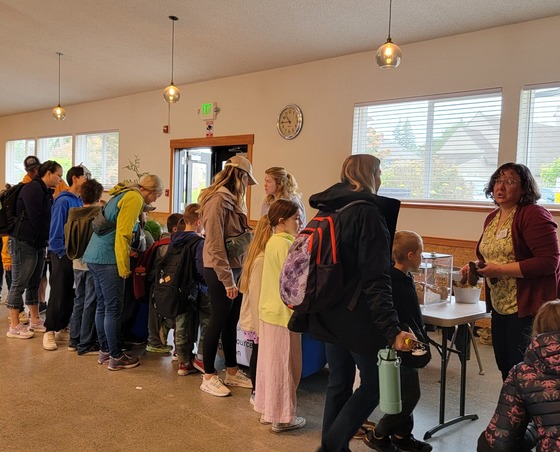 We got to teach children and parents about water pollution, plant power, and septic systems at Sedro-Woolley City Works Day this May!
We got to attend some awesome events in May! We had a blast at Sedro-Woolley City Works Day, hosted by Central Skagit Library, and at the Skagit Master Gardeners Plant Fair! A big thank you to our hosts and everyone who stopped by and said hello!
If you missed us, you also missed our fun displays on...
Permeable pavement
Permeable pavement is a special kind of pavement that lets water trickle through to the ground below. This way, water isn't flowing across the pavement and picking up pollution to carry into our water.
It's great for driveways, parking lots, and patios because it means no puddles!
Plants vs. Erosion
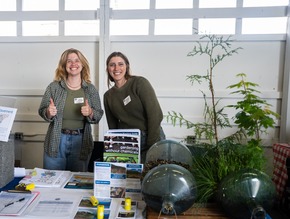
One of our favorite displays (pictured on the right) shows how plants keep soil in place— and out of our water. We pour water into both the bare soil and the planted display, and children and adults alike are surprised at how much cleaner the water that flows out of the planted display is.
The secret to the display? Roots! Roots hold soil together, stopping rain from picking it up and washing it away. This display is a great example of why it's so important to have native trees and shrubs around our waterways.
Septic systems
One of our major focuses at Sedro-Woolley City Works Day was septic systems! Kids and their parents got to see a miniature model of a septic tank, then try their hand at the "poop toss" game into a fake toilet (don't worry, the poop was fake, too!). Keeping septic systems working well is important because they can leak bacteria into our water if they fail.
Dying to see us? We'll be at the Master Gardeners Discovery Garden Open House on June 27, 10 am to 2 pm, with our permeable pavement and plants vs. erosion displays!
|
|
|
|
Summer is here! It's the season of ice cream, farmers markets, and finding excuses to spend more time near the water. May was a warm and dry month in Skagit County. The Mount Vernon WSU AgWeatherNet station recorded 1.8 inches of rain, which is about 0.7 inches less than what we normally see in May. The average temperature was warm, with an average of 55.9°F, about 1.3°F more than normal.
Our routine sampling happened to coincide with one of the few storms last month, on May 26. Bacteria results were elevated at nearly every site along our sampling route in the Samish and Middle Skagit watersheds. This serves as a good reminder that storms often produce the highest pollution loads, especially following extended dry periods.
The bacteria hotspots this month were found at Colony Creek, Little Indian Slough, the south Edison drainage, upper Thomas Creek, and upper Coal Creek.
All our bacteria results are shared on our water quality map, including our most recent samples. Check out the results in your neighborhood!
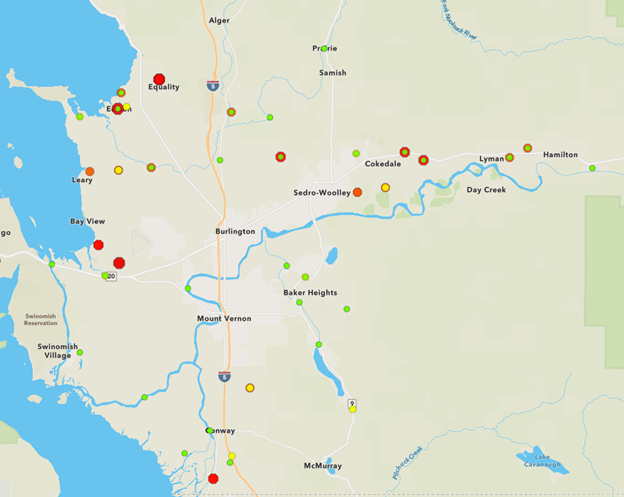 May's water quality results. Red dots represent sites with high levels of fecal bacteria, yellow represents sites with moderate levels of fecal bacteria, and green dots represent sites with low fecal bacteria levels. Click on the map to go to the online water quality map, where you can explore sites in Skagit, Whatcom, and Snohomish Counties.
|
|
Home Tip of the Month
It's time for your seasonal reminder: Don't wash your car in the driveway! Not only is it harder on you, it's hard on the environment.
What's wrong with washing at home?
When you wash your car in your driveway or the street, the water you use picks up everything that comes off your car— dirt, grease, road grime, and the soap you're using to wash— and carries it to the storm drain. Even biodegradable soaps are pollution. Our storm drains flow directly into rivers, streams, lakes, and the sea. The water in storm drains is not treated before it reaches these waterways. That means that all that gunk and soap ends up polluting our water. This pollution can harm wild animals, pets, and people!
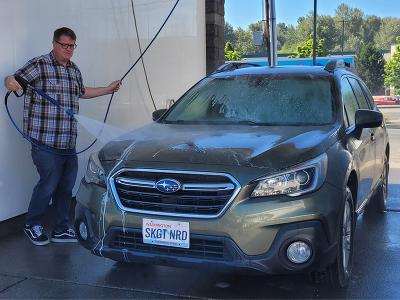
What makes commercial car washes different?
Commercial car washes clean the water you use before releasing it into rivers and streams. Unlike storm drains in your neighborhood, the drains at a carwash flow to a special treatment system. The system removes grease, dirt, and chemicals from the car wash water before it goes into the sewer system. In the sewer system it gets even more treatment before going out into our waterways.
Some commercial car washes even save water by recycling the wash water after it has been cleaned!
I can't go to a commercial car wash. What should I do?
If you can't make it to the car wash, there's a better way to wash your car than spraying it down in the driveway! Parking your car on your lawn or another grassy area to wash it will give the dirty water a chance to filter through grass, roots, and soil before it reaches waterways. This will help clean the water slightly before it enters our rivers and streams.
Only rain down the drain!
Only clean water should go down storm drains. Remember: the water that goes into storm drains flows directly into the waters we play in, fish in, and eat shellfish from.
Learn more about being a water-safe car owner at the Puget Sound Starts Here website!
|
|
|
Farm Tip of the Month
WEE'D hate to see your pasture overtaken by unwanted plants this summer!
With spring in full swing, noxious weeds are popping up in fields and pastures across the county. These weeds not only take up valuable space, they can be deadly to your animals.
Here's why you should be on the lookout for noxious weeds in your pasture:
Weeds kill livestock
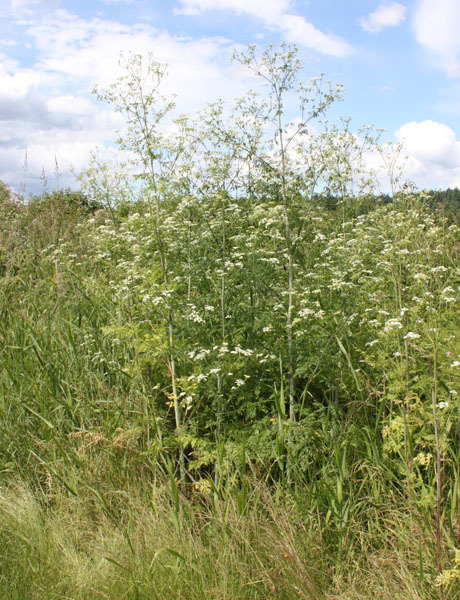
Several common noxious weeds are also toxic to animals. Some of these weeds include:
- Poison hemlock
- Tansy ragwort
- Bull thistle
- Scotch broom
Learn more about risks to animals from common noxious weeds in the Washington State Noxious Weed Control Board's booklet: Protect Your Horses and Livestock From Toxic Plants.
Weeds reduce pasture quality
Noxious weeds push out grasses and other desirable, high nutrient plants, reducing forage. This means less food for your animals all summer. Because many noxious weeds are toxic to animals even when dried, they can also make haying pastures risky.
How to control weeds
The best way to beat weeds is with healthy, productive grasses. This means keeping up with— you guessed it!— good old pasture management! Bare patches and old, low-energy grasses leave openings for noxious weeds to get a foothold. Make sure your grasses stay between 4 and 8 inches tall. This is where they are healthiest, most productive, and hold the most nutrients for your animals!
Check out Skagit Conservation District's Farming Resources page to learn more about pasture management techniques to keep your pastures healthy.
For information on identifying and treating specific weeds, visit the Washington State Noxious Weed Control Board website.
Make sure to pull, mow, or treat weeds before they can go to seed and spread. Need a weed wrench? We (Skagit County NRD) and Skagit Conservation District both have weed wrenches available to borrow! Contact our Noxious Weed Coordinator, Evan Emrick, at (360)-707-1502, or evane@co.skagit.wa.us or visit the Skagit Conservation District Equipment Share page.
|
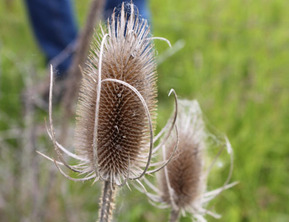
Anyone feeling prickly today? Our noxious weed of the month certainly is!
Common teasel is best recognized by its large, spikey oval flowerhead. It has hundreds of seeds in each flowerhead, and they can easily spread when the plant is disturbed. Common teasel does well in many conditions and has taken over valuable agricultural land.
Here's what you need to know about identifying and controlling common teasel:
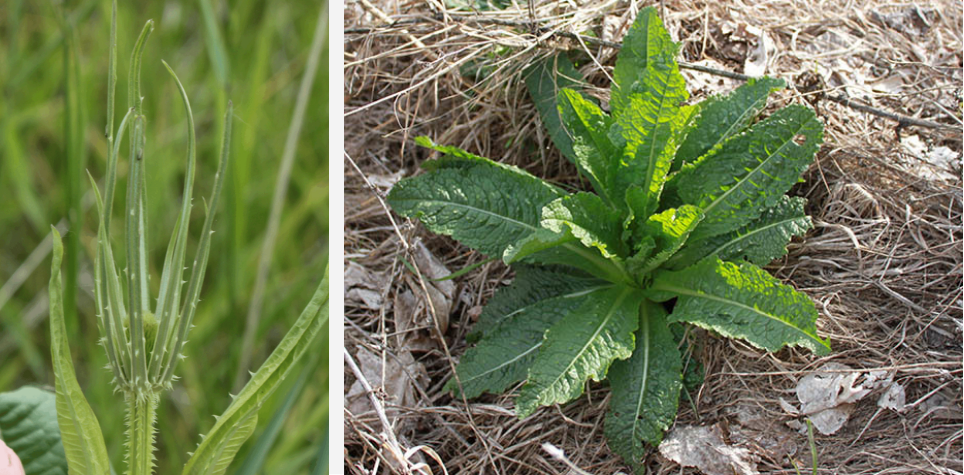
Description: Common teasel has dark green, pointed leaves that grow as a rosette on the ground. These lower leaves have a ruffled appearance and have spines. Stems from .5 to 2 meters tall appear in the second year of growth. Leaves on the stems are narrower but still prickly and grow opposite each other on the stem. Stems have opposite branches and become more and more prickly nearer to the top.
Flower heads are spiney, dense and oval shaped, about 4 inches tall. Long, prickly bracts grow at the base of the flowerhead. When in bloom, the flowerhead produces two rings of purple or pink flowers. Out of season, the flowerheads are brown.
Toxicity: Common teasel is not known to be toxic, but animals should not be encouraged to consume it.
Control: Common teasel can be dug up at the rosette stage as long as the roots are fully removed. Flower heads can be carefully removed after flowering (if they are removed before flowering they may resprout). Mowing common teasel plants with flowerheads is not recommended as they may contain seeds that would be spread by mowing.
For more information or help in identifying and controlling common teasel or for borrowing a weed wrench, reach out to our Noxious Weed Coordinator, Evan Emrick, at (360)-707-1502, or evane@co.skagit.wa.us.
Learn more about common teasel from the Washington State Noxious Weed Control Board.
Photos courtesy of Washington State Noxious Weed Control Board.
|
|
|
Program News
Many of our programs are getting into their busier season, and all of us are hard at work! Our noxious weed team has been taking advantage of the (mostly) nice weather go after knotweed and spartina. Restoration and drainage projects abound. Our stormwater team is always out an about inspecting and maintaining our stormwater system, and water sampling is as frequent as ever. As for our outreach team— we've got a busy summer ahead of us!
|
Classes and Events
Grass to Garden Workshop, June 10, 5:30 PM to 7:30 PM, Hillcrest Park Lodge: Have you ever been curious about how to take your yard to the next level from a grass lawn to a pollinator garden or a food garden? Come learn the beginner steps on how to transform your lawn into a thriving garden!
Explore Outdoors: Invasive vs. Native - Plant Detectives, June 13, 10 AM to 12 PM, Hillcrest Park: Become a plant detective at Hillcrest Park and learn how to spot invasive plants versus helpful native species! We’ll explore the park, uncover sneaky invaders, and find out why native plants are so important for our ecosystem.
Wildfire Preparedness Workshop, June 17, 6 PM to 7 PM, Sedro-Woolley: Join Skagit Conservation District as their Community Wildfire Resilience team leads a wildfire preparedness field tour where you will learn how to minimize the effects of wildfire around your home, yard, and neighborhood.
Gardening with Lisa "Bag of Salad" Workshop, June 18, 6 PM to 8 PM, 2727 E College Way, Mount Vernon: You don't need a field to garden. Learn techniques that let you grow vegetables in your own small space.
Salmon Release with Skagit Fisheries Enhancement Group, June 24, 12 PM, Northern State Recreation Area: Help Skagit Fisheries Enhancement Group release salmon fry and wish them well on their big adventure! The event starts at noon at Farmstead Bridge and will wrap up once the last fry makes its way downstream.
WSU Master Gardeners Discovery Garden Open House, June 27, 10 AM to 2 PM: Explore 8 acres of incredible gardens and talk to the volunteers who maintain them. Plus, you'll see us there!
Friend to the Forest: Protecting the Health of our Local Waterways, July 9, 6 PM to 8 PM, The Forest Discovery Center, Anacortes: Join Friends of the Anacortes Community Forest Lands and us (yes, US!) to learn about local waterways, how we monitor them, and how you can protect them!
Libraries Love Lakes, July: This July, we are partnering with the Mount Vernon, Anacortes, and Upper Skagit libraries, as well as Friends of the Anacortes Community Forest Lands (Friends of the ACFL), to teach about our local lakes and how to protect them. Each library will have a display of books about lakes and other waterways, along with take-home resources. We will also be collaborating with the libraries on lake focused events and story times, such as:
-
Anacortes Public Library & Friends of the ACFL
-
Stories in the Park: Lakes and Forests, July 17, 10 AM to 11 AM, Storvik Park: Learn what it is like to be a scientist from the Friends of the Anacortes Community Forest Lands and Skagit County Water Scientists!
-
Buckets of Bugs, July 18, 12 PM to 3 PM, Anacortes Public Library: Explore the world of tiny creatures that inhabit our local lakes and how they relate to water quality!
- Friends of the ACFL Lake Hike Series: Join Ellie Kravets of Friends of the ACFL on a series of guided lake hikes. Can’t make it? Pick up a handout at the Anacortes Public Library for a self-guided hike.
-
Mount Vernon Library
-
Upper Skagit Library
- Mess Makers lake-themed activity and story time, July 23, 2 PM: Join for a special lake-themed story time and playtime with some oobleck for a cool water/algae bloom simulation experiment!
Volunteer Opportunities
Skagit Land Trust work parties, June 12: Volunteer with Skagit Land Trust to remove invasives, plant native shrubs and trees, and maintain important work tools! You can also learn about volunteering through community engagement and community science on the Skagit Land Trust website.
Bowman Bay Stewardship, June 9, July 7, August 4, September 8, 10 AM to 12 PM: Join Northwest Straits Foundation for a volunteer work party at Bowman Bay! Spend the morning supporting the ongoing restoration through weeding, spreading mulch, and tending to native vegetation to create a resilient nearshore habitat.
Salish Sea School Volunteer Opportunities: Whether you’re helping with educational programs, community events, marine conservation projects, or daily operations, your time and talents directly support a thriving Salish Sea where people and nature flourish.
|
|
Contact Us
For questions or more details, please contact Karen DuBose at kdubose@co.skagit.wa.us or 360-416-1460.
This project has been funded wholly or in part by the United States Environmental Protection Agency under assistance agreement PC01J18001-0 to the Washington Department of Health. The contents of this document do not necessarily reflect the views and policies of the Environmental Protection Agency, nor does mention of trade names or commercial products constitute endorsement or recommendation for use.
|
|
|
|
|