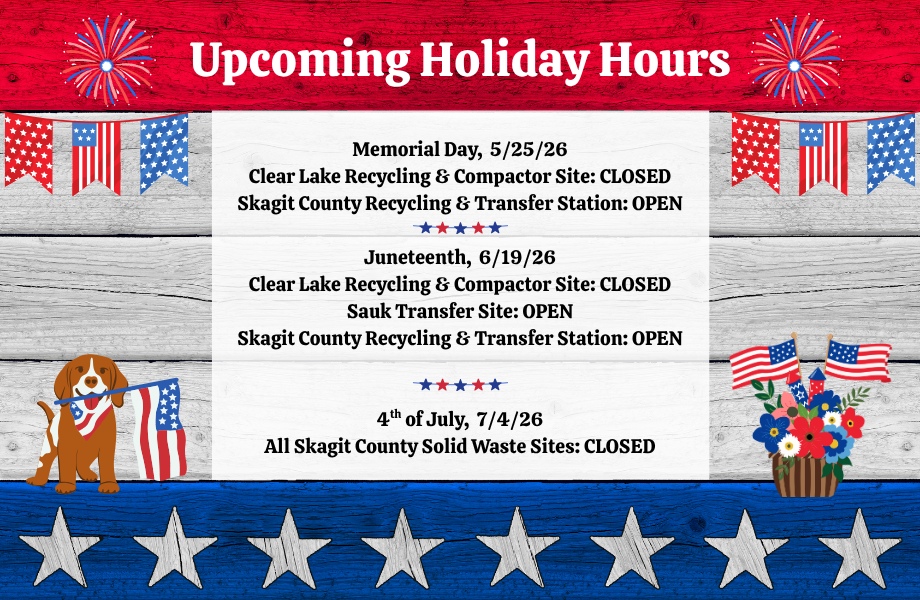
Upcoming Holiday Hours at Skagit County Solid Waste Facilities
Ask a Master Recycler
Get your recycling questions answered
Skagit County Master Composter Recyclers will be available one Saturday each month from April through October, 10 a.m. to 2 p.m., at the Skagit County Transfer & Recycling Center (14104 Ovenell Rd, Mount Vernon). Stationed in the recycling area staff shed, they’ll answer residents’ questions while you drop off materials at the free recycling drop-off area. Stop by to pick up helpful tips, learn what belongs in your recycling bin, and make your recycling routine easier and more effective!
Upcoming Dates to Ask a Master Recycler:
-
Saturday, May 30
-
Saturday, June 13
Reduction, Reuse & Repair Tip of the Month
Small actions that reduce waste, with ideas for reusing and repairing along the way.
Upcycle Containers into Seed Starters
Before you toss empty yogurt cups, milk jugs, or egg cartons into the recycling bin, give them a second life in the garden. Reusing common household containers as seed starters is an easy way to reduce waste, save money, and support spring planting at the same time.
Clean yogurt cups make excellent mini pots for starting vegetables, herbs, and flowers indoors. Simply rinse them well, poke a few drainage holes in the bottom, and fill with seed-starting soil. Egg cartons work perfectly as seedling trays for smaller plants and can help keep seedlings organized by variety. Plastic milk jugs can even become mini greenhouses when cut in half, helping young plants stay warm while they sprout.
Upcycling containers keeps useful materials out of the landfill a little longer and reduces the need to buy disposable gardening supplies. Once seedlings are ready for transplanting, wash and store the containers to use again next season or recycle them properly if they’re worn out.
A few reused containers may seem small, but simple habits like these can make a meaningful difference over time—especially during the busy spring gardening season.
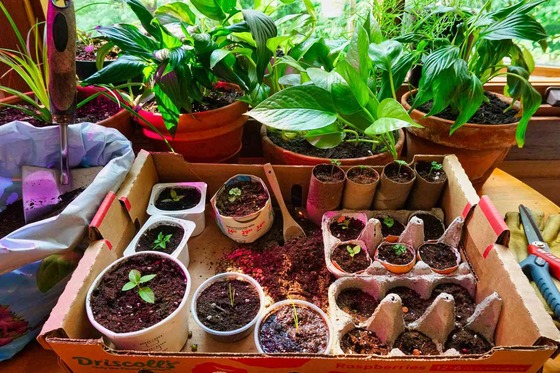 Photo: Seedlings growing in upcycled containers.
Simple tips to help you recycle the right way and stay informed about upcoming changes.
Where to Recycle Old Plant Pots
The easiest way to recycle plastic plant pots in Skagit County is through local garden centers and community reuse programs. Since most curbside recycling programs can’t accept nursery pots and trays, these drop-off options help keep garden plastics growing instead of going to the landfill.
Where to Recycle Plant Pots Locally 🌿
-
The Home Depot
Many Home Depot Garden Centers have collection bins for used plastic nursery pots and trays that may be recycled or reused, but availability and participation can vary by location. Check with your local store first to confirm what they accept.
-
Lowe’s
Many Lowe’s Garden Centers accept plastic planter pots and trays for recycling or reuse, including pots purchased from other stores. However, participation and accepted materials may vary by location, so it’s best to check with your local store first.
-
Skagit County Master Gardener Foundation
Bring your leftover square 1-gallon pots to the Discovery Garden (16650 State Route 536, Mount Vernon). The bin for recycling the square 1-gal pots is located in the parking lot, just north (to the right) of the main entrance. The MGs only need square 1-gallon pots like the ones pictured below. The recycling bin will be available now through fall. Simply put your empty pots into the bin, and the MGs will take care of the rest!
Before You Drop Them Off 🌼
- Shake out soil and rinse pots clean.
- Remove stickers or plant tags when possible.
A quick rinse and a simple drop-off can help keep thousands of plastic pots in circulation for another growing season.
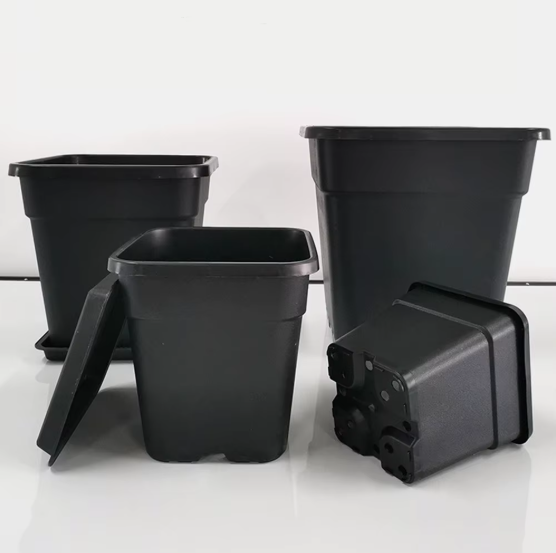 Photo: 1-gallon plastic plant pots are recyclable at various drop off locations in Skagit County.
Organics Tip of the Month
A quick guide to new organics rules, with tips for everyday composting.
Washington Organics Law: What It Means for Skagit
Washington State’s organics management law is expanding statewide, including Skagit County. A key part of the update is the Organics Recycling Collection Area (ORCA) system, which determines where year-round organics collection must be provided to residents and businesses.
ORCA Requirements (What the Map Shows)
By April 1, 2027, jurisdictions in ORCA-designated areas must provide year-round organics service to all single-family residences and businesses producing more than 0.25 cubic yards (about 50 gallons) of organic waste per week. ORCA areas (shown in dark blue on the state map) are based on population and waste generation. Communities with fewer than 25,000 residents or less than 5,000 tons of annual solid waste are not included. “Brink areas” are communities nearing 25,000 residents that may be added in future updates.
💡 Tip: Check your city’s website or the WA ORCA map to see your local status and timeline.
💡 Tip: To learn more about the ORCA requirements and how to use the ORCA map, check out this tutorial video.
What This Means in Skagit County
Under ORCA rules, Mount Vernon and the Mount Vernon Urban Growth Area (UGA) are the only communities in Skagit County that currently meet the population requirements for required organics collection service. Smaller cities like Burlington and Anacortes do not currently meet these requirements, but they may still choose to offer organics service. Smaller towns and rural areas are more likely to use drop-off sites or home composting instead of curbside pickup. Some homes in unincorporated areas may still be able to sign up for organics service through local providers. Services may vary depending on the city or area.
What Goes in the Organics Bin
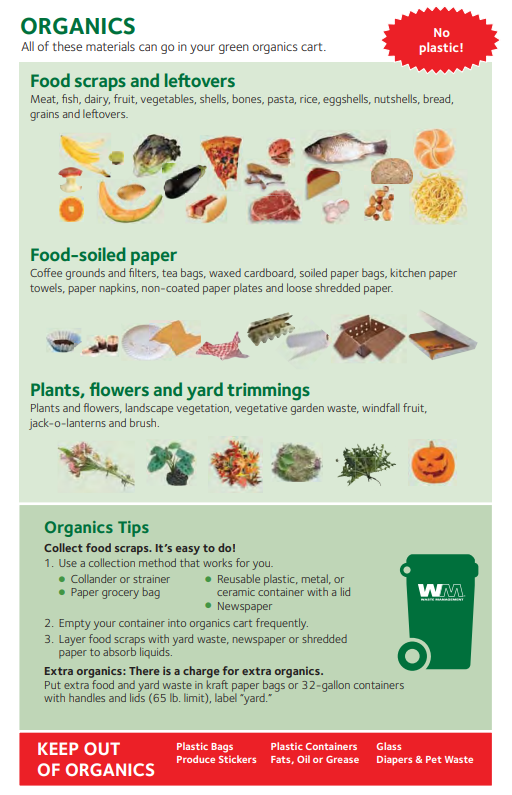
Accepted materials include food scraps (fruit, vegetables, coffee grounds, eggshells), yard waste (leaves, grass clippings, small branches), and paper products like napkins, paper towels, and pizza boxes (unwaxed or food-soiled cardboard).
What NOT to Include
Plastics, glass, metals, recyclables, compostable plastics (unless locally approved), pet waste, and diapers.
💡 Reminder: When in doubt, leave it out—contamination affects the entire compost load.
Tips for Households
Use a small kitchen container for food scraps, follow local guidance on bin liners, and keep your regular pickup schedule. Rural residents may also consider home composting as a supplement or alternative.
Why It Matters
The ORCA system standardizes organics service across Washington, helping reduce landfill waste, cut methane emissions, and support compost production across communities.
Photo: Examples of items accepted in an organics collection bin.
A curated mix of what we’re loving, learning, and paying attention to.
WA Reuses is a statewide initiative that connects communities, businesses, and organizations to repair, reuse, and materials exchange programs across Washington. It helps redirect surplus goods, tools, and materials away from disposal and into reuse networks that support local repair, sharing, and sustainability efforts.
By Anne- Marie Bonneau of Zero Waste Chef
The article shares practical, low-cost ways to reduce plastic use in gardening by rethinking common habits and materials.
Upcoming Events
Recycling Facility Tours, May 29, WM Cascade Recycling Center, Woodinville
Interested in learning more about our state-of-the-art recycling facilities? Request to attend an upcoming recycling facility tour in person or virtually! WM hosts free tours throughout the year.
Skagit Master Gardener and Master Composter, Herta Kurp will give a demonstration on composting, followed by a tour of the Skagit Master Gardener display garden and WA Native Plant Society display garden. Bring a picnic lunch to enjoy after the tour. The garden is open to the public until dusk
Fix-It Days, May 30, 9 am to 2 pm, Anacortes Farmers Market, 611 R Ave, Anacortes
Help avoid throwing out and replacing broken items! Bring them in and the Transition Fidalgo repair team will evaluate and fix your item, if possible. Examples: appliances, tools, lamps, clothing, and more. When in doubt, bring it in and they’ll gladly assess. Donations to Transition Fidalgo community group for the repairs, are welcome.
|