Ask a Master Recycler – Starting Saturdays in April
Skagit County Master Composter Recyclers will be available one Saturday each month from April through October, 10 a.m. to 2 p.m., at the Skagit County Transfer & Recycling Center (14104 Ovenell Rd, Mount Vernon). Stationed in the recycling area staff shed, they’ll answer residents’ questions while you drop off materials at the free recycling drop-off area. Stop by to pick up helpful tips, learn what belongs in your recycling bin, and make your recycling routine easier and more effective!
Upcoming Dates to Ask a Master Recycler:
-
Saturday, April 18
-
Saturday, May 30
-
Saturday, June 13
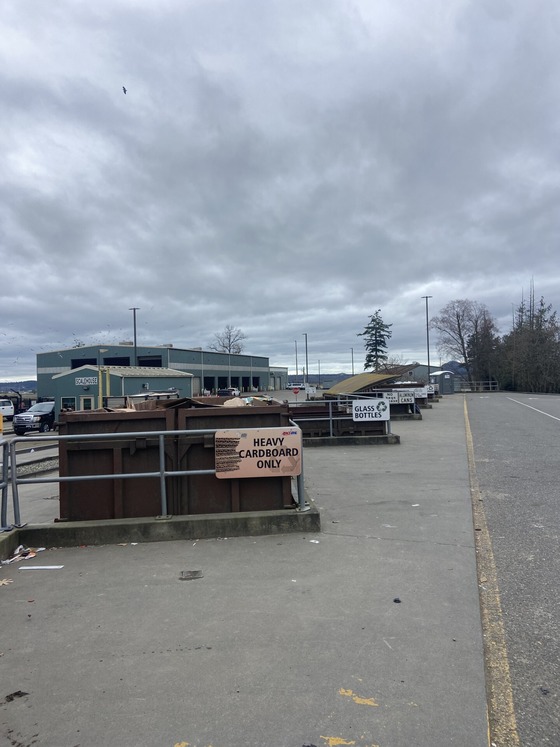
 We offer field trips!
From April through October, the Skagit County Transfer & Recycling Station offers guided tours for school and community groups. Visitors can see firsthand how waste is sorted, recycled, and managed, while learning about recycling and waste reduction. Tours require a minimum of five participants, and groups with children must maintain a 1-to-4 adult-to-child ratio. Tours are offered on Tuesdays and Thursdays only. Please contact Waste Reduction/Recycling Education Specialist Callie Martin at calliem@co.skagit.wa.us to book in advance.
Recycling Tip of the Month
Lucky Numbers: #5 Cups for a Greener St. Patrick’s Day
As luck would have it, this year more types of cups can go into your curbside recycling cart. This includes rigid plastic cold cups and paper coffee cups, making it easier to recycle items you use every day.
But don’t rely on luck alone—there are a few tricky details to watch for. Not all plastic cold cups are the same. The cups that can be recycled are made from #5 polypropylene (PP) plastic. These are often used for thicker, reusable-style cold drink cups from coffee shops and can be sorted and turned into new products.
Some clear plastic cups—like many party cups—may look almost identical, but they are made from #1 polyethylene terephthalate (PETE) plastic. These cups are not accepted in your recycling cart under the new guidelines, even though they may look the same as #5 polypropylene (PP) cups.
Most of the time, we encourage people to recycle based on the shape of the item—like bottles, jugs, and tubs. and jars. But cups are one case where shape can be misleading, so it’s important to check the number instead.
To find it, take a quick look at the bottom of the cup. Most plastic cups have a small symbol with a number inside. Often, this is the recycling symbol made of three arrows in a triangle shape, called the “chasing arrows.” Sometimes, the number may be inside a solid triangle instead—and that means the same thing. This number tells you what type of plastic the cup is made from.
If you see a #5, it’s good to go in your recycling cart. If you see a #1, it should go in the trash. Foam cups made from #6 polystyrene (PS) should also never be recycled in your curbside cart, so be sure to toss them in the trash as well. With a quick check, you can recycle with confidence—no luck needed, just the right number in the triangle!
Knowing where to look and what the numbers mean can make recycling much easier. By putting the right cups in your recycling cart, you help reduce confusion and keep the system working the right way—and that’s a bit of good luck for everyone! 🍀
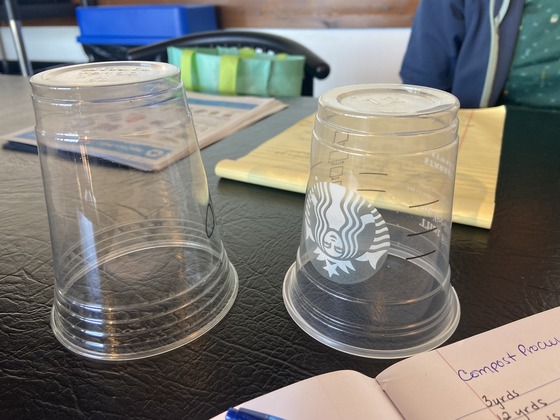 The photo above shows two almost identical plastic cold cups. The taller cup on the left is made from #1 PETE plastic, while the cup on the right is made from #5 PP plastic. The #5 PP cup from the coffee shop is currently the only type of plastic cup accepted in curbside recycling.
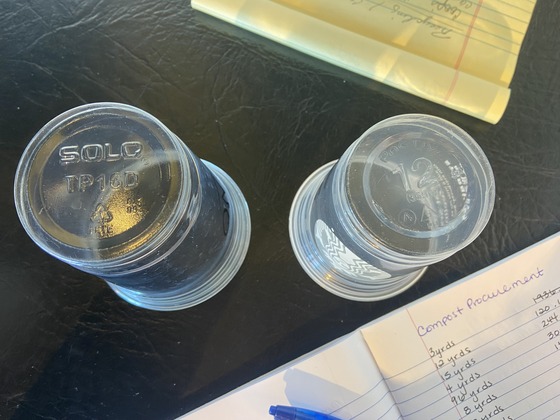
In the photo above, you can see how to identify recyclable cups by the number on the bottom. It’s usually inside the chasing arrows symbol, or sometimes within a small, solid triangle, like the coffee cup on the right.
Composting Tip of the Month
Biosolid Compost: What You Should Know
Biosolid compost is made from treated city wastewater. This means it starts as the solid material left over after water from homes and businesses is cleaned at a wastewater treatment plant. This material, which comes from human waste and other organic sources, is carefully treated to remove harmful bacteria and reduce contaminants. Once safe, it is mixed with yard trimmings and other organic matter and composted into a nutrient-rich soil amendment. Essentially, it’s a way of turning human waste into safe, useful compost that helps gardens and landscapes grow while keeping waste out of landfills. Some consider it a thoughtful and innovative way to handle municipal waste water!
When processed to the highest safety level (Class A), biosolid compost is safe to use in home gardens and landscaping. In Skagit County, the town of La Conner produces Class A biosolid compost at its wastewater facility and offers it to residents, making it an excellent choice for flowerbeds, lawns, and other landscaping projects. However, there are things to keep in mind when using biosolid compost, and it’s always a good idea to consider other compost alternatives if it doesn’t match the type of gardening you plan to do.
Pros:
Cons/Things to Think About:
Best Uses:
-
Lawns, flower gardens, or other non-food landscapes.
-
Soil improvement projects where extra nutrients are helpful.
When to Use Other Compost:
-
Vegetable gardens or fruit crops (unless Class A biosolids are approved for food use)
-
Sensitive soils or areas where you want a fully plant-based product.
For more information, including safe handling, nutrient content, and recommended uses, check out the WSU Extension fact sheet on using biosolids in gardens and landscapes. It’s a great resource for gardeners who want to learn how to use this material safely and effectively.
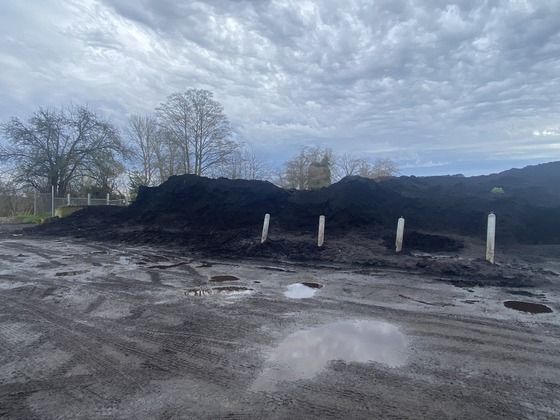 A leprechaun’s black pot-o-gold! 🌈
The La Conner Wastewater Treatment Plant public compost kiosk offers free, self-serve “black gold” compost and is open to the public anytime.
By Eleanor Licata and Evan Robinson, Washington State Department of Ecology
Washington funds landfill projects to capture methane and cut emissions.
Pierce County’s Earth Matters Series offers free virtual and in‑person classes on home composting, waste reduction, and sustainable living. Highlights include Composting Made Easy, and Talking Trash sessions, which provide practical tips for reducing waste at home. Led by environmental education staff and local experts, the series equips participants with the tools and knowledge to build greener habits and a more sustainable lifestyle. Register online to participate virtually.
The 2025 Impact Report shows how food businesses are working together to cut food waste. More unsold food is now being donated or composted, and new tools are helping businesses take action. The report offers practical ideas for reducing food waste across the food system.
By Kaleigh Harrison, E + E Leader for a Sustainable Tomorrow
A new program lets hard-to-recycle oil and automotive packaging be safely collected and recycled, helping producers comply with state recycling laws.
Upcoming Events
Each season, the Solid Waste Division’s Education & Outreach team offers opportunities to learn how to reduce waste. We also highlight workshops and events from local partner organizations focused on repair, reuse, and repurposing. Get your recycling and composting questions answered and take home helpful resources. Join us at a local event or free workshop this month!
Repair x Share Summit: Building a Care Economy
Join repair, reuse, and sharing advocates from around the world for this free virtual summit exploring ways to grow community repair programs and a more circular economy. Sessions will cover topics like repair cafés, tool libraries, reuse hubs, and strategies for expanding repair education and community partnerships.
Date: Thursday, March 19th & Friday, March 20th
Time: 10:00 am - 2:00 p.m.
Place: Virtual, register online
Skagit SICBA Home & Garden Show
Discover home improvement inspiration at the SICBA Home Show at the Skagit County Fairgrounds in Mount Vernon, WA. Explore exhibits from local builders, remodelers, landscapers, and design professionals, learn about the latest products and trends, and connect with experts to help bring your home projects to life.
Date: Friday through Sunday, March 27th - March 29th
Time: Friday, Noon - 6:00 p.m.; Saturday, 10:00 a.m. - 6:00 p.m.; Sunday, 10:00 a.m. - 4:00 p.m.
Place: Skagit County Fairgrounds
Environmental Justice Listening Session – Sustainable Food Management Grants
The Washington State Department of Ecology, with the Washington Center for Sustainable Food Management, is beginning rulemaking for new grants on food waste prevention, rescue, and recovery.
Join the online Environmental Justice Listening Session to share your input—especially if you work with or represent overburdened and food-insecure communities—and help shape how the grants are implemented.
Date: Tuesday, March 31st
Time: 10:30 a.m. - 11:30 a.m.
Place: Virtual, register online
City of Mount Vernon Residential Spring Clean Up-Day
Bring household garbage, recycling, yard waste, and other acceptable items to Mount Vernon’s free Spring Clean‑Up day for city residents. Hosted by the City of Mount Vernon Solid Waste Division, this event helps you responsibly dispose of clutter and common household items at no cost.
Date: Saturday, April 18th
Time: 9:00 a.m. - 4:00 p.m.
Place: City Of Mount Vernon Shop Complex 1010 Shop Lane
City of Anacortes Residential Spring Clean-Up Day
City residents can bring household garbage, furniture, and yard waste to the Anacortes's free Residential Clean-Up day. Appliances are accepted for a fee, and certain items like TVs, tires, propane tanks, and construction debris are not allowed. Verification of residence is required—please bring two forms of ID. Plan to arrive early; gates close promptly at noon.
Date: Saturday, April 18th
Time: 9:00 a.m. - 12:00 p.m.
Place: City of Anacortes Operations Facility, D Avenue and 37th Street
Anacortes Earth Day
Come to downtown Anacortes and take part in two days of joy, beauty, and education as we honor and celebrate our natural environment. The event includes the Luminary Light Parade, the Procession of the Species, the Sustainable Fashion Show, and activity/ educational booths. All activities are free and everyone is welcome!
Date: Friday, April 24th & Saturday April 25th
Time: Friday evening, and all day Saturday
Place: Downtown "Old Town" Anacortes
Master Gardener Plant Faire
Visit the WSU Master Gardeners Plant Fair to find quality garden plants, locally-grown and chosen for success in our Skagit Valley environment. Free admission and parking, plant clinic, dozens of vendors, food, and fun!
Date: Saturday, May 9th
Time: 8:00 a.m. - 2:00 p.m.
Place: Skagit County Fairgrounds. Event parking through south gate.
Recycling Facility Tours
Interested in learning more about our state-of-the-art recycling facilities? Request to attend an upcoming recycling facility tour in person or virtually! WM hosts free tours throughout the year.
Upcoming In-Person Cascade Recycling Center Tours
Date: Friday, May 29, 2026
Place: WM Cascade Recycling Center, Woodinville, WA.
Register here for both virtual and in-person tours of Western Washington Recycling Facility
Composting Demonstration & Discovery Garden Tour
Skagit Master Gardener and Master Composter, Herta Kurp will give a demonstration on composting, followed by a tour of the Skagit Master Gardener display garden and WA Native Plant Society display garden. Bring a picnic lunch to enjoy after the tour. The garden is open to the public until dusk
Date: Saturday, May 30th
Time: 12:00 noon -2:00 p.m.
Place: WSU Discovery Gardens, 16602 WA-536, Mount Vernon
Fix-It Days
Help avoid throwing out and replacing broken items! Bring them in and the Transition Fidalgo repair team will evaluate and fix your item, if possible. Examples: appliances, tools, lamps, clothing, and more. When in doubt, bring it in and they’ll gladly assess. Donations to Transition Fidalgo community group for the repairs, are welcome.
Date: Saturday, May 30th
Time: 9:00 a.m. - 2:00 p.m.
Place: Anacortes Farmer's Market, 611 R Ave, Anacortes, WA 98221, USA
|