|
Photo of the Month
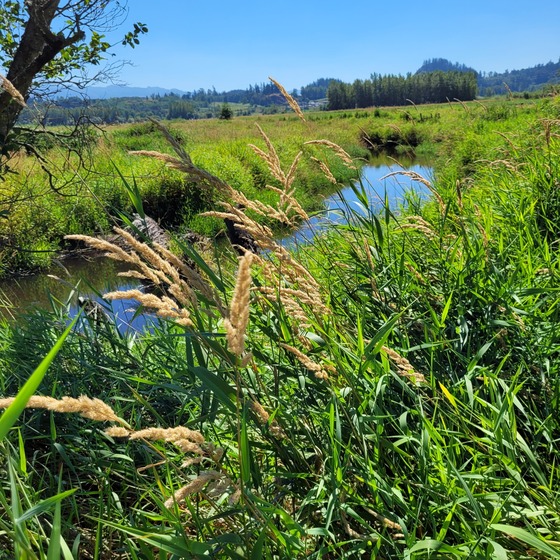
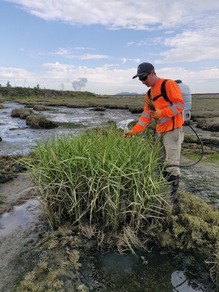
Invasive reed canary grass has this local creek in a chokehold— but there's hope!
Nookachamps Creek, which flows into the Skagit River, is the site of a 17-acre restoration project led by Skagit County. This project was recently covered in the Skagit Valley Herald!
Surrounded by scenic farmland and the beautiful bowl of the Skagit Valley, Nookachamps Creek has become flooded with invasive grasses that have moved in where native plants once grew.
The stream is home to salmon, including Chinook and coho, and trout. Without native plants around it, the creek is losing many of the things that make it good habitat for these fish and other wildlife, as well as safe and clean water for people downstream to use.
Luckily, Skagit County is working with consultant group Riparia Environmental to mow the invasive grass and replace it with native plants.
Native plants, especially trees, provide shade that keep the water the perfect temperature for the animals that live there. Colder water also typically makes it harder for bacteria to grow. Less bacteria upstream means safer water for people to use downstream.
Native plants also have robust root systems that help hold streambanks in place, reducing erosion, flooding, and property damage.
Check out the Skagit Valley Herald's article on this project to learn more AND watch a video of our Restoration Program Manager Emily Derenne explaining the project.
|
|
|
Has spring sprung? It certainly feels like it with the oso berries, daffodils, and crocuses starting to bloom! In February, the Mount Vernon AgWeatherNet station recorded 2.32 inches of rain— about 0.5 inches lower than the historical average. Temperatures were a bit cooler than usual, with an average high of 45.3°F compared to the historical average of 48.0°F.
Our bacteria hotspots this month were scattered across the western portion of Skagit County. In the north, we saw high levels at the North and South Edison Drainages, middle Joe Leary Slough, and Little Indian Slough. In the south, hotspots included upper Carpenter Creek, Sullivan Slough, and Big Ditch/Maddox Creek.
With longer days and warmer weather ahead, now is a great time to check your property for potential pollution sources. Make sure to pick up any pet waste, that yard clippings are composted properly, and that any fertilizers or chemicals are stored to prevent runoff. Small steps now can help protect water quality through the spring and summer.
Curious about bacteria conditions near you? March on over to our Water Quality Map for the latest updates!
 February's water quality results. Red dots represent sites with high levels of fecal bacteria, yellow represents sites with moderate levels of fecal bacteria and green dots represent sites with low fecal bacteria levels. Click on the map to go to the online water quality map, where you can explore sites in Skagit, Whatcom and Snohomish Counties.
|
|
Home Tip of the Month
Doing some spring cleaning in your shed, garage or supply closet? If you see any materials with labels that say "Danger," "Warning," or "Caution," bring them to our Household Hazardous Waste Facility for FREE disposal!
Materials with these warning labels are hazardous waste. Pest and plant killers, paint thinners, car and battery fluids, and some cleaning products are hazardous waste. They contain chemicals that could be dangerous. When these materials are put in the regular trash, they are at risk of leaking out into the environment, where they can poison and even kill people, pets, and wildlife.
To help you deal with these dangerous chemicals properly, Skagit County has the Household Hazardous Waste Facility where we dispose of your hazardous waste for free!
The Household Hazardous Waste Facility can take up to 25 gallons of your home's hazardous waste each month. Find more information on the facility and to see a full list of materials we accept on the Household Hazardous Waste Facility page. Make sure to keep all of your materials separate and clearly labeled when you bring them.

If you have hazardous materials you're still using, make sure they are properly contained. All containers should be labeled and leak-free with a tightly closing lid. Keep all chemicals out of reach of children and animals. Even everyday household cleaning products can contain chemicals that will kill people and pets if ingested.
Don't want to worry about hazardous waste? Here are some tips for reducing the chemicals in your home:
-
Research alternatives: See if you can use a non-toxic or less toxic product to solve your problem. There are often low- or no-chemical alternatives to common hazardous products. For example, natural cleaners using things like vinegar or baking soda can often replace chemical-heavy cleaning products.
-
Buy less: If a hazardous product is the only option for your project, buy only what you will use up in a reasonable amount of time. If you have leftovers you can't use, share them with neighbors and friends.
-
Avoid aerosols: Aerosol is used in many spray cans to propel the product out. The aerosol often runs out before the product, leaving leftover hazardous waste in the can. Cans with any hazardous waste in them need to be brought to the hazardous waste facility.
|
|
|
|
Farm Tip of the Month
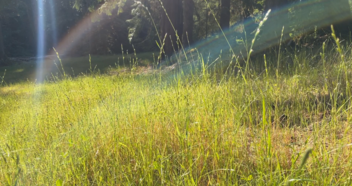
As spring creeps in, your pasture grasses might be looking a little longer, but you'll still have to hold your horses— and your cows!
Grasses should be at least 6 to 8 inches tall before animals are turned out to graze. This is because grass stores its energy in the bottom three inches of the stalk. If this lower three inches is eaten, the grass's growth will be stunted. In short, grazing too early will mean less grass for the rest of the year.
How can you tell when it's time to graze? Once the grass is tall enough (6 to 8 inches) you can do a "pull test" by tugging the grass until it breaks or pulls up from the roots. If the grass pulls up by the roots, it is NOT ready to be grazed on. If it breaks and leaves its bottom portion behind, you can turn your animals out to pasture.
Keeping your pastures healthy can discourage weeds that could be toxic to livestock. Grazing taller grasses can help keep your animals healthy, too, because it keeps them farther from the dirt where they could be exposed to parasites and bacteria. Strong root systems can also help animals in the surrounding environment by reducing erosion and improving water quality.
For more tips and information like this, check out Skagit Conservation District's Farming Resources Page to access resources like their monthly farm planner.
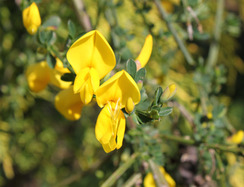
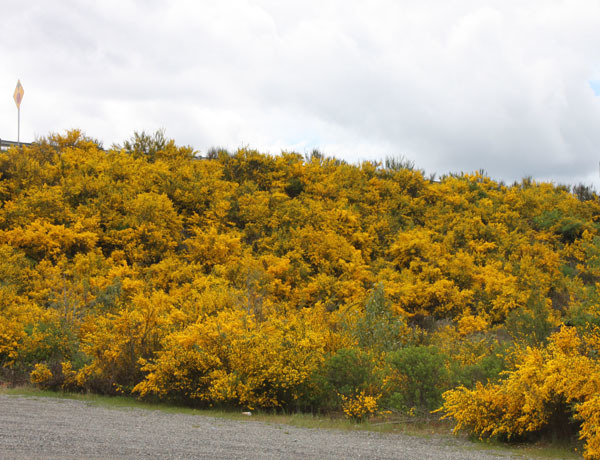
You may know our noxious weed of the month, Scotch broom, from the sides of many Washington highways. Scotch broom is on Washington's quarantine list, meaning it is illegal to sell, buy, transfer, or transport in the state. And for good reason! Scotch broom spreads quickly, is toxic to farm animals, and is extremely flammable— bad news when it grows along roads!
Here's what you need to know about identifying and controlling Scotch broom on your property!
Description: Scotch broom is a shrub with many thin, upright growing branches. These branches are dark green to woody and brown near the base and studded with tiny oval leaves. Leaves near the top of the plant grow on their own, but leaves near the bottom grow in groups of three.
Scotch broom is known for its bright yellow flowers, which start to bloom around April. Like other pea flowers, Scotch broom flowers have a large, hood-like petal over smaller petals. Flowers may also have red and orange on them.
After blooming, the flowers give way to fuzzy pea pods. The pods start out green and turn black as they age.
Toxicity: Scotch broom is toxic and may even be deadly to livestock and horses. It can also be toxic to humans.
Control: You can control small infestations of Scotch broom by hand pulling them. Tools like weed wrenches can be very helpful for removing the plant and root system. Repeated cutting over several years may also help with control, as well as herbicide on lower bark, leaves, and cut stems.
If you'd like more tips on controlling Scotch broom, please reach out to our NEW Noxious Weed Coordinator, Evan Emrick, at (360) 707-1502 evane@co.skagit.wa.us to discuss control options and support.
Learn more about how to identify Scotch broom from the Washington State Noxious Weed Control Board.
Photos courtesy of the Washington State Noxious Weed Control Board.
|
|
|
Program News
We're so excited to introduce Evan Emrick as our NEW Noxious Weed Coordinator!
Evan has been in our Noxious Weed Program for 3 years and was just hired as Noxious Weed Coordinator after serving as a FANTASTIC Noxious Weed Technician.
As Noxious Weed Coordinator, Evan will work with landowners, other organizations, and our seasonal Noxious Weed Aides to protect properties and habitat from invasive species across the County.
|

“I’m a Salish Sea local!” says Evan. “I’ve lived on the Puget Sound my whole life.”
Evan went to school for fisheries, but ended up working more with fish by working in the noxious weeds world.
He began his noxious weed journey here in Skagit with Skagit Fisheries Enchantment Group as a Washington Conservation Corps member in 2017.
In his free time, Evan enjoys boating and fishing the San Juans and playing with his dog Matia.
|
Classes and Events
Gardening with Native Plants, March 15, 11:00 AM - 12:30 PM, Bonnie Rae Park: Are you looking to add a few native plants or redo your whole landscape? The Salal Chapter of the Native Plant Society has ideas and resources for you. Several members will discuss specific projects they've done, including site preparations, challenges, and successes. They will also have a demonstration on the best way to plant new plants.
Backyard Habitats at Padilla Bay (ages 6-9), March 15 and 16, 10:30 AM - 12 PM: Come learn about habitats at Padilla Bay and make one to take home!
Discover Pass Free Day, March 19, State Parks: To celebrate the State Parks' 112th birthday, visitors will not need a Discover Pass to park a vehicle at a Washington state park or on lands managed by the Washington State Department of Natural Resources (DNR) and the Washington Department of Fish and Wildlife (WDFW) on March 19th.
Shore Friendly Contractor Workshop for Whatcom/Skagit, March 21, 2025, 9:30 AM - 4:00 PM, WECU Holly Education Center: The Shore Friendly program of the Northwest Straits Foundation and partners from Whatcom and Skagit County are hosting a FREE workshop for landscape professionals, arborists, drainage specialists, excavation services, and contractors working on marine shoreline properties. International Society of Arboriculture Continuing Education credits (ISA CEUs) will be available for qualified professionals.
Friends of the Salish Sea winter lecture series: Want to learn about underwater adventures, volcanoes, octopuses, and whales? Check out Friends of the Salish Sea's winter lecture series, which runs through March!
Volunteer Opportunities
Marine Biotoxin Monitoring Program Training, Thursday, March 27 (Virtual) 1:00-3:00 PM & Wednesday, April 2 (on the beach) 1:00-3:00PM: Skagit Conservation District is seeking adults 18+ in Skagit County who are interested in public health and the Salish Sea. Volunteers will learn about paralytic shellfish poisoning, diarrhetic shellfish poisoning, and its effect on humans, how to identify our local clams, and about shellfish industry processing in our area. Time commitment for this program includes completing the 2-day training, then approximately 4 to 6 hours a month from mid-April through September (during daytime low tides).
Volunteer with Skagit Land Trust, March 15th and 22nd, April 4th, and May 2nd: Help our friends at Skagit Land Trust restore our environment through plantings and invasive species removal!
Volunteer with Skagit Fisheries Enhancement Group! March 15th, 22nd, and 29th, and April 26th: Help our friends at Skagit Fisheries Enhancement restore ecosystems and protect salmon and other fish!
Padilla Bay Reserve Work Parties, March 20th and April 12th: These volunteer events are a great way to meet new people, learn a new skill, and get outside. Come join us! Work parties will generally focus on planting native plants and removing invasive species.
|
|
Contact Us
For questions or more details, please contact Karen DuBose at kdubose@co.skagit.wa.us or 360-416-1460.
This project has been funded wholly or in part by the United States Environmental Protection Agency under assistance agreement PC01J18001-0 to the Washington Department of Health. The contents of this document do not necessarily reflect the views and policies of the Environmental Protection Agency, nor does mention of trade names or commercial products constitute endorsement or recommendation for use.
|
|
|
|
|