|
Photo of the Month
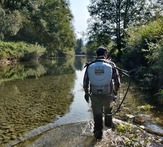
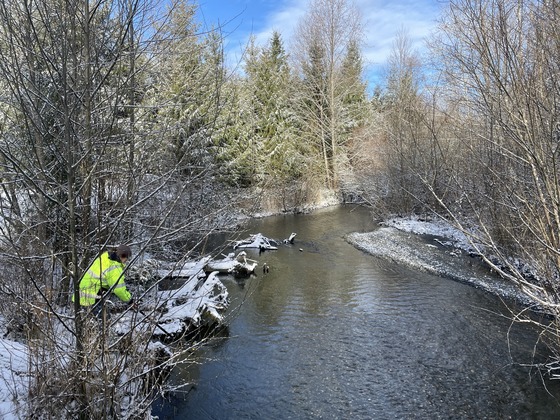 Natural Resources Technician Leanne Ingman samples water from Hansen Creek at Northern State Recreation Area.
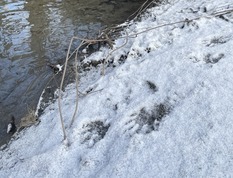
Rain or snow, Skagit County water quality sampling is always a-go! These photos were taken by our water quality team, Emma Santana and Leanne Ingman, on their very chilly sampling route this week.
Every week, our water quality team goes around the County to sample waterways for water quality indicators like bacteria, temperature, oxygen, and clarity. When our sampling reveals pollution in the water, we can find the source and fix it.
To give us a good understanding of water quality changes, we do this sampling year-round.
"Our water quality data is only as accurate as the conditions we sample in," said Emma. "Without sampling in harsh conditions, we risk missing some natural extremes."
Clean water is important for everyone. It means safe recreation in the outdoors, like fishing, swimming, and boating. It helps out our economy by providing safe water for growing crops and shellfish. It creates important habitat for fish and many other animals.
Our sampling program, along with other local organizations' sampling, helps us protect this important resource so we can keep using it for generations.
Read more about current water health in Skagit County in the section below!
|
|
|
|
With February here, love is in the air—but so is the chill of winter! Last month was both a cold and dry one. The Mount Vernon AgWeatherNet station recorded only 1.43 inches of rain in January, which is only about a third of the normal average of 3.91 inches. Temperatures were cooler than usual, too, with an average high of 44.1°F compared to the historical average of 47.21°F.
While not all of us love the cold weather, we do love the low bacteria levels that often come with freezing temperatures. This can be due to multiple factors, including bacteria die-off, reduced recreational and agricultural activities, and many farm animals being sheltered from the cold rather than in open landscapes. However, low bacteria levels aren’t always guaranteed in winter. Our bacteria hotspots this month were Edison Slough and upper Carpenter Creek.
Show our waters some love this February! Simple actions like picking up pet waste, maintaining septic systems, and keeping livestock areas clean can help protect water quality year-round. Check out our Water Quality Map to see how your favorite spots are doing and find ways to make a difference!
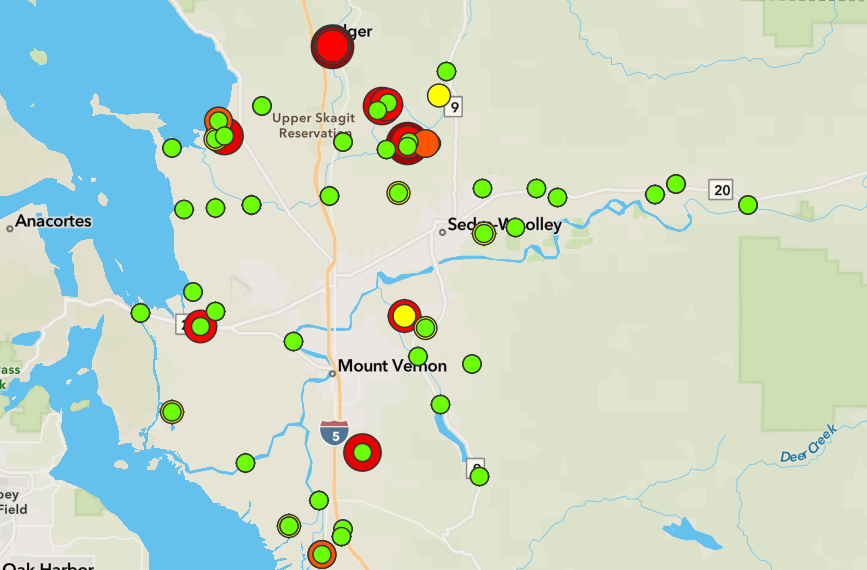 January's water quality results. Holy moly, look at all those green dots showing low bacteria levels! It's beautiful! Click on the map to go to the online water quality map, where you can explore sites in Skagit, Whatcom and Snohomish Counties.
|
|
Home Tip of the Month
This spring, love your garden for more than just its good looks! From landscaping legends to blooming beginners, gardeners across Washington are gardening using native plants. The result? Beautiful yards and gardens that are also easy to maintain, attract pollinators and wildlife, and protect the surrounding environment.
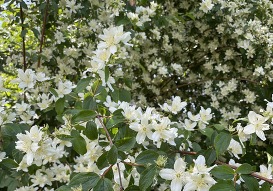
1. Find what fits.
A major benefit of native plants is that they are adapted to our local climate. However, every plant still has its preferences. Take a close look at your yard. Where is there shade or sun? Where is the ground drier or damper? Keep these things in mind as you plan your perfect garden.
Tip: Check out Skagit Conservation District's Native Plant Page or our Native Plants List to learn more about what conditions certain plants will do best in!
|
2. Take advantage of local plant sales.
'Tis the season for plant sales! There are several plant sales in the area where you'll be able to find native plants to fill your garden. Check out the Skagit Conservation District's Native Plant Sale for good prices on lovely native plants. WSU Master Gardeners Plant Fair (May 10th) and visits to local nurseries are also great opportunities to check out some beautiful native plants.
3. Know what NOT to grow.
Some common garden plants have a dirty secret— They are actually invasive weeds! As you're getting new plants, check the Washington State Noxious Weed Control Board website to check if they are noxious weeds before buying them.
If you love how your garden looks but learn that some of your plants are noxious weeds, you can browse for similar looking alternatives with the Noxious Weed Control Board's Garden Wise plant lists.
|
|

Farm Tip of the Month
Move over Valentine's Day— it's time for Fencing February!
Fields don't need cards or gifts of chocolates. The best way to your pasture's heart? Fencing!
Right now, while your animals are (or should be) off of your pastures, is a great time to straighten that leaning panel, fix that broken rail, or stabilize that wobbly post. Set your fencing up for success now to avoid bigger problems later.
Now is also a good time to start planning and setting up a rotational grazing system.
Rotational grazing is beneficial to your animals and your pastures. Rotational grazing means dividing your pasture into sections using fencing and letting animals graze one section at a time. This way, pastures are evenly grazed, but not overgrazed, and each section has a chance to rest and regrow.
Here are some tips for successful pasture rotation:
- Wait until the grass in your first pasture has reached 6 to 8 inches before you start grazing.
- Rotate your animals to the next pasture when they have grazed the grass down to 3 inches.
- Try to divide pastures to allow each section to rest at least 30 days before grazing it again. Temporary fencing is a great way to trial run pasture sizes.
- Use this pasture stocking calculator to determine how many acres you'll need for each animal.
- Once you have rotated your animals through all available pastures, rotate back to the first pasture. If the grass has not grown back to 6 to 8 inches, feed animals in a confinement area until the grass has reached the proper height.
Visit Skagit Conservation District's Farming Resources page and WSU's Pasture Grazing Management page to learn more about pasture health and confinement areas, as well as more farming tips and knowledge! Also, check out Tractor Supply's Ultimate Guide to Farm Fencing.
|
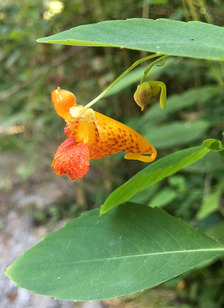
Whatever your sweetheart wants this Valentine's Day, this jewel is NOT on the list.
Spotted jewelweed (Impatiens capensis), also known as spotted touch-me-not, is an invasive plant that will break your (garden's) heart. It spreads quickly in a dense mat, suffocating other plants, whether they're in your garden or out in fragile nearby ecosystems.
Description: Spotted jewelweed grows 2 to 5 feet tall in dense mats. It has green or red stems that stand upright and sometimes split into multiple branches. Its leaves are round or egg shaped and have scalloped edges. Leaves grow opposite from each other across the stem.
Spotted jewelweed flowers are bright orange with tiny red spots. They are about 1 inch in size and are shaped like a trumpet with rounded petals at the end— the top petals look like a hood over the lower two.
Please note that spotted jewelweed looks very similar to several native Impatiens species.
Toxicity: Spotted jewelweed can irritate your digestive tract.
Control: You can pull spotted jewelweed by hand. Make sure to remove all of the roots from the soil. If there are no seedpods on the plant, you can leave the plants to dry in the sun. If there are seed pods, throw the plants away in a garbage bag.
Please take care that you are not harming native Impatiens species when controlling spotted jewelweed.
Please visit the Washington State Noxious Weed Control Board's page on spotted jewelweed for more information on identifying and controlling this invasive plant.
Photos courtesy of the Washington State Noxious Weed Control Board.
|

|
|
Program News
Skagit County is hiring Noxious Weed Aides for the summer of 2025!
Weed aides assist the Skagit County Noxious Weed Board in controlling invasive knotweed and spartina species that threaten our riparian and shoreline habitats. This position is responsible for controlling these invasive species using Integrated Pest Management Strategies including the use of herbicide. This position will also gain experience collecting and handling data.
Pay for this position starts at $21.06/ hour. Work typically starts in June. Learn more and apply online.
|
Classes and Events
Skagit Conservation District Native Plant Sale: Skagit Conservation District's Annual Native Plant Sale is ON! Orders on a huge array of native plants have begun, and plants are going fast!
Online Speaker Series- Theresa Trebon on environmental change in Skagit County, February 13, 6pm to 7:30pm: Historian Theresa L. Trebon will explore environmental changes in the Skagit from 1850 to 1950 and the impacts these changes set in motion. This online talk is the first in a new series of speaker events hosted by Skagit Land Trust.
Salish Sea Stewards Volunteer Training, Feb. 18 through Apr. 29, Tuesdays 1pm to 5 pm: The Salish Sea Stewards Program offers 40 hours of FREE community science training. In return, participants commit 40 hours of volunteer service in protecting the marine environment over the course of one year. Learn from many local experts on a variety of topics impacting the Salish Sea. Limited space left, apply now!
Skagit Fisheries Enhancement Group Winter Education Workshop, February 20, 10am to 12pm: Skagit Fisheries Enhancement Group needs volunteers to help us with classroom visits and field trips and will be training volunteers to help us with their education programs. Both the classroom and field trip portions of this program are a great way to engage local kids in invaluable watershed education!
Whatcom Farm Expo, March 1, 9am to 2pm, WECU Expo Building, Northwest Washington Fairgrounds: Join Whatcom Conservation District at their 9th annual Farm Expo! Wander and learn about all the resources available to you, from local organizations to businesses and community groups. Plus, attend local speakers' presentations on topics related to all aspects of farming.
Friends of the Salish Sea winter lecture series: Want to learn about underwater adventures, volcanoes, octopuses, and whales? Check out Friends of the Salish Sea's winter lecture series, which runs through March!
Volunteer Opportunities
Volunteer with Skagit Land Trust: Help our friends at Skagit Land Trust restore our environment through plantings and invasive species removal! See their volunteer event calendar for more details.
Volunteer with Skagit Fisheries Enhancement Group!: Help our friends at Skagit Fisheries Enhancement restore ecosystems and protect salmon and other fish! See their volunteer event calendar for more details.
|
|
Contact Us
For questions or more details, please contact Karen DuBose at kdubose@co.skagit.wa.us or 360-416-1460.
This project has been funded wholly or in part by the United States Environmental Protection Agency under assistance agreement PC01J18001-0 to the Washington Department of Health. The contents of this document do not necessarily reflect the views and policies of the Environmental Protection Agency, nor does mention of trade names or commercial products constitute endorsement or recommendation for use.
|
|
|
|
|