|
Photo of the Month
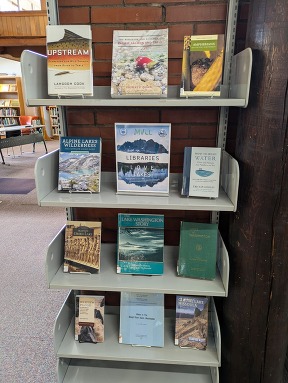
 At Mount Vernon City Library, lake-focused books are being displayed in both the children's and adult's areas. (Photo credit: Mount Vernon City Library)
What do libraries and lakes have in common? They both provide essential services for our community!
This July, for the first time, Skagit County Natural Resources is participating in Libraries Love Lakes, an outreach program partnering libraries and scientists to share the importance of lakes.
Lakes can be great places for wholesome outdoor fun— picnics, yard games, swimming, fishing, boating, and one of our personal favorites, reading a book by the water!
Lakes also provide habitat for some very important species. Salmon often lay their eggs in lakes, where their fragile young will start their lives. Beavers, ecosystem engineers who create habitat for other wildlife, also rely on lakes.
Unfortunately, many lakes in Skagit County experience algae blooms in the summer. Algae blooms are overgrowths of algae that happen when there are extra nutrients in the water. These extra nutrients often come from fertilizer, unscooped dog poop, and leaking septic systems.
Algae blooms are sometimes toxic to people and pets, so the cities and County have to close beaches until the algae is gone. The algae also reduces oxygen in the water, killing fish.
Want to learn more about lakes and algae blooms? Visit Mount Vernon City Library and Anacortes Public Library to see book collections and informational materials all about lakes!
|
|
|
|
After a cool and rainy June, it looks like the summer heat and sunshine are here to stay! The max average temperature in June at the Mount Vernon AgWeatherNet station was 57.6°F, a bit cooler than normal by about 1.3°F. We also had more rain than expected with a total of 2.6 inches, which is about 0.9 inches more the June average.
One storm this month led to a temporary shellfish harvesting closure in Samish Bay. The timing of this storm allowed us to collect samples along Samish River and its tributaries to pinpoint pollution sources. We found very high bacteria levels across the watershed, especially around the middle Samish River along Prairie Road. Late spring storms often lead to high bacteria levels because animals are out to pasture and people are out recreating.
Our routine monitoring this month revealed high bacteria levels at Lower Thomas Creek, the North Edison Drainage, and Big Indian Slough. We also found an uncommon hotspot at Upper Coal Creek. Normally, bacteria levels here are low, but summer wildlife activity– like coyotes feasting on fruit and leaving droppings by the stream– likely caused the spike. The County and our partners are working to identify and correct any sources of pollution that can be controlled. As we dive into summer fun, let’s do our part to prevent pollution by picking up after ourselves and our pets!
Curious for more details? Check out our Water Quality Map for the full scoop!
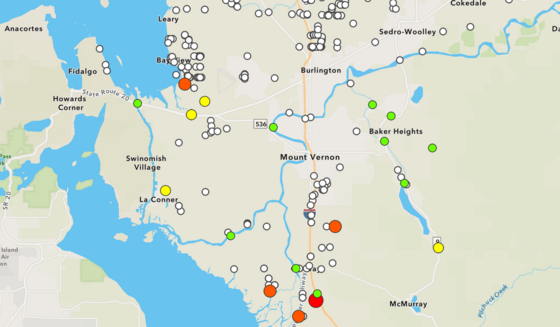 July's water quality results. Red dots represent sites with high levels of fecal bacteria, yellow represents sites with moderate levels of fecal bacteria and green dots represent sites with low fecal bacteria levels. Click on the map to go to the online water quality map, where you can explore sites in Skagit, Whatcom and Snohomish Counties.
|
|
Home Tip of the Month
Commercial car washes boast high water pressure, quality suds, and both DIY and drive-through options. But did you know that they also help protect our water?

Nothing says summer like a car wash on a hot day— but keep that hose coiled and take your car to a commercial car wash, instead.
What's wrong with washing at home?
When you wash your car in your driveway or the street, the water you use picks up everything that comes off your car— dirt, grease, road grime, and the soap you're using to wash— and carries it to the storm drain. Even biodegradable soaps are pollution. Our storm drains flow directly into rivers, streams, lakes, and Puget Sound. The water in storm drains is not treated before it reaches these waterways. That means that all that gunk and soap ends up polluting our water. This pollution can harm wild animals, pets, and even people!
What makes commercial car washes different?
Commercial car washes keep pollutants out of our water. When you wash your car at a commercial car wash, the water you use flows into a special treatment system. The system removes pollution from the car wash water before it goes into the sewer system. In the sewer system it gets even more treatment before going out into our waterways.
I can't go to a commercial car wash. What should I do?
If you can't make it to the car wash, there's a better way to wash your car than spraying it down in the driveway! Parking your car on your lawn or another grassy area to wash it will give the dirty water a chance to filter through grass, roots, and soil before it reaches waterways. This will help remove some of the pollutants.
Only rain down the drain!
Only clean water should go down storm drains. Remember: the water that goes into storm drains flows directly into the waters we play in, fish in, and eat shellfish from.
Learn more about keeping our stormwater clean at our Stormwater Management Program page.
|
|
|
Farm Tip of the Month
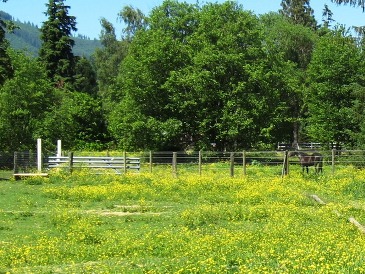
WEE'D hate to see your pasture overtaken by unwanted plants this summer! Protect your forage and livestock by controlling your weeds!
Noxious weeds are bad for both your pastures and your animals. They push out grasses and other desirable, high nutrient plants, reducing forage. Several common noxious weeds are also deadly to animals. You'll want to keep an eye out for tansy ragwort, poison hemlock, bull thistle, and Scotch broom especially. Make sure to pull weeds before they can go to seed and spread. Take a look at this guide to learn more about common pasture weeds that can harm your animals.
The best way to beat weeds is with healthy, productive grasses. This means keeping up with— you guessed it!— good ol' pasture management! Bare patches and old, low-energy grasses leave openings for noxious weeds to get a foothold. Make sure your grasses stay between 4 and 8 inches tall. This is where they are healthiest, most productive, and hold the most nutrients for your animals!
Check out Skagit Conservation District's Farming Resources page to learn more about pasture management techniques to keep your pastures healthy.
Bonus farm tip: Learn about pasture productivity, manure management, and heavy use areas at Skagit Conservation District's upcoming pasture walk on July 25th! Visit a local property to see what they're doing to keep their animals happy and their property working for them. Plus, can learn about how Skagit Conservation District can help pay for projects like building manure bins. Learn more about the pasture walk and RSVP online.
|
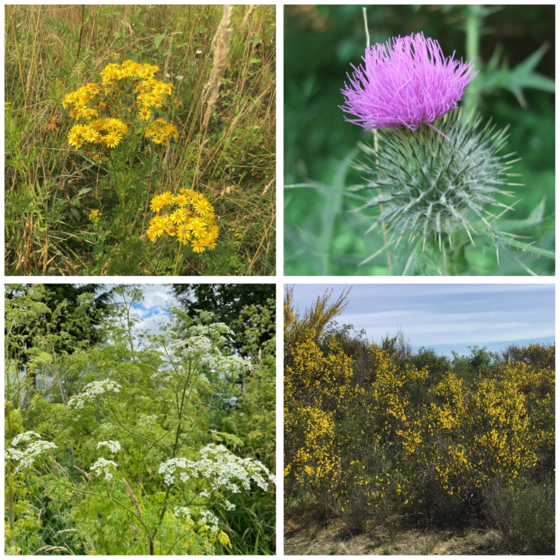 Tansy ragwort (top left), bull thistle (top right), poison hemlock (bottom left) and Scotch broom (bottom right) are all dangerous to livestock and can cause sickness or death if eaten.
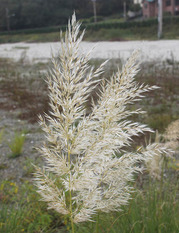
Like many other invasive plants, pampas grass, our noxious weed of the month, is a garden escapee. Starting in California, this once-ornamental grass has since spread into Washington. It can establish itself and thrive in a range of environments, making it particularly harmful to native plants and ecosystems.
Think you might have this plant in your yard, or have seen it around? Here's how you can identify it and control it!:
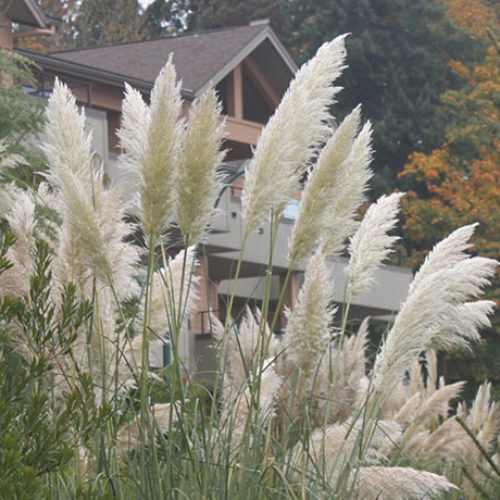
Description: The most noticeable feature of pampas grass is its showy, feathery plumes. This plumage can be 1 to 3 feet long and is typically white to light gold. It is actually made up of the flowers, and eventually the seeds, of the plant. Flowering heads sit atop stiff stems that grow up to 13 feet tall.
These feather duster lookalikes grow out of clumps of narrow, yellow to blue-green leaf blades, which can grow over 6 feet long. The leaves are exceptionally sharp, so watch out. They also have a distinct ridge running along their centers.
Toxicity: Pampas grass is not known to be toxic.
Control: The best way to control pampas grass? Don't plant it in the first place! Pampas grass is still sold in some nurseries and garden stores, so be conscious of what you're buying.
Already have pampas grass in your garden? There's no time like the present to remove it! Be careful of the sharp leaves when working with pampas grass. Always wear protective gloves to avoid getting cut. Cut and bag seed heads first, to stop seeds from being spread. Then, you can pull or dig out the rest of the plant. Make sure you get out at least the top section of the roots.
As you pull out the plant, do your best not to disturb soil around it. Disturbances could encourage buried pampas grass seeds to grow. Instead, seed bare ground with competitive, non-invasive plants.
If you are experiencing a larger infestation, please reach out to our Noxious Weed Coordinator, Madelyn Loy, at (360) 416-1467 or mloy@co.skagit.wa.us to discuss control options and support.
Learn more about pampas grass from the Washington State Noxious Weed Control Board.
Photos courtesy of the Washington State Noxious Weed Control Board.
|
 |
|
|
 |
|
Program News
Trailhead Poop-Ups!
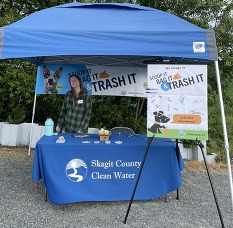
This summer we'll be tabling at local trailheads to talk to dog owners about always scooping up their dogs' poop on the trail and making sure it gets to the trashcan. We'll be giving out poop bags and other useful tools, plus cute stickers! Keep your eye out for our tent and learn more about why we do what we do at www.scoop-poop.org!
|
Classes and Events
Skagit Fisheries Trivia Night, July 10, 6:15 to 8 PM, District Brewing: Show off your fish knowledge at the Skagit Fisheries Enhancement Group Trivia Night! $1 from each pint sold will go towards supporting the amazing work Skagit Fisheries does! Check out this event on the Skagit Fisheries webpage!
Manure Management Mastery, July 25, 6 PM to 7:30 PM: Join Skagit Conservation District's manure-focused pasture walk to discover innovative ways to manage manure. You'll also learn how the Conservation District can help finance your waste storage facility. RSVP on the Skagit Conservation District website.
Stormwater Facilities Management Workshop, July 29, 5:30 PM to 8:30 PM: Join Skagit Conservation District's workshop on how to maintain stormwater facilities. Are you part of an HOA with a stormwater pond, or do you own property with stormwater facilities? This workshop is for you! RSVP on the Skagit Conservation District website.
Skagit County Fair, August 8 to August 11: Don't miss the fair this summer! Our noxious weed crew will be there to tell you all about the invasive plants that are affecting the County. Learn more at the Skagit County Fair webpage.
Fidalgo Bay Day! August 24, 11 AM to 3 PM: Come celebrate the wonders of our estuaries at Fidalgo Bay Day! Enjoy games, crafts, and educational activities for the whole family, all for FREE! Plus, experience local chowder and seafood. Learn more at the Fidalgo Bay Day webpage.
Western Washington Agricultural Association Farm Festival, August 24, 10 AM to 1 PM: A fun-filled day celebrating agriculture, good food, cool tractors, and all things farm-related! Reserve a spot for the Farm Festival today!
Citizen science trainings for noxious weed detection: Check out options for Pacific Northwest Invasive Plant Council's citizen science trainings to help detect and report invasive plants!
Learning from tree to sea!: Check out Padilla Bay National Estuarine Research Reserve's list of events for this season!
Vessel Turn-In Recycling Day, end of July: Do you have a boat you need to get rid of? Turn it in for FREE at the Skagit County Vessel Turn-In Recyling Day this July! Learn more and apply at their website.
Volunteer Opportunities
Nursery watering for Skagit Fisheries Enhancement Group: Help our friends at Skagit Fisheries Enhancement Group care for native plants that will help create habitat. See their volunteer event calendar for more details.
Volunteer with Skagit Land Trust: Help our friends at Skagit Land Trust restore our environment through plantings and invasive species removal! See their volunteer event calendar for more details.
|
|
Contact Us
For questions or more details, please contact Karen DuBose at kdubose@co.skagit.wa.us or 360-416-1460.
This project has been funded wholly or in part by the United States Environmental Protection Agency under assistance agreement PC01J18001-0 to the Washington Department of Health. The contents of this document do not necessarily reflect the views and policies of the Environmental Protection Agency, nor does mention of trade names or commercial products constitute endorsement or recommendation for use.
|
|
|
|
|