 You may have noticed staff in fluorescent vests perched in the recycling area at our Ovenell Rd. Recycling & Transfer Station. Throughout May, staffers collected data for the Secure Your Load for Safer Roads campaign.
Unsecured loads cause over 300 crashes in Washington every year and cause up to 40% of roadside litter. Every year, more than 26 million pounds of litter is tossed or blown onto Washington’s roadways and interchanges due to unsecured loads and debris inside of personal vehicles. The Washington State Department of Ecology's 2022 litter study shows there is an average of 73,580 pieces of litter (1,579 pounds) per mile, per year on Washington’s interstate highways. Local roads are the least littered and still have 18,051 pieces of litter (143 pounds) per mile, per year. While 2 out of 3 drivers always secure their loads, we still need everyone's help.
The results from the data collected in May showed that 40% of all loads entering Skagit County solid waste facilities are unsecured. To reduce this percentage, and honor June as Secure Your Load month in Washington State, Skagit County Solid Waste Division will host two, pop-up Cargo Net Giveaway Days in June. The giveaway will include a free cargo net or a strap, a Keep WA Litter Free window decal, and an informational brochure with tips about how to effectively secure a load. Participating customers agree to follow-up through a post-campaign survey about whether the giveaway helped them to make the choice to secure their load more often. In July, Solid Waste staff will collect post-campaign data to track the success of the outreach campaign and accompanying giveaway days.
Be sure to listen in on the local radio station, KSVR 91.7 FM for the Secure Your Load for Safer Roads PSA, circulating throughout the month of June.
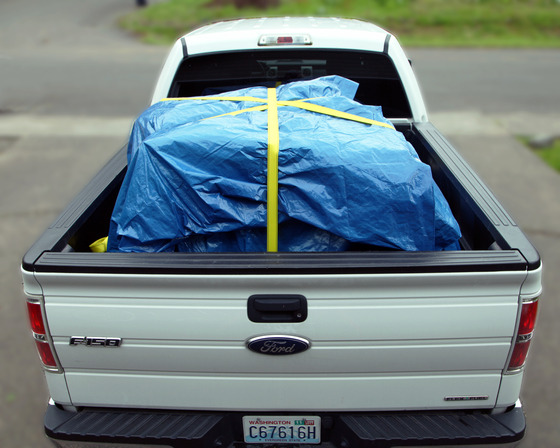 Photo of a properly secured load using a tarp and tie-down straps.
There is no "away" photo
Each month we will post a photo of something we saw that landed on our tipping floor, with the hope of provoking thought about how the item could have been disposed of differently.
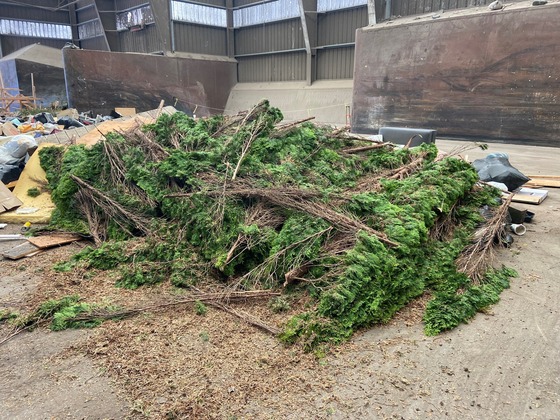 Yard waste & organics
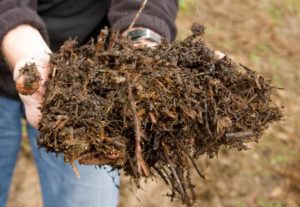
Landscaping trees dumped onto the tipping floor this month that could have been composted right next door at Skagit Soils, our local, industrial composting facility. Disposing of yard waste at the Skagit County Recycling &Transfer Station s minimum $20 dollar fee to Skagit Soils minimum $5.00! Green waste and organics that enter the landfill through the solid waste system do not have the chance to decay in the same way they would when composted. In fact, organics entering the landfill release methane gas as they breakdown. Methane is a powerful greenhouse gas, and is the second-largest contributor to climate warming after carbon dioxide (CO2). One of the easiest ways you can slow climate warming is by keeping green waste and all organics out of the landfill.
Don't Bag Your Recyclables
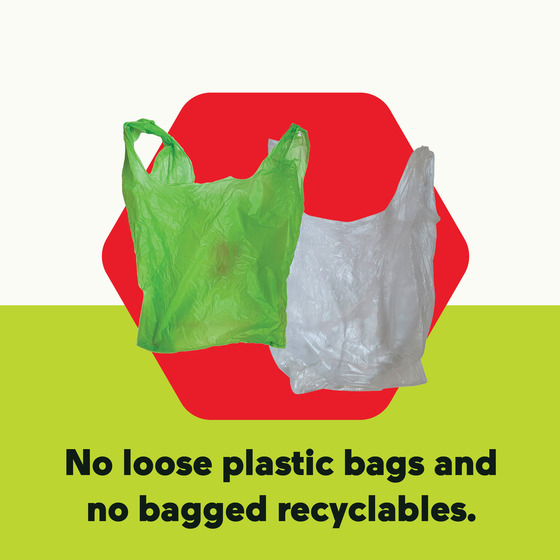
Putting your recyclables in plastic bags causes problems. The recyclables inside can’t get properly sorted, and the bags can get tangled in the machinery. As a result, bagged recyclables are pulled from the sorting lines by workers and sent to the landfill. It’s better to keep your recyclables loose in your bin.
Save Water, Combat Drought with the Help of Compost
We aren't kidding when we say compost has superpowers. When added to soil, compost steps in as a superhero to save water. As we enter into the heart of summer, Skagit County faces drought. Here are four ways compost sustains the watershed in your living landscape:
According to Michigan State University, when you increase the organic matter in your soil with compost by just one percent, you increase the volume of water that soil can hold to three quarts per cubic foot of soil. To put it simply, the organic matter holds a lot of water!
A hundred pounds of soil with a pound of compost mixed in will hold an additional 33 pounds (4 gallons) of water. Take the organic content to five pounds, and that hundred pounds of soil will hold nearly two hundred pounds (25 gallons) of water! WOW! Soils that hold a minimum of 5% organic matter can save 75,000-100,000 gallons of water per acre.
In a 2000 study, it was found that increasing the water-holding capacity of your native soil by adding compost helped gardens, shrubs, lawns, trees, and crops during summer droughts and reduced watering.
While this is essential information for farmers and large-scale agricultural areas, it’s also crucial for backyard gardeners like you. Just add compost to your soil and that organic material will help retain water at your plant’s roots, allowing them to thrive with less water, lessen the impact of our current drought, and keep money on your pocket by lowering your water utility bill.
Go ahead, do it! Add compost to your flower beds and gardens, as well as to your soil before laying sod or planting trees and shrubs. It even works to add a top dressing of compost to your existing lawn too.
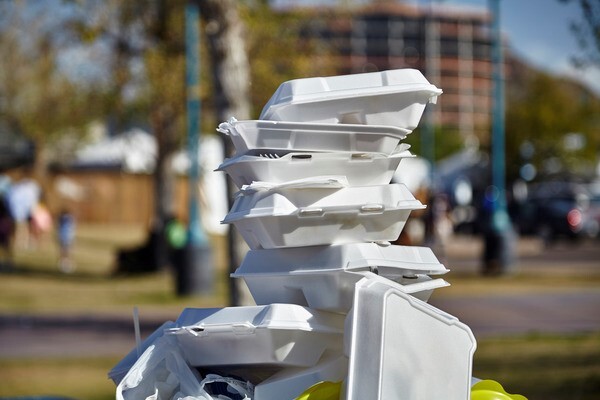 The Washington State Expanded Polystyrene Ban began June 1, 2024
As of Saturday June 1, 2024 the sale and distribution of expanded polystyrene (EPS) food service products such as plates, bowls, trays, cups, clamshell style containers, portable coolers, and packing peanuts are all now banned in Washington state.
The first phase of this ban began June 1, 2023 by banning EPS packing peanuts. As of June 1, 2024 EPS food service products and portable coolers will also join the list of banned items.
Items that are excepted from the list of banned products include:
- Block EPS packaging material,
- Trays and packaging for raw, uncooked, or butchered meat, fish, poultry, or seafood, vegetables, fruit,
- Egg cartons,
- EPS containers for drugs, medical devices, and biological materials or shipping perishable commodities from a wholesale or retail establishment.
This ban applies to any person, firm, association, partnership, corporation, government entity, organization, or joint venture that sells or distributes the EPS products covered by this ban.
To learn more about Washington's EPS Ban, visit Ecology's EPS Ban webpage.
Upcoming Events
Each season the Solid Waste Division's Education & Outreach team offers chances to learn methods for making less garbage. We'll also highlight other local events focused on reducing waste, repair and repurposing materials. Get your recycling, composting, and waste reduction questions answered, and take home materials to help you succeed. Catch us this month at a local event or free workshop near you!
Worms at Work Program at the Library
Do you like looking for worms in the garden? Have you ever made friends with a rollie poly bug? Do you know that these creatures can help people recycle? Join us for a for a fun children’s library program to learn how the work of worms (and their earth-dwelling friends) help us recycle food scraps back into dirt. Through stories, songs, and games, Callie Martin, Waste Reduction/Recycling Educator for Skagit County will be at the library to teach us how we can use red worms to recycle food scraps from our very own kitchens.
Wednesday, June 26th
La Conner/Swinomish Library
3:00 pm
Wednesday, July 24th
Burlington Public Library - Maiben Park
10:00 am
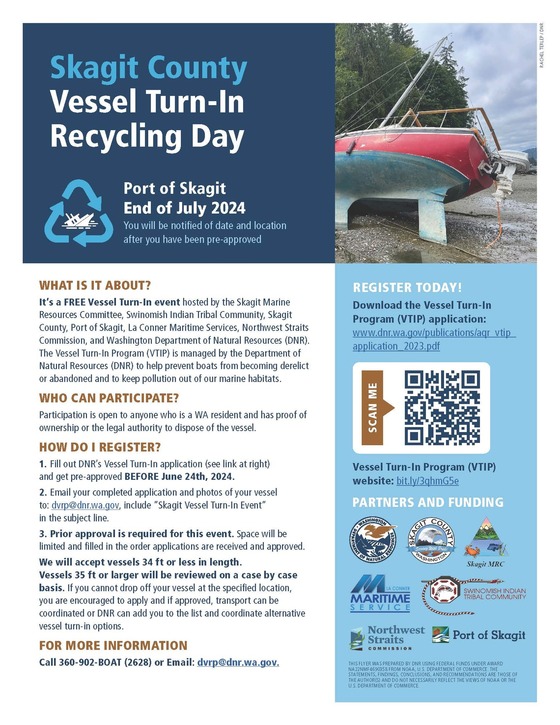
Vessel Turn-In Recycling Day
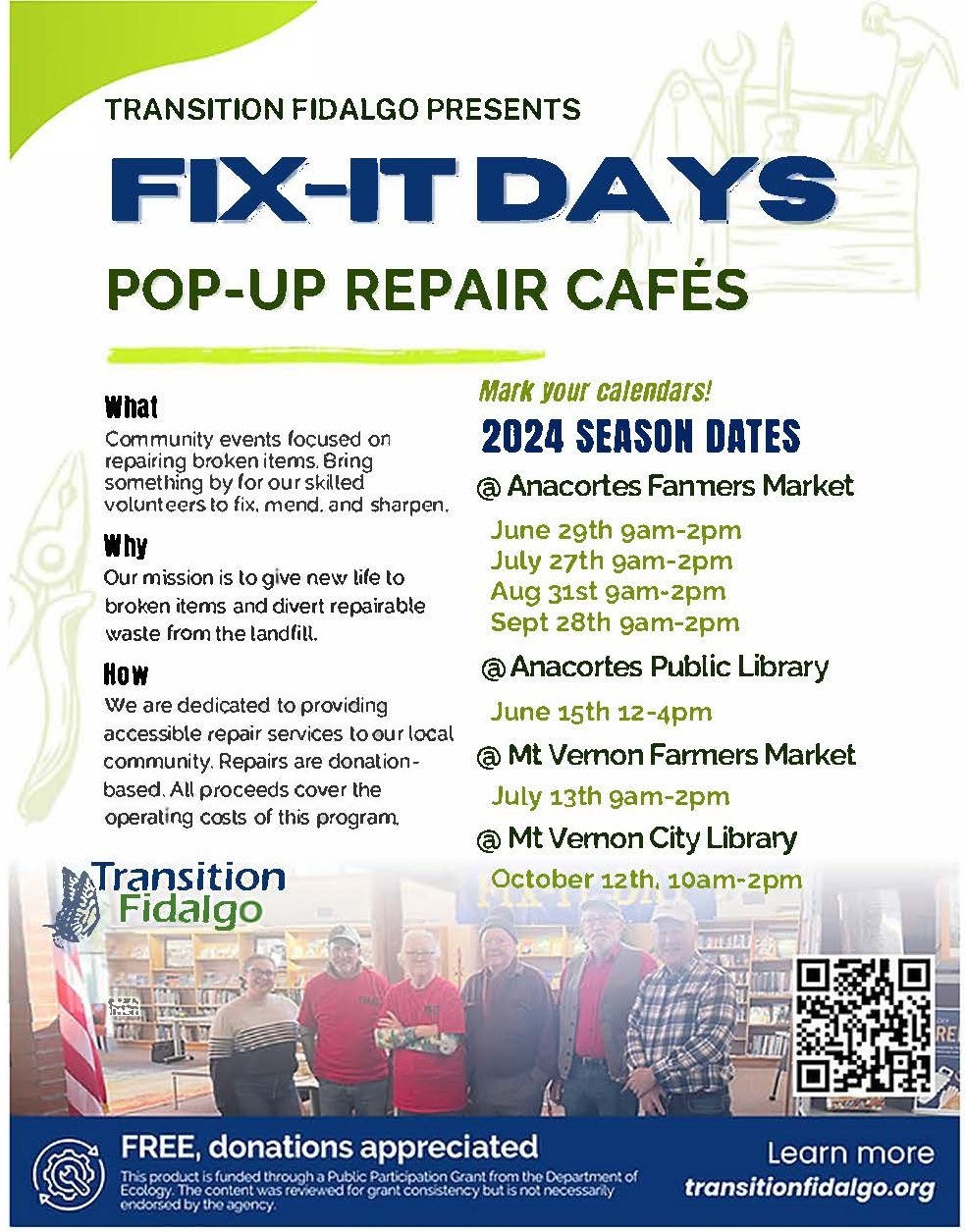
 Fix It Days
|