Beyond the Bin
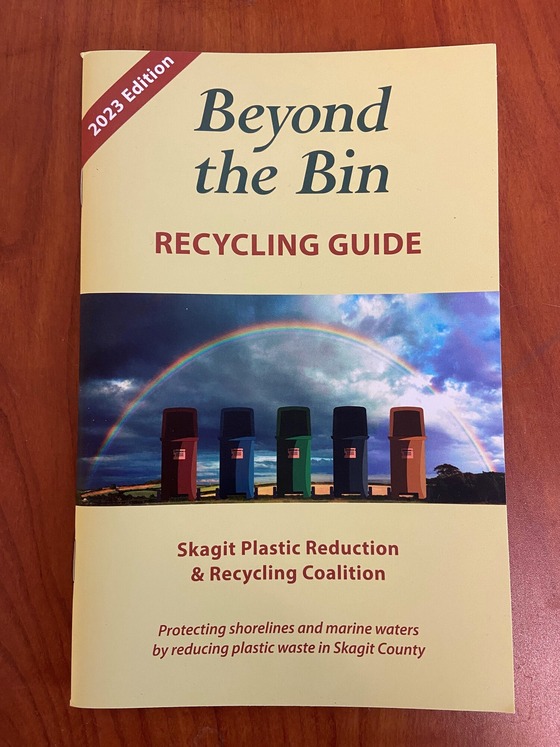
Ever wish you could recycle those old electronics, packing materials, paint, Styrofoam, rubber, tires, lightbulbs, batteries, chemicals, cell phones, eyeglasses, hair (seriously), or used cooking oil? Look no further than the updated Beyond the Bin Recycling Guide. This booklet has done much of the work, compiling scores of places to recycle those “hard to recycle” items or find a home for things that have outlived their usefulness to you.
The first edition of Beyond the Bin Recycling Guide was published in 2021 by Friends of Skagit Beaches - in partnership with Skagit County Solid Waste Division and the Skagit Marine Resource Committee's Salish Sea Stewards volunteer program. The guide was fully updated in 2023. You can view the updated version online through Friends of Skagit Beaches website, which offers active hyperlinks to URLs listed in the booklet. For the best online experience, select "two-page view" from the popup window menu (three dots) at the top right corner of the page.
You can pick up a paper copy at the Skagit County Transfer & Recycling Station, or at the Skagit County Continental Building. The booklets are also available to residents by mail.
There is no "away" photo
Each month we will post a photo of something we saw that landed on our tipping floor, with the hope of provoking thought about how the item could have been disposed of differently.
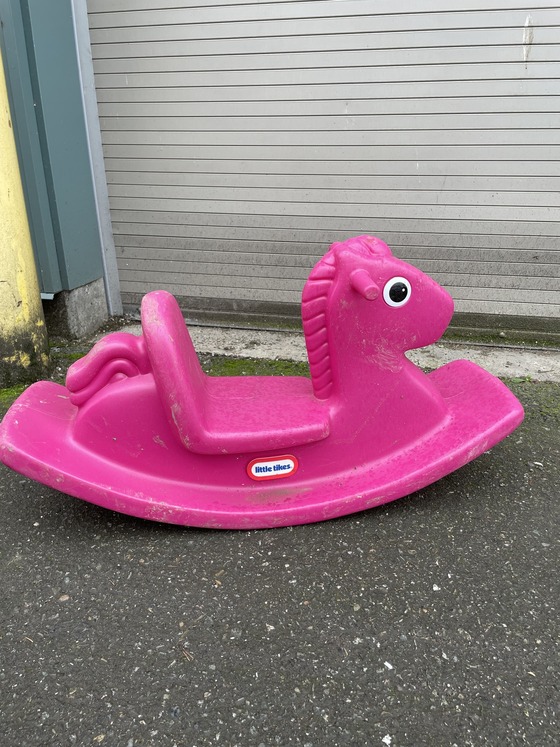 We see lots of children's play equipment thrown out on a regular basis, often in easily recoverable and reusable condition. This rocking horse for example, could have been donated to a local thrift store, children's consignment shop, or posted online to a Buy Nothing Group.
Hi-ho Silver, there's no away!
Celebrate a circular economy by thrifting, and donating your gently used items.
Skagit County welcomed the opening of Evergreen Goodwill Store in Sedro Woolley this month, adding to the line up of stores that support efforts toward a circular economy in Skagit County. The new Goodwill location will also act as a collection site for used electronics such as televisions, computer monitors, desktop computers and laptops free of charge through the E-Cycle Washington Program. These items donated in good working condition will be sold in Goodwill stores. Items that can't be sold will be recycled in accordance with E-Cycle Washington's guidelines, which ensure that toxic materials stay out of our landfills. Learn more, and celebrate by donating your used items, or shopping the thrift store soon.
Remember, the three R's of recycling begin with reduce and reuse. These are the keys to reducing waste. Recycling is what we do with something when we have exhausted all opportunities to redesign the product to be more durable, to reuse or repair it, or to simply do without it altogether. As a last resort, recycling is better than landfill or incineration, but other choices should always be considered first.
Create a compost ring
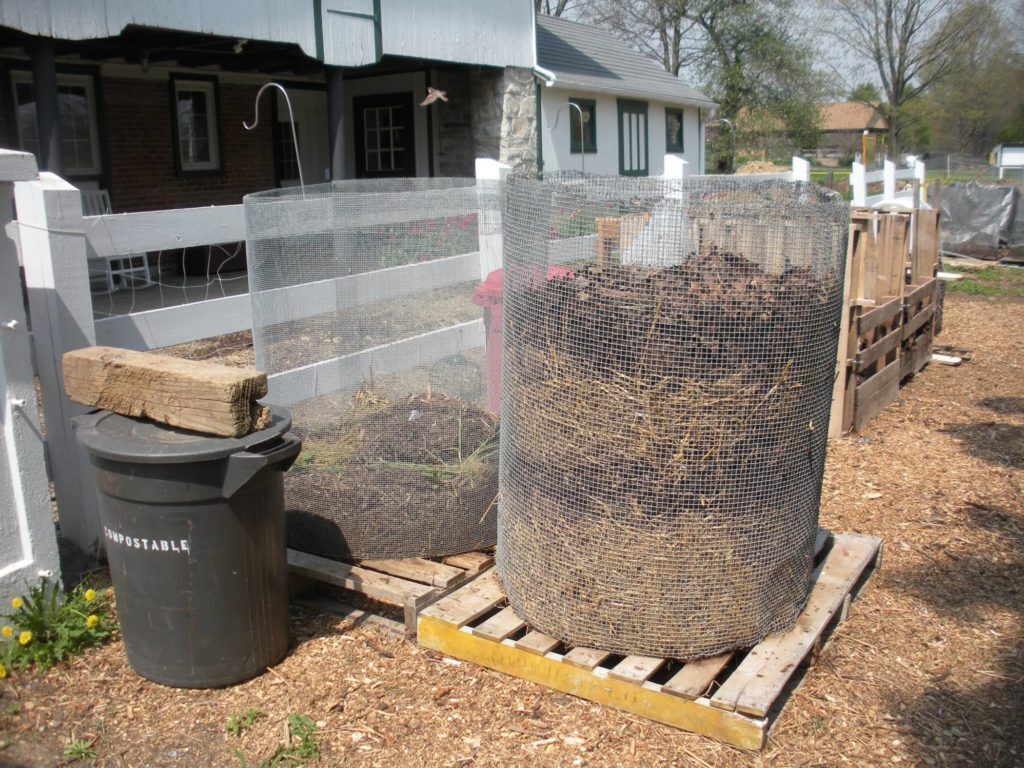
Tinges of spring are in the air, and many of us are clipping down last year's winter stalks to invite another season of new life. Rather than build up a bonfire pile, or pay to fill up a curbside yard waste cart, take this opportunity to begin an early spring compost pile! Wire compost rings are one of the cheapest and easiest ways to create a tidy site for your yard debris. Begin by finding a spot with flat, level ground, and at least 12x12 square feet of space so you are able to manage your pile as it grows. Your compost ring should be conveniently located within your yard and garden space, have access to water, and exposure to sunlight.
Next, gather the following supplies:
- Work gloves
- Wire cutters
- 36" h x 25' cage wire or hardware cloth (can be purchased online, or at a local farm or hardware store)
Cut your cage wire in half. Be careful with the sharp ends, as the wire can have a tendency to curl on you. Heavy objects or a friend are great to hold it down. Stand up one half of your newly clipped wire (use both if you have enough yard debris to fill two rings). Use garden twine tied in a bow or quick-release knot to fasten each ring shut with about 2-3" overlap. Begin filling your ring with yard and garden clippings, shredded paper, and...voila! Compost happens. When it's time to harvest the compost, or if you choose to manage the pile by turning it with a pitchfork, simply unhinge/detach the wire ring and reassemble it in a newly cleared out space.
If you're a visual learner, check out this easy video tutorial for more guidance.
Happy composting!
"The Washington Center for Sustainable Food Management or “Food Center,” is Washington’s hub to connect individuals and organizations across the food system to divert food waste and wasted food away from landfill disposal. Its objective is to cut in half the more than one million tons of food waste dumped in the state’s landfills every year, which includes 400,000 tons of edible food."
- Ecology Reporter, Jade Monroe
Upcoming Events
Each season the Solid Waste Division's Education & Outreach team offers chances to learn methods for making less garbage. Get your recycling, composting, and waste reduction questions answered, and take home materials to help you succeed. Catch us this month at a local event or free workshop near you!
During the month of March, the Skagit County Solid Waste Division staff will be training the new group of Master Composter/Recycler volunteers to carry out waste reduction outreach in the community. Look for more events this spring, beginning mid-April.
April 1-7, 2024
Get access to phenomenal courses, articles, and online resources from Food Waste Prevention partners and food waste organizations around the world. Participants receive encouragement and education, and have the chance to share their success stories about the amount of food being saved from the trash can, at home.
Events are online and in-person through partner organizations. Visit the website to learn more.
|