|
Photo of the Month
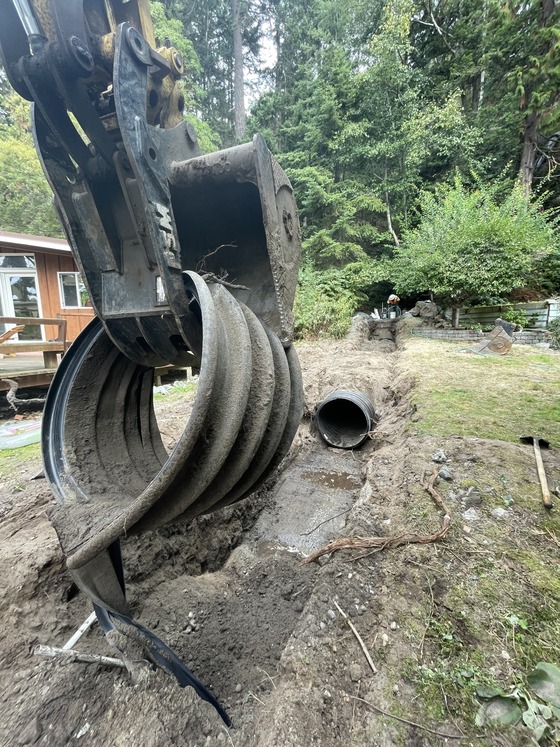 In a project funded by Skagit County Drainage Utility, a failing pipe that was gushing water next to a house was removed and replaced.

October means dark and stormy nights, changing leaves, carved pumpkins and lots of rain. For property owners, the drainage issues that come with these seasonal showers can be even spookier than the jack-o-lanterns.
One such drainage scare befell a pair of local homeowners when an underground pipe on their property started gushing water. Rainy weather and high tides near their property had combined to overwhelm the County-owned drainage system and send water spraying. Luckily, Skagit County Drainage Utility was there to help!
Our Drainage Utility team assessed the drainage system and found a plugged drain causing water to backup and a failing pipe allowing the water to leak. The seals between segments of the pipe had disintegrated over time, allowing water to force its way out of the pipe when flow was heavy. County employees dug up the old pipe and replaced several sections, as seen above. Afterwards, they patched the ground back up, good as new!
Drainage Utility gets many calls in the rainy season. As the ground grows saturated and rain continues to fall, more water stays on the surface where it flows into ditches, underground pipes and other waterways that cut across properties. High volumes of water can lead to increased erosion, flow backup and other drainage problems. Fallen leaves and branches can also contribute to blocked pipes and culverts. Common fall drainage issues like erosion, blocked flow and overflowing pipes can lead to serious damage of homes and properties if not dealt with.
When these problems surface, Drainage Utility is there. Our Drainage Utility team helps property owners in unincorporated Skagit County with flow issues, failing culverts, failing ditches, sediment buildup and erosion issues. The program can often even provide funding for projects to resolve issues.
|
|
|
|
Colorful leaves and pumpkins, rain and “first flushes”! Autumn brings many of our favorite cozy activities, but with the rain also comes flush events. After dry periods, rain washes accumulated bacteria and other pollutants off the landscapes and into our waterways. We saw a minor flush event back in July, but now we’re in for the real deal with the fall rain. We had our “first flush” last week with the atmospheric river that hit our coast. First flushes typically show the highest levels of fecal pollution, oils, pesticides, sediment and heavy chemicals. Volunteers from the Storm Team with Skagit Conservation District were able to collect some samples in Padilla Bay during the storm on Sunday, September 24. Very high fecal pollution levels were observed throughout the area— yuck! As the fall rains continue to “rinse” our landscape, we can all do our part by picking up after our pets regularly and using best management practices for manure and pastures.
Our ambient sampling didn’t capture the “first flush”, but we did see some elevated bacteria levels on the sampling route in the south County at the end of September. Nearly every site in the Nookachamps watershed had moderate to high bacteria levels. Other sites that had high counts in September included Colony Creek, South Edison Pump Station, Joe Leary Slough and Little Indian Slough. On a positive note, the high counts of bacteria observed on the mainstem of the Skagit River near Mount Vernon last month have started to fall back towards normal levels. The County and other agencies are working hard to identify potential sources contributing to these high bacteria counts.
We had more rainfall this September than normal with 1.80 inches accumulated at Mount Vernon WSU AgWeatherNet, while the historical average is about 1.52 inches. The September average maximum temperature was about 68.6°F, which is only 1.3°F lower than the historical average.
Check out our spook-tacular Water Quality Map if you’re interested in more!
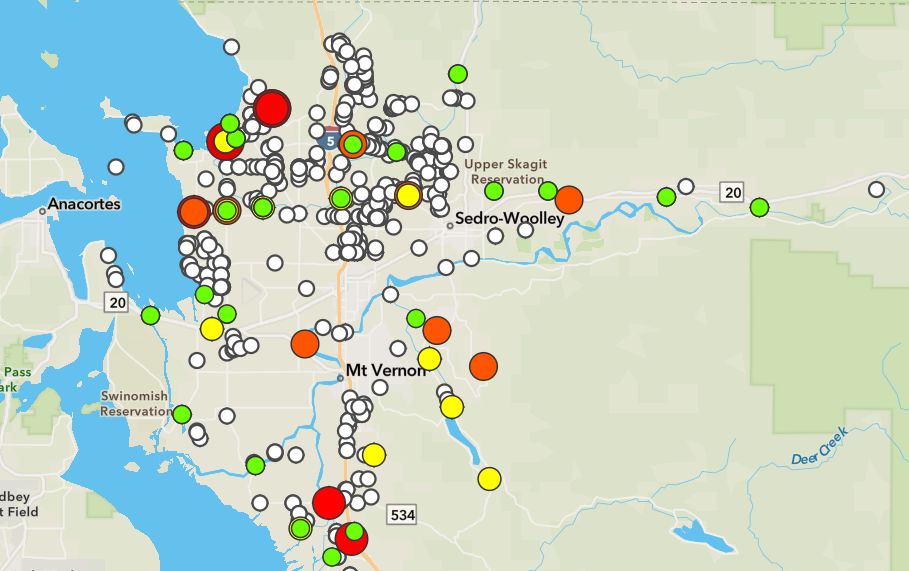 September's water quality results. Red dots represent sites with high levels of fecal bacteria, yellow represents sites with moderate levels of fecal bacteira and green dots represent sites with low fecal bacteria levels. Click on the map to go to the online water quality map, where you can explore sites in Skagit, Whatcom and Snohomish Counties.
|
|
Home Tip of the Month
The salmon are running in Skagit County, which means it's the perfect time to pump up your tires!
You may be wondering what salmon season has to do with putting air in your tires. The answer is simple: N-(1,3-Dimethylbutyl)-N′-phenyl-p-phenylenediamine-quinone.
When we don't want our brains tied up in knots, we call this compound 6PPD-Q. The chemical is found in car tires and has been shown to kill coho salmon. 6PPD-Q gets into the water when rain washes tire wear particles off of the road and into streams. There, even small concentrations of the compound can kill salmon.
The good news is, it's easy to help save salmon! Making sure your tires are filled to the appropriate pressure reduces wear and tear. That means less tire particles on the road and less 6PPD-Q in the water.
Keeping your tires filled has benefits for you, too! The slower your tires wear down, the longer they'll last before they need replacing. Properly full tires also give you better gas milage and make driving safer.
You can fill your tires at car maintenance businesses and many gas stations, often for free. Who'd have thought it would be so cheap and easy to save salmon?
Our bonus tip of the month: If you haven't gone to see the salmon make their seasonal upstream journey, now's the time!
|
|
|
Farm Tip of the Month
Did you know that Skagit County's Flood Preparedness Week starts October 16th? What better way to celebrate than by preparing the farm for flood events!
Getting prepared now will help things go smoothly and safely for you and your animals when disaster strikes.
There are a lot of pieces to the puzzle of preparedness. Luckily, there are many resources to help you along. Here are just a few:
Each resource is full of great information on how to handle disasters like flooding before, during and after the event. Here are a few of their tips:
1) Learn about potential hazards and how they might affect your property.
It's important to know just what hazards you might be facing. Along with flooding, earthquakes, tsunamis, wildfires and severe weather can all create emergency situations. Learn more about emergencies in Skagit County from the Department of Emergency Management.
Keep an eye on the Skagit County Flood Preparedness page and call in to the River Level Hotline (360-416-1404, daily hotline updates will begin mid-October) to find out about current river and flood conditions.
2) Have a disaster response plan.
Once you've determined some of the hazards you might face, plan out what you'll do in different scenarios, including being stranded and isolated on your property for several weeks. If you do need to evacuate your property, what route will you take? Where will you go? How will you transport your animals, and which animals will have priority?
Make sure you have several options ready for evacuation routes and destinations, and that your transport vehicle always has at least half a tank of gas in it for emergencies. If you need to leave your animals behind, leave notes for rescue teams about which animals to evacuate first and any special care they'll need.
3) ID your animals.
In an emergency like a flood, it's not unlikely that you'll become separated from your animals. Make sure that your animals have some form of identification on them such as tags, brands or microchips. Keep copies of your animals' information (physical descriptions and photographs, breed and registration information, medical records, etc.) on hand and with an out-of-state emergency contact. Temporary identification markings like collars with tags or writing your contact information somewhere on your animal (such as with a livestock marking crayon on their fur or with permanent marker on a hoof or horn) could also help you be reunited after disaster.
4) Create an emergency kit.
Your emergency kit should be portable and contain supplies and food that will hold you and your animals over for at least 2 weeks. The list of supplies you may need is extensive, so check out the resources above for some basic supply lists to start you off.
5) Communicate with neighbors.
Community is an indispensable resource during disaster, especially if you live in a remote area. Go over disaster plans and evacuation routes with your neighbors. Make an inventory of what resources you each have (arena, stalls, cages, pens, corrals, generator, trailers, tractors, veterinary/animal science experience etc.). Set up a buddy system in case one of you is away or unable to act when disaster strikes.
|
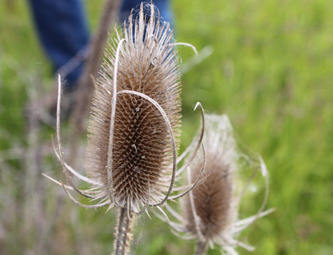
Do you see what looks like funky fall decor growing in your pastures? You might be looking at common teasel, our noxious weed of the month!
Common teasel is best recognized by its large, spikey oval flowerhead. It has around 850 seeds in each flowerhead, and they can easily spread when the plant is disturbed. Common teasel does well in many conditions and has been very successful at overtaking valuable agricultural land. Luckly, now is a great time to start controlling it before it takes over your pastures!
Here's what you need to know about identifying and controlling common teasel:
Description: Common teasel has dark green, pointed leaves that grow as a rosette on the ground. These basal leaves have a ruffled appearance and have spines. Stems from .5 to 2 meters tall appear in the second year of growth. Leaves on the stems are narrower but still prickly and grow opposite each other on the stem. Stems have opposite branches and become more and more prickly nearer to the top.
Flower heads are spiney, dense and oval shaped, about 4 inches tall. Long, prickly bracts grow at the base of the flowerhead. When in bloom, the flowerhead produces two rings of purple or pink flowers.
Toxicity: Common teasel is not known to be toxic, but animals should not be encouraged to consume it.
Control: Common teasel can be dug up at the rosette stage as long as the roots are fully removed. Flower heads can be carefully removed after flowering (if they are removed before flowering they may resprout.). Mowing common teasel plants with flowerheads is not recommended as they may contain viable seed that would be spread by mowing.
Learn more about how to identify and control common teasel from the Washington State Noxious Weed Control Board.
Photos courtesy of Washington State Noxious Weed Control Board.
|
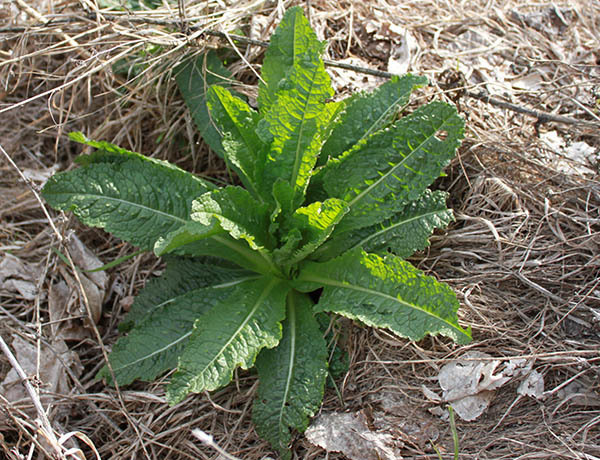 Common teasel rosettes are made up of dark green leaves that have small spines and appear ruffled. These basal leaves tend to die off early in the second growth season.
|
|
Program News
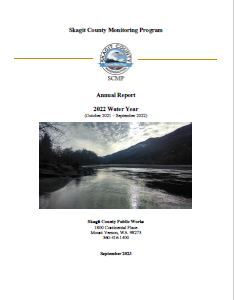
The 2022 Water Year Report is out! Every year, Skagit County Monitoring Program puts together a report of water quality throughout the County. Over the course of the 19-year project, many sampling sites have seen improvement. This is thanks to hard work of residents, farmers, Tribes, government and environmental groups. But there's still work to be done. Most sampling sites still showed high levels of bacteria at some point during this water year. It's up to all of us to keep our water clean by keeping human, pet and farm animal waste out of it.
Interested in Skagit County water quality but looking for an easier read? Check out these helpful sample site report cards that go over how water quality has looked at each of our sample sites!
|
Classes and Events
Tour Skagit Farms at the Festival of Family Farms, October 7 and 8, 10 AM to 4 PM: Come see what local growers and farmers are producing at the Festival of Family Farms. With hands-on experiences for the whole family, you can get a taste of what it takes to run a farm. Plus, visit us at Taylor Shellfish! Learn more about the festival here!
Experience the Wild and Scenic Film Festival, October 12, 6 PM to 9:30 PM, $20: Join Skagit Fisheries Enhancement Group for a night of environmental and action films at Lincoln Theater! Learn more about the festival here.
View spawning salmon at Pressentin Park, October 14, 12 PM to 3 PM: Hang out with Skagit Fisheries Enhancement Group for Orca Recovery Day on the banks of a recently restored site to watch as pink salmon spawn. Learn more here!
See salmon in Oyster Creek, November 4, 12 PM to 3 PM: Join Taylor Shellfish and Skagit Fisheries Enhancement Group in watching spawning chum salmon. Learn more here.
Volunteer Opportunities
Take the Spawner Survey volunteer workshop, October 7, 7 AM to 3 PM: Want to help survey salmon populations this winter? Take Skagit Fisheries Enhancement Group's Spawner Survey volunteer training to learn how! Learn more and register here.
Help keep ivy out of Edgewater Park, October 21, 10 AM to 1 PM: Help Skagit Fisheries Enhancement Group remove English ivy from a restored area in Mount Vernon's Edgewater Park. Learn more and register here.
Stewardship Saturday at Riverfront Park, October 28, 10 AM to 1 PM: Join Skagit Fisheries Enhancement Group in removing invasives from Sedro-Woolley's Riverfront Park. Learn more and sign up here.
Help plant trees at along the Skagit River, November 11, 10 AM to 1 PM: Help Skagit Fisheries Enhancement Group plant trees along the Skagit River in South Mount Vernon. Learn more and register here!
Volunteer with Skagit Land Trust: Help keep Skagit County's native habitat healthy at one of Skagit Land Trust's work parties! Check out their upcoming volunteer events and sign up here.
|
|
Contact Us
For questions or more details, please contact Karen DuBose at kdubose@co.skagit.wa.us or 360-416-1460.
This project has been funded wholly or in part by the United States Environmental Protection Agency under assistance agreement PC01J18001-0 to the Washington Department of Health. The contents of this document do not necessarily reflect the views and policies of the Environmental Protection Agency, nor does mention of trade names or commercial products constitute endorsement or recommendation for use.
|
|
|
|
|