|
Photo of the Month
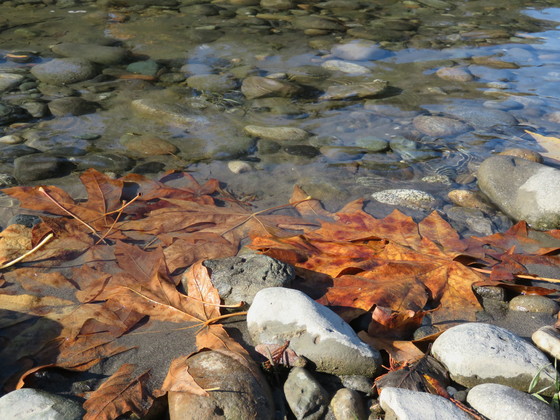
Hay there! This weather is un-be-leafable, right? Orange you glad it's fall?
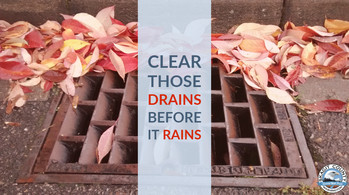
We're thankful for the beautiful leaves, and we're also thankful for the residents who rake those leaves out of gutters and storm drains. Cleared drains keep us from swimming in calls about urban flooding.
Can you help by clearing a storm drain near your house? Water you waiting for? Don't leaf us hanging! (Okay, okay...we'll stop now. Sorry...we blame leftover Halloween candy for this attack of terrible punnery.)
|
|
|
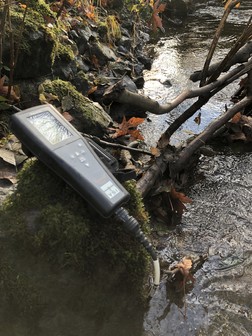
October is here and so are the rains! Autumn is always a challenging time for Skagit County when it comes to water quality. Several places struggled with high levels of bacteria as the rains wash accumulated poop off the landscape. Where does that poop come from? The three big sources are dogs, livestock manure, and sewage from failed septic systems or illegal RV dumping. Unnatural numbers of wildlife contribute too, especially when they're attracted by fruit left on our apple and pear trees!
Hotspots in the Samish Bay watershed were Thomas Creek, Edison Slough, and Colony Creek. We're actively working in all three of these areas to better understand where the bacteria are coming from. In the Padilla Bay watershed, the only site with minor concerns in October was No Name Slough. We are actively working with landowners upstream of this site to fix several known sources of pollution.
Things looked pretty good in the Middle Skagit River area, with a few concerns in lower Coal Creek and lower Hansen Creek. The Lower Skagit River area was very clean, with the exception of College Creek, which flows out of Mount Vernon.
Nookachamps Creek is a large tributary of the Skagit River near Mount Vernon. Of the six sites that we sample in the Nookachamps Creek area, the worst was just downstream of the confluence of the two main forks of the creek. Upstream sites were all relatively clean.
If you're interested in checking out any of these areas closer, you can always find all of our results (and the results of our partners at the Washington Departments of Agriculture and Ecology and the volunteer Storm Team) at https://arcg.is/1iiifS.
|
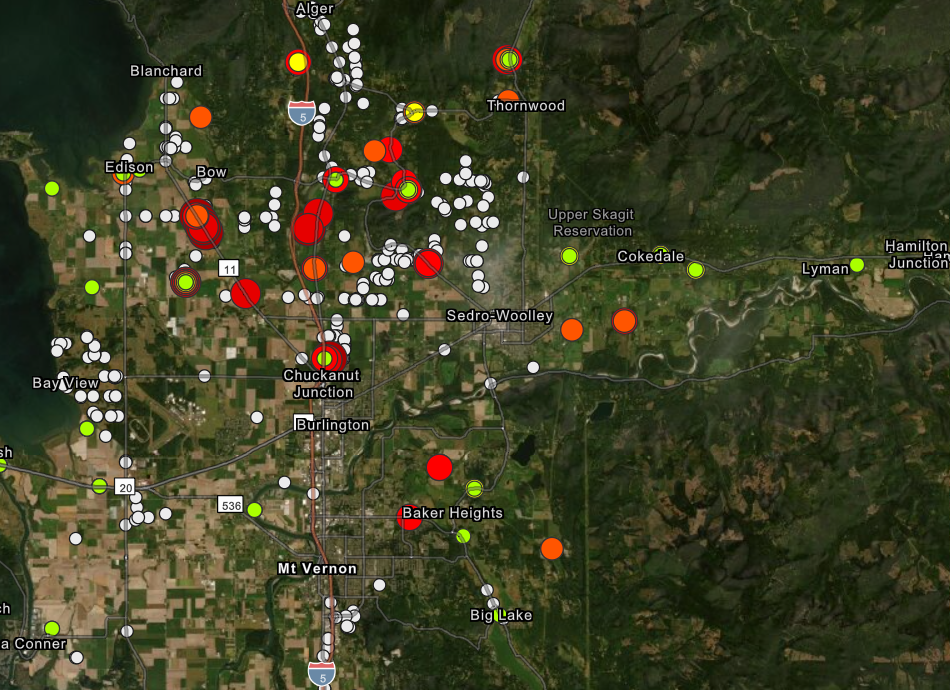 A snapshot of recent water quality results in Skagit County in the month of October.
|
|
Tip of the month to Protect Life and Home
Got a dog? When your dog poops in your yard, what do you do? If your answer is leave it be or toss it somewhere out of the way, we'd like you to consider changing that plan.
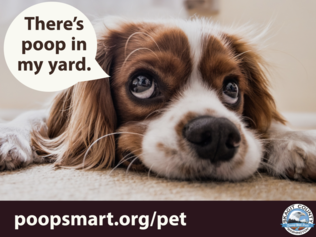
Dog poop is raw sewage. It is NOT fertilizer. Like human poop, it's full of pathogens that can transmit disease to your family, your dog, and other animals. Some of those pathogens remain infectious for YEARS, long after the poop has dissolved into the lawn.
Rainwater picks up everything it touches, including poop, and carries it to our local creeks and beaches. Even if you're not near a creek, rainwater runoff carries poop and pathogens there. We've tracked high levels of bacteria in surface water to mismanagement of dog poop in yards more than once.
Kids play in creeks. Pets play in creeks. And everyone loves a trip to the beach. So if you're not cleaning up that poop, you're exposing yourself and your whole community to pathogens.
Please do your part to be PoopSmart, and scoop the poop. Find out more at https://poopsmart.org/.
|
|
|
Farm Tip of the Month
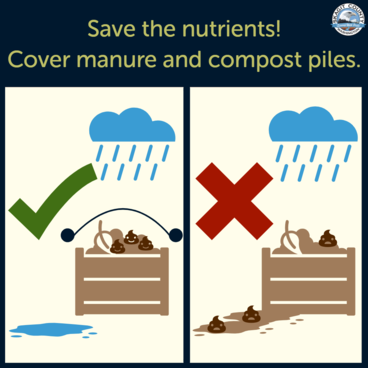
Got a compost or manure pile? Put a cover over that pile!
Good compost is like gold. Protect it from the rain so that rainwater can't leach out all those glorious nutrients and dump them into groundwater and local creeks. A simple tarp is all you need to keep those nutrients where they belong: enriching your soil and growing beautiful forage.
Visit https://poopsmart.org/small-farm for more tips on good farm management, including links to financial assistance to help you manage your manure pile better.
|
|
|
Program News
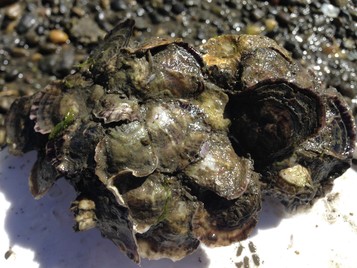
Celebrating Success in Local Olympia Oyster Restoration: About two decades ago Puget Sound Restoration Fund (PSRF) committed to restoring 100 acres of native Olympia oysters and their habitat in the Puget Sound region. North Puget Sound used to have several thousand acres of native oysters. Overharvesting, habitat destruction, and pollution left them essentially extinct in our area. In 2002, Skagit Marine Resources Committee (MRC) joined PSRF to establish the first North Sound Olympia oyster restoration project in Fidalgo Bay. PSRF supplied the seed oysters, and Skagit MRC volunteers monitored progress. Since 2002, the small area that was seeded with hatchery oysters has turned into about 3 million oysters over about 4 acres, all the result of spawning of the original seed oysters and their offspring. Olympia oysters now appear to be well-established in Fidalgo Bay, and they're spreading into new areas of the bay. They are now a self-sustaining population. We couldn't be more pleased with the success! You can find more information at http://www.skagitmrc.org/projects/marine-life/olympia-oyster-restoration/.
Maddox Creek Restoration Project is Complete: We're pleased to report that the Maddox Creek restoration project is now complete. We shared some photos of the project at near-completion in September. We are now anxiously awaiting the return of adult salmon to the creek to see how it performs. We have a website up about the project. Check it out here: https://www.skagitcounty.net/Departments/PublicWorksCleanWater/MaddoxCreekProject.htm.
Lake McMurray Flood Reduction Study: In June, a study was completed about how to reduce flooding on Lake McMurray, Hull Rd, and Hull Dr. If you'd like to learn more about the issue, you can check out the report at https://www.skagitcounty.net/PublicWorksNaturalResourcesManagement/Documents/Flood%20Reduction%20Investigation%20Lake%20McMurray.pdf
Financial Assistance for Septic Inspections: If you can't afford a septic system inspection, we may be able to help! Skagit County's Public Health Department has a new program to help low-income residents meet the state's septic inspection requirement. Eligibility depends on your household income. If you meet the requirements, you can get a free septic inspection. For more details, contact Skagit County Public Health at eh@co.skagit.wa.us, or 360-416-1500.
For those who don't qualify for that program, we will soon have an option for you! Our septic inspection rebate program will be returning soon. We're still working out the details, but we'll be sure to let you know when it's available!
|
|
|
Contact Us
For questions or more details, please contact Karen DuBose at kdubose@co.skagit.wa.us or 360-416-1460.
This project has been funded wholly or in part by the United States Environmental Protection Agency under assistance agreement PC01J18001-0 to the Washington Department of Health. The contents of this document do not necessarily reflect the views and policies of the Environmental Protection Agency, nor does mention of trade names or commercial products constitute endorsement or recommendation for use.
|
|
|
|
|