Building Emissions Performance Standard (BEPS)
Featured Seattle BEPS FAQ
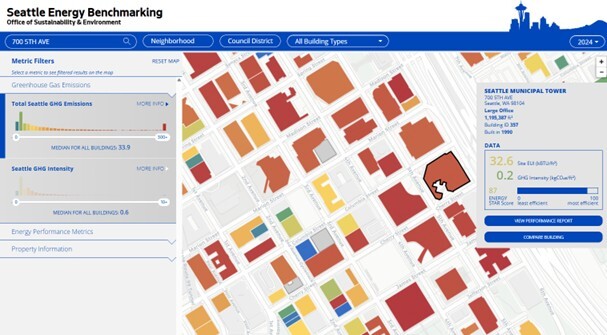
Is total Gross Floor Area (GFA) defined the same for BEPS and WA CBPS?
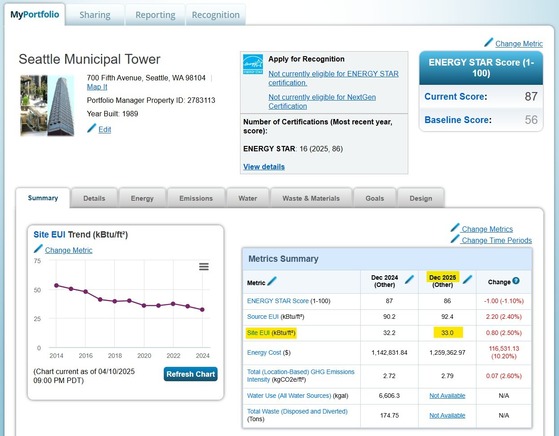
Yes. The Seattle Building Emissions Performance Standard (BEPS) and the Washington State Clean Buildings Performance Standard (CBPS) both set performance-based targets and require compliance calculations based on the building’s GFA in square feet (SF). Seattle BEPS measures greenhouse gas emissions intensity (GHGI) in kgCO2e/SF per year and WA CBPS uses energy use intensity (EUI) in kBtu/SF per year.
BEPS and CBPS use the same approach to measure GFA. They both leverage existing ENERGY STAR® Portfolio Manager® (ESPM) GFA guidance and rely on the ESPM platform for tracking building details. Importantly, accurate GFA measurements are required for compliance with both standards. The following key components of measuring building GFA are handled the same for BEPS and CBPS:
-
Measurement area: GFA is measured from exterior surfaces of enclosed fixed walls
-
Spaces included in GFA: All supporting functions such as offices, lobbies, restrooms, equipment storage areas, mechanical rooms, break rooms, and elevator shafts1
-
Spaces excluded from GFA: Outside bays, docks, and parking areas1
-
Conditioned spaces: All spaces included in the ESPM GFA guidance are used to calculate the whole-building GFA2
1 ESPM guidance below provides additional detail on what to include and exclude in GFA.
2 For CBPS, if a building has semi-heated and unconditioned space that lowers the building GFA of a Tier 1 building to less than 50,000 SF or a Tier 2 building to less than 20,000 SF, they may qualify for an exemption.
Additional GFA Resources
BEPS Webinar on June 8
Learn more about BEPS and the Seattle Energy Code. Ask questions to BEPS experts. More information in the Events section of this newsletter.
Building & Energy Portal Updates
The New Seattle Building & Energy Portal is Coming Soon
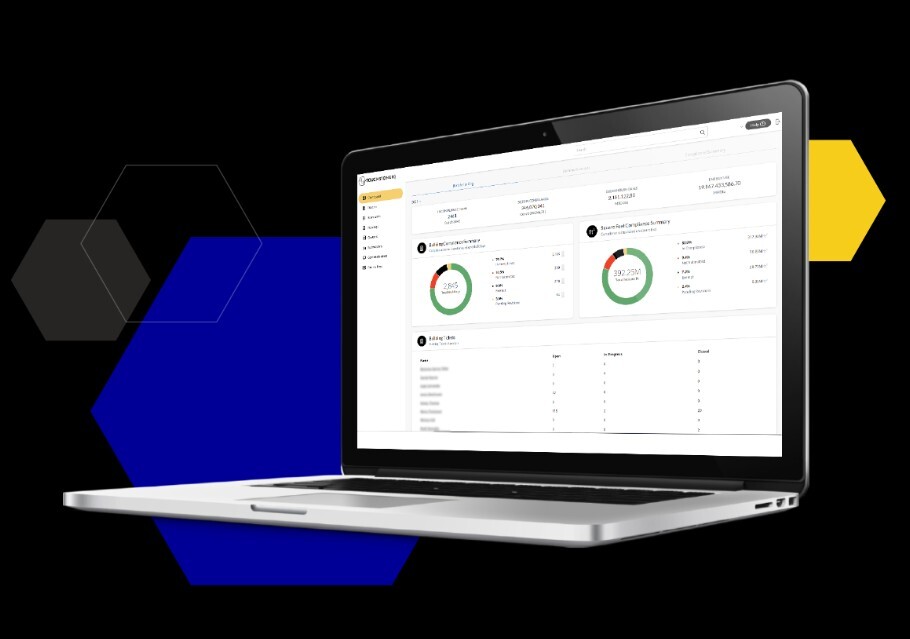
The Buildings and Energy team at OSE has been busy designing and preparing to roll out a new technology platform for Energy Benchmarking and Building Emissions Performance Standard (BEPS) compliance activities developed by Touchstone IQ. In July 2026, OSE will launch the first phase of the Seattle Building & Energy Portal for Energy Benchmarking. Additional features for BEPS compliance will roll out in winter 2027.
What to know about upcoming changes:
- Buildings that remain noncompliant for Benchmarking after the June 1 deadline for reporting 2025 data will be required to achieve compliance under the new process established within the Building & Energy Portal. Buildings that are compliant by June 1 do not need to take any further action this year.
- The new portal integrates with users’ ENERGY STAR® Portfolio Manager® accounts, and will become your centralized hub for compliance, reporting, and technical assistance for Benchmarking and BEPS.
- Starting next year, all covered buildings will need to comply with Energy Benchmarking for Data Year 2026 by June 1, 2027, via the new Building & Energy Portal and compliance process.
-
BEPS compliance and reporting features will be available in winter 2027 to support the first BEPS compliance deadline of October 1, 2027 (buildings larger than 90,000 SF).
-
All OSE benchmarking technical assistance help desk services will be suspended from June 18 to July 16 to prepare for the transition to the new Building & Energy Portal. This includes customer support provided via phone, email, 1-1 scheduling, and weekly office hours. Customers will still be able to work directly with utilities and complete self-guided updates in Portfolio Manager® during this time.
Please stay tuned to future newsletters and keep your ENERGY STAR® Portfolio Manager® account contact information up to date for timely updates on the launch of the new Seattle Building & Energy Portal, compliance process changes, and available trainings.

SUPPORT FOR BUILDING OWNERS
2026 Building Decarbonization Grant Program Now Accepting Applications!
The Building Decarbonization Grant program is open to applications through August 10 and will award up to $4 million for projects at BEPS-covered buildings. These grants will help fund engineering design and capital retrofit projects to reduce greenhouse gas (GHG) emissions from recipient buildings ahead of BEPS compliance deadlines. As in 2025, OSE will prioritize buildings like nonprofits, affordable housing, senior housing, and other facilities serving frontline communities, as well as buildings whose current energy data show them exceeding upcoming BEPS greenhouse gas intensity (GHGI) targets. However, all buildings covered by BEPS are eligible and encouraged to apply. All grant information is posted on the Building Emissions Navigator webpage.
Key Details
-
Eligibility: Buildings must be covered by Seattle’s BEPS to be eligible. These include multifamily or nonresidential (i.e., commercial) buildings larger than 20,000 square feet.
-
Application: Apply via the link on the Navigator webpage. In the coming weeks, OSE is hosting two information sessions on Zoom, with pre-registration required. The sessions will be recorded and posted on the Navigator webpage.
-
Deadline: Submit the online application form by August 10, 2026, at 8 PM to be considered.
-
Technical Assistance: Free technical assistance is available to applicants on a first-come, first-served basis. Buildings owned or occupied by nonprofit organizations, or serving Seattle’s Frontline communities will be prioritized, but all buildings are eligible. Apply for assistance now!
Building Emissions Navigator Coaching Cohorts
To help you understand BEPS and develop your path to compliance, the City of Seattle provides support through the Seattle Building Emissions Navigator. The Navigator offers free group training and customized technical assistance for your building — and it’s available to building operators, owners, and property management teams.
Three cohorts are currently underway, and the Navigator will host at least one additional cohort starting this fall:
- Virtual cohort with four monthly workshops, starting September 16
Before enrolling in the program, you must attend a one-hour online info session or watch the info session recording. Then email cleanbuildings@seattle.gov to request an enrollment form.
Funding Added to Commerce’s Multifamily Building Efficiency Grants Program
The Washington State Department of Commerce recently reopened the Multifamily Building Efficiency Grants Program that provides funding to decarbonize and replace fossil fuels with high-efficiency electric equipment. The program received an additional $10M from the Washington State Legislature in the 2026 Supplemental Budget. Only affordable multifamily properties in Commerce’s Housing Trust Fund portfolio are eligible to apply. Contract work may start on July 1, 2026, and funds must be spent by June 30, 2027. Reach out to Aaron.Dumas@commerce.wa.gov for more info.
Washington Launches State Green Bank With $25M Funding Infusion
The Washington State Green Bank recently received $25 million in state funding and has rebranded as Washington Builds. Washington Builds will be a clean energy lender for households, small businesses, and Tribal nations across the state — stepping in to attract private lenders in markets that traditional lenders have overlooked and making clean energy financing accessible to the households and businesses that need it most. Click here to learn more about Washington’s newly capitalized green bank.
Seattle 2030 District Benefits
Seattle’s 2030 District unites property owners, managers, businesses, local governments, and other community partners in a shared commitment to deep energy, water, and transportation emission reductions. Seattle 2030 membership provides building owners with the tools, data insights, and collaborative network they need to accelerate their sustainability goals and demonstrate leadership. District membership also offers owners technical assistance with building benchmarking and performance tracking. Learn more about upcoming networking, training, and education opportunities on the Seattle 2030 District monthly events calendar.
The Lab at City Light
 Seattle City Light (SCL) has officially reintroduced the Lighting Design Lab, its longtime energy efficiency resource, as The Lab at City Light. The new identity reflects an expanded commitment to advancing building electrification technologies and a broader focus on integrated systems, advanced controls, and emerging technologies that help building owners meet energy performance and decarbonization targets.
The Lab at City Light provides hands‑on demonstrations, applied research, and design guidance to support those who work directly with commercial and institutional buildings — Qualified Persons, Building Tune‑Up Specialists, commissioning agents, energy managers, engineers, and service providers.
Call For Input
The Lab at City Light is conducting a survey with the engineering firm TRC to gather perspectives on the training and materials that would be most helpful and relevant to those working to improve building performance. Input will help inform the development of future offerings, ensuring they are useful, practical, and aligned with local interests. Industry professionals interested in taking the survey, please email SeattleCityLight_Research@trccompanies.com.
BUILDING TUNE-UPS
Cohort 3 Owners Achieve 86% Compliance
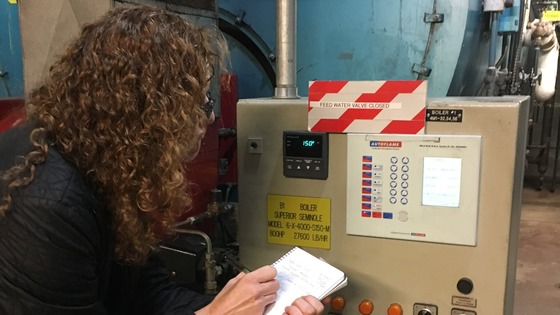
The vast majority of nonresidential building owners in Cohort 3 (70K–99K SF) achieved compliance before the end of the first grace period. Those who have yet to complete all outstanding corrective actions or initiate their tune-up have until October 1, 2026, to submit to avoid enforcement action. Those who fail to meet all tune-up requirements by this date will be issued a Notice of Violation with an $8,000 fine.
Cohort 4 Tune-Ups Due October 1
More than a quarter of Cohort 4 (50K–69K SF) building owners have already achieved compliance or are in the process. The reporting deadline for the final cohort is October 1, 2026. While future tune‑ups won’t be required, compliance prepares your building for Seattle BEPS and the WA Clean Building Performance Standard, which includes new operations, maintenance, and energy management requirements. Skip the stress — complete your tune‑up today, avoid fines, and prepare your building for what’s ahead.
Visit the Building Tune‑Ups webpage for more information or email buildingtuneups@seattle.gov for technical assistance.
EVENTS
The Lab at City Light
Decarbonizing Affordable Housing with the Housing Development Consortium (June 4)
Join the Housing Development Consortium (HDC) for an informative Learn at Lunch on June 4 (12-1 PM) as it unveils a new Multifamily Decarbonization Readiness Guide, designed to help affordable housing operators align asset management planning with current regulations and resources.
The presentation will break down the new resource and how multifamily building owners can start using it to plan to decarbonize their individual buildings and building portfolios. The guide will prepare organizations to save money, reduce carbon emissions, and create healthier buildings for residents and staff. In addition to building developers and owners, energy service providers are encouraged to join this session to facilitate communications for delivery of services. HDC worked with OSE to develop the Guide, which will soon be published on HDC’s website. Register here.
Seattle Building Emissions Performance Standard & Seattle Energy Code for Existing Buildings: What BEPS & SEC Requirements Apply to Your Building? (June 8)
On June 8th (12-2 PM), the Smart Buildings Center, Building Potential, the Building Operator Certification (BOC) program, and the City of Seattle are hosting a free webinar for building owners, operators, facilities professionals, property managers, and energy service providers.
The session will cover BEPS, CBPS, and the Seattle Energy Code (SEC), highlighting where compliance requirements differ and overlap. Following the presentation, attendees will have the opportunity to participate in a Q&A with Nicole Ballinger (BEPS Program Manager, Seattle OSE) and Duane Jonlin (Energy Code and Energy Conservation Advisor, Seattle Department of Construction and Inspections). Learn more and register here.
|