|
|
|
|
|
|

Developed in partnership with the Seattle Fire Department and the University of Washington School of Medicine, a new data pipeline integrates siloed emergency response and health records, enabling faster, more comprehensive analysis while safeguarding patient privacy. By automating data collection, cleaning, and linking 911 dispatch records with medical outcomes, the pipeline empowers EMS leaders to improve survival rates and health outcomes.
Seattle has made this solution available to other EMS agencies as open source software, offering a head start for communities looking to modernize their data systems. By sharing this tool, Seattle aims to help agencies nationwide focus on what matters most—saving lives. Public safety agencies can request access by contacting Seattle’s IT Data Engineering team.
Read more: Unlocking Emergency Medical Services Data
|
|
|

Rising housing costs are compounded by the complexity of Seattle’s permitting process, which often involves over 30 approvals across multiple departments. To address this, Innovation & Performance (IP) analyzed the permitting journey from the applicant’s perspective, uncovering key bottlenecks. For example, the team found that there were very low first-round approval rates for Drainage plans, indicating that applicants were struggling to understand requirements. By improving processes, guides, and resources, the Drainage team boosted approval rates by nearly 10% in just six months.
IP is now mapping the entire permitting process, publishing performance data, and identifying delays to improve coordination across departments. With newly-published open data posted online, Seattle is now one of the most transparent jurisdictions in the nation with its construction permitting data.
Read more: Modernizing Seattle’s Permitting Process
|

Last year, the Mayor’s Office asked IP to determine whether Seattle’s existing anti-displacement efforts were effective and where the City needed to do more. The evidence was clear: no single silver bullet exists, and effective anti-displacement strategies must address multiple drivers, including financial instability, rising rents, administrative complexity, and gaps in legal protections.
Emergency rental assistance (ERA) is one of the most effective ways to prevent displacement. Seattle offers ERA, but it is fragmented across four departments with different rules and entry points. To rebuild ERA into a more coherent, preventive, resident-centered system, IP:
- Convened departments, community organizations, landlords, and residents to redesign the ERA program
- Secured $4 million in new ongoing annual rental assistance — part of a total $11.5 million investment strategy
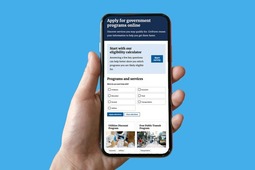
- Developed an ERA screening tool in Seattle's unified benefits portal
- Launched a pilot with Housing Connector to intervene earlier in the housing instability cycle
Read more: Strengthening Communities Against Displacement
|
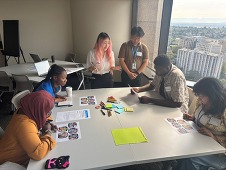
IP is working with partners at the City of Seattle, youth, trusted adults, parents, and mental health experts in the community to re-imagine how young people connect with resources. With one-time funding, IP has designed a prototype Youth Connector platform that organizes programs in a way that is easy to navigate and familiar to teens. The platform highlights details youth care about most—whether a program pays or costs money, if food or transportation is provided, and how simple it is to sign up.
Looking ahead, IP will test social media ads and influencer outreach to reach youth who might not otherwise hear about these opportunities and encourage participation. In addition, IP is exploring a new referral pathway with school-based health center counselors, giving counselors access to a set of free, pre-reserved program slots so they can directly register students who lack trusted adult support to navigate sign-ups on their own.
Read more: Building Pathways for Youth Connection and Opportunity
|

Small business owners face a maze of different regulatory agencies and unclear processes to open a new location in Seattle. Too often, small business owners sign a lease with little understanding of all the requirements to remodel a space for their needs.
In early 2025, IP worked with the Seattle Office of Economic Development and Seattle Department of Construction and Inspections to convene City and King County regulatory agencies in a new working group dedicated to improving permitting processes for small businesses.
To demystify the process and empower business owners with the tools to be successful, we conducted user research and worked with stakeholders to publish a new Opening a Business Location guide.
Read more: Demystifying and Improving Small Business Permitting
|
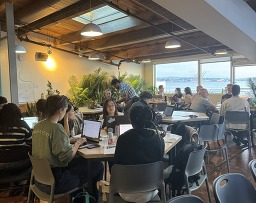
In October and November, IP partnered with the AI2 Incubator to host a series of Community Innovation Hackathons at the AI House on Seattle’s waterfront.
At these events, teams were challenged to envision the use of data and AI tools to help improve construction permitting processes and deliver better customer service.
|
|
|
|