|
|
Aurora Ave Project Update
We've completed part one of the planning phase!
Seattle’s Department of Transportation (SDOT) began working on a plan to improve Aurora Ave N in 2022 and is now at the halfway mark to the final plan. We’ve been co-creating this plan with community while also bringing in our partner agencies King County Metro and Washington State Department of Transportation (WSDOT).
This plan for Aurora Ave N (from Roy Street to N 145th Street) is important because Aurora connects people to their homes, jobs, businesses, and services. It’s also home to the region’s busiest bus line, the RapidRide E Line, and plays a key role for freight in transporting goods and deliveries. However, transportation safety is a big concern, as the road has had many serious crashes, especially involving people walking or rolling. This project aims to make Aurora Ave N safer and more community friendly.
|
|
|
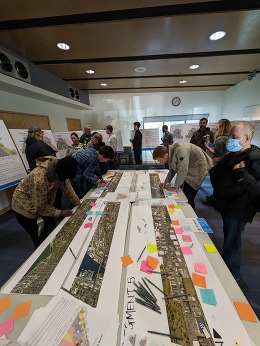 Design workshop at Broadview Library
|
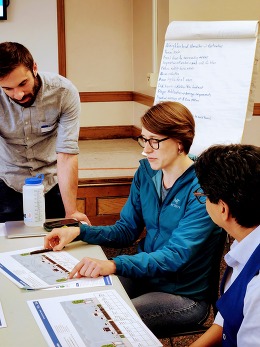 Design workshop at Phinney Neighborhood Center
|
|
|
What We've Done
- Starting the Project: 2022
- We began the project with a community survey to understand people’s biggest concerns and transportation safety needs.
- Over 2,000 responses focused on making the street safer for people walking and rolling, reducing collisions and speeding and better connecting neighborhoods.
- Collaborative Community Workshops: 2023
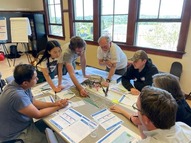
- Over 450 residents, community leaders, local businesses, and service providers joined workshops to share their vision for the future of Aurora Ave N and what’s most important to them.
- Most people see Aurora Ave N as part of a vibrant community space with better sidewalks, trees, and greenery, spaces to interact, and businesses to visit. Others focused on Aurora Ave N being a major street that moves people and goods.
- Draft Community Ideas Shared: 2024
- Based on community input, SDOT worked with our partners to develop draft ideas for the future of Aurora Ave N.
- We shared these ideas through our Community Ideas Hub webpage:
- Walkable Boulevard
- Bike Connection
- Center-Running Bus Lanes
- Maintain Vehicle Capacity
- Public Survey & Responses
- We developed a survey to hear from community whether the draft ideas included their main concerns and safety needs from the first survey. Over 6,800 people participated in the survey, and most felt that the draft ideas addressed their priorities.
- We heard strong support for wider sidewalks, better lighting, and more crosswalks with signals.
- We heard more mixed opinions on moving bus lanes to the center of the street, adding bike lanes, and reducing car lanes.
- Improving the Ideas
- We used community feedback to make the design ideas better and evaluated them using 21 different criteria. This helped us learn about the pros, cons, tradeoffs of each, guiding us in planning the next steps.
Key lessons learned from the latest evaluation...
|
What we’ve learned so far
|
|
1. Removing vehicle lanes south of Green Lake is very challenging due to high traffic volumes and limited alternative routes.
|
|
2. The Walkable Boulevard idea offers the greatest potential to enhance safety, comfort, equity, and placemaking on Aurora Ave N, in line with adopted plans and policies.
|
|
3. While the Bike Connection idea did not perform as well as Walkable Boulevard, we know people will bike on Aurora Ave N, especially to reach local destinations and transit stops.
|
|
4. The Center-Running Bus Lane concept presents potential challenges due to space constraints and complex signal operations.
|
|
5. Any changes to Aurora Ave N north of Green Lake will require significant upgrades to underground utilities. This may also limit where street trees can be placed.
|
|
What comes next
|
|
1. Because the street is wider south of Green Lake, we can maintain two vehicle lanes while also designing improvements that increase safety and comfort for people walking, biking, rolling, and taking transit.
|
|
2. We will do more analysis to understand and communicate how reducing vehicle capacity on Aurora Ave N north of Green Lake would affect street operations, including transit and freight. We will also look at the potential impacts on parallel and intersecting streets.
|
|
3. We will determine where bike facilities are needed on Aurora Ave N and where to focus on parallel bike routes with safe connections to Aurora Ave N.
|
|
4. We will complete more detailed design and intersection analysis. Working with King County Metro, we will figure out the best way to prioritize transit on Aurora Ave N while also keeping freight moving.
|
|
5. We will partner with Seattle Public Utilities to coordinate our designs and develop an implementation plan that balances project complexities with community needs.
|
Where We’re Headed
The next phase of planning will begin later this year and take about two years to complete. Here’s what to expect:
-
More design and analysis: We’ll dive into the details of the future design, look at project costs, plan construction steps, and find ways to reduce impacts.
-
Community engagement: We’ll keep working with residents, workers, and businesses to make sure your priorities shape the project.
-
Prepare for the future: We’ll work with our partners to develop a plan for permits and construction to make these improvements a reality.
Stay Involved
Your voice matters! We’ll share updates and ask for feedback during the next phase of planning. We want you to be informed and help spread the word within your community.
- Share this Update: Tell your neighbors and coworkers about this project.
- Get involved: Look out for surveys, events, and online updates later this year.
- Contact Us: For more details, visit our project website or write to us at aurorastudy@seattle.gov or call us at (206) 905-3620.
|
|
|
|