|
|

Director's Note—July 2024
We finally made it to summertime and I hope you’re taking extra care during these high temperature days. This month, we recognize Minority Mental Health Awareness Month and Disability Pride Month. These moments encourage us to deepen our commitment to inclusivity and understanding.
Minority Mental Health Awareness Month draws attention to the specific challenges faced by underrepresented groups in accessing mental health care. At HSD, we are committed to raising mental health awareness and ensuring that everyone has access to culturally competent care. For example, a valuable resource for minority mental health is the Healthy Black Minds Mental Health Resource Hub from one of our community partners, the Urban League of Metropolitan Seattle. Let’s continue to support the mental well-being of all our community members through active engagement and advocacy.
Disability Pride Month is a time to celebrate the history, achievements, and experiences of the disability community. Since the signing of the Americans with Disabilities Act (ADA) on July 26, 1990, we have made significant strides in accessibility and inclusion, but as we grow there will always be more to learn and work to be done. I appreciate “Learn and engage this Disability Pride Month,” a recent UW Combined Fund article that provides Disability Pride Month history and a tremendous number of links to disability resource in Seattle and beyond.
Finally, this month we acknowledge the anniversaries of the Older Americans Act (July 14, 1965) and the establishment of Medicare and Medicaid (July 30, 1965). These laws have played a crucial role in providing services that help older adults, people with disabilities, and caregivers live with greater independence—with vital programs and services provided by HSD—and supported families with children that live on limited incomes and resources to access the health care they need to grow, develop, and thrive.
As we recognize these important milestones and awareness months, let’s renew our commitment to building a community that values mental health, accessibility, and inclusion for everyone. Together, we can continue to make Seattle a place where all individuals feel supported and empowered.
In community,
|
|
|
 Community Corner: Atlantic Street Center
This month, we also highlight Atlantic Street Center, an organization dedicated to supporting diverse families and youth in South Seattle, King County, and North Pierce County. They offer behavioral health services, family support groups, early learning opportunities, and after-school programs. Atlantic Street Center also provides advocacy for survivors of gender-based violence, empowering community members with the tools they need for success.
|
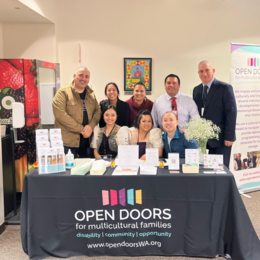 Community Corner: Open Doors For Multicultural Families
This month, we highlight Open Doors for Multicultural Families, an organization that enriches the lives of individuals with developmental disabilities from diverse backgrounds. They ensure services are accessible and culturally tailored, enhancing their community impact through a unique cultural brokerage model. Open Doors offers programs that connect clients with staff who share their language and cultural background, fostering understanding and stronger community ties.
|
|

Employee Spotlight: Gabriel Manriquez
Meet Gabriel Manriquez, a Senior Grants & Contracts Specialist in HSD’s Youth and Family Empowerment (YFE) division. Gabriel’s portfolio focuses on youth behavioral health and is deeply rooted in racial equity, overseeing contracts that provide BIPOC students with mental health services through Seattle Public Schools. Discover how Gabriel makes a difference in our community.
|

Civic Coffee: Brain Health
Join Age Friendly Seattle’s next Civic Coffee to gain insights into maintaining and improving your cognitive health on Monday, July 22 (1:30–2:30 p.m.). All are welcome! Attend in person at Lake City Senior Center (12509 27th Ave NE, Seattle, WA 98125) and enjoy light refreshments, or join online. [Learn More]
|
|
|
Mayor Harrell Announced $2 Million Toward Youth Violence Prevention and Expanded Telehealth Access for Students
 |
|
Mayor Bruce Harrell unveiled a plan that significantly expands telehealth access from 80 to 2,000 students and allocates $2 million for youth violence prevention. This initiative is part of a comprehensive strategy to improve safety and mental health resources for Seattle’s youth, focusing on community-driven solutions and accessible care. [Learn More] |
City of Seattle’s free Summer Meals Program opened July 1st
 |
|
The City of Seattle plans to provide more than 100,000 meals and nearly as many snacks for children aged 1-18, through the Summer Meals Program, from July 1–August 23. Celebrating over 50 years of meals and snacks that can be enjoyed at over 60 parks, community centers, and other sites in Seattle neighborhoods. We would also like to invite you to join Summer Food Celebration Event at Jefferson Park on July 12th from 11am -2pm. Visit our website for more information and a list of locations. [Learn More] |
New Street-Based Outreach Services Request for Qualification (RFQ)
 |
|
HSD announced a $6.2 million funding opportunity for the enhance outreach services for Seattle’s unsheltered population. This investment will unite qualified agencies with our Unified Care Team to offer comprehensive support, including shelter access, stable housing, and other tailored services. Launching in 2025, the initiative aims to strengthen community connections and the path to permanent housing. [Learn More] |
Washington State Joins Age-Friendly and Dementia-Friendly Networks
 |
|
Governor Jay Inslee announced Washington State’s joining of the AARP Network of Age-Friendly States and Communities and USAging’s Dementia-Friendly America networks. Similar to Age Friendly Seattle, these statewide efforts will enhance services for aging residents, ensuring that the needs of older people are considered in development of community services and amenities. Supported by Washington’s health agencies, these initiatives particularly reflect a strong commitment to improving the quality of life for older adults. [Learn More] |
|
|
|
|