For SPD Officers
Understanding the Difference Between Supervisor Actions and “FYI” Supervisor Actions
A Supervisor Action (SA) generally involves a minor policy violation or performance issue that the employee’s supervisor best addresses through training, communication, or coaching. OPA contacts the employee’s supervisor mandating counseling or retraining for the employee, which the supervisor must complete and return to OPA within 15 days. Upon request, OPA may extend the completion deadline.
An “FYI” Supervisor Action is issued when OPA’s intake investigation determines the allegations were unfounded, but the complaint does meet Contact Log criteria. In these situations, OPA directs the chain of command to take no action other than informing the named employee of the complaint’s closing.
For more information, see “classification types and definitions” on page 21 of OPA’s manual.
Planning Where and When Takedowns Occur
A recent study suggests that about one-third of unintentional deaths in policing in the United States occur due to an injury related to capture or restraint (DeGue, 2018). A similar study by the University of Illinois Chicago (2023) shows that more than 81% of legal intervention injuries result from “blows or manhandling.” Several less-lethal tools have been introduced to policing, like the taser10 and bola wrap.
However, a well-performed takedown can help soften a non-compliant community member’s fall and mitigate overall injury risks. Hands-on takedowns rely heavily upon officer judgment and physical performance, requiring a rapid calculation of whether force is objectively reasonable, necessary, and proportional combined with competent execution. Your training emphasizes recalibrating threat levels and adapting and modulating to often rapidly evolving situations. These capacities are quite challenging to hone and refine. While training offers a safe and controlled environment with mats to build muscle memory and learn takedowns, it does not simulate the unpredictable real-life threats you might encounter. With all these things in mind, the Office of Police Accountability encourages you to think about the following before performing takedowns:
-
Incorporate environmental hazards into your planning process. We recognize it is not always possible to avoid hard surfaces, like curbs, concrete walls, parking meters, or signs, but they should be considered when safe and feasible.
-
Consider the expected level of injury. Foreseeable injuries sometimes do not meet the severity of the crime or can be more impactful for community members of advanced age or with discernable health concerns.
-
Think about whether the situation can be diffused through alternative means, like time, distance, and shielding. The person may not be an imminent threat to themselves or others, affording you time to decide how to best take them into custody.
Closed Case Summaries
About Closed Case Summaries
OPA creates Closed Case Summaries (CCS) for all completed investigations. CCSs detail the complaint, the investigation, the OPA director's analysis and findings, and any recommended and imposed discipline. Policies cited for each allegation are drawn from the Seattle Police Manual and represent the policy in effect when the alleged misconduct occurred. Currently, OPA posts CCSs on its website every other Friday.
Important Trigger Warning: To promote transparency, OPA includes photos and other evidence in CCSs that some may find disturbing.
Click Here to go to the Closed Case Summaries Page
Executive Summary (Excerpt) from 2021OPA-0478 – Sustained
OPA alleged that while conducting an on-scene investigation, Named Employee #1 (NE#1) failed to take advantage of de-escalation opportunities properly and used unauthorized force resulting in injury. Community Member #1 (CM#1). OPA also alleged that NE#1 was unprofessional during the encounter.
Click Here to be taken to the full Closed Case Summary Report
News & Policy Updates
OPA’s 2022 Annual Report is Here!
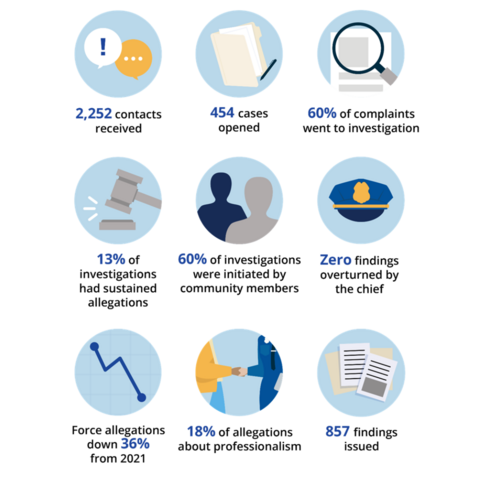
OPA released its 2022 Annual Report on May 22nd. The report highlights our office’s data trends and police accountability work from the previous year and summarizes our complaint, investigation, and discipline data.
OPA Director Gino Betts Jr. Discusses His Vision for the Office
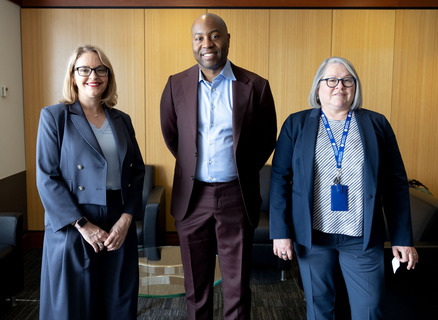
In August 2022, our office welcomed Gino Betts Jr. as its new director. Director Betts, a former attorney at Chicago’s Civilian Office of Police Accountability (COPA), came to us from the Cook County State’s Attorney’s Office, where he served as a community justice prosecutor. Since joining OPA, he’s laid out a vision for increased transparency, high-quality investigations, and earning community trust.
Click Here to learn more about Director Betts
|