As we prepare to say good-bye to 2022, now is a great time to reflect on the year and set goals for next year!
Did you notice our little friend telling you to be prepared?!
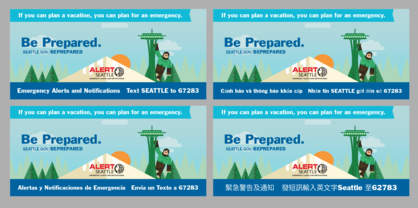
If you can plan a vacation or an upcoming event, you can plan for an unexpected event that could disrupt your normal routine. Winter officially kicked off on December 21st, and we have a long way to go before it warms up again. Doing just one thing to prepare for bad weather is that much more than doing nothing at all. Let’s get better prepared together!
AlertSeattle
AlertSeattle is the City of Seattle's official emergency alert system. Residents, workers, and visitors are encouraged to sign up to receive free text, email, or phone call alerts when emergencies are happening in their area. You'll receive alerts for things like major road closures, snowstorms, high winds, and other winter hazards. This system is also used to share information during disasters like earthquake and tsunamis.
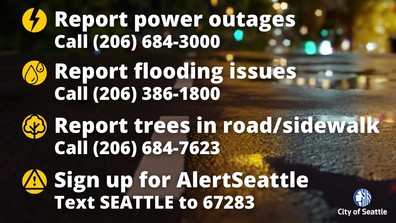
Simply visit click the link below or visit alert.seattle.gov and click the red Sign Up Now! button, or text the word SEATTLE to 67283 to instantly receive text message alerts from AlertSeattle.
|
If you travel, try to do so as safely as possible:
|
Winter Hazards
The winter months bring us plenty of weather, and with that the potential for emergencies. Click the links below to learn more about our winter hazards.
Being prepared for winter emergencies is as easy as understanding the hazards and planning for how you and your family will deal with them. Click here for information about creating an emergency plan for yourself, your family, and your neighborhood.
As the temperatures drop this winter, remember to plan for yourself, your family, and potentially those in your community. It's important to know who may need help and what you're prepared to face in case your power goes out.
Below is a checklist of items to go through and think about as winter storms come in:
- Stay off roads if possible. If trapped in your car, then stay inside. Prepare your emergency car kit in case you get stuck! Include jumper cables, sand, a flashlight, warm clothes, blankets, bottled water and non-perishable snacks. Keep a full tank of gas.
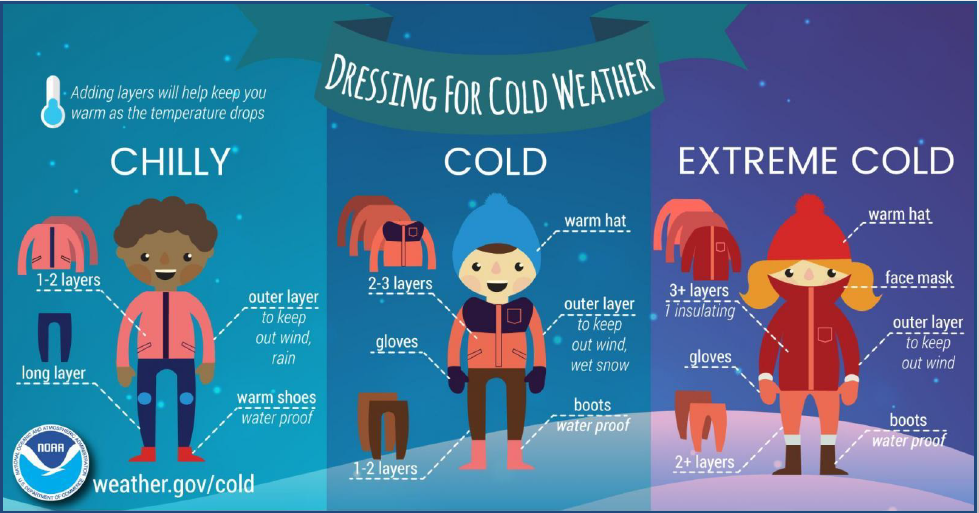
- Limit your time outside. If you need to go outside, then wear layers of warm clothing. Watch for signs of frostbite and hypothermia.
- Reduce the risk of a heart attack by avoiding overexertion when shoveling snow and walking in the snow.
- Generators can be helpful when the power goes out. It is important to know how use them safely to prevent carbon monoxide (CO) poisoning and other hazards. Generators should always be outside of the home.
- Know the difference between a winter storm watch and a winter storm warning:
-
Watch: Alerts the public to the possibility of a blizzard, heavy snow, heavy freezing rain, or heavy sleet. Winter Storm Watches are usually issued 12 to 48 hours before the beginning of a Winter Storm.
-
Warning: Issued when hazardous winter weather in the form of heavy snow, heavy freezing rain, or heavy sleet is imminent or occurring. Winter Storm Warnings are usually issued 12 to 24 hours before the event is expected to begin.
Keep an eye out for your neighbors if possible. If you know someone who may be negatively impacted by the cold or by flooding, please check to make sure they're prepared for power outages and are safe and well in their home during extreme weather.
|