Case & Policy Update
Volume 55 | October 19, 2022
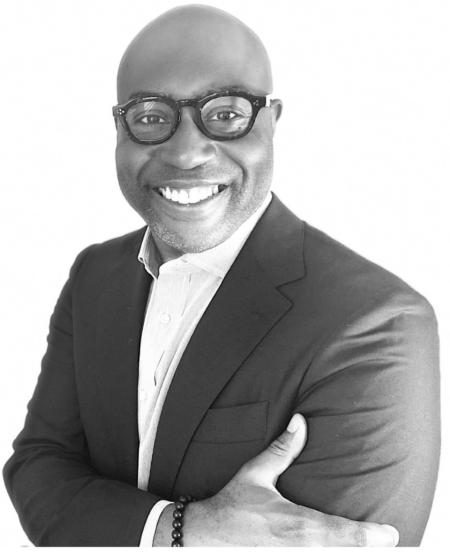
Below, Office of Police Accountability (OPA) Director Gino Betts answers questions of public and police interest.
Meet the New OPA Director
 |
|
What are your priorities as OPA Director?
As OPA director, 1) improving civilian and officer confidence in the police oversight system, 2) increasing public awareness, particularly in BIPOC and other marginalized communities, about OPA’s duty to investigate police misconduct and how to file complaints, and 3) identifying and recommending revisions to SPD policies that do not meet community needs, are all high priority items.
|
What do you hope to accomplish in your first 100 days as Director?
I have three major goals for my first 100 days: First, I will tour underserved communities and SPD precincts to meaningfully and genuinely engage the people and listen to local concerns. Second, I plan to improve the complainant experience during OPA’s investigative process. To that end, we hired a complaint navigator, who will focus on ensuring complainants understand the investigative process and provided frequent and personalized case status updates. We also plan to offer complainants case review meetings, where OPA explains its investigative steps, analyses, and findings once an investigation concludes. Third, I will get OPA operating at full capacity. Like several agencies, OPA endured significant attrition. Following the pandemic, we were left with several high-level vacancies I plan to fill by the end of the year.
What is your background with police accountability and law enforcement?
My interest in police accountability was sparked by several national incidents of police misconduct captured on video and broadcasted for the world to see; like, the killings of Philando Castile in Minnesota, Eric Gardner in New York, and Laquan McDonald in my hometown of Chicago. In 2017, I was recruited to join Chicago’s newly established Civilian Office of Police Accountability, where I served as an attorney. I worked on cases involving significant corruption and uses of force. Prior to that, I worked as a prosecutor at the Cook County State Attorney’s Office. I left in 2015 to work at Cook County’s Department of Homeland Security and Emergency Management, where I was quickly promoted to acting chief of staff. In 2019, I returned to the State Attorney’s Office, where I worked in the Felony Review Unit, Felony Trial Division, and the Community Justice Center.
What is your background working with the community?
At the Community Justice Center, in addition to prosecuting violent felonies, I worked directly with community leaders and stakeholders to address local concerns and reduce violence on Chicago’s Southside. I led monthly community stakeholder meetings including law enforcement, business, education, and faith-based leaders. Together, we problem solved issues caused by habitual offenders and drivers of violent crimes. We also held midnight prayer vigils and positive loitering gatherings in the Southside’s high crime areas.
What is OPA’s role in the police oversight framework?
OPA has frontend and backend accountability responsibilities. Frontend accountability speaks to our duty to recommend SPD policy changes for practices that do not meet community needs. It also includes our duty to preempt police misconduct, by recommending policy reforms and identifying best practices, whenever possible. Community input is essential to successful frontend accountability.
Backend accountability refers to our investigations of misconduct complaints. Unlike frontend accountability, the OPA director must be insulated from external influences when investigating allegations of police misconduct.
What is OPA’s role in the community?
OPA owes the community thorough, timely, transparent, and objective police misconduct investigations. In addition to its investigative work, OPA must be a visible and engaged police accountability partner. All areas of Seattle should know about OPA and consider it a valued resource for investigating questionable police encounters. Ultimately, the goal is to simultaneously increase public and police trust in our ability and intent to conduct an uncompromised process.
How will you help build community trust in police oversight?
The consist production of thorough, timely, and objective investigations coupled with sound DCM analyses should go a long way toward trust building. Partnering with local stakeholders engaged in police accountability work is another strategy. Additionally, another tool I plan to implement is annual surveys capturing community attitudes toward police oversight. That feedback will help shape OPA operations and community outreach strategies. Hopefully, as we continue to do the work, community attitudes will improve.
If officers want to meet or contact you, how can they do that? Do you have any plans to engage with officers?
I do plan to avail myself to officers. I am sure they have questions about my vision for OPA and expected changes. To that end, I plan to tour each precinct to outline my plans. I also want to hear their concerns and brainstorms ways to increase their buy-in in our processes.
What would you do to ensure full transparency of OPA investigations?
I am a huge proponent of transparency. Transparency is the easiest way to build public and police trust in our process. I want to be as transparent as possible. Some jurisdictions publicly release videos and reports within thirty days of a complaint being filed. I think the benefits of that level of transparency outweigh the concerns, typically centered on added public scrutiny.
Is there a specific topic you would like to see covered in CPU? Please send your topic suggestions to opa@seattle.gov.
The legal analysis and opinions herein are OPA’s own and do not state the positions of the Seattle Police Department (SPD). SPD employees should seek the formal advice of SPD Legal, Precinct Liaisons, and the City Attorney's Office when legal questions arise in the field.
OPA also posts past issues on the Case & Policy Updates page.
|