News about the week ahead for the West Seattle Bridge Program.
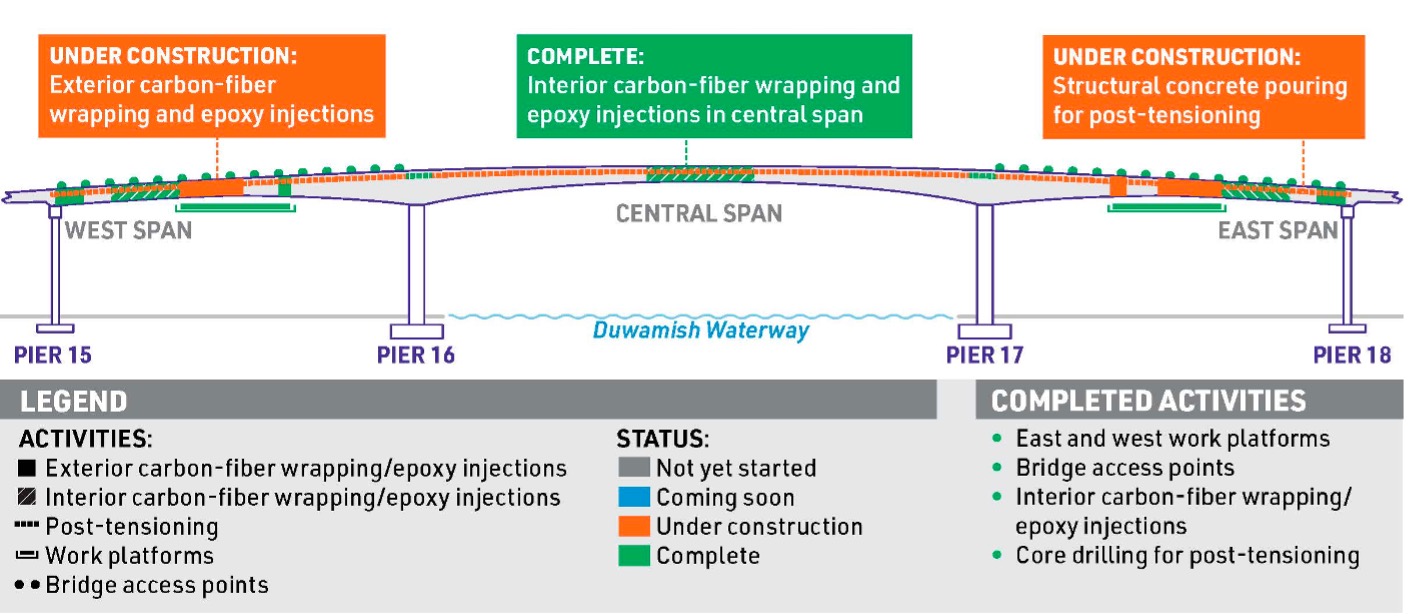
This was a big week for the West Seattle Bridge repair effort. We completed the final structural concrete pours for the new post-tensioning system inside the bridge!
Concrete work was originally scheduled to begin in February and was delayed by a concrete strike that affected practically every transportation and construction project in the Puget Sound region. This week’s deliveries involved concrete trucks making back-to-back pours. Our construction contractor poured 15 truckloads of concrete in two days, more than half of the 245 cubic yards of structural concreted needed for the entire project.
With the foundation of the new post-tensioning system completely poured and curing, we are beginning the next step in the tensioning process.
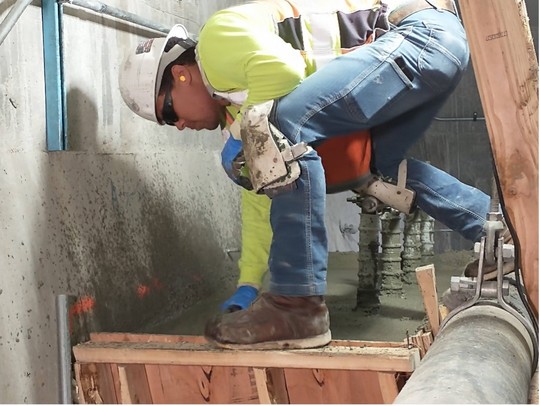 A crew member smooths the surface of a newly poured concrete anchor.
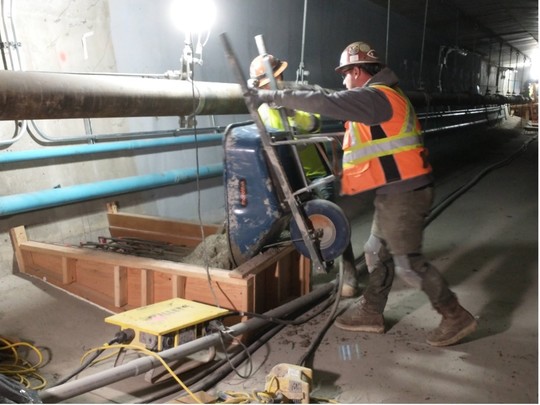 Crews pour concrete into the form for a structural support component.
As part of this next step, we began installing ducts inside the bridge this week. These ducts act as a protective casing for the post-tensioning cables and will span the length of the bridge. Over the coming weeks, we will install about 11,000 feet of ducts inside of the bridge. Soon, we will begin threading cables through the ducts and the openings in the new concrete structures.
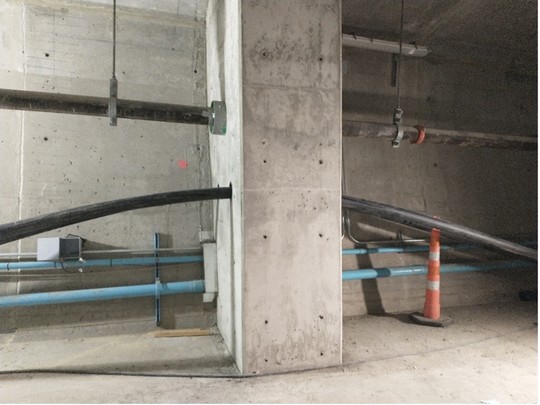 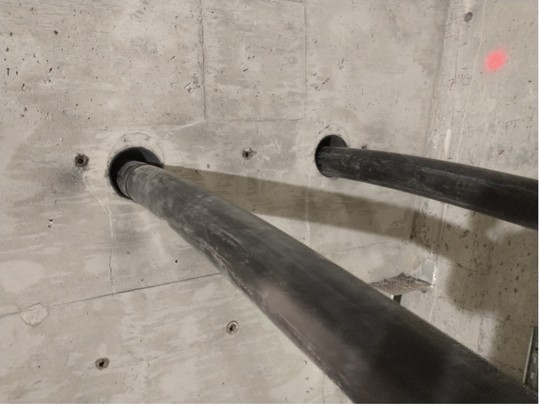 The black ducts that will encase the post-tensioning cables pass through an opening in the newly poured concrete structure.
We also continued maintenance work on the bridge this week as we made more progress removing overhead signage structures that will be replaced with brand new structures.
This Saturday and Sunday, we’re paving SW Spokane St between the Chelan 5-way intersection and the Terminal 5 access bridge. This is near the eastbound entrance to the low bridge and the access bridge to Terminals 5 and 7. The pavement at this location has been rapidly deteriorating due to the increase of heavier vehicles since the closure of the West Seattle Bridge.
We’ll start this paving around 4 AM and expect to be done by 6 PM each day. During this work, we’ll need to reduce the two travel lanes to a single lane. We’ll have someone directing traffic at the work location to keep traffic moving efficiently.
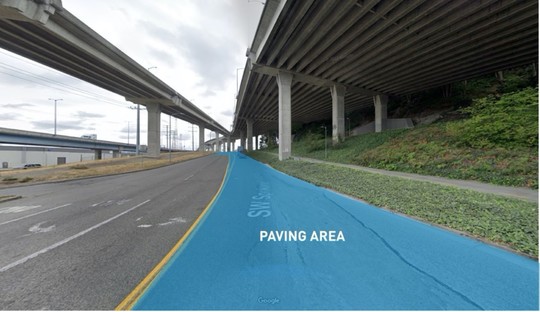 The paving area, shaded in blue. On Saturday, May 28 and Sunday, May 29, we’re paving near the eastbound entrance to the low bridge and access bridge to Terminals 5 and 7.
If you plan to drive on the low bridge this weekend, please leave early and expect delays. As always, drive slowly and carefully in work zones and follow directions from signs and flaggers.
On Saturday as early as 7 AM – 11 AM, we will be working on 14th Ave S and S Cloverdale St to install reflective bands around the signal heads in the area. Traffic impacts include the closure of one lane at a time as we work on the installations. Please anticipate minor delays in the area.
Also on Saturday, we will be updating the flashing beacon on 17th Ave SW and SW Henderson St. Rapid flashing beacons increase safety at crossings by using amber light to alert drivers of people crossing. We anticipate this work to begin at 8 AM and conclude by 5 PM. We will be primarily working from the parking lane however please expect minor disruptions in the area.
As part of Reconnect West Seattle, we were happy to be able to plant 300 trees around West Seattle and the Duwamish Valley. As sSummer approaches, you may see our crew members maintaining the new trees in your neighborhood. We use irrigation bags to water newly planted trees for three summers after they have been planted. Our crews are scheduled to fill bags with approximately 20 gallons of water once per week during our dry summer months. The water drips out from the bottom of the bag over a 3 to 4 hour period to reduce or eliminate any runoff.
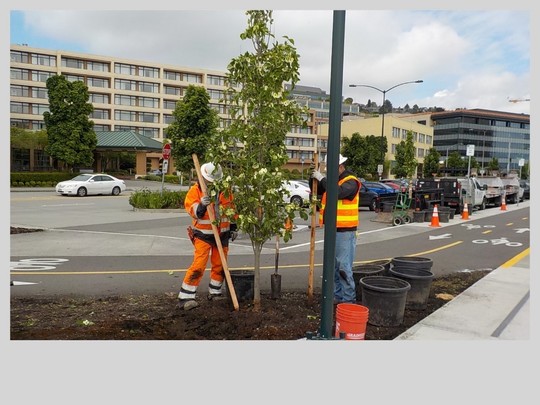 Installing new trees
Is there a new tree on your street? Want to give it a little extra TLC to help it thrive? We encourage you to fill the irrigation bag one additional time, 3 or 4 days after our crew visits. Thank you for your help in giving Seattle a cleaner, greener future! Learn more about our trees and landscaping program.
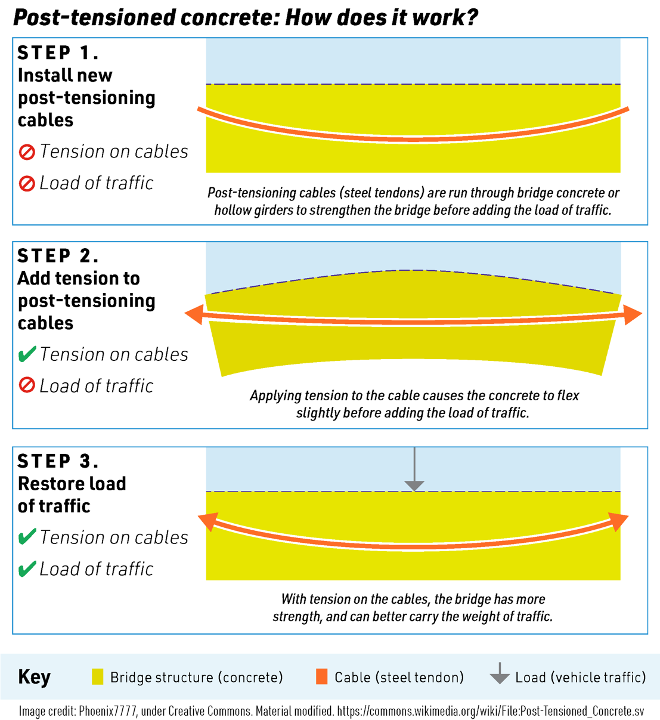
All modern concrete bridges have steel reinforcements that increase strength and control cracking. Smaller conventional concrete bridges often use steel reinforcing bars, or rebar. Longer-span bridges, like the West Seattle High-Rise Bridge, require something in addition to rebar to prevent cracking, which is called prestressing.
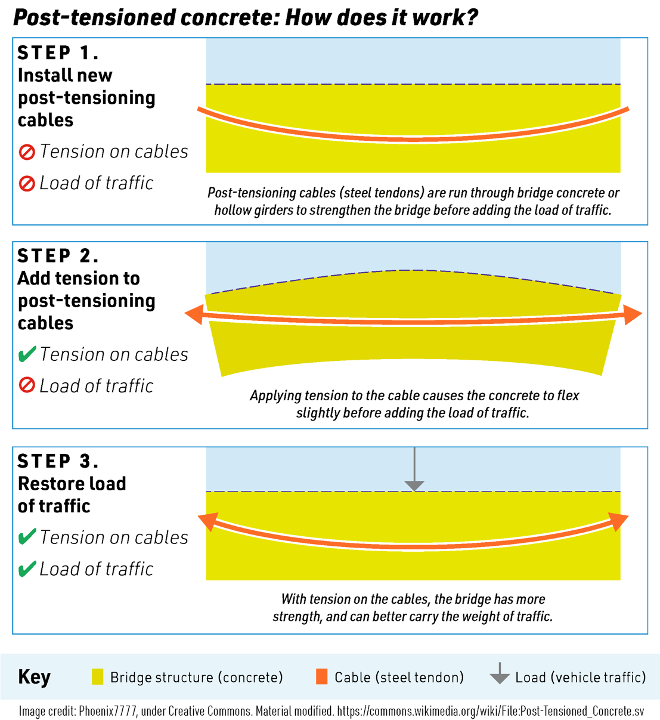
These “prestressed” bridges use high-strength cables to compress the concrete, so that the bridge can hold a heavier load. It’s called prestressing because it compresses the concrete prior to applying the weight of vehicle traffic to the concrete. The steel cables used to accomplish the prestressing are installed and stressed prior to pouring the concrete (pre-tensioning) or installed and stressed after the concrete has been poured and hardened (post-tensioning).
 If you missed it, watch our latest video to see us in action as they apply carbon-fiber to the underside of the bridge and construct new post-tensioning concrete components.
If you or someone you know wants to talk with us, give feedback, or could benefit from having this information read to them in another language, please call (206) 400-7511.
|