News about the week ahead for the West Seattle Bridge Program.
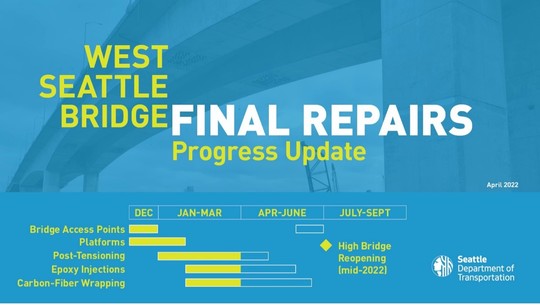
March was a busy month for West Seattle Bridge repair work!
Watch our latest video to learn more about how our skilled team puts carbon-fiber wrapping on the bridge for strength, and what we did to prepare for recent concrete pours so we can install the post-tensioning system that will make reopening the bridge possible.
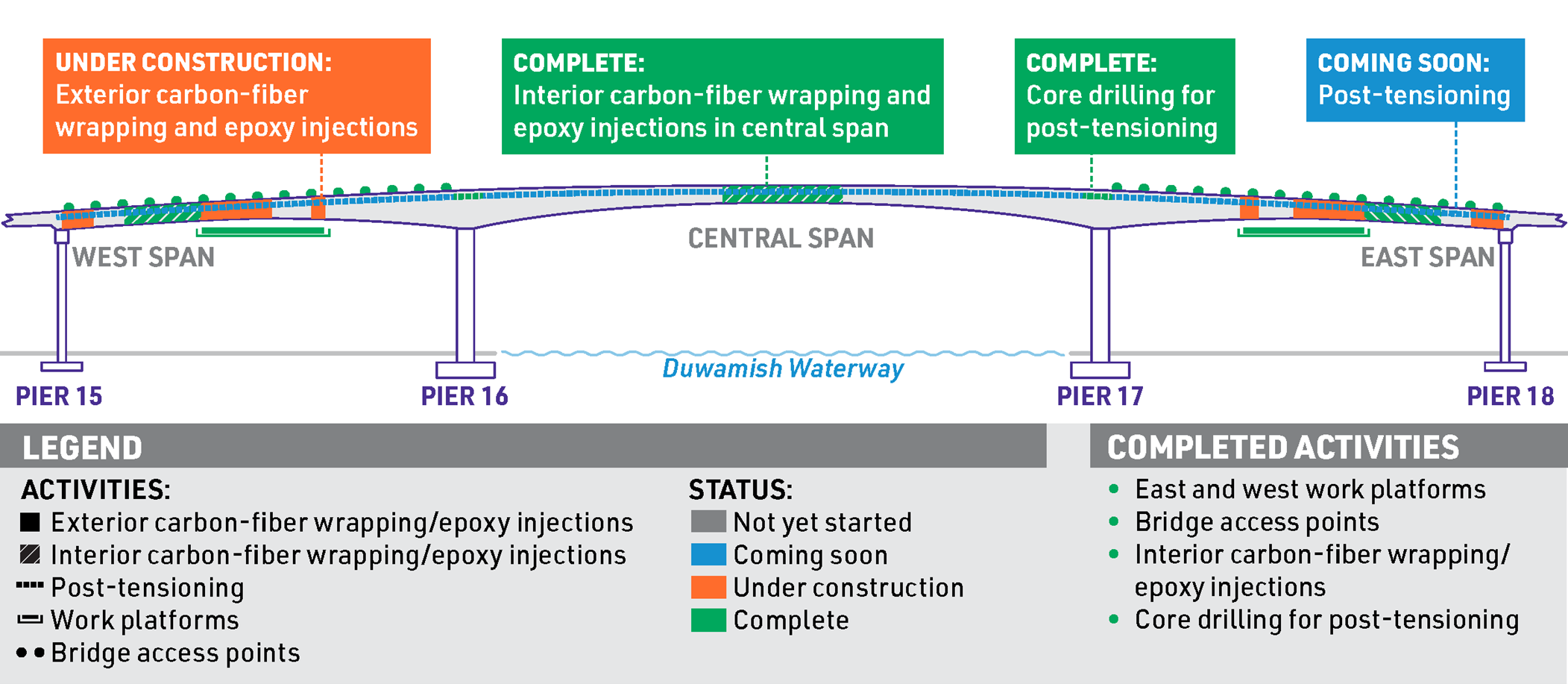
Following last weekend’s successful structural concrete pour, this week we continued pours for the new post-tensioning system. The concrete post-tensioning components will guide and anchor 46 miles of steel cables that will span the length of the bridge.
Check out our time lapse video showing the inside of the bridge while crews pour concrete into structural forms. In the video, you’ll see a dark hose that stretches down from the ceiling and is fed into the wooden forms. This hose is used to pump concrete from the bridge deck above into the bridge’s interior.
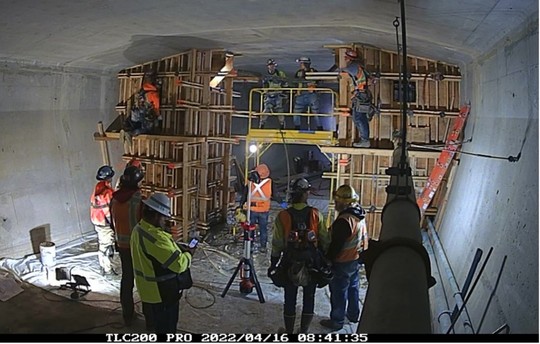 As crews pour concrete into the forms, they also vibrate the mixture to help it settle into place and remove any pockets of air. This process increases the strength of the concrete.
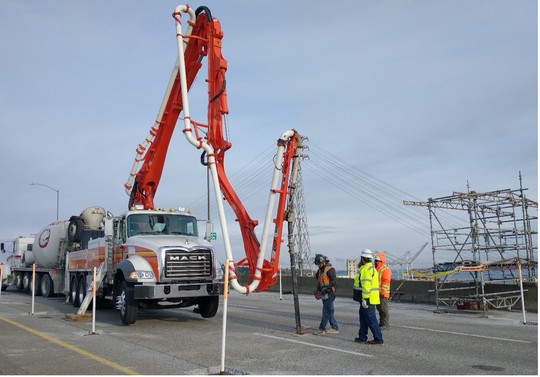 Concrete is pumped from the bridge deck into the inside of the bridge.
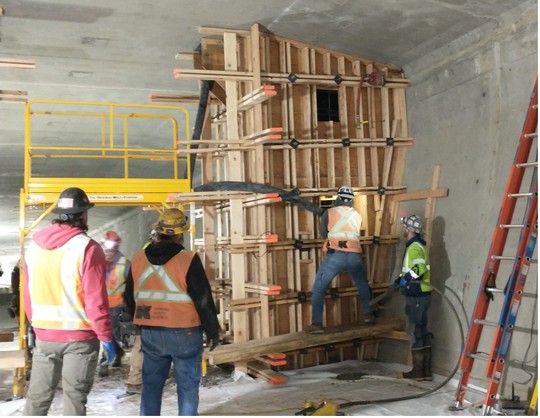 Crews feed the concrete pump hose into the form for the post-tensioning system.
While the concrete cures over the coming weeks, we will prepare for additional pours and continue carbon-fiber wrapping on the bridge’s exterior.
During our West Seattle Bridge repair work, we recently encountered 2 peregrine falcons that have taken residence under the bridge.
Our team is working closely with the Washington State Department of Fish and Wildlife to ensure that we do not disturb the residents of the nest while we continue our repair work. This includes having a biologist on-site when crews work nearby.
On Thursday, we held the 28th West Seattle Bridge Community Task Force (CTF) Meeting.
We discussed recent construction highlights and the rehabilitation schedule for the West Seattle Bridge, upcoming low bridge rehabilitation, and the Reconnect West Seattle Program.
 For more information, watch the full meeting on YouTube or read our meeting recap blog post.
We’re planning to complete several projects this weekend. For all planned construction, we expect to begin work as early as 7 AM and conclude by 5 PM. Please anticipate delays, drive safely in work zones, and follow directions from signs and flaggers.
On Saturday and Sunday, we’ll be updating curb ramps on 16th Ave SW and SW Barton St in the Highland Park neighborhood. Parking will be limited in these areas during this work. People walking and biking in the area will be detoured to the other sides of the intersection for crossing.
Throughout the weekend, signs and marking crews will be working in several locations.
-
Marking a crosswalk on 45th Ave SW and Admiral Way SW
-
Pavement marking work and sign installations on Albro S Pl S and S Eddy St
-
Pavement marking work and sign installations on 16th Ave SW in the vicinity of SW Findlay St
-
Restoring the pavement markings on Marine View Drive SW between SW 104th St and SW 106th St
-
Updating the remaining pavement markings and installing reflectors on West Marginal Way SW between 2nd Ave SW and Highland Park Way on Sunday. Time permitting, they will also install reflectors on the lane lines on Highland Park Way between SW Holden St and S Holden St.
-
Installing crosswalks and legends on 1st Ave S and Olson Pl S on Sunday
On Sunday, we’ll be installing signs on southbound SR 99 between S Atlantic S and S Spokane St. During this work, we’ll need to reduce the two travel lanes to a single lane and there may be delays for people driving.
The S Spokane St on-ramp to northbound SR-99 closed on Monday, April 18 while WSDOT repairs a hole in the pavement. The work is expected to last approximately one more week.
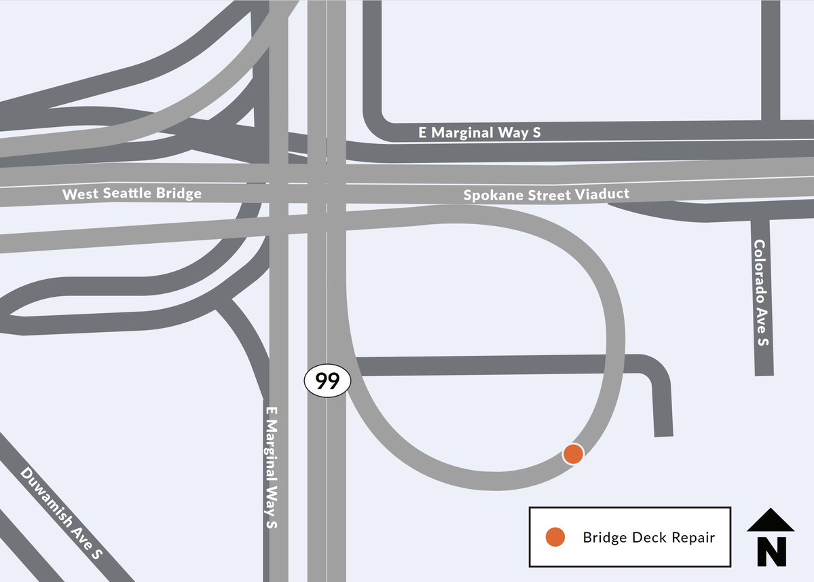 Location graphic courtesy of WSDOT.
Please be aware and find alternate routes. Learn more on WSDOT’s blog post.
SDOT uses a variety of tools to help keep streets safe in Seattle:
-
Parking management: Parking on both sides of the street can be an effective traffic calming tool. On wide open streets, some drivers can feel comfortable traveling at higher speeds. Narrower streets encourage drivers to slow down.
-
Radar speed sign: The speed signs detect and display the speed of oncoming vehicles. The displayed speed reminds drivers to drive responsibly.
-
Speed humps, cushions, and tables: speed humps reduce drivers' speeds.
-
Traffic circles: Traffic circles guide vehicles through an intersection around a central island, forcing vehicles to slow down. These slower speeds help reduce the number and severity of collisions. Landscaping in and around the traffic circle further improves neighborhood livability.
-
Yard signs: Yard signs are intended to inform drivers that they are travelling on a neighborhood street and remind drivers to slow down.
Visit our website to learn more about traffic calming measures. You can also check out a recent blog post about pedestrian safety tools.
-
Plan ahead for sports in Sodo. Mariners and Sounders games have returned. With more in-person sporting events, you may see increased traffic on game days. King County Metro provides a wide range of transportation options and choices for King County. In addition to the region’s largest bus network, our choices include vanpools, paratransit services, and many new forms of transportation solutions.
-
Flip Your Trip offers support and free rides to those who live or work in West Seattle. Sign up today at FlipYourTrip.org to receive a special welcome bonus worth $25 in FREE trips you can use on transit, water taxi, and bike/scooter-share (using the Transit GO Ticket app)—as well as the first month free on Metro vanpools, personalized trip planning, informational events, and more.
If you or someone you know wants to talk with us, give feedback, or could benefit from having this information read to them in another language, please call (206) 400-7511.
|