|
|


reetings HSD community,
March is National Social Worker Month! Many staff working at HSD and our community partners are part of the social work community, by credential or by identity.
There are nearly 720,000 social workers in our nation. According to the Bureau of Labor Statistics, that number is expected to grow by 12 percent by the end of the decade, making social work one of the fastest growing professions. Social workers have a long history of dedication to improving the lives of vulnerable children and adults. They played vital roles in the Civil Rights and women’s rights movements (March celebrates National Women's history month too), pushing for social programs we now may take for granted, including the minimum wage, a 40-hour work week, Social Security, and Medicare.
The National Association of Social Workers (NASW) is the profession's membership group. They highlight information about the profession as well as this year's theme, “The Time is Right for Social Work," which underscores the contributions social workers have made for more than a century and how the services they provide are needed more than ever.
In his recent State of the City address, Mayor Bruce Harrell spoke of his “vision of One Seattle – defined by a commitment to listen to and work with one another toward shared goals rooted in urgency and action.” He then proceeded to highlight many issues that are a critical part of our mission here at HSD and the social work that we and our partners do every day—together.
Mayor Harrell spoke of enforcing our criminal laws while acknowledging the facts of institutional racism against African Americans, the exploitation of indigenous people, and the recent rise in anti-Asian hate and antisemitism. He said we should define progress “not just with law enforcement, but also community engagement, outreach, support and social services.” He mentioned community safety responses like Health One, career opportunities for young adults and Seattle Promise, new regional approaches to addressing homelessness, and emergency financial assistance to respond to the impacts of COVID.
Each day, social workers empower millions of Americans, so they can live life to their fullest potential. Social workers also work in communities and in politics to improve living conditions for all. During Social Work Month we urge you to learn more about our important profession, thank the social workers in your lives, and help support their work.
All my best,
Tanya Kim
|
|
|
|
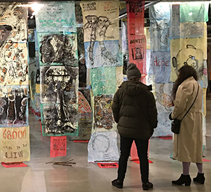
The 1 Million - Multiple Species Eradication
February 3, 2022 - April 7, 2022
The 1 Million - Multiple Species Eradication exhibit at King Street station explores bio-/multi-species extinctions and species affected by humanity's mass resource extraction.
|
|
In 2022, the City of Seattle will expand health care partnerships and opportunities for COVID-19 vaccinations and boosters for Seattle residents. Details of eligibility, locations, and how to make an appointment below.
Information is also available in Amharic, Chinese, Korean, Somali, Spanish, and Vietnamese.
|
|
|
Seattle Redistricting Commission invites public participation
The Seattle Redistricting Commission has begun the process of examining how to redraw the boundaries of Seattle’s seven City Council Districts and is inviting community members to learn about the process and provide feedback. You can review drafts of proposed maps and offer your feedback at the Seattle Redistricting Commission website. The designated public comment period is open February 16 – July 31, 2022.
On Human Interests: Support Survivors of Violence
On AgeWise King County: Caregiver Burnout: Is Your Flame About to Fizzle?
We are entering our third year of a pandemic that has stretched us emotionally, physically, mentally, and financially. Daily life is challenging enough but toss in an ever-evolving pandemic and the landscape has become more complex.
Caregiving and caregivers have been hit exceptionally hard. Whether you are a parent or grandparent helping your kids navigate distance learning, then in-person learning, while also balancing childcare with work obligations, or you’re supporting a loved one with additional care, or helping others manage all these responsibilities, we know it’s been tough.
Visit the blog to learn ways to identify if you are experiencing burnout and practical tips for self-care and stress management.
|
On Public Health Insider: With A Commitment to Equity: Board of Health Updates King County’s Bike Helmet Policy
Bike helmets save lives and help prevent serious injuries. A review of several published studies estimates that bike helmets provide a 63-88% reduction in the risk of head and brain injuries for people who ride bikes. As part of the movement to encourage the use of bike helmets, the King County Board of Health passed a law in 1993 requiring anyone riding a bike to wear a helmet.
However, data presented to the Board of Health has shown racist and discriminatory enforcement. Seattle Police data collected and analyzed by Seattle Neighborhood Greenways and the Helmet Law Working Group shows that police disproportionately gave helmet law citations to Black, Indigenous, and People of Color cyclists.
Their analysis found that Black riders were nearly four times as likely to be cited by police for not wearing a helmet while biking compared to White riders. Further, in Seattle, nearly half of the citations issued for biking without a helmet were given to people living homeless.
In light of this data, and in alignment with the Board of Health’s declaration of Racism as a Public Health crisis, on February 17th, the Board of Health repealed the King County bike helmet law while affirming the importance of helmets in preventing serious injury and death. In a companion resolution passed in the same meeting, the Board of Health emphasized the importance of helmet use for bikes, scooters and other similar vehicles and committed to work with community partners to expand access to low and no-cost helmets, provide education on helmet safety, and support the improvements for safer bike infrastructure.
Visit the blog to learn more about the decision and free bike helmet resources that are available.

2022 Notice of Funding Availability
HSD presented to the Seattle City Council Public Safety and Human Services Committee on January 25, providing more info from staff about the five planned investments—
- Farm to Table Support Services
- Youth and Young Adult Behavioral Health
- Gender-Based Violence (GBV) Victim Services
- Batterer Intervention Services
-
Gender-Based Violence (GBV) Legal Services
plus a sneak peek at possible 2023 funding opportunity areas. Watch video of the presentation on Seattle Channel's YouTube channel.
HSD recommends parties interested in applying for HSD funds review our Funding Opportunities page regularly and subscribe to the HSD Funding Opportunities email list.
|
|
|
 The Seattle Human Services Department (HSD) connects people with resources and solutions during times of need so we can all live, learn, work, and take part in strong, healthy communities.
HSD is one of the largest contributors to Seattle's safety net, investing hundreds of millions of dollars in contracts to more than 200 community-based organizations and programs that support Seattle neighbors and communities each year. About 400 staff further the department’s role as a funder, convener, and direct service provider to achieve positive results. HSD invests in innovative strategies and effective programs and services that promote racial equity, support basic needs in our communities, and foster connection through collaborative approaches to address six key impact areas:
Preparing Youth for Success
Supporting Affordability and Livability
Addressing Homelessness
Promoting Public Health
Supporting Safe Communities and Safe Lives
Promoting Healthy Aging
|
|
|
|
|