City of Seattle, Washington sent this bulletin at 01/13/2022 02:44 PM PST
A Note from the Acting Director - January 2022
Greetings and Happy New Year,
The start of a new calendar year is an excellent time to talk about new beginnings. January 2022 brings a new mayoral administration at City Hall and new Council Committee Assignments, Schedules and Leadership Positions. Here at HSD, we welcome Michael Bailey as a new Deputy Director and Lena Tebeau as our new Senior Executive Assistant. (With big thanks to Tess Colby for serving as Interim Deputy Director and Michael Mathewson for serving as interim Sr EA!)
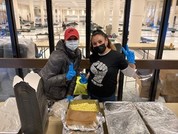
This year’s change also brought record-breaking cold temperatures and snow that began a nine-day severe weather shelter activation. I want to thank the Homeless Strategy and Investments staff, the HOPE Team, the service providers, the King County Regional Homelessness Authority (KCRHA), volunteers, and City departments for their hard work and dedication to working together. This coordinated outreach provided cold-weather supplies, food, and transportation to many severe weather night shelters and day warming centers.
Many thanks to our planners and HR experts who managed opt-in staffing reassignments, ADS case managers who maintained client contacts and supported the communication of vital information, and to our partner agencies who are committed to helping people through times of extraordinary need. The HSD Human Interests Blog highlights some of that work.
This week marks the start of many opportunities to celebrate the life of Martin Luther King Jr. (1/15/1929 – 4/4/1968). Seattle has a vibrant history of working to improve equity and social justice, and HSD is a part of that work. Our City is a diverse and amazing place to live, learn, work, and explore. Yet we all know Seattle and the region are not without deep and persistent inequities – particularly when it comes to race. In 2022, let us continue the legacy Dr. King helped build by honoring our shared humanity through actions that empower those most vulnerable in our community.
This month we are sunsetting our Homeless Strategy an Investments Division, which includes most of our service provider contracts and colleagues we have worked with for many years to the KCRHA. This major task is just one of the end-of-year highlights for 2021 which we share with you below.
To all the people and providers who helped us in this past year, I wish you prosperity in the new year, and I look forward to working with you soon.
All my best,
Tanya Kim
Winter brings snow, ice, and cold. This makes traveling difficult for buses, emergency vehicles, and you. Winter weather also puts people at risk who are experiencing health problems and homelessness. Plus, cold temperatures can cause pipes to freeze and burst.
Seattle.gov/winterweather brings together information and links to web pages from multiple City sources as well as some of our partner agencies. Learn where to call to report downed power lines and fallen trees. Sign up for AlertSeattle. Find maps of road closures and bus reroutes. Learn when HSD opens severe weather shelters. And much, much more...
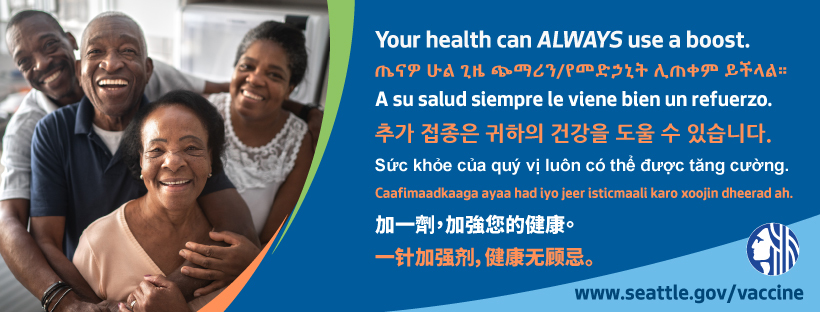
The City of Seattle and partners are currently hosting fixed COVID-19 vaccination clinics.
ID and insurance are not required to receive a COVID-19 vaccine at any City of Seattle site or mobile clinic. If you are receiving a second dose or booster, please bring your proof of vaccination with you. Undocumented immigrants can be vaccinated at any Seattle vaccination site. Your medical information is private, and vaccine providers will not share it with federal immigration law enforcement agencies.
Information is also available in Amharic, Chinese, Korean, Somali, Spanish, and Vietnamese.
Seattle Mayor and City Council Proclaim January Human Trafficking Awareness Month
Mayor Bruce Harrell and Councilmember Lisa Herbold were joined by other City Councilmembers to declare the month of January as “Human Trafficking Awareness Month,” and today, January 11, 2022, to be “Human Trafficking Awareness Day” to proclaim the equality and freedom inherent to all people. The proclamation sets forward the City’s intent to advocate for legislation and protection for survivors, to educate leaders, and to encourage public awareness and action against various forms of human trafficking. Read more on HSD's Human Interests blog.
Looking Back at 2021 Highlights
Our Mission to connect people with resources and solutions during times of need so we can all live, learn, work, and take part in strong, healthy communities continued to hold a greater sense of urgency in 2021. Over this past year, HSD continued to be one of the largest contributors to Seattle’s safety net, and our staff and community of human service providers continued to be a part of the front-line response to COVID-19. And we couldn’t do it without the partnership and efforts of friends and community members.
As we take on new bodies of work in 2022, we move forward committed to helping people grow up and grow old with opportunity and dignity and will work to support and empower diverse communities across Seattle. We are proud to share some 2021 highlights.
COVID-19:
Aging & Disability Services (ADS) helped 14,000 clients secure COVID-19 vaccine appointments and 1,350+ in-home vaccine screenings. Staff also assisted in standing up 120 vaccine clinics in SHA buildings and other locations.
Wellspring distributed checks totaling an additional $81,200 in cash assistance from the Hospitality Worker Emergency Relief Fund. The cumulative dispersed amount for the Fund is 1,520 checks totaling $2,023,00 in cash assistance.
Seattle Relief Fund provided over $16 million in direct cash assistance for vulnerable low-income residents impacted by COVID-19.
Preparing Youth for Success:
Seattle Summer Food Service Program distributed 82,903 meals including lunches, breakfasts, and snacks at 39 sites throughout Seattle, including parks and Seattle Public Schools.
Seattle Youth Employment Program (SYEP) supported 328 paid youth opportunities through its Earn and Learn program and employment internships, which ranged from environmental work to media production and more.
Supporting Affordability and Livability:
HSD provided funding for 214,549 food bank visits (duplicated) and 1,457,972 meals through meal programs (at PSH, ES, and Community meals).
ADS staff helped lead the large-scale transition of the state’s “Get Care” Database which involved training and supporting 132 individuals and 32 agencies.
The nationally recognized Mobile Integrated Health Program partnership continued to increase the service area for Health One and added a second Seattle Fire unit to respond to referrals, andannounced the launch of a third unit in 2022.
2,351 people were reached via 22 Age Friendly Seattle virtual events in 2021 as the program continued to support learning and social connection through online programing including Civic Coffee Hours, Close to Home programs, an African American Elders’ Candidates Forum, and more.
STC staff conducted several funding processes to invest in community, including:
$10.4 million Community Safety Capacity Building RFP which awarded 33 contracts (17 are new providers to HSD).
$300,000 to address racism and intolerance towards API communities
$600,000 to mitigate increasing gender-based violence during the pandemic
As we look ahead, please join us in celebrating these tremendous contributions and looking forward to what we will achieve together in 2022!
On Human Interests: ICYMI: City of Seattle Provides 9,392 Cash Assistance Grants to Income-Eligible Families through the Seattle Relief Fund
Last month, the City of Seattle in partnership with several nonprofits announced that it has provided 5,257 individuals and 4,135 households with direct cash assistance through its Seattle Relief Fund. This fund was created to support vulnerable income-eligible Seattle residents who have been impacted by the COVID-19 pandemic.
Of the applicants, 5,585 adults received $1,000 awards, 827 two-adult households received a payment of $2,000, and 2,980 households with children or adult dependents received a payment of $3,000. HSD and the Office of Immigrant and Refugee Affairs (OIRA) both managed the Seattle Relief Fund, with the planning process starting in July and the official application having launched on October 25th. In the three weeks that the application was open, the program received 63,672 submissions.
Read more about it on our blog, and see what some of our community partners had to say about the importance of this funding…
On AgeWise King County: Advancing Age Friendly Seattle
Last month, HSD’s Aging and Disability Services Division welcomed a new team member—Age Friendly Seattle Program Manager Dinah Stephens. Dinah comes to us with a nonprofit background in communications, policy advocacy, and electoral work. After more than 10 years with Planned Parenthood Los Angeles, most recently as Senior Director of Public Affairs, she has worked as a consultant to other mission-driven nonprofit groups seeking to advance justice and equity.
With a history of focusing on women’s health and rights in her work, Dinah was originally drawn to aging issues from a gender equity lens. While supporting the California Women’s Law Center, she was inspired to think more deeply about the inequities women experience over a lifetime and the ways in which these can compound in older years. She appreciates that the City of Seattle has a culture of centering racial and social justice and looks forward to continuing to lift this up through the Age Friendly Seattle initiative.
Learn more about Dinah, and check out the other articles in this month’s issue of AgeWise King County!
On Public Health Insider: How to Stay Out of the Hospital with Omicron Here
The Omicron variant is driving up cases of COVID-19 in King County since it was first identified less than a month ago. Soon, we will likely surpass the highest daily total seen throughout the entire pandemic. Our hospital ERs and ICUs are already near full, so even if just a fraction of these cases end up in the hospital, it could overload our already stressed healthcare system.
Our hospitals have limited resources, like ICU beds and ventilators, and limited staff to care for patients. If they get flooded with COVID cases, critical resources won’t be available to handle all the daily emergencies, like injuries from car collisions and people having heart attacks.
HSD was pleased to issue its 2022 Notice of Funding Availability (NOFA) related to the following investments:
Farm to Table Support Services
Youth and Young Adult Behavioral Health
Gender-Based Violence (GBV) Victim Services
Batterer Intervention Services
Gender-Based Violence (GBV) Legal Services
This notice provides an overview of HSD’s impending funding opportunities for 2022 with a brief description of the service areas for each opportunity, anticipated funding amounts, release dates, and contract start dates. Once finalized, HSD will issue detailed funding opportunities for each investment.
Guided by HSD’s Theory of Change, funding opportunities will include both population level and racial disparity data and will outline the desired results of the investment. In 2022, HSD will include new questions focused on a) language access for people who are deaf or hard of hearing and b) program and service accessibility for individuals for whom English is a second language.
The Seattle Human Services Department (HSD) connects people with resources and solutions during times of need so we can all live, learn, work, and take part in strong, healthy communities.
HSD is one of the largest contributors to Seattle's safety net, investing over $170 million in contracts to nearly 150 community-based organizations and programs that support Seattle neighbors and communities each year. About 400 staff further the department’s role as a funder, convener, and direct service provider to achieve positive results. HSD invests in innovative strategies and effective programs and services that promote racial equity, support basic needs in our communities, and foster connection through collaborative approaches to address six key impact areas: