|
|


Greetings,
As we approach the end of the year, staff here at HSD are wrapping up contracts and accounts of 2021 work and planning for new contracts and programs in the new year. We also bid farewell to Mayor Jenny A. Durkan and welcome a new mayoral administration across the street. City Council passed the City's 2022 Budget on November 22. You can learn more about funding for our department and others here: http://www.seattle.gov/city-budget-office
We are gathering our highlights for 2021, which we will share with you next month. COVID-19 pandemic efforts are still underway, but staff and resources are beginning to recover. As we look back on what our staff and partners have accomplished, see below for the release of our 2020 Annual Report. Its delayed release allowed us to include some of the specific work done to address the health crisis. We will have more in our upcoming highlights.
Here at HSD, changing priorities won’t just be coming from new faces at City Hall. With the start of the new year, we are saying goodbye to much of the work to address homelessness – and some of the people we have worked with for many years – as the City hands off most of our service provider contracts and planning to the new King County Regional Homelessness Authority. New budget cycles, shifting program priorities, and other changes also mean we’re changing and hiring staff. Don't miss our Employment Opportunities posted every month at the bottom of this newsletter.
Finally, to all the people and providers that have helped us this year, here’s to a wonderful season filled with warmth and happiness. Community members like you are what make our jobs possible.
All my best,
Tanya Kim
|
|
|
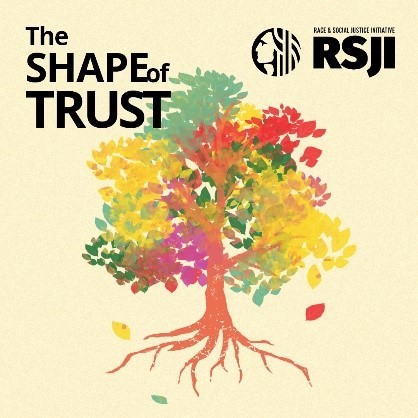 The Race & Social Justice Initiative, Seattle Human Resources, & Seattle Office of Arts & Culture are proud to present the next phase in The Shape of Trust, a multi-year project that uses transformational, anti-racist approaches to make change in the workplace and beyond. The heart of the project is a filmed performance that captures the authentic experiences of a group of City of Seattle employees, most of whom are BIPOC women.
|
|
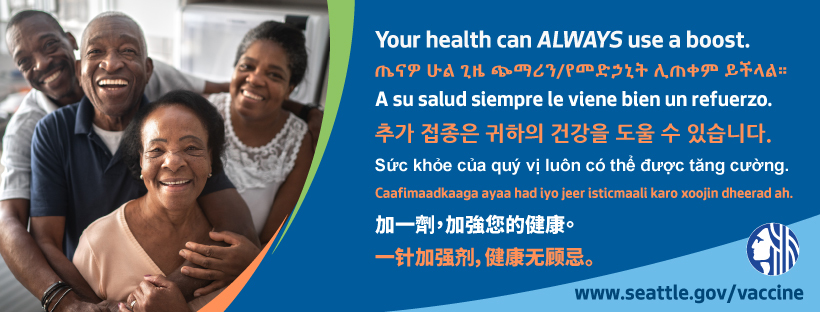
COVID-19 vaccines for children 5-11 from Pfizer have been approved as safe and effective by the Food and Drug Administration (FDA) and Centers for Disease Control & Prevention (CDC) for Emergency Use. Vaccinating children is important for their safety, as well as that of their families, teachers, and classmates. Free vaccines and boosters are available across our region. Details and locations can be found by clicking below.
Information is also available in Amharic, Chinese, Korean, Somali, Spanish, and Vietnamese.
|
|
|
SYEP is Currently Accepting Applications
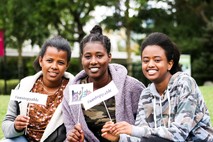
The Seattle Youth Employment Program (SYEP) is currently accepting applications for its 2022 Job Readiness Bootcamp. This SYEP experience is a fast-paced “learn and earn” program in which participants will gain soft skills (i.e., teambuilding, communication, conflict resolution) and job readiness skills (i.e. resume writing, interviewing skills). Those successfully completing program requirements will receive a stipend up to $600 depending on their engagement level. The goal is to equip young people with the skills needed for future internships and employment opportunities.
The Job Readiness Bootcamp will begin the week of January 24th and end the week of April 30th. COVID vaccination will be required for in-person programming options, but there will still be an all-virtual option to participate.
To be eligible, an applicant must be between the ages of 16 and 24, live within the City of Seattle limits, and live in a household with income at or below 80% Area Median Income.
For more information or to apply, please visit the SYEP web page. Applications are due December 19, 2021, by 11:59 pm. If you have any questions, please contact HSD_SYEP@Seattle.gov.
|
Seattle.gov and Winter Weather

Winter storms bring snow, ice, and cold temperatures. This makes traveling difficult for buses, emergency vehicles, and you. Winter weather also puts people at risk who are experiencing health problems and homelessness. Plus, cold temperatures can cause pipes to freeze and burst.
City of Seattle staff spent time earlier this year preparing an easy to remember Winter Weather web page which brings together information and links to web pages from multiple City departments and offices as well as some of our partner agencies. Learn where to call to report downed power lines and fallen trees. Find maps of road closures and bus reroutes. Learn when HSD opens severe weather shelters. And much, much more. Easily find all the latest updates when you need them. Visit Seattle.gov/WinterWeather today and bookmark it in your browser!
|
2020 Annual Report Released
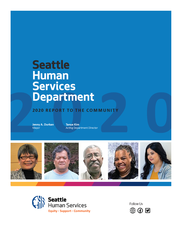
As we prepare for 2022 and an expected Return to Office for our staff in January, we are also beginning to return to some non-emergency tasks we regularly address as a department. One “routine” item to check off on our task list is our annual report for last year, completed a few months later than usual, but with an added section covering some of the work to address COVID-19 early in the pandemic.
We are pleased to share our just-released HSD 2020 Annual Report (pdf) with you, highlighting some of the incredible work we accomplished together—and with our City and community partners:
- A public awareness campaign was launched in partnership with The Vida Agency—“Be Ready. Be Hydrated. / Prepárate. Hidrátate.”—which promoted healthy choices to counter sugary beverage marketing tactics aimed at youth of color. It was funded by the Seattle Sweetened Beverage Tax (SBT). Learn more at bereadybehydrated.com and preparatehidratate.com.
- The City joined partners across King County to increase investments and pivot the work of some employees to focus on increasing food-related services. Of particular concern were residents disproportionately impacted by the economic downturn, including older adults, low-income children and families, communities of color, immigrants, refugees, and unsheltered individuals.
- To learn more about local efforts to disrupt human trafficking and ways to get involved, the Mayor’s Office on Domestic Violence and Sexual Assault partnered in January 2020 with the Washington Advisory Committee on Trafficking (WashACT) to host a program honoring some of the women who have led the way in this work. A panel discussion featuring survivors, activists, and representatives from our criminal justice response helped to expand the conversation around human trafficking in the City of Seattle.
- Our ongoing strategic investments in homelessness helped shelter and house more people in 2020 than any other year previous as we prepared to transition contracts to the new regional homelessness authority.
- Early on in 2020, HSD was tasked with creating an action plan to manage the impacts of the pandemic on vulnerable communities. Aging and Disability Services division staff increased nutrition services by expanding delivery and mobile options to meet growth due to COVID and provided new guidelines and other support for our community provider network.
Turn the pages of this report to learn more and view all the highlights from across our six investment impact areas—and our section on Responding to COVID. While not all-inclusive of the hard work of HSD staff over 12 months, it demonstrates the breadth of our work as we collaborate and perform services each day that deserve recognition!
|
On Human Interests:Benu Community Home and Friendship Heights Tiny House Village Open

Last week, HSD announced the opening of two new shelters for people experiencing homelessness, Benu Community Home, a 24/7 enhanced shelter, and Friendship Heights Tiny House Village. Together, they are anticipated to serve over 200 people experiencing homelessness providing wraparound onsite services and a pathway to permanent housing. These projects continue the recent surge in investments by the City to provide safe spaces for hundreds of people living unsheltered during the ongoing COVID-19 pandemic and as winter approaches.
Benu Community Home
Benu Community Home, located at the former Keiro Rehabilitation and Care Center (1607 Yesler Way), will be operated by Africatown Community Land Trust (ACLT)—who provided the above photo of one of the bedrooms—and will serve up to 150 male-identifying adults once fully operational in the first quarter of 2022. The program is 24/7 and will provide onsite wraparound services including case management, behavioral health supports, substance use disorder supports, housing navigation, and employment assistance.
Guest room configurations are single, double, triple, and quad, and are equipped with locker storage space, a bathroom that includes toilet and sink, and a multi-stall shower room on resident floors. The facility is ADA-accessible, and three meals are provided daily.
Friendship Heights Tiny House Village
The new Friendship Heights Tiny House Village is located at 12245 Aurora Ave. N. on property owned by the Low Income Housing Institute (LIHI) and will provide 47 new tiny houses. LIHI has established a religious sponsorship for the program with Epic Life Church and Seattle Foursquare Church.
Shelter referrals into Friendship Heights will be made by HSD’s HOPE Team based on shelter recommendations from their outreach provider partners. A Community Advisory Committee (CAC) will be formed to provide community input on operations and address concerns. The CAC will meet monthly, and members often include immediate neighbors, businesses, community and faith groups, and service providers.
HSD will maintain oversight of these two programs through the end of the year. Beginning in 2022, the new King County Regional Homelessness Authority (KCRHA) will take on administration of their budgets and contracts. The City opened its first tiny house village in 2017 and now funds ten villages providing 410 units of shelter.
Visit our Human Interest's blog to learn more about these new shelter options and view more pictures.
|
On AgeWise King County: Addressing Vaccine Equity
The foundation of race and social justice is embedded in all aspects of Aging and Disability Services (ADS) work, both as a division of the Seattle Human Services Department and as the Area Agency on Aging for Seattle and King County. ADS is committed to carrying this focus in addressing vaccine equity.
In October 2021, ADS was contacted and invited to participate in Sprint to Accelerate Vaccination Equitably (the acronym is SAVE but the project is often called “Sprint”). We responded with enthusiasm.
What is the Sprint? It is 10-week improvement plan coordinated by the Center for Primary Care, Harvard Medical School, designed to increase COVID-19 immunization rates. Teams across the United States meet weekly to discuss partnerships with clients, staff, and the community and receive and share tools and templates for ongoing improvements in immunization outreach.
I was asked to convene the Washington State team. Our team set these goals: Promote health. Accelerate the safe and equitable administration of the COVID-19 vaccine for focused populations. We developed two projects: 1) Address vaccine hesitancy among vulnerable adult clients served by Jewish Family Service; and 2) Increase COVID-19 vaccinations among older adults in the broader Russian and Ukrainian speaking communities of King County.
Click here to read more from Mary Pat O’Leary, RN., BSN, a senior planner at Aging and Disability Services, about what she learned in facilitating this work.
|
On Public Health Insider: Is a Booster Shot Right for Me?
Need a good news boost? Look no further than the arrival of COVID-19 vaccine boosters.
Recently authorized by the CDC and the FDA for the Pfizer vaccine and for certain groups of people, boosters are here to protect higher risk populations from severe COVID-19 infections. While there’s been a lot of news about boosters in recent weeks, there’s also a lot of confusion. You may be wondering if multiple shots are necessary, regardless of your vaccination status. You may also be wondering if you’re currently eligible, or when you might be.
Bottom line? Boosters will be important to fight COVID-19 — especially with new variants on the rise. But they’re not recommended for everyone.
Read on to learn if you’re currently eligible for a booster, and if it’s worth considering.

2022 Notice of Funding Availability
HSD is pleased to issue its 2022 Notice of Funding Availability (NOFA) related to the following investments:
- Farm to Table Support Services
- Youth and Young Adult Behavioral Health
- Gender-Based Violence (GBV) Victim Services
- Batterer Intervention Services
-
Gender-Based Violence (GBV) Legal Services
This notice provides an overview of HSD’s impending funding opportunities for 2022 with a brief description of the service areas for each opportunity, anticipated funding amounts, release dates, and contract start dates. Once finalized, HSD will issue detailed funding opportunities for each investment.
Guided by HSD’s Theory of Change, funding opportunities will include both population level and racial disparity data and will outline the desired results of the investment. In 2022, HSD will include new questions focused on a) language access for people who are deaf or hard of hearing and b) program and service accessibility for individuals for whom English is a second language.
This notice also links to resources to help potential applicants learn more about HSD’s investment priorities and standard application requirements.
HSD recommends parties interested in applying for HSD funds review our Funding Opportunities page regularly and subscribe to the HSD Funding Opportunities email list.
|
|
|
 The Seattle Human Services Department (HSD) connects people with resources and solutions during times of need so we can all live, learn, work, and take part in strong, healthy communities.
HSD is one of the largest contributors to Seattle's safety net, investing over $170 million in contracts to nearly 150 community-based organizations and programs that support Seattle neighbors and communities each year. About 400 staff further the department’s role as a funder, convener, and direct service provider to achieve positive results. HSD invests in innovative strategies and effective programs and services that promote racial equity, support basic needs in our communities, and foster connection through collaborative approaches to address six key impact areas:
Preparing Youth for Success
Supporting Affordability and Livability
Addressing Homelessness
Promoting Public Health
Supporting Safe Communities and Safe Lives
Promoting Healthy Aging
|
|
|
|
|