|
|

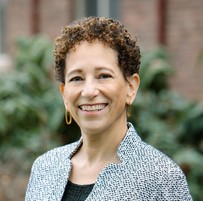
Greetings! This marks my first note in Lifelines as Interim Director of HSD and my second month on the job. I look forward to using this space each month to connect with the Department’s dedicated staff, providers and community partners.
As we mark Black History Month, it’s a good time to reflect on what it means when we say that Seattle Human Services lives out its mission “to connect people with resources and solutions during times of need so we can all live, learn, work, and take part in strong, healthy communities.” What makes a strong, healthy community? And how do we ensure that “all” of us, in multiple communities within our city, are able to take part?
In Seattle, Black people are 6% of the general population, but constitute 15% of the low-income population, and nearly 30% of the homeless population. The impacts of historic injustice and systemic racism are glaring and undeniable. This February 2021, let’s remember and embrace our responsibility to serve the racial, ethnic and other groups disproportionately represented among those in need of the services that HSD and our partners provide, especially Seattle residents of African descent.
For those who’ve not met me, and even for those who have, a little context might be helpful. Not mentioned in my staff bio is the fact that I grew up in Seattle, and that my father, a retired trial lawyer, fought many civil rights battles here, including: helping to desegregate the construction unions in the late 1960’s; representing the Black firefighters promoted through the City’s affirmative action program in the 1970’s; and challenging police killings of young Black men in nearly twenty cases over multiple decades. That was his personal pro bono commitment because he hated to see police officers act as “judge, jury and executioner,” and because the use of deadly force by police officers was far too frequently directed at young African American males. If you’re interested, you can read more about my father here.
One of HSD’s 2021 priorities to advance our mission is increasing the language accessibility of our materials. While the seeds of this work were underway well before the global pandemic, the public health crisis presented by COVID-19 underscored its importance, and we’ve now begun this work in earnest.
We recently updated the Utility Discount Program page (Seattle.gov/UDP) to provide information in seven languages: Amharic, Chinese, English, Korean, Somali, Spanish, and Vietnamese. An accompanying multilingual media campaign will publish news content, digital ads, radio and television public service announcements, and social media graphics using a $50,000 advertising budget provided by Seattle City Light to support mostly local ethnic media and community-based organizations in Seattle.
In addition, HSD recently collaborated with Wellspring Family Services to reach hospitality workers affected by loss of employment due to public health closures of bars, hotels, and restaurants in response to COVID-19. Through this partnership, we translated the information on Wellspring’s website and the application into nine additional languages. We also created a media toolkit to offer newsletter content and social media messaging in all nine languages that could easily be shared throughout the community to reach as many people in need as possible.
Sharing public health information, connecting those in need with services and support, and helping the public to learn about the work that we do simply does not happen if someone in need is unable to understand the services we have to offer. It's just one way HSD is looking to improve our work and be more accountable to the communities we serve.
Thank you all for your continued partnership. I look forward to working with you in the months ahead on these and other strategies for our work.
Thanks for all you do, Helen
|
|
|
 The City of Seattle can help people who are struggling to pay their electricity and utilities bills. Eligible households can enroll in the Utility Discount Program (UDP), which offers a 60% discount on Seattle City Light bills and a 50% discount on Seattle Public Utilities bills.
To be eligible, your pre-tax household income must be at or below 70% of the state’s median income.
|
|
Here’s what we know: Gathering with people we don't live with—even close friends and family—may spread COVID-19. The more people we interact with at a gathering and the longer that interaction lasts, the higher the risk of becoming infected.
The safest action for everyone is to avoid gatherings, even outdoors, and find different ways to celebrate this season.
Multilingual Content
|
|
|
|
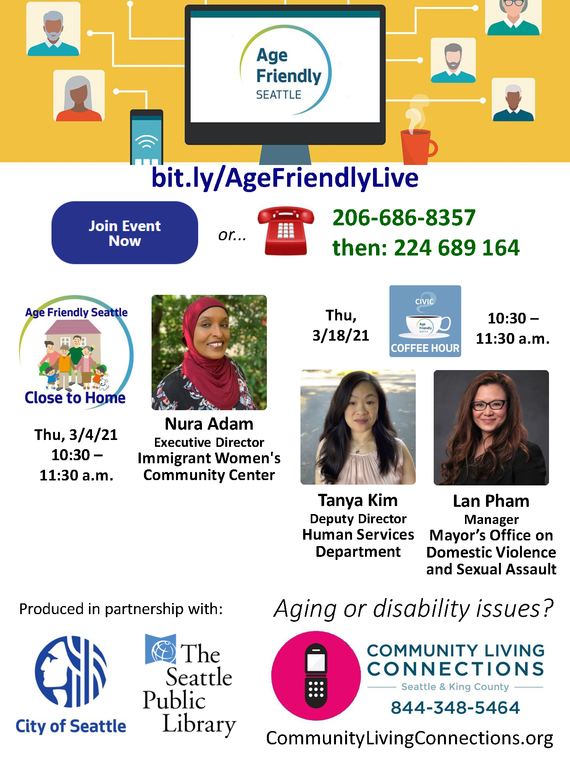
Click on the flyer above to visit bit.ly/AgeFriendlyLive to learn more!
City of Seattle Opens Severe Weather Shelters at Seattle Center, Community Center
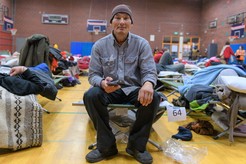
Once again, February brought us a series of winter storms with snow accumulation and below-freezing temperatures to the region, and Seattle Human Services Department (HSD) staff moved quickly to action. [It also delayed Lifelines--again.]
In partnership with Seattle Parks and Recreation (SPR), Homeless Strategy & Investment division staff opened Bitter Lake and Garfield Community Centers as 24-hour coed severe weather shelters. The Low Income Housing Institute (LIHI) operated both locations with shift support from HSD and SPR staff.
These two shelter locations provided an additional 86 COVID-safe emergency shelter spaces for individuals experiencing homelessness. Operation Sack Lunch (OSL) provided three meals a day, showers were available for shelter guests, and service animals and pets were accommodated.
In partnership with the Finance and Administrative Services department and Seattle Police Community Service Officers, HSD also opened Fisher Pavilion at Seattle Center as a daily severe weather shelter, with capacity for 78 adults, and City Hall for additional capacity of 75 more, with operations led by The Salvation Army and Compass Housing Alliance.
The Homelessness Outreach and Provider Ecosystem (HOPE) Team coordinated outreach and shelter referrals into the City’s temporary severe weather shelters, and other City funded shelters, in partnership with our contracted outreach providers. SPR loaned passenger vans to the HOPE Team and staff members also worked with the Seattle Fire Department’s Health One in conducting evening welfare visits to people living unsheltered and to provide help with transporting individuals to available shelter resources. From Wednesday through Sunday night, the team, in partnership with SPR’s Encampment Team did outreach resulting in:
- 380 welfare checks
- 310 conversations about temporary shelters
- 277 individuals provided winter supplies (hats, gloves, handwarmers, etc.)
- 237 provided basic needs supplies (water, snacks, etc.)
- 42 Individuals transported to temporary shelter
Afterwards, the team made 13 referrals from the community center shelters into permanent shelters.
In addition, the Urban League sent teams to refer and help transport people to hotels. HSD also arranged transport through Uber/Lyft. Twenty people moved into other shelter: 12 to hotels and eight to St. Martin de Porres shelter, run by Catholic Community Services.
On Saturday night 198 individuals were sheltered; and on Sunday night 216 of 239 available emergency beds were occupied. Community partners also mobilized to open additional permanent shelter beds earlier than planned at First Presbyterian and a permanent day shelter in Lake City, so that additional services would be available during the severe weather.
For general information about temporary severe weather shelters and new permanent shelter spaces the City of Seattle is standing up, call 206-735-9461. If you or someone you know is in need of shelter, call 2-1-1 or 1-877-211-9274. For families with minor children, call YWCA’s late night shelter 24-hour intake line at 206-461-4882.
|
Farm to Table Program Explores an Equitable Future Fund
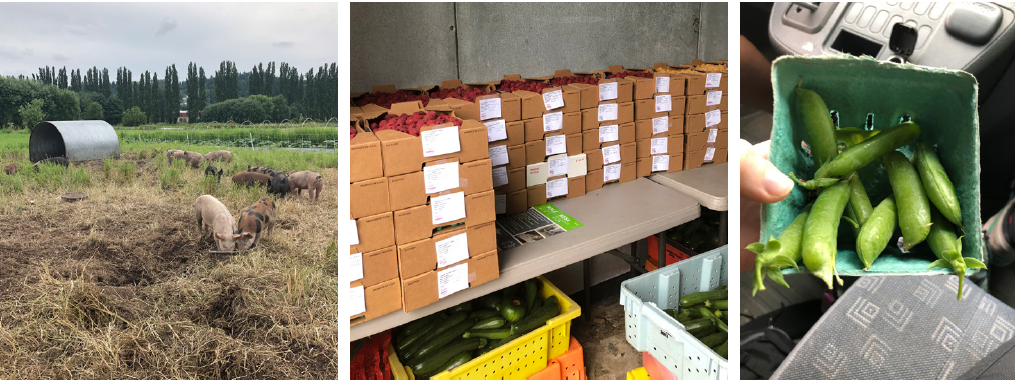 Farmstand Local Foods LLC and The Vida Agency collaborated throughout 2020 into early 2021 to engage with community and explore ways to strengthen equity in the Farm to Table Program. The Farm to Table Program is an initiative designed to provide funding, technical assistance, and educational support for early care and education centers to purchase and serve farm fresh foods from local farmers. The main goal of the Farm to Table Program is to increase access to locally farmed and produced food for these childcare and education centers to address health and food security inequities, while also supporting the local economy. Farmstand Local Foods LLC is the lead coordinating agency on this program, in partnership with Tilth Alliance, Nourishian for Life, and Solid Ground.
The Vida Agency conducted a series of community engagements with families and staff that participate in the program, the Sweetened Beverage Tax Community Advisory Board, area experts in early childcare, and farmers in the program.
In late February, The Vida Agency will provide Farmstand Local Foods LLC and the HSD with a report from these engagements that summarizes findings and recommendations for Farm to Table Program improvement.
Seattle Youth Employment Program Summer Internships

HSD staff are excited to let you know that the Seattle Youth Employment Program (SYEP) is continuing to prepare for job readiness trainings and employment opportunities this summer despite the uncertainty that COVID brings.
The SYEP 2021 Summer program will begin accepting applications from February 19 - April 2, 2021. We anticipate the program will be six weeks, running July 7 through August 17, 2021. Depending on the public health guidelines, the summer program will either follow a “learn and earn” model (where we recruit employer partners to provide short virtual training sessions), an “in-person internship” if possible, a “virtual Internship” where participants work remotely, or a "hybrid" model that combines all of these. Further descriptions are provided in the linked Interest Form below. All options will come with the support of SYEP Youth Development Counselors for both host organizations and our interns to ensure smooth delivery.
If your community organization or company would like to be involved in SYEP this summer – or you know of one that would, please let us know your capacity to host interns or be involved in other ways by filling out our Employer Interest Form. This form is due by February 19th ,2021.
For more information on the program please visit the SYEP webpage at Seattle.gov/SYEP.
|
On AgeWise King County: You Might Be Eligible for a Property Tax Reduction!
The Washington State Legislature has made major changes in the Senior Citizens Property Tax Relief program, and King County has made it easier to apply for this program.
The income limit is now indexed to 65 percent of the median household income in King County. The new limit is $58,423. This allows more people to be eligible for savings.
King County Assessor John Wilson shares more about eligibility criteria and how to get assistance with applying in the online article.
|
On Public Health Insider: What King County's Data Tells Us About Race, Geography and the COVID-19 Vaccines
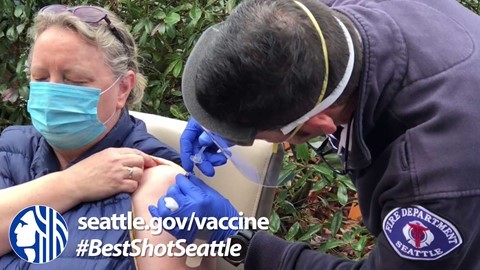
Nearly a year into the COVID-19 pandemic, we have arrived at a moment of both hope and frustration. On the one hand, we have highly effective vaccines reaching people who need them. And we have more on the way, signaling real hope for moving beyond the most challenging phases of the pandemic.
On the other hand, our communities have been hit hard by the pandemic, and there is not nearly enough vaccine yet to meet the urgent need.
Given the mismatch between supply and demand, our strategy at Public Health is to center equity in how we focus our limited resources. That means prioritizing people and communities who are at high risk because they have been disproportionately impacted by the pandemic, and especially vulnerable adults, including those who are disconnected from the health care system.
So how do we measure whether we’re making progress on those goals? One important way is to constantly listen to the communities we are trying to support. Whether it’s through our Task Forces, our Pandemic and Racism Community Advisory Group or our Community Navigators, we continuously work with and learn from them in order to adjust our response.
We also rely on data to inform and improve our approach. Data tells us:
- where COVID-19 has had the greatest impact
- where people are more likely to have been vaccinated
- where there are inequities
- where we need to focus attention and resources.
It’s up to us to use this data to push for equitable access to vaccines. Otherwise, left on its own, the system will give favoritism to those who already have resources and privilege – and leave out too many who are vulnerable.
Learn more about Public Health's vaccine data dashboard, what the current data tells us, and how they are reaching communities disproportionately impacted by COVID-19 in their blog post.

The Youth and Family Empowerment Division (YFE) of the City of Seattle Human Services Department (HSD) is seeking applications from agencies to provide food to low-income individuals and families in the Delridge, Georgetown, and South Park neighborhoods of Seattle. HSD seeks to contract with a diverse group of providers to help ensure the result of its Geographic Specific Food Bank Services investment is that all people living in Seattle can meet their basic needs. Click here for more information.
2021 Expanding Neighborhood-Specific Outreach RFQ
The Homeless Strategy & Investment (HSI) Division of HSD is seeking applications from Outreach & Engagement partners to provide neighborhood-specific street outreach to homeless individuals in West Seattle, Delridge, South Park, and Rainier Valley; Lake City; and Northwest Seattle.
This expedited Request for Qualifications (RFQ) is a competitive, but closed, process open to homeless outreach and engagement programs with existing HSD contracts that also meet any additional requirements outlined in Section IV of the Guidelines. Click here for more information.
|
|
|
 The Seattle Human Services Department (HSD) connects people with resources and solutions during times of need so we can all live, learn, work, and take part in strong, healthy communities.
HSD is one of the largest contributors to Seattle's safety net, investing over $170 million in contracts to nearly 150 community-based organizations and programs that support Seattle neighbors and communities each year. About 400 staff further the department’s role as a funder, convener, and direct service provider to achieve positive results. HSD invests in innovative strategies and effective programs and services that promote racial equity, support basic needs in our communities, and foster connection through collaborative approaches to address six key impact areas:
Preparing Youth for Success
Supporting Affordability and Livability
Addressing Homelessness
Promoting Public Health
Supporting Safe Communities
Promoting Healthy Aging
|
|
|
|
|