|
|


Greetings and Happy New Year!
I hope you had a restful and safe end of year. For many at the Seattle Human Services Department and for our community partners, the end and start of the year is the busiest time of all. I thank you for putting in long hours to ensure we enter 2021 well-positioned to help those most in need.
As many of you know, this month marks my last at HSD. Please join me in welcoming Helen Howell, who started in her role as Interim Director of the Human Services Department last week. Some of you know Helen from her work at the King County Housing Authority, Building Changes, and Pierce County Human Services. We are very excited to have Helen on board and look forward to leaning on her three-plus decades of expertise in the human services sector. You will hear from Helen in February's Lifelines newsletter.
Every year, the department highlights its annual priorities. I would like to share those with you at this time. Last year was upended by the pandemic. I am proud of how the department and our partners stepped up to that challenge. We are looking to continue our COVID-19 response, bring on new programs, and restart several initiatives in the year ahead. Here are a few of the department’s 2021 priorities:
- Complete the King County Regional Homelessness Authority (KCRHA).staffing and investment transition
- Sustain critical COVID-19 work of providing shelter, food, PPE resources, and vaccinations for high-risk and vulnerable populations
- Complete Age Friendly Seattle priorities by increasing access to information and services through multiple platforms, promote social connection and support networks to reduce social isolation during COVID-19, and support the City’s digital equity initiatives to increase access and connectivity for all
- Expand youth opportunity, including Seattle Youth Employment Program, Seattle Opportunity Promise and College Promise
- Develop a comprehensive community safety plan, including capacity-building and budget proposals, with community partners
- Establish the HOPE Team to lead outreach and coordinate shelter referral process for those experiencing unsheltered homelessness
- Increase affordability for Seattle residents through benefits like the Utility Discount Program (see below)
These priority projects are elevated even higher for the department and the community, given the ongoing impacts of COVID-19. Your partnership is deeply appreciated and necessary to accomplish these goals.
On a personal note, thank you for the support you have given to me and the department over the last year and years prior. My three-year tenure as Director and seven-plus years with the department taught me a great deal and awarded me the privilege of leading a body of work that has made a positive impact in our community.
This past year has been particularly trying for all of us. Yet, even in the face of a pandemic, Seattle Human Services—in partnership with each of you—has been successful in our mission to connect people with resources and solutions during times of need. I am proud of our shared work to ensure we can all live, learn, work, and take part in strong, healthy communities. If you haven’t done so already, please check out our brief list of accomplishments below, and visit our blog to read more details on 20 of our accomplishments in 2020.
Thank you again for your continued partnership. I look forward to keeping up on all the impactful and great work you do through Lifelines and through the work you do to lift up communities in need. Be well!
Take care of yourself and your loved ones, Jason
|
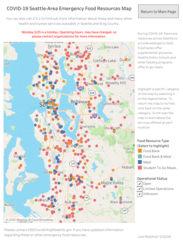
COVID-19: In March, HSD’s Data, Performance, and Evaluation (DPE) team built an interactive map of food bank and meal programs operating in Seattle and King County. It is available to the public and provides up-to-date details for these resources. The site has over 34,000 views and is updated on a regular schedule.
HSD successfully redeployed approximately 130 employees throughout the department to fulfill mission priority work related to food distribution, set-up of emergency shelters in City-owned buildings, and shelter staffing support including overnight shifts. Staff also provisioned over $600,000 in PPE, sanitation supplies, and to-go food distribution supplies for emergency feeding providers.
HSD also helped our community partners respond to the pandemic by supporting multiple capital projects: including construction of three new childcare facilities to support families with low-incomes, relocation of the ROOTS youth shelter during the COVID-19 pandemic, and supporting relocation and expansion of the Ballard Food Bank facility.
Our staff oversaw the implementation of two rounds of CDBG and ESG CARES Act emergency funding, working across six departments and the Mayor’s office to maximize impact, and managed 10 new COVID response funding sources totaling almost $50M of increased budget to aid in the City’s pandemic response. Over $8M in state and federal funds was awarded to providers for COVID response to BIPOC communities, free and reduced lunch students, people experiencing homelessness, and more, working with partners like the National Guard and the United Way of King County.
Preparing Youth for Success: Seattle Youth Employment Program (SYEP) developed a Summer Virtual Job Readiness Program pilot for over 200 youth in collaboration with Seattle Parks and Recreation and Seattle Police Department. The workshops included teambuilding, time management, problem solving, growth mindset, resumé and cover letter writing, interviewing, and certifications in First Aid/CPR and Food Handling.
Supporting Affordability and Livability: 11,137 households were enrolled in the Utility Discount Program (UDP) through the COVID-19 online self-certification form through 1/03/21. The total number of households benefiting from UDP now exceeds over 40,000.
Promoting Public Health: The nationally-recognized Mobile Integrated Health Program partnership increased the service area for Health One and now allows any Seattle Fire unit to make a referral.
Addressing Homelessness: HSD provided additional funds to our homeless service providers through an emergency funding process to support unanticipated costs due to COVID-19. We funded shelter programs, day/hygiene centers, and Permanent Supportive Housing (PSH) sites. These funds allowed for program modification and physical layout of program spaces to be COVID-compliant.
Promoting Healthy Aging: Early on in 2020, HSD was tasked with creating an action plan to manage the impacts of the pandemic on the vulnerable communities we work with. Aging and Disability Services division staff increased nutrition services by expanding delivery and mobile options to meet growth due to COVID and provided new guidelines and other support for our community provider network. Staff also pivoted in-home supports, offering online and telephonic services that helped keep over 12,000 community long-term care clients safe.
Supporting Safe Communities: As Mayor Jenny A. Durkan said recently, this year also brought “a civil rights reckoning that demanded our city address systemic injustices in policing, housing, health care, and education.” Because of changes to how our City addresses Public Safety, the Mayor’s Office on Domestic Violence and Sexual Assault (MODVSA) recently welcomed 13 colleagues from the Seattle Police Department to be part of the Crime Survivor Services Unit.
This new unit within the MODVSA, as well as the Office itself, will be part of something new in 2021, as HSD staff work through feedback gathered at the community forum series we recently held to help stand up its new Safe and Thriving Communities Division. This new division will respond to community requests for the City of Seattle to shift funding away from traditional police response and reinvest in community building efforts using nearly $22 million in annual investments.
|
|
|
 COVID-19 has affected Seattle residents in many ways. Many people, including older adults and families, are facing tough times due to job loss.
The City of Seattle can help people who are struggling to pay their electricity and utilities bills. Eligible households can enroll in the Utility Discount Program (UDP), which offers a 60% discount on Seattle City Light bills and a 50% discount on Seattle Public Utilities bills.
To be eligible, your pre-tax household income must be at or below 70% of the state’s median income.
|
|
The governor’s new regional-based Healthy Washington plan goes into effect January 11—read updated information.
Here’s what we know: Gathering with people we don't live with—even close friends and family—may spread COVID-19. The more people we interact with at a gathering and the longer that interaction lasts, the higher the risk of becoming infected.
The safest action for everyone is to avoid gatherings, even outdoors, and find different ways to celebrate this season.
Multilingual Content
|
|
|
Application Opens for $2.17 Million in Direct Cash Assistance for Hospitality Workers Impacted by COVID-19
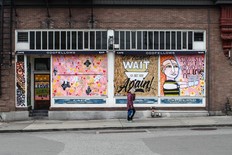
On January 11, Mayor Jenny A. Durkan announced that $2.17 million in direct cash assistance is now available for hospitality workers who live and work in Seattle who have lost jobs or income due to COVID-19. People in need of assistance can visit this website to learn if they qualify and apply for resources. This funding is part of the Mayor and City Council’s December announcement to provide up to $5 million in new financial assistance for small businesses and hospitality industry workers impacted by the most recent COVID-19 restrictions. More than 1 million people have collected unemployment benefits in Washington state since the pandemic began. In Seattle alone, more than 600 restaurants and bars have been forced to close their doors for good due to the pandemic.
The City of Seattle’s Human Services Department (HSD) contracted with Wellspring Family Services to administer and distribute the $2.17 million in direct cash assistance in partnership with the Seattle Hospitality Emergency Fund for hospitality workers. Through this fund, hospitality workers that have experienced economic distress caused by job or income loss due to COVID-19 may be eligible to receive up to $2,000 per family. An individual could receive $1,000, with an additional $200 per dependent, up to $2,000 per family. Eligible recipients must either be employed, laid off, and/or faced reduced hours in the hospitality industry and earn less than 60% of the area median income (AMI) to qualify. Applicants must live and have worked at hospitality business within Seattle. This can include franchises or chains located in Seattle, with headquarters elsewhere. Gig workers are not eligible, but delivery drivers for restaurant or bars are eligible. After eligibility is established, there will be a weighted selection process that will prioritize applicants with dependents and earning less than 50% AMI. To learn more and apply, please visit this page and connect with Wellspring.
Wellspring has been helping Seattle-area community members in crisis since 1892. According to Wellspring’s Director of Housing Services, Nawiishtunmi Nightgun, “When people have no safety net, Wellspring steps in as a companion and resource-navigator. When the pandemic arose, it just made sense to expand our essential services to individuals and families during these dire economic circumstances.” Since March, Wellspring has collaborated with community partners in King, Pierce, and Snohomish counties to deliver nearly $10 million in financial assistance to individuals and families impacted by the COVID-19 crisis.
To date, the City has invested nearly $10 million in small businesses through its emergency Small Business Stabilization Fund. Applications for the most recent round of funding closed on November 30. The Office of Economic Development is contracting with Scholarship Junkies to award funding from the additional funding announced in December for hospitality workers and eligible restaurants and bars.
The City also has a number of relief programs for working people, including emergency grocery vouchers, rental assistance, and support for immigrants and refugees. The City’s Disaster Relief Fund for immigrants recently distributed $7.94 million to 3,730 applicants.
Seattle’s labor standards laws provide worker protections that may be helpful to know about as workers navigate this difficult time. These protections include the requirement that an individual’s former employer pay all the compensation owed to them (like final wages) and, when an individual returns to work, the accrual and use of paid sick and safe leave for absences caused by illness (among others). For more information about these rights and others, please visit the Office of Labor Standards website.
Residents and businesses can find a list of existing COVID-19 relief resources and policies on this website.
|
City of Seattle and United Way of King County Partner on Community Food Fund

Seattle Human Services is partnering with United Way of King County to address food insecurity during the COVID-19 pandemic. The Community Food Fund invests $1M to support food access among Black, Indigenous and other people of color, as well as immigrant and refugee communities.
27 local organizations across Seattle received funds for a variety of strategies, such as food delivery, culturally appropriate meals for seniors, pop-up food sites, a new greenhouse, cold storage, and collaborations with ethnic restaurants to get hot meals to vulnerable communities. They included both small and large community-based organizations, including the Black Farmers Collective, Casa Latina, Eritrean Association in Greater Seattle, Hip Hop is Green, Queer the Land, United Indians of All Tribes Foundation, and Urban Fresh Food Collective.
Funding comes from the federal CARES Act received by the City of Seattle, and from United Way’s Community Relief Fund. Grants run through the end of the year. See United Way’s recent blog post “Overcoming Cultural Barriers During the Pandemic” for more information and read about the impact of this funding on the Afghan Health Initiative.
|
On AgeWise King County: Exciting Changes to ‘Age Friendly Live’ Virtual Events
In 2021, Age Friendly Live is back with a full slate of virtual programming that aims to improve access to information about community resources and encourage civic participation among older adults and their caregivers. Currently, they are planning 22 virtual events, each of which will now last a full hour. Both the Civic Coffee Hour and Close to Home will be produced in partnership with The Seattle Public Library, allowing us to continue improving language access and digital equity.
To better illustrate what Aging King County has planned for this year, read their look back at how it all began.
|
On Public Health Insider: What We Know (& A Few Things We Don’t) About Covid-19 Vaccines: A Conversation with Dr. Jeff Duchin
Two COVID-19 vaccines have been authorized for emergency use by the FDA and the first shipments have arrived in King County. Public Health Insider checked in with Dr. Jeff Duchin, Health Officer for Public Health – Seattle & King County, to learn more about this major development in the response to the pandemic.

The 2020 Shelter Surge RFQ hotel service providers have been selected and notified. We will, at a later date, announce the provider(s) for the Tiny House Village and Enhanced Shelter components. The 2020 Street to Housing Rapid Rehousing RFQ provider has also been notified.
At this time, we plan to announce all funding awards from this RFQ together when the decisions have been completed. Please contact Lisa Gustaveson, Strategic Advisor at lisa.gustaveson@seattle.gov or (206) 482-4573 with any questions.
2021 Notice of Funding Availability (NOFA)
HSD is pleased to issue its 2021 Notice of Funding Availability (NOFA) related to the following investments:
- Area Specific - Georgetown, South Park, Delridge - Food Bank Services RFP
- Supporting Youth and Young Adults for Success RFP
This notice provides an overview of HSD's impending funding opportunities for 2021 with a brief description of the service areas for each opportunity, anticipated funding amounts, release dates, and contract start dates. Once finalized, HSD will issue detailed funding opportunities for each investment on our Funding Opportunities page.
|
|
|
 The Seattle Human Services Department (HSD) connects people with resources and solutions during times of need so we can all live, learn, work, and take part in strong, healthy communities.
HSD is one of the largest contributors to Seattle's safety net, investing over $170 million in contracts to nearly 150 community-based organizations and programs that support Seattle neighbors and communities each year. About 400 staff further the department’s role as a funder, convener, and direct service provider to achieve positive results. HSD invests in innovative strategies and effective programs and services that promote racial equity, support basic needs in our communities, and foster connection through collaborative approaches to address six key impact areas:
Preparing Youth for Success
Supporting Affordability and Livability
Addressing Homelessness
Promoting Public Health
Supporting Safe Communities
Promoting Healthy Aging
|
|
|
|
|