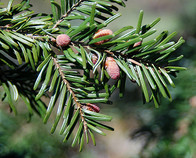
...that the inner bark of the grand fir was (and still is) used by Coast Salish people for treating colds and fever? Another “grand” feature of this Pacific northwest native tree is the woodsy, citrus-like scent of the needles. This beautiful evergreen likes mostly sunny spots but can tolerate a little shade. What it would like most is for you to give it a home. You can do so this year through Trees for Neighborhoods. The application is open now. |
|
 |
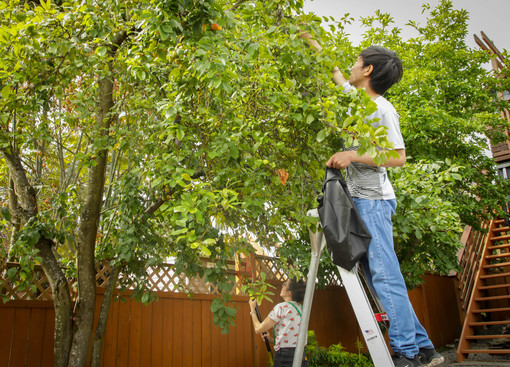
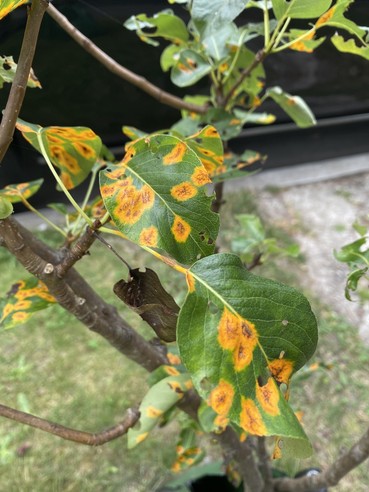
Fruit trees are easy to love, but you should also be careful when you consider planting them. While we value their ability to produce fresh fruit, they often have problems like pests and disease that can be far more impactful than their potential as a food source. For example, you may have noticed rusty spots this summer on the leaves, twigs and fruit of pear trees. This is most likely pear trellis rust, a disease that can have a serious impact on the health of fruiting and ornamental pear trees. The disease is caused by a rust fungus that spends part of its time on juniper trees to complete its lifecycle. While it does not negatively impact the juniper, it does form orange gelatinous galls that produce spores to infect the pear tree. Those rusty spots on the leaves will eventually form swellings that release spores back to the juniper. After several years of passing the infection back and forth, your pear tree may begin to show reduced vigor, crown dieback, and eventually death. Removal of possible juniper hosts from within 1,000 feet of your pear tree may reduce the occurrence of pear trellis rust. Chemical controls can be helpful but should be used with extreme caution, in accordance with the product label, and only as a last resort due to toxicity and cost.
Learn more about the cause, symptoms, and management of pear trellis rust here.
Orange discoloration on the leaves indicating possible pear trellis rust.
Fruiting trees in the City
In addition to the threat of pests, fruit trees also require significant time and labor to clean up after and maintain. They tend to be dwarf cultivars pruned low so the fruit can be reached more easily during harvest, contributing less canopy cover and fewer environmental and public health benefits to the urban forest than larger conifer trees. Learn more about City of Seattle’s goals for a healthy tree canopy here, and consider these tips when thinking about which trees to plant in your yard this fall.
Beacon Hill Tree Walk
Take this self-guided tour and learn about 20 of the fascinating trees that make up Seattle’s urban forest. This particular Tree Walk will provide additional insight into the many pests that threaten the health of our trees while showing off their unique features and identifying characteristics. Located along a designated Stay Healthy Street and hugging the northern end of Jefferson Park, include the Beacon Hill Tree Walk in your list of outdoor summertime fun activities.
Download the free Seattle Tree Walks mobile app for your Apple or Android smartphone or view a printable version of the Beacon Hill Tree Walk on our website.
All in-person Trees for Seattle Events are cancelled until further notice
Everyone's health and safety is always our number one priority. Due to the emergence of novel coronavirus (COVID-19), all in-person Trees for Seattle events are cancelled until further notice. We will resume hosting volunteer opportunities and other tree-related events when the guidance from health officials supports public gatherings again. In the meantime, keep an eye on our website for virtual ways to stay engaged and updates on this year's Trees for Neighborhoods program.
|