City of Seattle, Washington sent this bulletin at 05/11/2020 07:07 AM PDT
Spring 2020 Apartment Fire Safety
Outdoor Grilling Fire Safety
Warm weather means more cooking outdoors. Before turning on a grill, take some important safety precautions.
How to be safe
Unattended grilling is a main cause of outdoor grilling-related fires. If rooftop grills are available, make sure residents know the following:
Barbecue grills are designed for outdoor use only. Never barbecue in an enclosed area – dangerous carbon monoxide (CO), a colorless, odorless gas, can accumulate and become deadly.
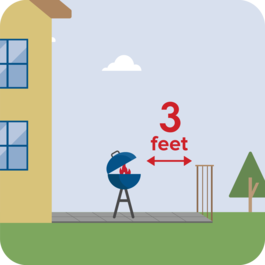
Set up your grill in an open area at least three feet away from buildings, overhead combustible surfaces, dry leaves and brush.
Never leave grills unattended while cooking.
Keep a three-foot safe zone around the grill where children and pets aren’t allowed.
For charcoal grills, allow coals to cool for 48 hours before disposing. If you are not able to wait, douse coals with plenty of water, and stir them to ensure that the fire is out. Never place coals in plastic, paper or wooden containers; place in a metal container with a tight-fitting lid.
The use of barbecues in single-family homes, apartments and condominiums is not regulated by current Washington state law. However, apartment building owners and condominium associations, through lease agreements and owner’s association rules, may still prohibit or restrict use of barbecues.
Replace CO alarms before they expire
CO alarms need to be replaced every 7 years
The Seattle Fire Department has received multiple 911 calls this year from concerned residents because of chirping carbon monoxide (CO) alarms. While it’s important to call 911 if your CO alarm is sounding continuously without stopping, a CO alarm that chirps every 30 seconds is not an emergency. It probably means your CO alarm has reached its end of life and should be replaced.
CO alarm life span
CO alarms have a life expectancy of around seven years. All CO alarms produced after August 1, 2009, have an end-of-life warning notification that alerts the resident that the alarm should be replaced. The CO alarm will beep every 30 seconds or display ERR or END.
If a CO alarm is at its end-of-life, replacing the battery will not stop the beep.
Replace CO alarms installed in 2013
In January of 2013, Washington State law (RCW 19.27.530) required CO alarms to be installed in new residences and in existing rental properties.
Renters should notify property managers or landlords immediately if their CO alarm is beeping every 30 seconds indicating its end-of-life. They should also know that intermittent beeping CO alarm is not reason to call 9-1-1.
A CO alarm that beeps continuously without stopping could indicate that carbon monoxide is present. If you your CO alarm is sounding continuously and you have signs of CO poisoning such as dizziness, headache, vomiting or flu like symptoms, find fresh air and call 9-1-1 immediately.