City of Seattle, Washington sent this bulletin at 03/01/2020 08:43 AM PST
Message from the Fire Chief
As February comes to a close and we enter into March, we are transitioning to a time of preparedness for the Novel Coronavirus (COVID-19). Seattle is collaborating closely with Public Health, King County Emergency Medical Services and our department Medical Director Dr. Michael Sayre to monitor the COVID-19 outbreak. We along with other King County fire agencies are working diligently to take appropriate safety measures to protect our personnel while continuing to respond to medical emergencies. Read more on the King County Fire Chiefs Association website about how we are preparing locally.
Public Health-Seattle & King County is encouraging everyone to prepare both individually and as a community, so we can better manage any disruptions in daily life and reduce the impact of the disease. Check tips below and resources offered by public health on appropriate preparedness actions to take.
This month we will celebrate a very important milestone: the 50-year anniversary of Medic One. Founded as a partnership between the Seattle Fire Department, University of Washington and Harborview, this innovative program has brought unparalleled pre-hospital emergency care to Seattle since March 1970 and has inspired communities in King County and beyond to provide exceptional advanced life support to the public. Founders, paramedics, physicians, instructors and community members who helped build our region’s Medic One program will be honored at a dinner on March 7 at the Washington State Convention Center. I am proud to be a member of the Seattle Fire Department during this time of honoring the history of turning Seattle and King County into one of the world’s leading pre-hospital emergency medical systems.
March is also a time to look back at women’s history and how it has positively impacted the fire service we work in today. Check our social media sites throughout the month for highlights of our female firefighters and their important work of driving equity in the Seattle Fire Department.
Stay safe,
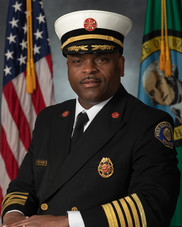
Harold D. Scoggins, Fire Chief
Significant incidents recap
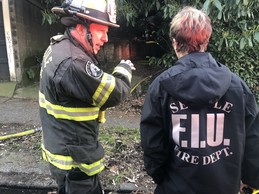
Feb. 13 –6200 Block of Airport Way S. Fire started in an apartment unit on the second floor of a three-story complex. Investigators ruled the fire as accidental and said it started when food caught fire on the stove and spread to nearby combustibles. One adult male was transported to the hospital with minor injuries. Total estimated loss is $125,000.
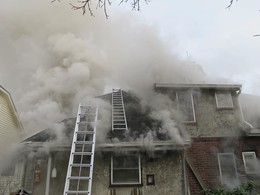
Feb. 14 – 5700 Block of 25th Ave. NE: Fire started in the garage and spread to the interior of the house. Investigators ruled the fire as accidental and said it started from an electrical shortage in a lamp that was plugged in. Total estimated loss is $195,000.
Feb. 14 – 6800 Block of 46th Ave. S. Fire started in the basement of the home, and spread to all floors of the house. Investigators ruled the fire as accidental and said it caught fire during a copper pipe repair. One adult male was transported to the hospital with minor injuries. Total estimated loss is $200,000.
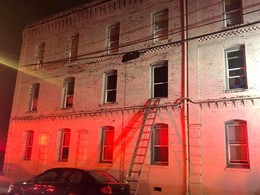
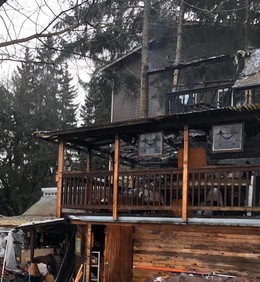
Feb. 27 - 1000 Block of Belmont Ave. E.
Firefighters responded for a fire in a shed attached to a vacant residential home. Thanks to alert neighbors who called it in and a quick stop by the responding crews the fire did not spread further into the home or nearby brush. Fire investigators were unable to determine the cause due to extent of fire damage.
Seattle Fire around the community
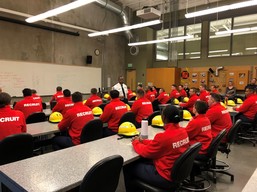
Recruit Class 112 begin their journey to become firefighters
Feb. 5 marked the beginning of Recruit Class 112 as they embarked on their journey to become professional firefighters. This 15.5 week program will test their capabilities to serve the City as firefighter/EMTs. Welcome Recruit Class 112 to the best career in the world.
Fire Station 21 welcomes students from local school
On Feb. 9, crews at Fire Station 21 in Greenwood had some special visitors from a local school. The students presented a poster to the firefighters for their “passion project” - something they are passionate and care about. Building relationships with the community we serve is important to us, and this made our day.
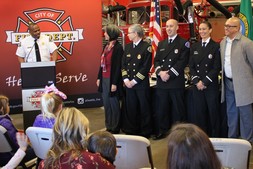
Chief Scoggins promotes several fire personnel
On Feb. 19, we held a promotional ceremony at our headquarters to appoint three firefighters to new positions as well as welcome two new civilian employees. Please help us congratulate Deputy Chief of Training Melissa Kennedy, Captain David Berry and Captain Melissa Woolsey along with welcoming Debbie Goetz and Matthew Butler to the department.
Pup reunites with one of the paramedics that saved him
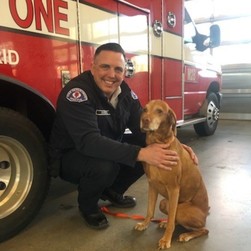
In late December, crews responded to a residential fire and found Otter, a Vizsla dog, lying unconscious along a stairway. Firefighters from Engine 33 quickly removed Otter from the smoke-filled house while paramedics Gene Goodner, Kent Burden and Lt. Michael Barokas performed life-saving efforts to revive the pup.
On Feb. 23 Otter's family stopped by Fire Station 28 to reunite with Gene and say thanks for saving him.
Heart attack survivor reunites with bystanders and crews
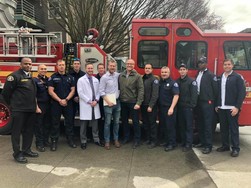
Thomas Loop was working out at a boxing gym in North Seattle in early February when he suddenly went into cardiac arrest. Two bystanders immediately jumped into action to begin CPR compressions until our firefighters and medics arrived on scene. Mr. Loop was transported by medics to Harborview, where doctors continued treatment.
On Feb. 25, we celebrated this success story at Fire Station 16. Mr. Loop reunited with a bystander (Amos Wiedmaier), firefighters, medics and a doctor who were all involved in his care.
It takes a system to save a life, which starts with YOU. Be ready to help: learn hands-only CPR and download the PulsePoint application to get notified of nearby CPR incidents.
Paramedic students train on responding to traumatic incidents
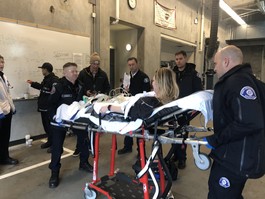
Paramedics must think and act quickly when responding to all emergency calls. They work against the clock to assess, treat and transport patients who are often in critical condition. Paramedic students put their skills to the test during a trauma drill at Seattle's Joint Training Facility on Feb. 3.
Keeping you safe
Novel Coronavirus (COVID-19)
The outbreak of the Novel Coronavirus (COVID-19) continues to grow and health officials are seeing confirmed cases locally in King County.
Stay home when you are sick. Staying home when ill prevents the spread of infections to others.
Use good respiratory etiquetteand hand hygiene in all community settings, including homes, childcare facilities, schools, workplaces and other places where people gather. Cover your coughs and sneezes with a tissue and put the used tissue in a waste basket. If you don’t have a tissue, cough or sneeze into your upper sleeve, not your hands.
Wash your hands often and thoroughly with soap and water for at least 20 seconds or use an alcohol-based hand sanitizer (with at least 60-95% alcohol).
Avoid touching your eyes, nose or mouth: Germs are often spread when a person touches something that is contaminated with germs and then touches his or her eyes, nose, or mouth.
Practice other good health habits: Clean and disinfect frequently touched surfaces at home, work or school, especially when someone is ill. Get plenty of sleep, be physically active, manage your stress, drink plenty of fluids and eat nutritious food.
What other steps might be required in a Novel Coronavirus pandemic?
Voluntary home quarantine:
Staying home when sick is an important step to limit the spread of illness. Depending on how COVID-19 spreads in the community, voluntary home quarantine of exposed household members might be recommended as a personal protective measure during a severe pandemic in combination with other personal protective measures such as respiratory etiquette and hand hygiene.
Use of face masks by people who are well:
CDC does not routinely recommend the use of face masks by people who are not sick in the home or other community settings as a means of avoiding infection from COVID-19. Furthermore, people wear masks for a variety of reasons, including to avoid pollen and air pollution, as a courtesy to others when they have the common cold, and for other cultural and even social reasons. Because mask use is customary in some cultures, it’s not appropriate to make assumptions about why someone is wearing a mask or to stigmatize or discriminate against people who choose to wear masks.
Use of face masks by people who are ill:
The use of face masks by ill people might be recommended during a severe pandemic when crowded community settings cannot be avoided (for example, when people with symptoms of COVID-19 seek medical attention).
Another example when a mask might be appropriate is when ill people are in close contact with others and share common spaces with other household members, or when symptomatic postpartum women care for and nurse their infants. Face mask use by ill people might protect others from infection in these situations.
Cleaning is important during a pandemic, isn’t it?
Everyone can help to keep the environment germ-free by cleaning frequently touched surfaces and objects like doorknobs. Regularly cleaning surfaces and objects that are frequently touched is recommended in all settings, including homes, schools, and workplaces, to remove viruses and bacteria that can cause illnesses – and might help prevent transmission of COVID-19.
For more information about what individuals, families, schools, and workplaces can do to prepare for a pandemic, visit Public Health - Seattle and King County's website.
Replace your carbon monoxide (CO) alarms before they expire
The Seattle Fire Department recently responded to three residences where a person called 9-1-1 after their CO alarm beeped intermittently. Upon further investigation it was discovered that there was no emergency but that the CO alarms in question were sounding every 30 seconds to indicate expiration.
CO alarm life span
CO alarms have a life expectancy of around seven years. All CO alarms produced after August 1, 2009, have an end-of-life warning notification that alerts the resident that the alarm should be replaced. The CO alarm will beep every 30 seconds or display ERR or END.
If a CO alarm is at its end-of-life, replacing the battery will not stop the beep. Some CO alarms have a feature that will silence the signal for 30 days, but this will not solve the issue as the CO alarm will continue to beep after the 30-day period ends.
What people should know
Homeowners should consider replacing all CO alarms that were installed in or before 2013. A CO alarm that signals that it’s at the end of its life should be replaced as well.
Renters should notify property managers or landlords immediately if their CO alarm is beeping every 30 seconds indicating its end-of-life. They should also know that intermittent beeping CO alarm is not reason to call 9-1-1.
A CO alarm that beeps continuously without stopping could indicate that carbon monoxide is present. If you your CO alarm is sounding continuously and you have signs of CO poisoning such as dizziness, headache, vomiting or flu like symptoms, find fresh air and call 9-1-1 immediately.
More information on carbon monoxide alarm requirements
In January of 2013, Washington state law (RCW 19.27.530) required CO alarms to be installed in new residences and in existing rental properties. Owner-occupied single-family residences, legally occupied before July 26, 2009, are not required to have CO alarms until they are sold or when a building permit application for interior remodeling is submitted.