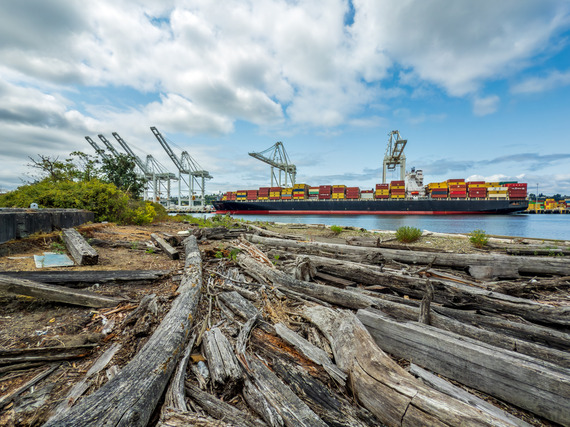
2025 marked a milestone year for clean air progress across The Northwest Seaport Alliance (NWSA), the Port of Seattle (POS) and the Port of Tacoma (POT). With major infrastructure investments, new collaborative planning efforts and continued progress toward zero-emission (ZE) operations, the ports advanced the shared vision outlined in the Northwest Ports Clean Air Strategy. This year’s accomplishments reflect ongoing commitment to reducing greenhouse gas emissions, improving air quality for neighboring communities and supporting a just and equitable transition to cleaner maritime operations.
Many of these projects have been explored in more detail in past issues of this newsletter, and if you want to learn more, visit our issue archive here.
We are grateful this year and every year for you, our readers, who take interest and are invested in what we do. Thank you from all of us, and onward and upwards in 2026!
As part of our shared commitment to the Northwest Ports Clean Air Strategy, the three ports advanced their respective action plans toward a zero‑emission future. The NWSA and POT adopted updated five‑year Clean Air Implementation Plans (CAIPs) through 2030, while the POS continued implementation of its 10‑year Maritime Climate and Air Action Plan (MCAAP).
New Clean Air Implementation Plans (CAIPs) for NWSA and Port of Tacoma
To develop the new 2026 – 2030 CAIPs, the NWSA and the POT collaborated with many community, industry and government stakeholders and leveraged internal expertise from across Port business units. The final plans, approved by POT Commissioners and NWSA Managing Members respectively, build off progress that took place in the 2021 – 2025 timeframe and establish near‑term actions to accelerate adoption of zero‑ and low‑emission technologies.
The 2026 – 2030 NWSA Clean Air Implementation Plan, approved in January, includes a roadmap to continue installing shore power infrastructure at major international container terminals, strategies for accelerating the deployment of zero-emission drayage trucks and equipment among our operating partners, and mechanisms to move the market on the adoption and deployment of zero- and near-zero emission maritime fuels in our gateway.
The 2026 – 2030 Port of Tacoma Clean Air Implementation Plan includes key actions to reduce emissions from Port-owned fleets and facilities, including the transition to electric light-duty vehicles, and sets emission reduction goals for the Tacoma Grain Terminal.
2025 Implementation Progress for Port of Seattle’s Maritime Climate and Air Action Plan
Meanwhile, the Port of Seattle made continued progress on the Maritime Climate and Air Action Plan (MCAAP), which outlines strategies and actions to be achieved by 2030. With its 2024 greenhouse gas (GHG) inventory, the Port reached a 72% reduction in maritime‑related Scope 1 and 2 emissions compared to the 2005 baseline. This progress was driven largely by the ongoing purchase of renewable natural gas for buildings and renewable diesel for port‑owned fleet vehicles and equipment. The Port also advanced construction of electric vehicle charging infrastructure to support fleet electrification and more than doubled the miles traveled by electric work vehicles in the maritime fleet. Maritime‑related Scope 3 emissions remain 31% above the baseline, based on data from 2021-2022.
Additional implementation highlights are outlined in the sections below.
Decarbonizing Drayage Roadmap Published
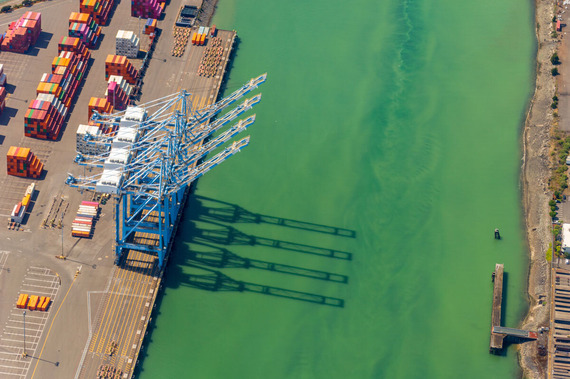
The NWSA hit a big milestone in 2025 with the release of the Decarbonizing Drayage Roadmap (the Roadmap). The Roadmap was produced by the Puget Sound Zero Emission Truck Collaborative and identifies the key issues brought forward by the Collaborative members, which includes over 25 stakeholder groups including truck drivers, OEMs, local utilities and community based organizations. The three key areas for recommendations are vehicles, infrastructure, and equity and opportunity. Each area is additionally divided into near-term, mid-term and long-term action items. The final Roadmap is available here.
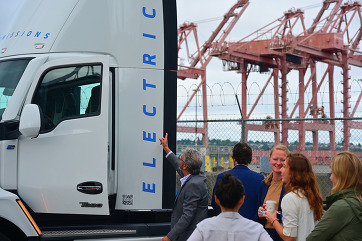
This year saw the launch of the inaugural NWSA incentive program for zero-emission (ZE) truck and charging deployment. After a competitive bid process, the NWSA selected ZEEM Solutions as the award subrecipient. ZEEM has a proven track record deploying ZEVs and charging infrastructure in California, but this will be the first deployment in Washington state.
Made possible by a $6.24 million grant from the Washington State Department of Transportation (WSDOT), the ZEEM project will bring 19 zero-emission trucks to serve NWSA terminals by 2027. ZEEM partnered with six different local drayage companies and is building a charging site near SeaTac that will be able to charge 250 vehicles per day and 70 overnight. This program was made possible by Climate Commitment Act funding, Washington’s cap-and-invest program supporting climate, jobs and public health. More information on the NWSA ZE Truck Program is available here.
|
Shore Power Complete at Husky Terminal
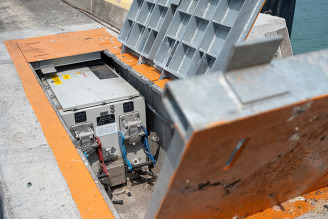
Last summer, the NWSA successfully completed shore power installation at Husky Terminal in Tacoma, and welcomed Hapag-Lloyd’s Kuala Lumpur Express as its inaugural vessel to plug in to shore power. This makes Husky Terminal the second international cargo terminal in Washington state to be shore power capable, following the completion of Terminal 5’s system in 2023. With this system in place, container vessels can plug in and shut down auxiliary engines while at berth, reducing diesel emissions and improving air quality in impacted communities.
Meanwhile, at Terminal 18 in Seattle, construction began in late 2025 to bring new shore power infrastructure to two berths at the gateway’s highest‑volume container terminal. When completed, T‑18’s system will significantly expand the NWSA’s shore power capacity and provide more consistent plug‑in opportunities for carriers serving the gateway.
|
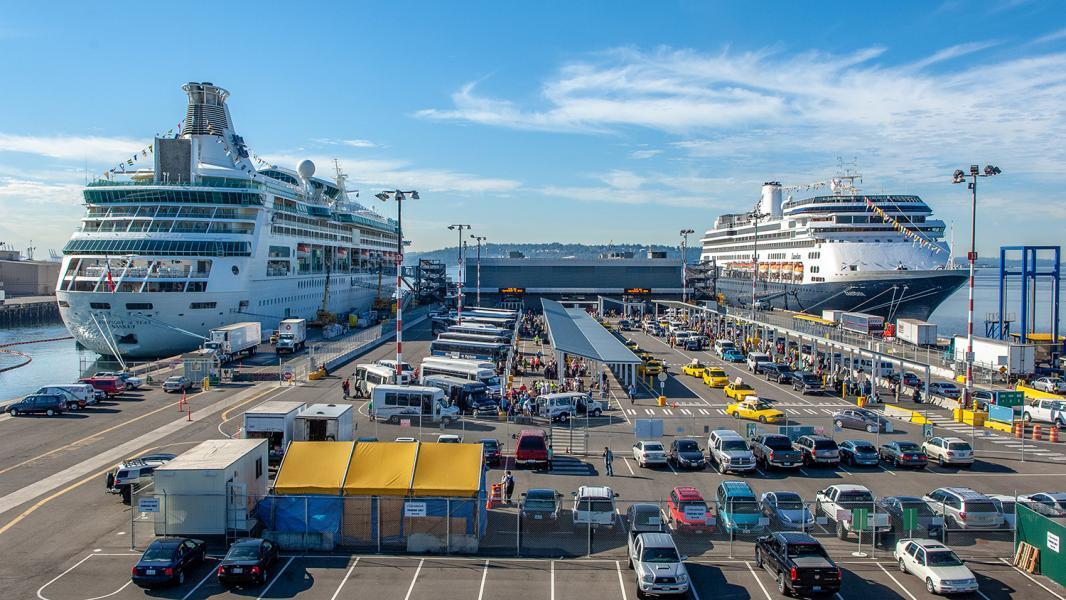 87% of shore-power capable cruise ships connect at Port of Seattle
2025 was the first full cruise season at the Port of Seattle where all three cruise berths offered a shore power connection. Out of 298 total cruise calls, 233 calls could connect to shore power, and 203 calls ultimately connected. Shore power use avoided metric tons of greenhouse gas emissions and 1.7 metric tons of diesel particulate matter. Explore the 2025 Cruise Activity and Performance Dashboard for more information. The 2026 cruise season kicked off on April 17 with 330 cruise calls scheduled.
Powering Maritime Innovation (PMI) Project Underway
The Port of Seattle has initiated a three-year Powering Maritime Innovation (PMI) project, funded by a $3 million U.S. EPA Clean Ports Program grant and in collaboration with the NWSA and the Port of Tacoma, to explore and plan for the deployment of next-generation maritime fuels in the Puget Sound gateway. Through 2027, the project will undertake multiple studies to inform the development of a new maritime fuels roadmap, which will include fuel demand projections, storage and bunkering feasibility, vessel electrification opportunities, safety considerations and workforce needs.
Community and industry engagement is a core component of the effort, with planned opportunities for stakeholders to review findings and help shape strategies for a safe, equitable transition to next-generation fuels. Planning for these engagement opportunities is underway with a competitive procurement and onboarding of a Community Capacity Building Consultant. The consultant will collaborate with the POS and the NWSA to design and implement a crucial Community Liaison Program. The resulting Community Liaisons will play a key role in providing multilingual public education and awareness on the pathway to zero-emissions cargo operations
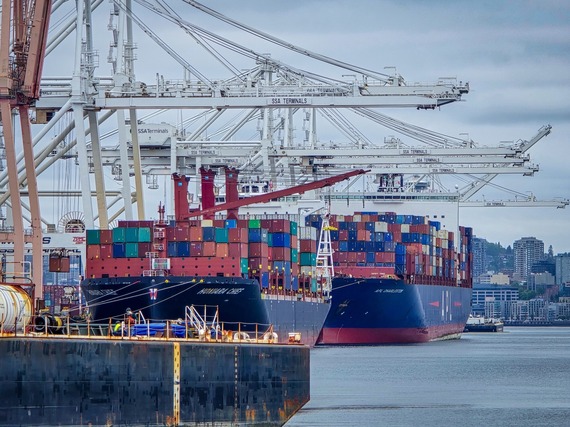 Sustainable Maritime Fuels Collaborative Launched
The Ports partnered with government, industry and community stakeholders to launch the Sustainable Maritime Fuels Collaborative. Led by Washington Maritime Blue, the Collaborative aims to accelerate the availability, affordability and deployment of low- and zero-emission maritime fuels, vessels and technologies in the Pacific Northwest. In 2025, the Collaborative developed a Sustainable Maritime Fuels Framework and participated in industry forums such as One Ocean Week Seattle to advance innovative development in the maritime industry. This work helps to advance the Ports’ vision of net-zero emissions by 2050, as emissions from ocean-going vessels, harbor vessels and recreational vessels together account for 77% of the GHG emissions in the 2021 Puget Sound Maritime Air Emissions Inventory. More to come!
Green Shipping Corridors Advanced...
The NWSA, along with the Ulsan Port Authority, shipping company Wallenius Willhelmsen and other partners, are continuing to collaborate on a roll-on/roll-off Green Ro/Ro Shipping Corridor and are preparing to shift to implementation. The Maersk Mc-Kinney Moller Centre for Zero Carbon Shipping completed a feasibility assessment in late 2025 to study the feasibility of deploying two green methanol powered Ro/Ro vessels in our gateway by 2028 or sooner. Vessels would be fueled in Ulsan and would call Tacoma for this first phase of implementation. A second phase feasibility assessment focused on fuel supply and bunkering capabilities in the United States is being conducted by the Rocky Mountain Institute. This feasibility assessment is underway and is expected to be completed later this year.
The NWSA also continues to explore the development of a Green Container Ship Corridor between the Busan Port Authority in South Korea and the NWSA gateway of Seattle and Tacoma. Key partners include the Korean Ministry of Oceans and Fisheries, the Korean Register, two Korean ports (Busan Port Authority and Ulsan Port Authority), two shipping companies (HMM and Swire Shipping), several alternative fuel providers, and the Rocky Mountain Institute (RMI). The Korean Register completed a feasibility assessment in late 2025 that was focused on vessel fueling near Busan. The NWSA and key partners are currently working together to pivot to support vessel deployment on this route as early as 2027. RMI is leading a feasibility assessment for this corridor that is studying fuel supply and bunkering in the United States. The RMI study is expected to be completed later this year.
The Port of Seattle continued to collaborative with cruise industry and port partners to explore low- and zero-emission cruising in the Pacific Northwest to Alaska (PNW2AK) Green Corridor Project. In 2025, partners completed the technical work for a green methanol feasibility study led by the Mærsk Mc-Kinney Møller Center for Zero Carbon Shipping. The study evaluates the potential for four cruise ships to operate on green methanol by 2032. Project partners are now finalizing a report that is expected to be published in 2026.
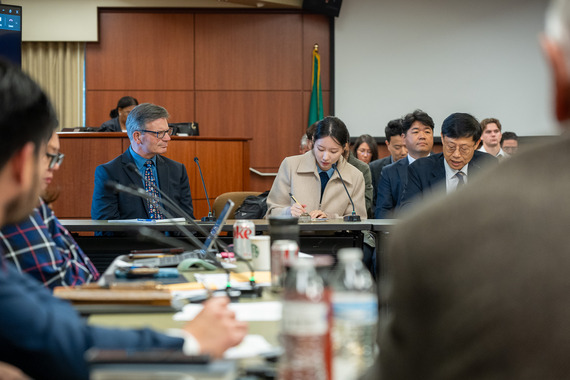
Muti-port MOU signed
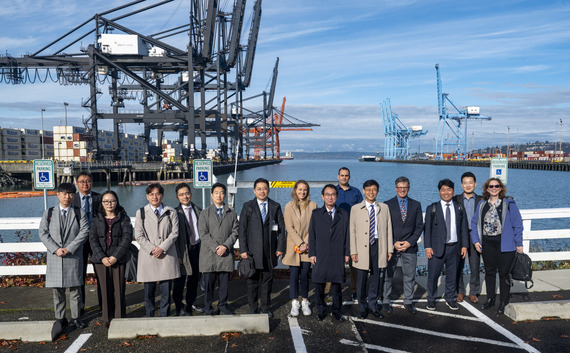
To support our work implementing the green shipping corridors, the Ulsan Port Authority, Busan Port Authority, the NWSA, the Port of Tacoma and the Port of Seattle signed a joint Memorandum of Understanding (MOU) last November. The MOU focuses on increased coordination and cooperation around our green shipping corridors, maritime decarbonization and accelerating access to alternative marine fuels. This collaborative effort establishes a framework for cooperation and information sharing, aiming to transform one of the world’s busiest Trans-Pacific trade lanes into a sustainable and resilient low-carbon corridor.
 |
Demonstrated Biofuels in a Cruise Ship
During the 2025 cruise season, Holland America Line (HAL) and the Port of Seattle conducted a real‑world demonstration of biofuels use aboard a cruise ship operating out of Seattle. HAL bunkered renewable diesel on the MS Eurodam during three port calls (July 26, September 6, and September 20). Although biofuels are considered “drop‑in” fuels, the demonstration revealed several challenges, including compatibility issues with onboard fuel systems, limited infrastructure for distributing and delivering biofuels, higher fuel costs and a lack of consistent standards for measuring carbon intensity. These insights can help guide future deployments of low‑ and zero‑emission fuels and opportunities to change policy to better support cleaner maritime fuel use.
Port Partners Transition to Renewable Diesel
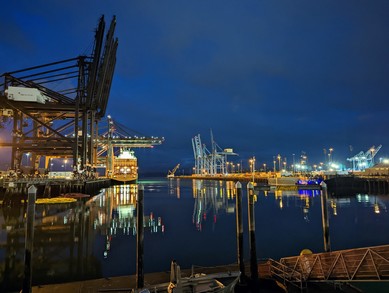
2025 saw expanded use of renewable diesel among port tenants and operators. Notably new users include two marine terminal operators, SSA Marine and Husky Terminal, as well as Lineage Logistics, a key supply chain partner to the NWSA. These partners play a critical role in the movement of cargo across our gateway, and their switch to RD demonstrates strong industry willingness to reduce carbon impacts while maintaining operational reliability.
Renewable diesel is a drop-in fuel substitute for conventional diesel fuel made from renewable feedstocks. While not a zero-emission solution, it can reduce lifecycle (from production through use) carbon intensity of fuel upwards of 50% relative to conventional diesel. The Ports have all transitioned to renewable diesel in their port-owned fleets and continue to encourage tenants and partners to consider switching to renewable diesel as an accessible interim solution as we work toward a full zero emission maritime future.
|
Zero-Emission Cargo-Handling Equipment at the NWSA’s Busiest Breakbulk Terminals
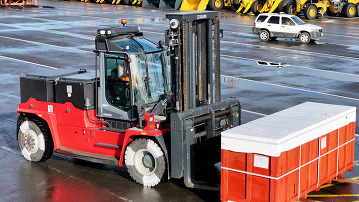
The NWSA took first steps towards zero-emission terminal operations at the EB-1 Terminal with the purchase of a new electric forklift. The forklift is capable of lifting up to 36,000 pounds and can operate for eight to 10 hours before recharging, replacing diesel-powered equipment at the terminal. This purchase was supported by a $2.6 million grant from the Washington State Department of Transportation Port Electrification Grant Program. With this funding support, NWSA plans to purchase at least three additional zero-emission forklifts and associated charging infrastructure for the terminal.
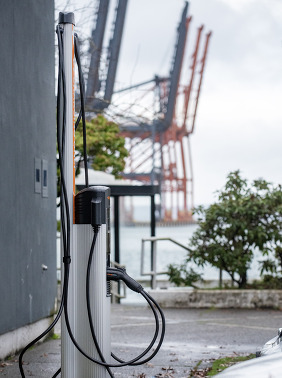
The NWSA is also electrifying its light-duty and passenger vehicle fleet at EB-1. In late 2025, the Port was awarded $80,000 from the Department of Ecology Charge Where You Are Grant Program to install Level II vehicle chargers supporting up to twelve electric vehicles in the port’s fleet.
|
Energy Planning Strategies Completed
The Port of Seattle and the NWSA jointly published the Seattle Waterfront Clean Energy Strategy (SWCES) in partnership with Seattle City Light. The SWCES provides a roadmap to electrify the Seattle waterfront and enable the transition away from fossil fuels through clean energy infrastructure and technology investments. Next steps include developing an implementation framework and assessing the near-term capital projects identified in the SWCES and incorporating these into capital improvement plans for the Ports and the utility.
In addition to the SWCES, the NWSA and Port of Tacoma also completed a South Harbor Electrification Roadmap (SHERM). The SHERM focuses on planning for the infrastructure needed to enable the transition to zero-emission operations at NWSA’s Tacoma Harbor terminals.
Zero-Emission Terminal Plans Initiated
NWSA is planning for future zero-emission operations and infrastructure needs by developing zero-emission terminal plans for both East Blair One Terminal (EB-1) and Washington United Terminals (WUT). The planning work, supported by a U.S. Environmental Protection Agency Clean Ports Planning Grant, will identify future electrical and infrastructure needs for zero-emission operations, support upcoming capital investment decisions, and ensure terminals can meet operational needs while preparing for zero-emission equipment deployment.
These deployments are part of a broader zero-emission transition effort. As a part of the 2026 – 2030 NWSA CAIP, the NWSA plans to conduct zero-emission terminal transition plans at all active terminals to enable key infrastructure investments and support both early zero-emission equipment deployment and long-term fleet planning efforts.
|

Peaches Thomas is a Maritime Environmental Engagement Program Manager on the Community Engagement Team at the Port of Seattle, where she has worked for five years. Her work supports the Port of Seattle’s ongoing equitable engagement, community partnerships, and investments through the Duwamish Valley Community Equity Program (DVCEP). She works closely with Duwamish Valley community partners, staff from the Port of Seattle and the Northwest Seaport Alliance, and agency and industry partners to develop educational events and activities that engage near-port communities in a variety of maritime environmental topics.
In 2019, the Port of Seattle formalized their commitment to equitable engagement and investment in the Duwamish Valley through the Duwamish Valley Community Benefits Commitment (CBC), adopted by the Port of Seattle Commission via Policy Resolution 3767. The primary CBC goals of Port-Community Collaboration, Health Environment and Communities, and Economic Prosperity were co-developed in partnership with a community advisory group, the Port Community Action Team (PCAT). The Port of Seattle’s Duwamish Valley Community Equity Program was developed to implement and advance the goals of the CBC. The Duwamish Valley Community Benefits Commitment is our guiding light and outlines how the Port of Seattle, in partnership with the Northwest Seaport Alliance and others, will advance health and economic outcomes in the Duwamish Valley.
Peaches’ passion and commitment to equitable engagement has developed new community partnerships and identified creative ways to engage near-port communities. She was born and raised in South Seattle. Before joining the Port, Peaches was a community organizer in the Duwamish Valley and led complex racial equity, transportation advocacy, and environmental engagement plans and processes. She has over nine years of experience in equitable engagement, DEI strategic planning, and large-scale event coordination. She shares four children with her husband Anthony. In her free time Peaches enjoys reading, watching crime dramas, and spending time with family.
|

|