|
First time users must enroll in the School Meal Programs Canvas course before accessing the course modules.
|
Through a Fiscal Year 2024 Team Nutrition Training Grant, the Office of Superintendent of Public Instruction (OSPI) created ten new standardized recipes developed in partnership with school nutrition chefs and Washington school districts! These recipes:
- Are practical for school kitchens
- Are student tested and approved
- Feature local ingredients
- Offer breakfast options that limit added sugars
- Feature meat/meat alternates for breakfast
- Provide new and interesting ways to include beans, peas, and lentils
|
|
 |
Recipes are posted on the Team Nutrition webpage under the “Standardized Recipes” drop-down.
This project was funded using U.S. Department of Agriculture grant funds.

This session will feature six new OSPI-developed culinary videos. These videos were produced through the Fiscal Year 2024 Team Nutrition Training Grant and respond to changes from the 2024 Final Rule: Child Nutrition Programs: Meal Patterns Consistent With the 2020-2025 Dietary Guidelines for Americans. They feature tips and tricks for reducing sodium and added sugars, offering more meat/meat alternates at breakfast, and highlight creative ways to use beans, peas, and lentils.
This session will share ideas for using these new culinary videos in staff trainings, as well as explore other scratch cooking resources.
Date: December 3
Time: 2–3 pm
|
This project was funded using U.S. Department of Agriculture grant funds.
Join OSPI on December 9 for Local Foods in FFVP: Exploring Opportunities to Feature Washington Grown Produce, an hour-long learning session highlighting ways to incorporate Washington-grown food into Fresh Fruit and Vegetable Program (FFVP) activities. Participants will explore resources to support local purchasing, discuss local sourcing options, discover tools to support FFVP nutrition education recommendations, and identify Washington-grown products to feature in their program. |
|
 |
Attend office hours following the session to ask questions and receive additional support. Participants are encouraged to submit questions ahead of time through the registration link below.
Date: December 9
Time: 1–2 pm: Learning Session: Local Foods in FFVP: Exploring Opportunities to Feature Washington Grown Produce
2–3 pm: Procuring Local Foods office hours
Looking for practical ways to make school meals healthier while keeping them appealing to students? A new USDA toolkit offers resources to help schools take the next step.
This toolkit supports USDA's pledge for healthier school meals and gives schools practical ideas to put the pledge into action.
The toolkit includes seven tip sheets featuring strategies, menu ideas, school success stories, and activities covering:
- Whole-food choices for breakfast
- Healthy cooking methods for meats and meat alternates
- 100% whole grain products
- Healthier Smart Snacks
- Whole fruit
- Whole milk
- Procuring whole foods
The toolkit also includes ready-to-use posters, flyers, social media graphics and posts to help spread the word to students, families and communities.
The Rooted in Excellence awards recognize excellence within school nutrition programs in Washington state. School Food Authorities (SFAs) that operate the National School Lunch Program (NSLP) and/or School Breakfast Program (SBP) are eligible to apply.
|
How to Apply
Applications are available online. Applications close February 28, 2027.
2026 Awardee Feature: Inchelium School District
 |
|
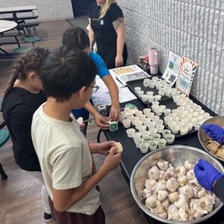
OSPI recognized Inchelium School District with a 2026 Rooted in Excellence award for excellence in the Farm to School category. Inchelium maximizes its Farm to School efforts by sourcing products directly from local farms and food hubs, as well as developing recipes that highlight local ingredients, like refried beans and tortillas. The district also celebrates local heritage foods, such as during its Garlic Fest, which features Inchelium Red Garlic, the oldest known strain grown in North America and native to the community. Other initiatives include visits from local farmers, hands-on school garden work, and tasting events. |
Resources
To learn more and apply online, visit the Rooted in Excellence webpage.
Questions? Contact CNStraining@k12.wa.us.
 |
|
OSPI is seeking skilled candidates for several positions within Child Nutrition Services.
Current Recruitments
|
Upcoming Recruitments
- Administrative Program Specialist—FSMC/Procurement
- SFSP Lead Program Supervisor

OSPI continues to celebrate SY 2025–26 Power Up Your Program participants by featuring Highline Public Schools’ and Mossyrock School District’s work in the Local School Wellness Policy course.
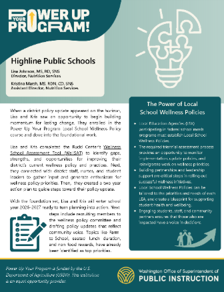
Highline Public Schools—Investing in Relationships to Build an Actionable Wellness Policy
During SY 2025–26, Lisa Johnson and Kris Marsh had a goal to update their district’s wellness policy. In the face of major department transitions and multiple competing priorities, Lisa and Kris prioritized tasks that would lay the groundwork for long-term success.
First, they utilized the Rudd Center’s free Wellness School Assessment Tool (WellSAT) to analyze their existing wellness policy and identify its strengths, gaps, and opportunities for improvement. Then they dug into community work, connecting with district staff, nurses, and student leaders to learn what is important to their community. These influential conversations helped to guide wellness policy language and garner awareness and support for student wellness initiatives.
 |
|
With a foundation in place, the duo developed a two-year action plan to keep making progress toward their goals. Their next steps include building up their wellness committee and drafting a new wellness policy that includes the priorities identified during their community discussions. |
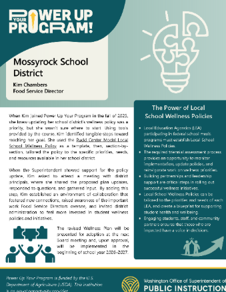
Mossyrock School District—Building Buy-in Before Implementation
During Power Up Your Program, Kim Chambers used the Rudd Center Model Local School Wellness Policy as a starting point for updating Mossyrock School District’s policy. Understanding the importance of establishing achievable goals, she tailored the model to fit the district’s priorities, needs, and resources. She shared the draft with the district superintendent, who offered support and invited Kim to share the policy proposal with the school board.
 |
|
Kim understood that she’d also need support from school principals and asked for time at a district principals’ meeting to share the draft policy and gather input. The meeting helped strengthen ties between the food service team and district administration, and to build excitement around student wellness. Principals were enthusiastic about the policy proposal and ultimately offered their backing.
With broad administrative support, Kim brought the policy update to the school board, and the board approved it for adoption. The policy is now in full effect for SY 2026–27.
|
Ready to Power up Your Local School Wellness Policy?
Use the Canvas enrollment link to join the Power Up Your Program: Local School Wellness Policies course today! This self-paced course offers practical guidance, action-planning tools, and resources to:
- Develop and strengthen policies
- Complete the triennial assessment and other wellness policy requirements
- Enhance outreach and engagement
- Put school wellness goals into action
Check out the Menu of Actions for a sneak peek at some of the tools and resources featured in the course.
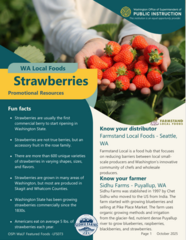
Celebrate the sweet taste of Washington-grown strawberries through the Washington Local Foods (WaLF) Program! Washington strawberries are a student favorite and provide a delicious source of vitamin C, fiber, and antioxidants. Whether served fresh or incorporated into recipes, strawberries bring bright color, natural sweetness, and local flavor to school meals.
 |
|
Serve WaLF strawberries in a variety of ways, including:
- Thawed as a grab-and-go fruit option.
- Added to yogurt parfaits, smoothies, or breakfast bowls.
- Tossed into salads with leafy greens or other seasonal produce.
- Incorporated into baked foods such as muffins, breads, or breakfast bars (thawed and drained first to release excess liquids).
- Blended into sauces, toppings, or fruit-based desserts.
|
Their vibrant red color, sweet flavor, and versatility make strawberries an excellent way to introduce students to locally grown produce while supporting Washington farmers and food producers.
Learn more about using WaLF frozen strawberries with the WaLF Frozen Strawberries Fact Sheet, and explore resources for promoting this versatile local fruit through the Harvest of the Season Berry Resources and WaLF Strawberries Promotional Resource.
To include WaLF frozen strawberries on the menu in SY 2027–28, include LFS073 Frozen Strawberries during the pre-order process in February 2027.
Washington Local Foods Spotlight Request
OSPI wants to hear from sponsors that have served Washington-grown strawberries or other WaLF products in creative ways. Share success stories, favorite recipes, student feedback, photos, or marketing ideas that generate excitement around local foods with OSPI at farmtocnp@k12.wa.us.
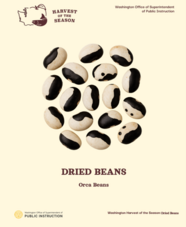
Nutritious, versatile, and packed with protein and fiber, dried beans come in many varieties, including black beans, pinto beans, kidney beans, navy beans, and garbanzo beans. They can be enjoyed in soups, chilis, salads, grain bowls, tacos, burritos and dips. Beans are unique because they count as either a vegetable or a meat/meat alternate, making them a powerhouse ingredient for healthy school meals. Note, beans cannot credit as both a meat/meat alternate and a vegetable in the same meal. |
|
 |
Beans have a long shelf life and can be grown in a variety of climates, making them an important crop. Their mild flavor makes them easy to incorporate into familiar recipes while introducing students to nutritious, locally grown foods. Schools can highlight dried beans by featuring them on the salad bar or school menu, hosting classroom taste tests with different bean varieties, or exploring how beans grow through a school garden or classroom nutrition lesson.
Looking for ideas and ready-to-use resources? Explore the OSPI Harvest of the Season: Dried Beans resources for cafeteria connections, classroom activities, family resources, recipe ideas, and more!
Date: Thursday, November 19
Time: 2–3 pm
These every other month networking calls bring together school nutrition staff, farmers and food producers, resource providers, and others supporting local food procurement in schools across Washington. Connect with peers, build new partnerships, share practical ideas, tools, and best practices on local food sourcing and related topics.
This month's call will feature tips and tricks for marketing local food offerings to students and families.
 |
|
Great Farm to School ideas are worth sharing! Send stories, photos, and lessons learned from local food, school gardens, taste tests, and other Farm to School activities to farmtocnp@k12.wa.us!
|
|