|
 Civics, Economics, Geography, History, & Skills for Public Life
Note: Resources are provided for informational purposes and not as recommendations from OSPI. Resources referenced here may be for educators or parents/families and may not be intended for use in the classroom. We recommend reviewing all educational materials for alignment with district policy and state law before using them with students. Articles and other resources are provided for informational purposes and do not necessarily reflect the viewpoints or policies of OSPI.
|
|
|
As members of the community may be participating in one or more of these observances, we share resources to educate ourselves.
Yom HaShoah - Holocaust Memorial Day

Yom HaShoah is a solemn occasion that invites reflection on the immense tragedy of the Holocaust and the enduring strength of those affected. The full name is "Yom HaZikaron laShoah ve-laG'vurah," meaning "Holocaust and Heroism Remembrance Day". The day falls on 27 Nisan according to the lunisolar Hebrew calendar and therefore begins at nightfall of Sunday, 5 May 2024 and ends at nightfall on Monday, 6 May 2024 of the Gregorian calendar. It is on this day that the Jewish communities and others from across the world commemorate the approximately six million Jews and five million others who perished in state-sanctioned, systematic murder by the Nazi regime and its collaborators. Additionally, the day honors those who participated in acts of resistance and heroism against their tormentors and is observed as a public holiday in the State of Israel. To learn more about Yom HaShoah, please visit this page from Yad Vashem. Additionally, please consider the opportunities provided by the Holocaust Center. More about Washington state Holocaust and Genocide Education can be learned here.
|
Vesak Day

For Theravada Buddhists, Vesak is a major holy day to be marked by a rededication to the dharma and the Eightfold Path. Monks and nuns meditate and chant the ancient rules of their orders. People bring flowers and offerings to the temples, where they may also meditate and listen to talks. In the evenings, there are often solemn candlelight processions. Vesak observances sometimes include the release of birds, insects, and caged wild animals to symbolize the liberation of enlightenment.
According to Buddhist legend, when the Buddha was born he stood straight, took seven steps, and declared "I alone am the World-Honored One." And he pointed up with one hand and down with the other, to indicate he would unite heaven and earth. The seven steps represent seven directions -- north, south, east, west, up, down, and here.
The ritual of "washing the baby Buddha" commemorates this moment. This is the single most common ritual, seen throughout Asia and in many different schools. A small standing figure of the baby Buddha, with the right hand pointing up and the left hand pointing down, is placed on an elevated stand within a basin on an altar. People approach the altar reverently, fill a ladle with water or tea, and pour it over the figure to "wash" the baby.
See links below for resources:
PBS LearningMedia - Vesak
Middle Way Education - Vesak
|
Memorial Day

Memorial Day is a federal holiday in the United States for honoring and mourning the U.S. military personnel who died while serving in the United States Armed Forces. Since 1971, it is observed on the last Monday of May.
Cities and towns across the United States host Memorial Day parades each year, often incorporating military personnel and members of veterans’ organizations. Americans also observe Memorial Day by visiting cemeteries and memorials. Some people wear a red poppy in remembrance of those fallen in war—a tradition that began with a World War I poem. On a less somber note, many people take weekend trips or throw parties and barbecues on the holiday, perhaps because Memorial Day weekend—the long weekend comprising the Saturday and Sunday before Memorial Day and Memorial Day itself—unofficially marks the beginning of summer.
History Channel - Memorial Day
History Channel - 9 Things you May Not Know About Memorial Day
|
Teach with TVW - New Curriculum
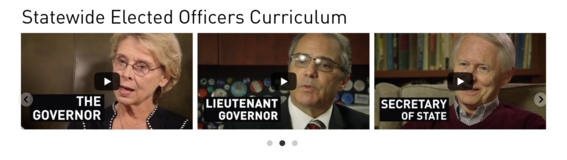
Teach With TVW has NEW curricula on the nine statewide elected officials!
We have revamped our website for easy access to nine individual lessons that dive into the roles and responsibilities of each of the nine elected members of the state’s Executive Branch.
Each lesson includes:
- An anticipation prompt
- A 5-7 minute video about the elected’s role
- A classroom activity
- Further research opportunities
All of this is available in a downloadable Google Folder so that students can work independently online or in a group.
Teach individually, or, jigsaw them for the whole class!
|
 |
|
TVW-CONNECTS is produced by Teach With TVW, a FREE civics resource for all Washington social studies teachers. Explore all of our civics programs at www.teachwithtvw.org |
Generation Citizen Pilot Program 2024-25
Through Generation Citizen, students learn civics by DOING civics. They offer a project-based approach to civics education, in which young people learn about democratic systems and processes by actively working to solve problems in their local community in partnership with government and community leaders. As a student-centered program, Generation Citizen creates a dynamic learning environment by supporting social-emotional learning and creating platforms to elevate student voice.
They are looking for 5-6 high/middle school teachers or 1-2 districts to partner with Generation Citizen for this great opportunity. Spots are limited so please reach out if interested in piloting this program for the 2024-25 academic year. This pilot program will be fully sponsored and paid for in partnership with Fix Democracy First Education Fund, a WA state-based organization focused on supporting and expanding civic education statewide.
For more information on how to bring Action Civics to your school or classroom, please contact: Morgan Kim mkim@generationcitizen.org Program Director, West Generation Citizen
|
Daniel J. Evans Civic Education Award for Students
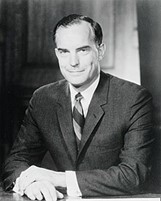
Named after former Washington State Governor Daniel J. Evans, this award recognizes four students, two from Western Washington, two from Eastern Washington, for their civic leadership and academic achievement in social studies. Any student in grades 3–12 who:
- Has successfully completed an OSPI-Developed Assessment in civics, a district-supported Classroom Based Assessment, civic-related National History Day project or other project-based learning, or a civic-related inquiry project, and
- Demonstrates civic leadership in their classroom, school and/or community.
Nominations are due June 30, 2024. Click here to learn more and nominate a student.
|
America’s Field Trip

America250 is excited to introduce America’s Field Trip, a nationwide scholastic contest designed to actively engage America’s youth in commemorating and celebrating the 250th anniversary of the nation. Beginning March 4, students grades 3-12 are invited to submit artwork, videos, and essays articulating what America means to them. First-place awardees will be provided an unforgettable “field trip” experience to visit some of the nation’s most iconic cultural landmarks and institutions. Second-place awardees will receive a cash award. The “field trips” include tours at landmarks like Yellowstone National Park or historic sites such as the Library of Congress — and will include travel and hotel accommodations for each student and a chaperone.
Students and teachers can find more information, including resources, contest rules, release forms, and toolkit materials to integrate the contest into classroom activities at America250.org/FieldTrip.
|
Washington State Civic Learning Council Grants

The Washington State Civic Learning Council has created a scholarship program to provide financial grants and support to educators and students participating in high-quality civic education programs at the national, state, tribal and local government level.
Grants will generally be awarded between the range of $250 to $1000. Grants will be considered over these amounts, contingent on funds availability and strength of application. Eligibility is open for a wide array of personnel involved in education, including educators, leaders of after-school programs, parent-teacher associations, home school organizations, individual students, nonprofits, and community organizations.
For more information and a link to the application, click here.
|
OSPI Social Studies Grants 2024-25 - Education grant Management System (EMGS)

The Education Grants Management System (EGMS) is an application designed for users to apply for funding opportunities, manage grants, and award grant recipients. The EGMS also provides recipient capabilities for organizations needing tools to administer, track, account for, and report on their grant-related activities. Beginning 2024-25 fiscal year, the Kip Tokuda Memorial Grant and Civic Education Travel Grant will occur in EGMS. We anticipate opening the applications after July 1, 2024.
All reports and form packages associated with School Year 2023–24 will remain in iGrants (e.g. end-of-year reports, budget revisions, etc.).
We encourage all those interested in applying for those grants moving forward to visit the OSPI Education Grant Management System website. You can learn more about the platform and learn how to create an account.
|
Holocaust and Genocide Education - Requirements, Best Practices and Guidelines
 |
|
In this one-hour webinar on Monday, May 6 from 4-5pm, we will review resources and guides to support Holocaust and Genocide Education. This will include Washington State legislation and resources available on the OSPI website. We will also make connections to Social Studies standards and how Holocaust and Genocide Education can promote SEL and equity. Educators can earn one equity clock hour.
|
Islamophobia in the K-12 Classroom: Understanding Context, Recognition, & Student Success Strategies
This educator workshop offers an introduction to essential tools and insights needed to effectively address Islamophobia in K-12 classrooms. Participants will gain an understanding of the political, social, and cultural factors contributing to Islamophobia and its impact on students. Educators will learn strategies for fostering inclusive and culturally responsive learning environments that support the well-being and academic success of diverse student populations. By the end of the training, participants will emerge equipped with actionable strategies and resources to counter Islamophobia, promote empathy, and cultivate a more equitable educational experience for all students.
This PD offers attendees 1.5 clock hours and is being taught virtually on May 10th at 4:00 pm by the Director of the Office of Diversity, Equity and Inclusion at Green River College. This PD is co-sponsored by Green River College Continuing & Community Education and the Puget Sound Educational Service District (PSESD).
Sign Up on pdEnroller.
|
Washington State ASCD Educator Conference
The WAASCD Educator Conference is back and will occur July 17–18, 2024, in Tacoma, Washington. The theme of the conference is “Whole Child – Whole Educator.” As such, the conference will focus on teaching the “whole child,” promoting the “whole educator,” and leveraging technology to create safe, healthy, engaging, supportive and challenging spaces, which can only be achieved through the lens of equity.
Click here to learn more about attending and presenting.
|
AP Government and Politics and PBL
Learn how to implement a project-based approach to AP Government and Politics this summer! The registration link below is where you can sign up for an online session (various weeks available) OR Washington state teachers can attend an in-person four-day session in Bellevue, WA, June 25–28. Participants will gain access to robust curriculum implementation guides for each project, with plenty of supporting resources. While the curriculum is designed for AP US Government and Politics, teachers of on-level courses in Civics or Government are welcome to attend and consider ways to adapt these projects for your classroom setting. Both semester-only or full-year course teachers are welcome. Both the online and in-person institutes come with the option to attend up to four additional support sessions (online) during the school year to support your PBL implementation. Fee waivers are available from the College Board.
Click here to learn more and register.
|
Judicial Institute for Teachers
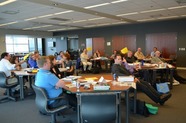
The Court, in collaboration with Seattle University School of Law, has developed a Judicial Institute for teachers of grades 5-12. This highly interactive program offers teachers a unique opportunity to hear from federal judges, attorneys, and law enforcement and to learn about topics including the U.S. Constitution, federal judiciary, civil rights, federal-state courts, and federal criminal law. Teachers will attend actual proceedings, as well as be questioned in a simulated jury selection process.
This program is offered to teachers in Western Washington within the court’s geographic boundaries. There is no cost to attend the program, and clock hours are offered. This is a 3-day in person program which includes overnight accommodations.
|
“We The People” Summer Institute
You are invited to be a participant in the James Madison Legacy Project Expansion (JMLPE)/US Department of Education research program in conjunction with Georgetown University and Civic Education WA State. This training will focus on the civic education program, We the People, and on Social/Emotional Learning. Teachers who apply must confirm they have not used the “We the People” program. You will be provided with 52 hours of free professional development, lodging at the Historic Davenport Hotel in Spokane, meals, free parking, guest speakers, and even a field trip! A $500 stipend will be awarded to each attendee once Georgetown has confirmed that you have completed the program.
Your principal must confirm via signature that you will have a class where you can teach the “We the People” lessons during the 2024-25 school year and that you are willing to do so. If you want to join us, fill out the application, have your principal sign it, and e-mail it to us. This Professional Development Program is open to High School & Middle School teachers, ELL teachers, and special education teachers. School teams of teachers are encouraged to apply.
Click here to access the application.
|
Learning Standards Review
Learning standards define what all students need to know and be able to do at each grade level. As required by state law (RCW 28A.655.070), OSPI develops the state’s learning standards and periodically revises them based on the student learning goals in RCW 28A.150.210. Click here to learn more about the process and click here for a timeline of review and implementation.
If you have any questions, please email standards.review@k12.wa.us.
|
|
|
ALL STUDENTS PREPARED FOR POST-SECONDARY PATHWAYS, CAREERS, AND CIVIC ENGAGEMENT.
Led by State Superintendent Chris Reykdal, OSPI oversees K-12 public education in Washington state. Our mission is to provide funding, resources, tools, data and technical assistance that enable educators to ensure students succeed in our public schools, are prepared to access post-secondary training and education, and are equipped to thrive in their careers and lives.
|
|
 |
|
|
|
|
|