Lance comes to FEPPP from CTE where he was the Business and Marketing Program Supervisor at the Office of Superintendent of Public Instruction (OSPI) working with the Business and Marketing Pathways along with FBLA and DECA board positions. Lance spent 13 months during his tenure in CTE as Project Coordinator for Career Connect Washington at OSPI. Work Based learning has also been an assigned focus during his time at OSPI. Lance is not new to FEPPP. Lance has presented at FEPPP workshops and has been an appointed member of the board by the Superintendent of Public Instruction for many years. Prior to his employment with OSPI, he was an Associate Professor of Business Administration, teaching business and accounting classes at Centralia College and advising the school's Rotaract Club for five years. He taught High School Business Education at W.F. West in Chehalis, Pe Ell High School, and White Pass High School for the 11 years before accepting the position at Centralia College.
|
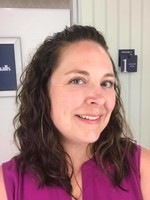
About Abbigail Blakney
Abbigail Blakney was born and raised in Spokane Valley, Washington. She graduated from University High School and attended college at Eastern Washington University. After graduating college Abbigail moved to Selah, WA and began working as a teacher at Toppenish Middle school in Toppenish, WA. Abbigail has also taught at Washington Middle School and Eisenhower High School, both in the Yakima School District in Yakima, WA. Currently Abbigail is teaching at Selah High School.
In 2014, Abbigail started working with the Financial Education Public-Private Partnership (FEPPP) ultimately incorporating suggested curriculum and teaching techniques into her classrooms. Abbigail is currently a FEPPP Fellow and is super passionate about bringing financial education to all K-12 students.
Tracy Godat, FEPPP Executive Director, sat down and asked Abbigail some questions about her teaching experience and here’s what she had to say.
TG: What are the rewards of teaching financial education?
AB: I didn't get financial education in school. And money wasn’t something specifically discussed in my home. I knew I would have to pay bills and try to save money once I moved out but that was about it. So, I made some really poor decisions financially because of that lack of knowledge. I love being able to share my experiences with students. I want them to know my mistakes and learn from them. I also love to see how financial knowledge can be life changing for them.
TG: What would you tell teachers new to financial education?
AB: Even though it feels scary, it is not! Students connect with and respond to your story. Be honest, share your own personal journey and let your students know that talking about money is not taboo. This will be one of the biggest things students will take away from their K-12 education.
Continue reading the entire article!
|
(For Educators new to personal finance.)
When: K-5 Educators: June 27, 2022 from 9:00 am to 3:30 pm
6-12 Educators: June 29, 2022 from 9:00 am to 3:30 pm
Register TODAY - June 27, 2022
Register TODAY - June 29, 2022
(For Educators with some personal finance training.)
When: August 2 and 3, 2022 8:30 am until 3:30 pm
Where: In Person at ESD 113, Tumwater, WA
REGISTER Today for August 2-3 Masters Training
Managing and Understanding Student Loan Debt (Virtual)
Who: Educators, Public, Anyone Seeking this Information
When: August 11, 2022 from 9:00 am to 10:30 am
Register TODAY - August 11, 2022
Please share these opportunities with your teacher friends and colleagues.
Please check our Trainings and Events page frequently for the latest information.
Questions?? Email FEPPP Executive Director, Tracy Godat at tracy.godat@k12.wa.us

 Washington Office of Superintendent of Public Instruction
K-12 Open Educational Resource Project
Washington OER Hub Needs Assessment Survey
Survey time: 10-15 minutes Responses due by June 30
Washington educators, administrators, and non-profit staff completing the survey will be entered into a drawing for a $25 Amazon gift card. Forty respondents will be selected.
Your help in filling out a brief survey for OSPI’s OER Project would be greatly appreciated. Input will help us continue to develop and spread the word about the Washington OER Hub in ways that best meet the needs of educators.
Throughout this upcoming school year, we’ll be working with Team Soapbox to provide increased visibility to resources on the Washington OER Hub and offer new professional learning opportunities supporting use of the platform as well as specific instructional materials.
Please feel free to Barbara Soots with any questions.

The Office of the State Treasurer and WorkSource of Washington have partnered to provide FREE Monthly workshops, in-person and online, on select consecutive Tuesdays at 9 am each month. Learn the steps towards financial wellness. These workshops will discuss financial basics such as budgeting, savings, credit and debt, and financial goal setting/decision making for individuals and families. Register at worksourcewa.com.
Credit & Debt 101: This workshop will discuss financial basics such as understanding your credit score, building & improving your credit history, and making debt pay off plans.
June 21
Consumer Cautions: This workshop will involve such topics as budgeting conversations with partners and/or family, comparing employment packages, and identity theft prevention & awareness.
June 28
|
 Cryptocurrency & Digital Wallets
Presented by Brian Duerr of Washington State Employee's Credit Union
Blockchain Technology, Peer To Peer Payments, Cryptocurrency and NFT’s! This workshop will demystify the technology and how it is rapidly changing how financial transaction are done. Discover how this technology is impacting everything we do from how we value art, to sending money to one another, to covering the over 11,000 cryptocurrencies in existence!
In the Community Relations role with WSECU Brian Duerr is an integral part of the team responsible for WSEU’s community development initiatives and partnerships. He has been responsible for leading the design and deployment of several digital financial educational modules that over 800,000 Washingtonians have completed. Brian has extensive B2B experience leveraging automation and technology with expertise in sales, implementation, operations and distribution. Before joining WSECU, Brian spent 15 years in Sales, Manufacturing, Supply Chain Management, Distribution and lead Global Operations for MillFab Inc., where he lead the $110M procurement and distribution channels. Brian attended Oregon State University. He is a Certified Financial Educator and has his Credit Union Development Educator certificate.
 |
|
|
Don't miss the General & Special Education Conferences scheduled for July 13-15 and October 19-21. Full-day courses will be offered on a variety of topics by some of the giants in educational research. You can attend from your home or work location, no matter where you live. Each course will include extensive opportunities for interaction with the presenter, and with other attendees in virtual breakout sessions. The conference is easy to join with a computer, tablet, or smart phone.
Vicki Dohrmann – Outreach Coordinator
Justin Cole - Planning Committee Chair
For more information or to register online, visit the conference website: https://rehabseminars.org
Continuing Education Credits Available:
- Washington OSPI Clock Hours
- 2 Graduate Level College Credits Available for each conference
- Professional Credit From ASHA, AOTA, NASW, NASP, APA
July 13 – 15 Courses
- Technology Tools and Strategies for Supporting Executive Function and Literacy by Diana Petschauer, MEd, ATP
- The Neuropsychology of Emotional Disorders: A Framework for Effective Interventions by Steven Feifer, DEd, ABSNP
- Managing Challenging Behaviors and Effective Social Skills Training for Individuals with Autism Spectrum Disorders by Jed Baker, PhD
- Teaching Students Who Struggle: Applying Brain-Based Learning Principles for Improved Efficacy by Darlyne de Haan, PhD
-
Self-Regulation in Children: Keeping the Body, Mind, and Emotions on Task in Children with Autism, ADHD or Sensory Disorders by VarleishaGibbs, PhD, OTD, OTR/L, ASDCS
- Embedding SEL in Daily Instruction to Improve Student Engagement and Academic Success by Mike Anderson, MS
October 19 – 21 Courses
- Teach Students How to Learn: Strategies to Improve Student Metacognition, Study Skills, and Motivation
- Executive Function Skills for Learners in the Classroom
- Children and Teens with Autism: Practical Interventions to Address Challenging Behaviors
- Helping Kids who Worry: School-Based Interventions for Anxiety
- Reading, Writing and the Brain: Developing Effective Interventions
- Thriving Schools: Trauma Responsive Practices as a Whole School Approach
- The What, Why, and How of Tier 2 Behavioral Systems: Improving Social, Emotional, and Behavioral Outcomes
- Teaching the Hidden Curriculum: Helping Students on the Autism Spectrum Understand the Unstated Rules of Social Interaction
Transitional certificates available for educators with expired certificates
Effective immediately, educators whose regular certificates expire by June 30, 2022 and are subject to renewal, are eligible to obtain a transitional certificate.
Due to the pandemic, educators may have had difficulty obtaining 100 clock hours for regular certificate renewal.
The policy change in transitional certificates is intended to provide flexibility for school districts in employing individuals whose certificates are expired. Individuals may maintain employment under a transitional certificate until their expired certificate is renewed.
The transitional certificate is issued upon request by a school district, approved private school, or educational service district upon request for an individual whose regular certificate has expired.
For more details on transitional certificates as a tool for educator certificate renewal, visit frequently asked questions.
|