|

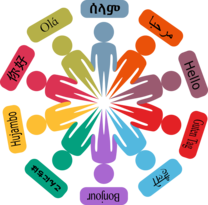
The rapid evolution of information technology (IT) is transforming our society, education, and how we work, play, and interact with others. People connect in ways never thought of before; the Internet is now accessible through mobile devices, tools such as e-mail and video chat have become commonplace, and social media allows us to share ourselves like never before. Educators need to help prepare our students for a world we cannot even imagine.
My family bought our first computer in 1989. I vividly remember going to the store and being allowed to play PAC-MAN while my father and the salesperson worked out the details. We were moderately early adapters of the PC (working for a nation-wide telecommunications company did not hurt) and continued that trend throughout the nineties. We had internet in 1992, a direct service line by the end of the decade (never being kicked off the internet if someone called!) and home Wi-Fi by the mid-aughts. I, in turn, had my first email address before I turned ten.
While I have personally never been all that involved in programming or coding, I have been interested in seeing where technology will advance, well… everything. From handwriting to typewriters to word processing programs to the cloud, our profession has changed exorbitantly in the past 25 years. As a student, my teacher was still using some mimeographed (purple ink!) copies and a slide projector in Latin 1, to having only a class set of textbooks as a first year teacher, to conducting classes entirely through Zoom during my last. This is not to say that all this change was easy or even welcomed. But there was always a glimmer of “what if?” in each progression.
By being an early adapter of Google Classroom, I was able to help guide my colleagues through the switch to fully virtual learning in March 2020. Now, after two years, I am sure they are pros. And there are organizations to help you, too. Listed in the Technology section, I have compiled some of the Language Learning and Technology associations from around the country. OSPI has resources for Computer Science, Open Educational Resources, School Technology, and Educational Technology. pdEnroller has hundreds of hours of professional development offered by experts from all over the state, often for a low cost or even free.
It can feel overwhelming when you are siloed in your classroom, school, district or even home, but we are here to help. Please take advantage of the resources in this newsletter or email us to ask what the best next step is for you and your classroom needs. Every question is a good question.
Dr. Veronica
veronica.trapani@k12.wa.us
360-819-0950
OSPI Connections:
Shannon Thissen (Computer Science): shannon.thissen@k12.wa.us
Barbara Soots (OER): barbara.soots@k12.wa.us
Educational and School Technology: OSPIEdTechDept@k12.wa.us
|
Office of Superintendent of Public Instruction (OSPI):
Migrant and Multilingual Education (Formerly Migrant and Bilingual Education)
Heritage Language Educators' PLC
Come learn with us through this statewide, virtual professional learning community. Participants share about their programs, effective strategies, and favorite lessons and instructional resources. We are informal and all are welcome to join us!
Meets the third Tuesday of the month at 3:30–4:30 pm.
Register for this PLC in pdEnroller to get follow-up info, reminder emails, and free clock hours.
Zoom link: https://us02web.zoom.us/j/83651966388 | Add this meeting to your calendar system.
Super Less Commonly Taught Languages (SLCTL) Proficiency Assessments
New Custom Testing Request Form
OSPI is excited to announce a new Custom Testing Request site! In cooperation with Extempore, we will continue the service started by WAFLT to offer Custom Testing for languages that are not currently supported by the major testing companies. All languages are eligible for World Language Competency-Based Credits and the Washington State Seal of Biliteracy for District and school officials may send a request directly through the website.
For Super LCTLs, finding evaluators can be a lengthy process, sometimes taking months. It is important for requests to come as soon as possible and to prioritize current students in grade 11 and 12 for credit and Seal purposes. However, no restriction exists for how heritage languages can be assessed.
Super Less Commonly Taught Languages Evaluator Search
To supply evaluation services for Custom Testing, Avant Assessment needs native/near-native and literate speakers of super LCTLS. Please contact Lisa Werner, Avant’s Super LCTL Program Manager to learn more!
Currently, there is a need for these languages:
Bisaya/Visaya | Cebuano | Dinka | Fijian | Fur | Icelandic | Karen | Kirundi | Kosraean | Krio | Kunama | Lingala | Mandinka | Palauan | Pohnpeian (Micronesian) | Soninke | Toishanese | Tongan
|

Washington State:
Washington Association for Language Teaching (WAFLT-WA)
LIFT (Learn, Inspire, Friends, Teach)
Donna (Immediate Past President) and Teresita (President) are hosting these evening meetings. So please, come join us once a month to LIFT each other, share, connect, plan, grade, laugh, cry, eat, and drink (BYOB)! We can also do breakout rooms by AATs, language, levels, ideas, etc.
Next meeting: January 24, 7:00-8:00pm Pacific | Link here
WAFLT’s Spring Conference will be held April 23.
Pacific Northwest Council for Languages (PNCFL)
PNCFL Spring Virtual Conference: "Bridging Our Distance, Fostering Collaboration"
March 18-19 | Session proposals due February 16
WAFLT members are also PNCFL members.
PNCFL Annual Award Nominations
Our region is graced with talented, supportive, and outstanding language education professionals! Please nominate a colleague for one of PNCFL's Professional Awards.
Nominations are due Saturday, January 15.
Award descriptions and nominations forms can be found on our website.
UW STARTALK
2022 Heritage Language Symposium
Language teaching colleagues from the University of Washington and around the state join together for our eighth symposium on working with heritage language learners.
In addition to the live keynote and panel presentations on February 12th, we are offering a curated list of links to prerecorded, highly engaging and relevant presentations on Heritage Language Learning and Teaching, that will be available the week before the Symposium for participants to view in advance and discuss at the Symposium, as well as view after the Symposium.
Saturday, February 12 | 9:00 AM – 12:00 PM Pacific | Register here
|

National Updates:
United States Department of Education (DoE)
School Ambassador Fellowship Program (SAFP)
The School Ambassador Fellowship is a professional learning community designed to improve educational outcomes for students by leveraging the expertise of school-based practitioners in the creation, evaluation, and dissemination of information around national education initiatives.
Application deadline is Friday, January 14 at 11:59pm Eastern. Please visit the Applicant Information page and sign-up for updates to stay in contact with the program.
United States Department of State
TechGirls Global STEM Leaders
TechGirls brings together 25 competitively-selected American young women (ages 15-17) with 111 peers from 35 countries/territories around the world for a 27-day international exchange program focused on the in-depth exploration of applied technology and STEM topics. The exchange will include an interactive technology camp at Virginia Tech University, site visits to technology companies, discussions on STEM education and careers, career readiness workshops, community service opportunities, leadership training, job shadow opportunities, cross-cultural dialogues, recreational activities, and homestays.
American and foreign TechGirls participants will be required to implement follow-on service projects in their home communities that they designed during their U.S.-based exchange. Activity sites include Washington, D.C., host cities across the country (Austin, Chicago, Cincinnati, Denver, Detroit, Portland or Seattle), and the campus of Virginia Tech in Blacksburg, VA.
The scholarship is fully inclusive of travel, courses, programming, housing and meals, staff supervision and ground transport for sightseeing.
U.S. youth STEM leaders, this is your chance to collaborate with likeminded peers from across the globe and gain tech skills that will inspire you to pursue your dreams.
Applications due Saturday, January 15
Joint National Committee for Languages & the National Council for Languages and International Studies (JNCL-NCLIS)
Virtual Language Advocacy Days 2022: Language at the Intersection
This past year we debuted the virtual adaptation of our annual language advocacy days which resulted in our largest, most successful event ever, providing advocacy training for over 350 advocates from all 50 states, and reaching all 100 Senate and 180+ House offices during live congressional meetings. Training is provided for first-time advocates. Let us support our local, state, and federal advocacy initiatives during congressional meetings.
February 2-4, 2022 | Zoom
|
Newcomers in Your School:
Given the increasing tide of newcomer youth entering U.S. schools, it is critical to address the cultural, social-emotional, and academic needs of these students to help them succeed in the classroom and beyond. Building on CAL’s decades of experience working with newcomers in educational and community settings, this institute focuses on two key components for optimizing success for newcomer students in the classroom:
- Day One: Cultural Perspectives, Influences, and Key Resources
- Day Two: Adapting Content Instruction for Newcomer Students
March 1 & March 8 | Register here
Early bird registration by February 1, 2022: $735/person
After February 1, 2022: $865/Person
Send two people or more and pay $735/person
White House Initiative on Advancing Educational Equity, Excellence, and Economic Opportunity for Hispanics (Hispanic Initiative)
This newsletter has been created by both the White House Initiative on Advancing Educational Equity, Excellence, and Economic Opportunity for Hispanics and the U.S. Department of Education. It will provide you with valuable information to help increase opportunities and improve outcomes in education for Hispanics in the United States including important facts and statistics, news about reports and Federal government programs/initiatives, and resources covering the full educational spectrum – including early learning, K-12, postsecondary, adult education, and more. We will also share fun facts and highlight leaders in education and the Hispanic community.
The purpose of the series is to showcase the unique college experiences of Hispanic students. These shared stories can serve as a resource for current students, especially first-generation students, to learn more about college life. In addition, it can be beneficial for faculty and university administrators to learn more about the Hispanic undergraduate experience. By celebrating our students’ achievements, this can create pathways for future Hispanic student success by demonstrating what our students are already achieving, while additionally underscoring the potential, and need, for future growth. This series will be updated periodically. To learn more about this series, please contact us at WHIEEH@ed.gov.
Language Learner Literature Advisory Board (LLLAB)
The mission of the Language Learner Literature Advisory Board (LLLAB) is to provide well rounded feedback about Classroom Library material as it pertains to race, ethnicity, cultures, social class, gender, sexual orientation, gender expression, age, religion, family structure, neurodiversity, abilities, and experiences. The board is composed of a group of diverse members that are well advanced in their field and can provide trustworthy information to help dismantle social inequalities and support teachers and authors in developing and curating culturally-sustaining reading material.
We are committed to (un)learning and welcome feedback and suggestions for honoring and validating everyone’s identities, experiences, and realities.
Members are committed to a year each term (August-July). Leadership will be elected every year. General Board members can renew their membership every year. Currently Available Languages: Spanish, French, German
|
Computer-Assisted Language Instruction Consortium (CALICO)
Join CALICO!
CALICO, the Computer Assisted Language Instruction Consortium is a professional organization that serves a membership involved in both education and technology. CALICO has an emphasis on language teaching and learning but reaches out to all areas that employ the languages of the world to instruct and to learn. CALICO is a recognized international clearinghouse and leader in computer assisted learning and instruction. It is a premier global association dedicated to computer-assisted language learning (CALL).
Learn H5P and Jumpstart the Infographics for Language Learning (ILL) Resource
In this workshop we will discuss Infographics for Language Learning (ILL), a new resource which will act as a hub for legitimately sourced authentic infographics with accompanying question exercises that can be imported into a course or used directly on the site. In this workshop, you will learn how to use various H5P content types to create interactive question sets and other exercises. To help populate ILL with question exercises, and help you have hands-on practice with H5P, a large portion of this workshop will focus on each participant creating exercises for pre-selected infographics to be included in the resource. Thursday, January 13, 7:00 – 10:00 AM Pacific
FUNemployed Workshop: Play and Make Your Own
FUNemployed is a social, role based, game for between 4 and 7 players. In each round, one player is an employer who is hiring for a particular position and the other players are applicants. Both the job and qualifications for each applicant are selected randomly by the app. (As seen in the YouTube intro video.)
In this workshop, participants will play a digital FUNemployed game, built on Kaizen Castano’s open source code, in order to experience the fun and memorableness of its format, then they learn how to adapt and publish their own versions of the game.
Further, we will introduce an extension of the FUNemployed game, which was developed by Dr. Yi-Su Chen and Ryan Sutton for a product sourcing game between buyers and suppliers. This extension includes a series of qualification categories. These categories are useful for being more specific about an applicant’s qualifications. For example, if you want to build a game for your students where the employer is someone looking for a roommate, then you could make sure that all applicants are given one qualification from a series of categories such as: bedtime, noisiness, cleanliness, friendliness, pets. Participants will receive templates for both the basic and the extended version of the game, to customize their own games. Thursday, January 13, 10:00 AM – 1:00 PM Pacific
Social Media Activism: Implementing an Intentionally Inclusive Pedagogy in the Language Classroom
Recent cultural and societal movements towards social justice have fueled a new critical understanding of World Language instruction. Despite its inherent intercultural characteristics, it has become more evident that standard language instruction reproduces an oppressive system based on class, gender and race. We argue that an intentionally inclusive pedagogy benefits from the use of and interaction with social media platforms to provide meaningful input representing diverse perspectives. This workshop demonstrates how language educators can use social media features and modalities to help students identify and combat oppressive views and biases, resulting in more diverse and inclusive teaching practices. Friday, January 14, 10:00 AM – 1:00 PM Pacific
|
European Association of Computer Assisted Language Learning (EUROCALL)
The EuroCALL Review
The EUROCALL Review is a journal of the European Association for Computer Assisted Language Learning (EUROCALL) that seeks to provide an international focus for the dissemination of high quality innovative research, development and practice in technology-enhanced language learning. It includes foreign or second language learning and development in technology-rich learning environments, theoretical debate and practical applications at developmental stage, evaluative studies of the potential of technological advances in the delivery of language learning materials and enactment of language learning activities, and discussions of policy and strategy at institutional and discipline levels.
Vol 29, No 2 (2021)
- “Faculty and student perceptions of the use of web 2.0 tools to develop communication skills in English” -Laura Chagas, Neuza Pedro
- “CHAT framework to study affordances in CALL environments” - Aparajita Dey-Plissonneau
- “Creating a positive learning environment in the online classroom with Flipgrid” Juan-Carlos Casañ-Núñez
- “The effect of editing techniques on machine translation-informed academic foreing language writing” -Vahid Reza Mirzaeian
- “Online comments as input enhancement” -Dukhayel Aldukhayel
|
International Association for Language Learning Technology (IALLT)
The International Association for Language Learning Technology (IALLT) is a professional organization that provides leadership in the integration of instructional technology into the world language classroom.
The FLTMAG is a free magazine on technology integration in language teaching and learning brought to you by IALLT.
In this webinar, the presenters will explain how Teletandem, a type of virtual exchange, can be integrated into the language classroom. They will discuss Teletandem’s principles of reciprocity, autonomy, and separation of languages and demonstrate how instructors can implement inexpensive telecollaborative tasks that support language learning and intercultural competence growth. The presenters will answer commonly asked questions about the implementation of Teletandem and share outcomes from their recent research.
Thursday, January 20, 11:00 AM – 12:00PM Pacific | Register here
|

Language Learning and Technology (LLT)
Language Learning & Technology (LLT) is a free, fully-refereed, open journal which has been published exclusively online since July 1997. Published continuously (from January 2022) by the National Foreign Language Resource Center at the University of Hawai‘i at Mānoa, the journal seeks to disseminate research to foreign and second language educators on issues related to technology and language education. The focus of LLT is not technology per se, but rather issues related to language learning and language teaching, and how they are affected or enhanced by the use of digital technologies. LLT has an editorial board of scholars in the fields of second language acquisition and computer-assisted language learning.
|
 |
|
Wait, where's the LANGUAGE content?!
Looking for all the language resources you love? We've moved them to a separate, supplemental publication, "The Language Lab". Coming soon to an inbox near you!
|
|
|
|
ALL STUDENTS PREPARED FOR POST-SECONDARY PATHWAYS, CAREERS, AND CIVIC ENGAGEMENT.
Led by State Superintendent Chris Reykdal, OSPI oversees K-12 public education in Washington state. Our mission is to provide funding, resources, tools, data and technical assistance that enable educators to ensure students succeed in our public schools, are prepared to access post-secondary training and education, and are equipped to thrive in their careers and lives.
|
|
 |
|
|
|
|
|