|
FOCUS: English Language Learners
February 2019
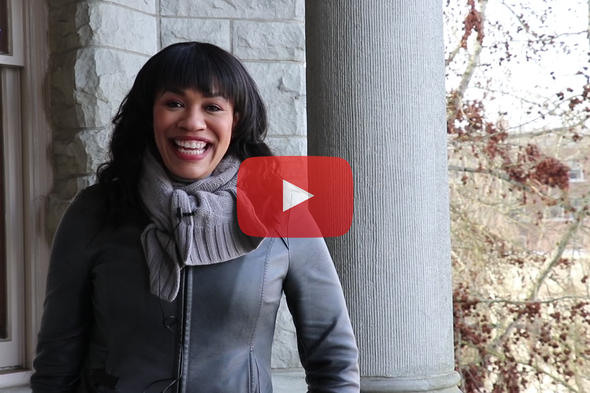

by Mandy Manning, NBCT, 2018 National Teacher of the Year
Engaging families is always a challenge, but when those families are from other nations and cultures, that challenge grows exponentially. In my eleven years working with linguistically diverse students and their families, I have learned that challenging rigid systems and cultural responsiveness are key.
To demonstrate, I want to introduce you to Maylina. Maylina is Marshallese. She came to the United States with her mother, because her mother could not find work to support the family and environmental factors were making their island uninhabitable. They speak conversational English, but are not literate yet.
Maylina came to the Newcomer Center excited to learn and to practice English. Her mother was also happy, as she had already secured a job at a local sewing factory.
Within the first two weeks of school, the district left many messages on their phone, and sent many letters home...
CLICK HERE to continue reading
|
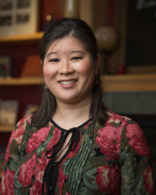
by Dr. Kristen Wong Callisto, Director of School Improvement, OSPI
OSPI’s equity statement recognizes that all students, families, and communities possess strengths and cultural knowledge that benefit their peers, educators, and schools. Accordingly, OSSI’s February newsletter focuses on supporting the teaching and learning for English learners. Did you know that Washington is among the top 10 states with the highest number and share of English learners, behind states like California and New Mexico (NCES, 2018; NPR, 2017; MPI, 2015)?
Our team is passionate about supporting English learners for many reasons, but especially because under the Washington School Improvement Framework, English learners have two different data points. First, their overall performance as a student population is considered, but there’s now a new indicator: English language progress. For this measure, Washington examines how many English learners are making adequate progress towards acquiring English language proficiency and transitioning out of the program within 6 years. Using the English language progress measure, some schools in Washington were identified for Targeted support. OSSI provides support to those schools and others by partnering with valuable resources like OSPI’s Migrant and Bilingual Education team, the Washington Association for Bilingual Education, the Bilingual Education Advisory Committee, and our own Continuous Improvement Partners.
What you’ll learn from the rich content in this month’s newsletter is about setting inclusive conditions for English learners and their families because we know that when learners feel supported, their capacity to learn is optimized. In conclusion, one more fun fact: After Spanish, what are the next three most popular languages spoken by Washington’s students? (Answer: Russian, Vietnamese, and Somali!)
|

by Maribel Vilchez, ENL, NBCT, North Thurston School District, PESB Member
For as long as I can remember my perception of the world comes from seeing it through the lenses of people’s languages and cultures. I’m fascinated by the richness of the sound of words in different languages, the diverse ways people interact, and the varied ways people do things. But what fascinates me the most, is that the majority of traditions seem to have similar motives. This I would say makes us more similar than different. For instance, in many Latin American countries, families celebrate the15th birthday of a girl a “Quinceañero” while in the US and Canada families celebrate the sweet 16th. Both cultural traditions honor the new phase in a teenager’s life. Each tradition has details that makes them “different”, but the truth is that both stem from the love of families for their children. This personal observation drives my interactions with parents, teachers and/or students. It sparks my curiosity to want to know more about them...
CLICK HERE to continue reading
|
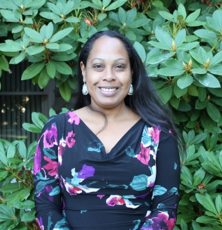
by Latifah Phillips, Director Office of Native Education, OSPI
The United Nations proclaimed 2019 as the International Year of Indigenous Languages in an effort to raise awareness of the cultural, linguistic and knowledge systems that are at risk of extinction. For many people raised within mainstream cultures, it’s hard to conceptualize the idea of a language becoming “extinct” when language surrounds us for communication, social interaction and business. Some may ask why humanity should care about endangered languages when an accessible means of communication exists through a lingua franca such as English, Spanish or French.
However, the standard for assessing the worth or value of a language shouldn’t be determined by outside dominant cultures which operate from a different set of values, norms and ways of life. Language is more than...
CLICK HERE to continue reading
|
by Catherine Carrison, Ph.D.
How do you honor all languages and cultures?
Many of our schools hold school-wide multicultural events showcasing song and dance from our students’ cultures. This includes a variety of events organized by teachers and students tied to the Dual Language Program such as our “Feria de libros bilingües” (bilingual book fair), Ballet Folkloríco dancers, and other celebrations showcasing the Latino culture.
How are you meeting the needs of EL students (either school and/or district-level)?
Evergreen Public Schools is working hard to ensure our ELs have the greatest chances for academic success. The mission of our English Language Learner Department is...
CLICK HERE to continue reading
|

Cultural & Linguistic Competency Training Program
OSPI has provided cultural and linguistic competency professional development training resources to Local Education Agencies in the state to support educators in providing more equitable classroom environments. These resources can... CLICK HERE to continue reading
Toolkit for EL Family Engagement -Build relationships based on trust with your EL families through home visits. Build on families’ strengths by bringing their funds of knowledge into classroom instruction. This toolkit will give you the foundation to strengthen this work in your school or district.
What it takes to increase EL Grad Rates- Graduation study highlights how four districts made systemic changes to improve their 4-year graduation rate for English learners.
Using TBIP and Title Districts share how they use Transitional Bilingual Instruction Program and Title III funds to implement effective programs for English learners. Watch their presentations on the annual TBIP/Title III iGrants training for SY18-19 (video)(slides).
The Migrant Education Health Program was designed with the intent to eliminate barriers that might impede migrant student's access to school and community health services, and help overcome health-related problems that inhibit their ability to succeed in school. For more information contact Armando Isais-Garcia
WABE, Washington Association for Bilingual Education resources:
|

GATE Advisory Meeting
February 19 9 am-12pm, ESD 113
Creating Access for All: The Role of Rigorous Coursework & Dual Credit Programs to Support Student Potential

WABE 2019 Annual Conference
Washington Association for Bilingual Education
Hyatt Regency Bellevue April 25-27
Register here

Title 1, Part A /Learning Assistance Program (LAP) Resources
The Share Your Story Project is a way for Local Educational Agencies (LEAs) or schools in Washington to showcase their Parent and Family Engagement successes. Below are two examples that showcase successful approaches to engage and support English Learners.
The Community Cafés in Benson Hill Elementary (Renton School District), which includes an English Learner Café. These cafés are typically parent hosted gatherings where participants contribute to guided conversations relevant to their own community. In the English Learner Family Café, the school wanted to gather information about the dreams parents had for their children and what makes school the best it can be. Details Benson Hill Elementary
Selah School District's Home Visiting Migrant Summer School includes a strong family engagement component. The goal of the program is to increase the academic skills of migrant students by modeling traditional games, technology and classroom activities that can be used by parents and caregivers to create a home learning environment that is fun and aligned with state learning standards. Details Selah School District
Contact Penleope Mena for more information.
|
|
Washington School Improvement Framework Data Rollout
OSPI is releasing the 2nd year of the Washington School Improvement Framework data. This release will not change the school identifications that were made last year, but it will report results based on the most recent three-years of data: 2015-16, 2016-17 and 2017-18. The next round of identification for tiers of support is planned for early 2021.
This year we will release the data in three phases:
- Secure Student Data for validation – January 30th
- WSIF Preview - February 14th
- Public Release of WSIF – March 7th
OSPI will be sending more specific information to district CEDARS administrators, school improvement leads and assessment coordinators. Those communications will have information about how to access and review data, as well as who to work with to make sure data accurately reflect performance within your district. Please contact Lance Sisco at 360-725-0421 with any questions.
New Report Card – Monthly Updates
As part of our iterative approach to the OSPI Washington State Report Card Redesign, we will be doing monthly updates to the New Report Card. These updates may contain new data visualizations, bug fixes, or enhancements to functionality. Our next public release will be on February 6th, 2019. One of the items scheduled for the February 6th release is the WaKIDS/Kindergarten Readiness visualizations, now available for district review in the Tableau Secure Data Portal. This display uses the WaKIDS files sent to districts via WAMS on December 14th, 2018 combined with CEDARS data to determine student group membership. In addition to the WaKIDS visualizations, the February 6th release will also include the following:
- Moving the WSIF results currently housed on the old Report Card site to the New Report Card
- Reorganizing the left-side navigation in the diversity report
- Fixing typos and bugs identified by users
- Updating the “Coming Soon” PDF on the main landing page
If you have questions about the Redesigned Report Card or the data that will be included, contact ReportCardRedesign@k12.wa.us. If you have questions about accessing the Tableau Secure Data Portal, please contact your District Data Security Manger. If you have questions about reporting to CEDARS, contact customersupport@k12.wa.us. If you have questions about the WaKIDS data, contact assessmentanalysts@k12.wa.us.
|
Serving English Learners and Migrant Students
Do you have online courses that are offered in other languages? Do you have a program that is successfully earning credits for migrant students or English Learners? OSPI wants to know more! Please reach out to ALD Director Rhett Nelson.

How do I See Beyond Diversity to Ensure an Inclusive Classroom?
by Liliya Stefoglo and Pam Schaff, Continuous Improvement Partners
It is essential that we make a choice to see beyond. Preparing ALL students to live successfully with a solid foundation has a ripple effect that is... CLICK HERE to continue reading
Our English Learners
by Monica Hulubei Piergallini, NBCT, Continuous Improvement Partner
We are now half way through the 18-19 school year, first school year of full implementation of ESSA, which has highlighted English Learners (ELs) both in academic proficiency, growth, AND language progress. To those schools that... CLICK HERE to continue reading
|
|
|
|