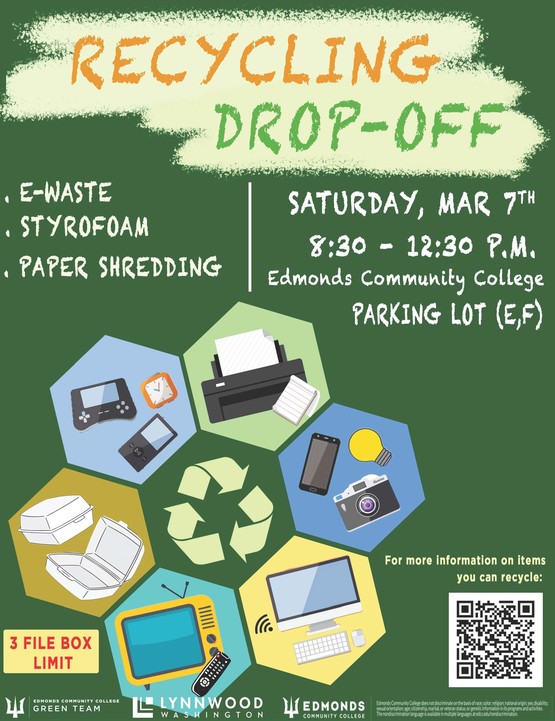
RecycleMania Drop Off!
The City of Lynnwood has partnered with Edmonds Community College to provide a recycling collection event for some items that are not always easy to recycle. This event is coming up quick on Saturday March 7th! If you have more questions regarding the event, including a detailed list of what can be collected, please visit https://students.edcc.edu/csel/green-team/recycling-dropoff.html
This excerpt is from an article by Waste Management.
What is Zero Waste?
Most people probably don’t think too much about the trash they throw away. After all, we’re all so busy with work and family and scrolling through Facebook that it’s easy to overlook the food and packaging and water bottles we go through on any given day.
But while most may not think too much about waste, there are some of us who think about it a lot…a whole lot. In fact, there are companies and organizations that have made it their business to figure out how to generate less, how to dispose of less, and how to define when we achieve some variation of a “Zero Waste” goal.
And while zero waste may sound pretty straightforward, it can actually be more complex than you might think.
What is Zero Waste?
Generally, “Zero Waste” is a philosophy of eliminating the generation of materials that have no viable or economic option for end-of-use management. In reality, there are varying interpretations for when (and if) it is achieved. Does zero waste really mean zero waste? Does it consider the waste that’s produced in the production of materials upstream? Is a small amount of waste acceptable at the end of a material’s end of life? What about Waste-to-Energy? The definition of zero waste varies widely, with various organizations defining zero waste differently, each with their own interpretation as to what it takes to get to “zero.”
The generation of waste can be lowered through a variety of options, including reducing, reusing, recycling, or taking appropriate action to prevent waste through design and engineering solutions. Many individuals, companies and municipalities continue to strive to achieve zero waste goals, while our very own Waste Management Phoenix Open is the largest zero waste event of its kind in the world.
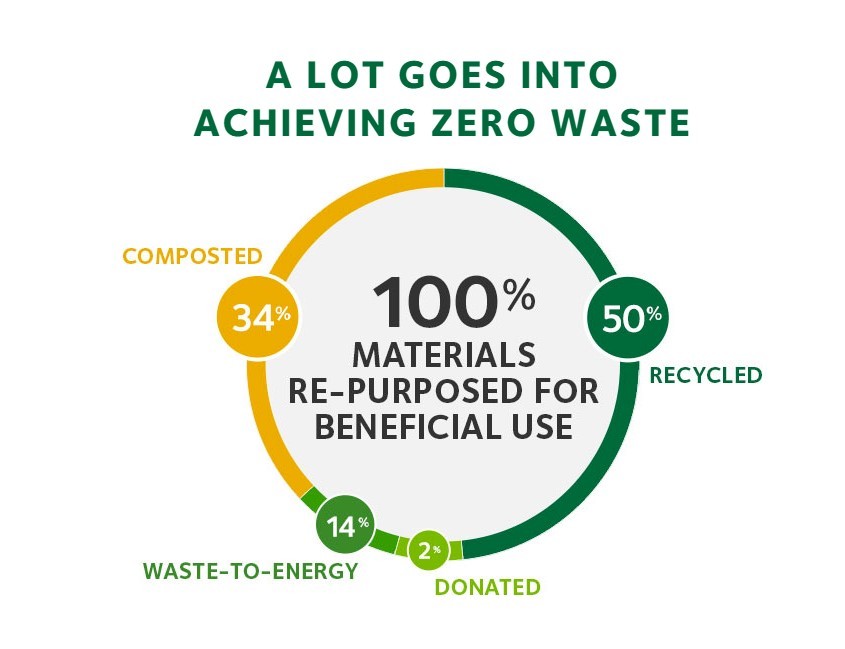 Is zero waste the best goal for the environment?
The answer may be more complex than you think. That’s because – in the end – diversion for its own sake has no value if the materials collected for recycling and composting are not turned into worthwhile commodities that can be sold and made into marketable products. In fact, in some cases, diverting materials can increase negative impacts on the environment if a net increase in energy or emissions are a result of the diversion process. That’s to say that some materials may contribute to higher greenhouse gas emissions through either the recycling and composting process, or through transportation to a recycling facility.
That’s why it’s important for every program and material to be evaluated according to its full lifecycle impact to ensure your primary sustainability goal is being achieved, whether that’s high diversion or lower greenhouse gas emissions.
No matter what, the heart of any effective waste management program is not diversion, but avoidance. That means planning ahead on how to manage items that will be a challenge to recycle, whether that means reuse, donating, or using an item to produce renewable energy.
The entire article can be found at http://mediaroom.wm.com/what-is-zero-waste/
Computers and TV's
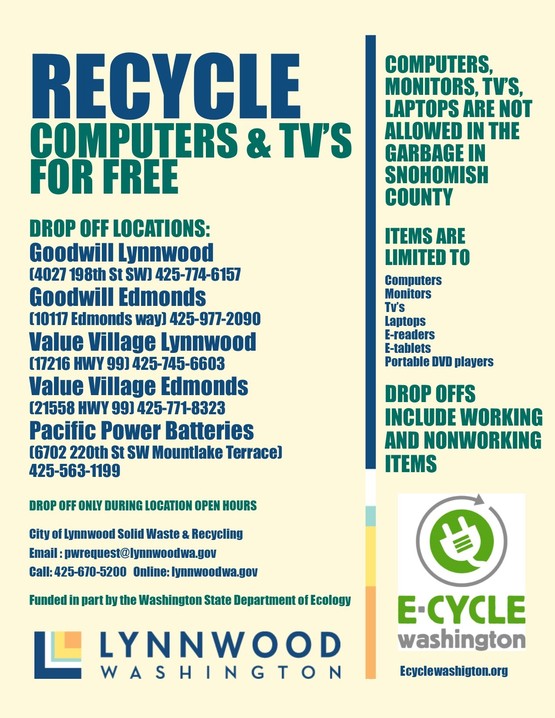
Check out this message from our cities Stormwater Division. Did you know?
Pet Waste
The Poop Problem
Dog poop spreads diseases to people and pets. Rain washes poop down ditches and drains and into waterways. When high levels of fecal bacteria are found, shellfish beds are closed to harvesting, and waterways are unsafe for swimming and fishing.
The Poop Solution
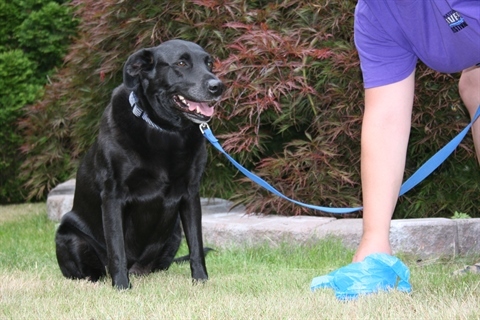
Scoop the poop, bag it, and place it in the trash!
At home, scoop at least weekly, ideally daily, especially before it rains. Diseases can be tracked indoors on paws, shoes, and flies. Some diseases can live in your yard for weeks or years!
On walks, bring extra bags, scoop every poop, and carry it to the trash. Be prepared. Always keep bags and a flashlight on your leash. Watch closely when dogs are off leash. Scoop even in tall brush.
 |
|
You can receive free poop bags when you stop by city hall!
The City of Lynnwood has a new website! You can find this information and more. Visit Lynnwoodwa.gov and search "Stormwater" or "Recycling"
|
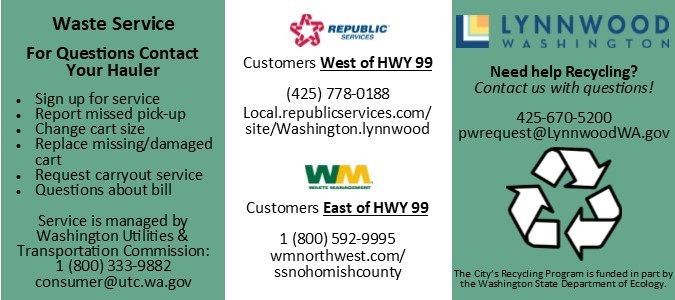
The Washington Utilities and Transportation Commission manages the contract that covers Lynnwood curbside garbage, recycling, and yard waste collection. If you have any issues that your garbage hauler can not solve, you can reach out to the Washington Utilities & Transportation Commission for assistance. Check out all of our garbage & recycling contact information below.
Do you have any ideas or suggestions about how to make this newsletter better? Are you involved in or know of any recycling events in our area? Please send an email to mshipley@lynnwoodwa.gov and reference the Recycling Newsletter.
The city of Lynnwood's recycling education program, including this newsletter, is funded by the Washington State Department of Ecology.
|










 SUBSCRIBER SERVICES: Manage Preferences