|
February 27, 2026
(Port Orchard, WA) - Kitsap County Public Works is pleased to announce two upcoming highway litter cleanup efforts in partnership with the Washington State Department of Ecology (Ecology) and the Washington State Department of Transportation (WSDOT). The projects will clean up litter on state highway ramps countywide and along the heavily impacted Gorst corridor of State Route 3.
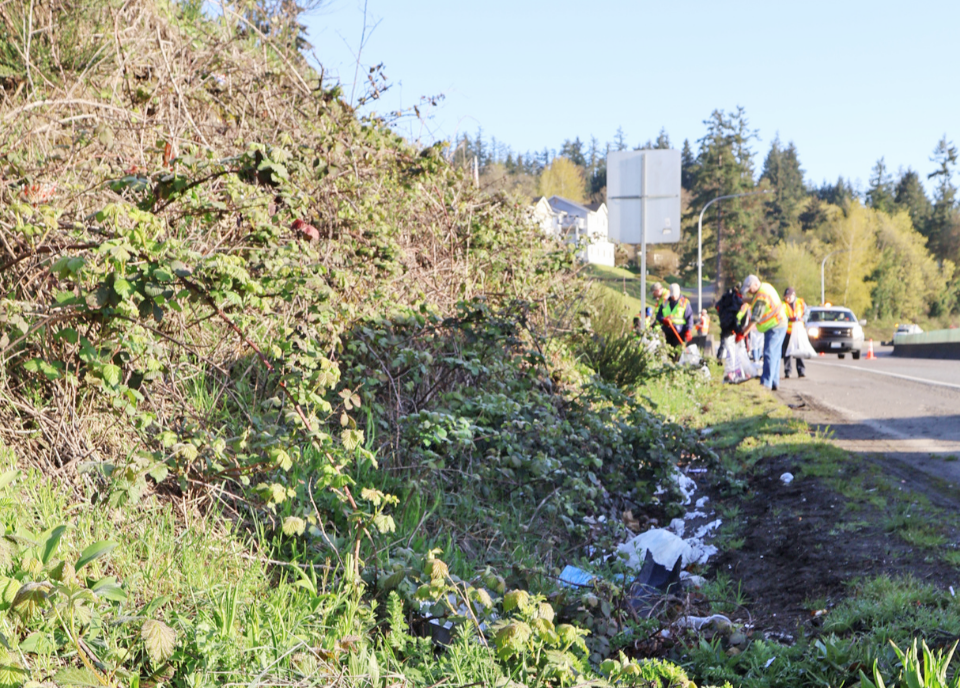 Employees from multiple agencies picking up litter along the Gorst Corridor in April 2025.
Highway ramp litter cleanup grant
Kitsap County has been awarded a $60,000 grant through Ecology’s Ramp Litter Cleanup Program. This competitive grant provides temporary funding to counties and cities to clean up litter on state highway on- and off- ramps, which are typically maintained by WSDOT and Ecology.
Kitsap County’s litter cleanup contractor, Totem Logistics, will clean 70 ramp segments in the county along SR 3, SR 16, and SR 303. Cleanup work is scheduled to begin in spring 2026 and continue through June 2027, when the grant ends. Each ramp segment will be cleaned two or three times, depending on the level of litter accumulation.
This is the second time Kitsap County has received funding through the Ramp Litter Cleanup Program. During the previous grant cycle in 2024-2025, the County’s contractor removed more than 22,000 pounds of litter from the same 70 ramp segments. A 2022 statewide litter study by Ecology found that highway ramps have more litter than any other public areas in Washington—including rural and urban roads, rest areas, and parks.
Gorst corridor cleanup scheduled Sunday, April 19, 2026
The second cleanup project will focus on the most litter-impacted stretch of highway in Kitsap County: the Gorst corridor of SR 3.
On Sunday, April 19, 2026, from 6 a.m. to 3 p.m., WSDOT will close the right, southbound lane between SR 304 (Navy Yard Highway/Charleston Blvd) and the West Belfair Valley exit so crews can remove litter along the shoulder.
Drivers should expect slower travel times and traffic backups. Law enforcement will manage traffic through the work zone.
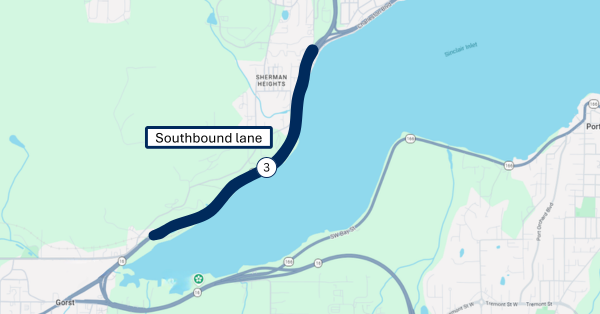 The cleanup will impact the southbound lane starting at the overpass of Charleston Blvd. to the West Belfair Valley exit.
This is the third annual Gorst cleanup coordinated by WSDOT and Kitsap County. As in previous years, the cleanup crew will include WSDOT staff, Kitsap County Solid Waste Division staff, and the Kitsap Board of County Commissioners. “This annual collaboration makes a big impact on the appearance of this busy stretch of highway,” said Kitsap County Commissioner Oran Root about the project. “But litter prevention would make a more permanent impact. The cost of these cleanups is huge and they’re also impactful to drivers. Properly securing vehicle loads would prevent much of this litter."
Litter prevention is key to reducing costs and environmental impacts
Litter is more than an eyesore — it’s an expensive and ongoing problem on Washington’s roads.
In 2024, WSDOT and Ecology volunteers, crews, and contractors collected and removed more than 1,000 tons of litter and debris from state highways. The state’s cost for this work is estimated at over $12 million.
Local governments also invest significant resources. In 2025, Kitsap County volunteers, crews, and contractors removed more than 92 tons of litter and illegally dumped materials from county roads, county properties, and some city streets. These efforts are coordinated through the Clean Kitsap Program and cost approximately $500,000 each year. Most of this funding comes from tipping fees collected at county-owned waste disposal facilities.
Despite these large investments, litter continues to impact Washington’s roads and communities.
Preventing litter at the source is far more effective — and far less expensive — than cleaning it up after the fact.
Here are three simple things you can do to help prevent litter:
- Secure your load – every trip, every time. It’s the law. Properly securing your load prevents debris from falling onto the road, reduces crashes, and keeps trash from becoming roadside litter.
- Dispose of trash properly. Keep a small bag in your vehicle for garbage and hold onto it until you can dispose of it in a trash can. This simple habit makes a big difference.
- Speak up. According to Ecology research, 26% of people who litter say they would be motivated to stop if “a friend, family member, or passenger asked me to.” A quick, respectful reminder can prevent litter before it happens.
By doing your part, we can keep Kitsap County’s roadsides clean and protect the natural beauty that makes our region special for residents and visitors alike.
Contact information
Kitsap County Public Works, Solid Waste Division, 360.337.5777 or solidwaste@kitsap.gov
Kimberly Pleger, Public Works Communications Manager, 360.337.5777 or kpleger@kitsap.gov
|