Thank you for subscribing to the Assessor’s Office newsletter. I hope that you find the information educational and useful. If you have suggestions on how we can make this publication more beneficial to you, please do not hesitate to contact the office at assessor@kitsap.gov or call 360.337.5777.
Phil Cook
Kitsap County Assessor
|

2026 tax highlights
It’s February and that means that the office had a very busy January completing the 2026 property tax calculations and certifying them to the Treasurer’s Office so tax statements can be mailed out to Kitsap County taxpayers by mid-month.
As was shared in our December newsletter, each taxing district must provide their approved resolution and budget, authorizing the collection of property tax to the Assessor. These documents are used by our office to correctly calculate the property tax rate required to fund the district budget. This process must be completed for each of the 40 taxing districts in the county. Districts include schools, cities, fire districts, the library, ports, parks, a public utility district, the state and county. A complete list of taxing districts that serve Kitsap County residents is available on our website.
|

Do you know which tax districts your home is in?
The easiest way to find your property information is to use the county’s online Parcel Search. You can look up your property by parcel number, physical (site) address, or mailing address.
Once the property is located, click on the “choose a theme” from the dropdown tab on the left side of the page in the “Manage Layers’ section. From the dropdown, you will see an option for “Districts”. If you click on that, you will have the option to pick whichever district type you are looking for, whether it’s a School District, Fire District, County Commissioners District, etc. After you have selected the district, go to the legend tab to identify the district.
|
Did you know detailed property tax information is available in our Assessment Books?
After property tax calculations are done for the new year, the Assessor’s Office compiles the data into an annual Assessment Book. This includes general property value and tax information, typical residential taxes, historical data, property tax collected for all districts in Kitsap County and much more.
Here is a link to the Assessment Book for Taxes Payable in 2026. You may also view previous years on the Assessment Books webpage.
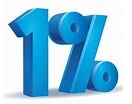
What is the 1% property tax limit?
The 1% property tax limit has been in place for over 20 years but can be misunderstood. This limit does not mean that the assessed value on your property may only increase by 1%. The Assessor must assess taxable property at 100% of market value by law (RCW 84.40.030).
The 1% levy limit applies to tax districts and how much they may levy for property taxes. The limit allows individual tax districts a 1% increase to their property taxes each year without voter approval. For example, a district that levied $100,000 last year, may levy $100,000, plus 1% ($1,000) and any tax revenues generated by new construction and state assessed value increases.
Does this mean that your property taxes will not increase more than 1% a year? No, not necessarily. Individual tax bills are based on several factors, such as how much your property changes in value compared to other properties within a tax district or if voters approve tax increases exceeding the 1% levy limit.
The Washington State Department of Revenue provides a publication, Property tax – How the one percent property tax levy limit works, which includes additional information on the 1% levy limit. Examples illustrate how changes to the assessed value on a property compared to another property impact the property tax amount. General property tax levy information is included as well.
|

It's time for businesses to file their personal property listings
Personal property filing reminders and listings were sent out last month for businesses to report their equipment as of January 1, 2026. This self-reported information is used to determine the assessed value on which property taxes will be based next year. This annual filing is due by April 30th each year.
Online filing is available for existing accounts and is the preferred method of filing. If you have a business and do not have a personal property account, you may complete a listing for a new account and email the completed form to personal-property@kitsap.gov and an account will be set up right away so you may file online.
Visit our website for additional information on business personal property.
|
Physical inspection update
Our September newsletter shared information regarding the physical inspection area and why the office must make on-site inspections. Since that publication, residential appraisers have completed about 48% of the inspections in South Kitsap. The goal is to complete the work by mid-spring.
If you live in the inspection area and are curious where the appraisers are currently working or wondering if they have already been through your neighborhood, go to our residential inspection map.

When are property taxes due?
Property taxes are due twice per year, with the first half being due by April 30th and the second half due by October 31st each year.
Did you know that the Treasurer’s Office offers a variety of ways to pay your property taxes? If you are interested in learning more about payment options, please visit the Treasurer’s website.
The Treasurer’s Office provides a tool to view property tax distribution. Detailed information on a specific property can be viewed using the search by site address or tax account number (aka parcel number) located on the top right side of the page.
|
Elections that impact future property taxes
The Bremerton and North Kitsap School Districts are asking their voters to approve ballot measures at the February 10, 2026, Special Election that will affect property taxes in 2027 and beyond. The ballot measures are for enrichment levies and capital projects.
These are excess levies which are imposed over and above regular property tax levies. Local schools only have excess levies. Regular property tax levies are imposed by districts such as cities, the county, fire districts, parks, ports, the library and the public utility district. Districts with regular levies may increase their budget each year by 1% without voter approval. These districts may ask the voters to approve an excess levy, such as a bond, which if approved, would be in addition to their regular levy.
For more details on the February Special Election visit the Kitsap County Auditor’s Elections webpage.
View Previous Newsletters
Monday - Thursday: 9 AM to 4 PM
Fridays: 9 AM to Noon
assessor@kitsap.gov • 360.337.7160
|