|
June 2025
Support Pollinators with
Bee-Friendly Weed Control
Bees are critical pollinators, yet, both native bees and honey bees face serious threats, including habitat loss, disease, pesticide exposure, and lack of nutritious forage. The good news? You can help with how you manage noxious weeds.
Some invasive plants, such as yellow starthistle and knotweed, may provide nectar, but their harmful impact on native ecosystems, wildlife, and agriculture far outweighs any benefit to pollinators. Replacing noxious weeds with native pollinator-friendly plants is a great way to support bee health while improving the landscape.
How You Can Help Pollinators While Controlling Weeds:
-
Remove responsibly: Avoid spraying or cutting weeds during peak bee activity (late morning to mid-afternoon).
-
Time it right: Do your control work in early spring, fall, or winter, before or after bloom.
-
Replace invasives: After weed removal, plant native or non-invasive flowering plants that bloom from spring through fall.
-
Stage large projects: Convert infested areas gradually to ensure bees still have nectar sources nearby.
-
Choose wisely: Include native wildflowers, herbs (like dill, chives, lavender), and flowering shrubs to support a variety of pollinators.
Native plants are especially valuable! They’re low maintenance, adapted to our climate, and support local wildlife. But many non-invasive garden plants also benefit bees.
By integrating pollinator-friendly practices into your weed control efforts, you’re helping create healthy habitats that sustain bees, butterflies, birds, and other essential species.
Weed Aware - Weed of the Month
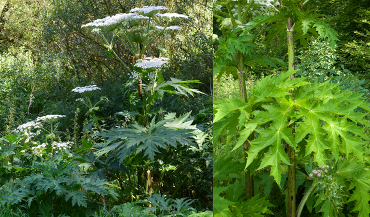
Giant hogweed (Heracleum mantegazzianum)
Giant hogweed was introduced as an ornamental, and now invades parts of the U.S. and Canada. It is a Class A (eradication required) noxious weed due to its health hazards and ecological impact.
Giant hogweed grows 10-15 feet tall with umbrella-shaped clusters of small white flowers up to 2 feet wide. Its hollow stems are 2-4 inches thick, with purple blotches and stiff bristles. Leaves can grow up to 5 feet across and are deeply lobed.
The plant’s sap contains chemicals that cause severe skin burns and blistering when exposed to sunlight. It also outcompetes native vegetation and promotes erosion along waterways due to its shallow roots.
Control requires caution! Wear protective gear and avoid sap exposure. Digging up the root at least 6 inches deep can prevent regrowth. Herbicides with the active ingredient glyphosate or triclopyr can be effective, especially on young plants, but follow-up for several years is essential. All plant material should be bagged and thrown in the trash and never composted or placed in yard waste bins. Reach out to our program if you need specific guidance on control options.
Due to its high toxicity, prompt identification and removal are critical.
Source: Sylvan Ramsey Kaufman, & Kaufman, W. (2012). Invasive plants: a guide to identification, impacts, and control of common North American species. (2nd ed.). Stackpole Books.
|