|
This newsletter is produced weekly. For more COVID-19 updates, go to kcowa.us/covid19. You can manage your subscriptions using the links at the very bottom of this bulletin. For weekday data updates, see our COVID-19 Surveillance Dashboard at kcowa.us/covid19daily
UPCOMING VACCINATION CLINICS: Appointments are available for our Jan. 12 clinic for ages 12+ and our Jan. 14 clinic for ages 5-11. Register here and find full details at kcowa.us/vaccine
Updates on COVID activity, hospitals, testing, and more
Trends we are tracking
-
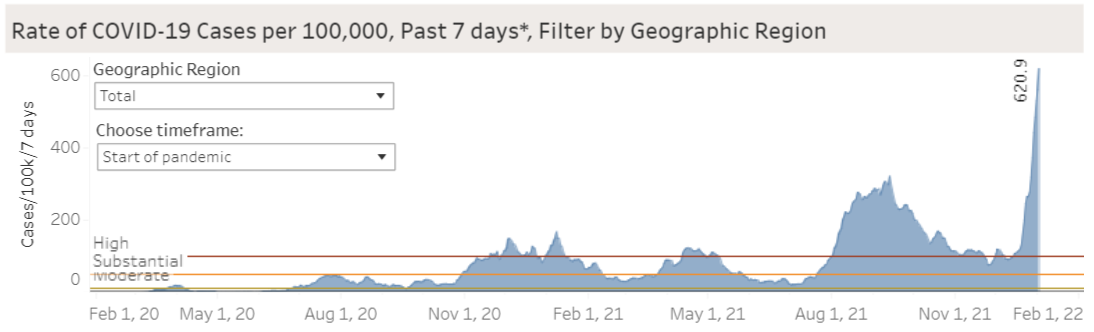
COVID-19 has never been more widespread in Kitsap County than it is right now. Our seven-day case rate per 100,000 population topped 600 and continues to grow. Hundreds of Kitsap residents are testing positive every day — more than ever before.
-
The current wave of cases is caused by the Omicron variant. Omicron is believed to spread more easily than previous variants of COVID-19. Data also indicate Omicron is less likely to make people severely ill, especially if they are vaccinated and have received a booster shot. However, hospitalizations could still increase because so many people are getting sick at once.
-
The number of Kitsap County residents hospitalized with COVID-19 has ticked up. Thirty residents were hospitalized in the week ending Jan. 1, up from 20 the previous two weeks. Some of these residents were treated at hospitals in other counties.
-
Find daily (weekday) data updates here and view all of our weekly COVID-19 data dashboards here.
We need your help to reduce the burden on hospitals
Our healthcare system is facing a crisis this winter. Hospitals are full or close to capacity across the state and region, and healthcare organizations are grappling with staffing shortages. The wave of Omicron cases is adding pressure to an already strained system.
In a letter to Gov. Inslee this week, Washington State Medical Association leaders wrote, "Our emergency departments are overrun, our hospitals are full. We are emotionally and physically exhausted."
We need to make sure emergency medical services remain available to the patients who need them. If you think you need immediate medical care, call 911. Do not go to the emergency department for routine COVID-19 testing or other non-emergency services.
Tips for COVID testing as demand soars
 We expanded availability at our drive-through testing sites. Click the image to learn more.
Demand for COVID-19 testing remains extremely high. Testing sites are filling up. At-home test kits are sold out at many retailers. Gov. Inslee announced this week that millions of additional test kits will be distributed in Washington, which could increase the supply in the near future.
-
If you need a test, check out list of Kitsap County testing providers. We update this list frequently. Be aware that all providers are experiencing very high demand. Please be patient as you look for a testing opportunity.
-
If you have symptoms of COVID-19 or have been exposed to someone with COVID-19 but are unable to get tested, assume that you could have COVID-19. Follow guidance for isolation. Stay home and avoid contact for others for at least five days. Seek medical help if your symptoms become severe.
-
If you need a test to go back to work, use a rapid antigen test if available. Diagnostic PCR tests should not be used for back-to-work testing because they can continue to show positive results after a person is no longer contagious.
-
In response to increased demand, Kitsap Public Health District and the Kitsap County Emergency Operations Center expanded drive-through testing operations to six days a week. The drive-through testing sites are intended to serve people who have symptoms of COVID-19 or have been exposed to someone with COVID-19. Preregistration is strongly encouraged as onsite registration is limited. Learn more here.
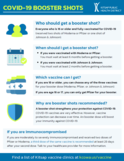
New guidance for booster shots
Vaccination and booster shots are extremely effective for preventing severe illness and hospitalization from COVID-19, including the Omicron variant.
The FDA, CDC and state Department of Health have adopted new guidance for COVID-19 booster shots:
Find a list of local vaccine providers here, or at vaccinelocator.doh.wa.gov.

Looking for a vaccination or testing appointment?
Demand is currently high for both COVID-19 vaccination and COVID-19 testing. Below are resources that can help as you search for an appointment in Kitsap.
🩹 COVID-19 VACCINATION:
UPCOMING VACCINATION CLINICS: Appointments are available for our Jan. 12 clinic for ages 12+ and our Jan. 14 clinic for ages 5-11. Register here and find full details at kcowa.us/vaccine
🧪 COVID-19 TESTING:
 |
|
PRINTABLE WEEKLY OUTLOOK
Download our weekly outlook report as a PDF that you can print and share in your community. Thank you for spreading reliable information about COVID-19!
Looking for an image file to share? Click here.
|
Numbers to know
-
As of Jan. 6, 73.3% of all Kitsap residents (ages 0+) have received at least one dose of COVID-19 vaccine and 66.5% are fully vaccinated. Almost 200,000 Kitsap residents have received at least one dose of vaccine. Of the Kitsap residents eligible to get the COVID-19 vaccine (ages 5+), 77.9% have received at least one dose and 70.7% are fully vaccinated.
-
1,480 COVID-19 cases were reported in our county in the most recent week with full data available (week ending Jan. 1): 89 cases on Bainbridge Island, 356 cases in Bremerton, 398 in Central Kitsap, 274 in North Kitsap, and 358 in South Kitsap, and 5 undetermined.
- Kitsap County's rate of cases per 100,000 population over 7 days was 621 as of Jan. 7 (includes cases reported through Jan. 2). The rate of cases reported in Kitsap is increasing very rapidly. COVID-19 transmission is at a "high" level in our county, per the CDC.
- For the week ending Jan. 1, there were 30 new Kitsap resident COVID-19 hospitalizations; there were 20 the week prior. The number of Kitsap residents hospitalized with COVID-19 is increasing.
-
265 Kitsap resident COVID-19-associated deaths have been reported to date.
- Find more local COVID-19 data at kcowa.us/covid19data
COVID-19 PREVENTION: LET'S GET BACK TO BASICS
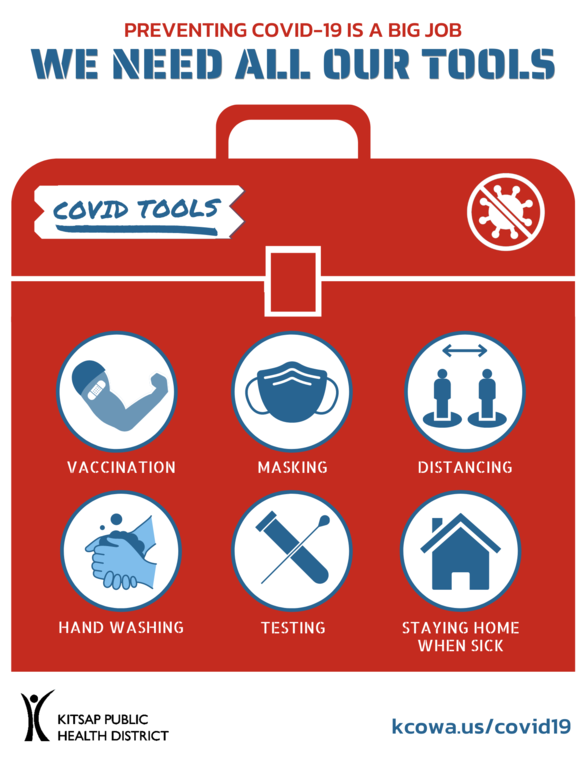
Holiday gatherings and the arrival of Omicron increase the risk for getting and spreading COVID-19 this winter. Now is a good time to get back to basics and focus on using the tools we know work to prevent the spread of respiratory illnesses:
-
Vaccination: Vaccines are expected to protect against severe illness, hospitalizations, and deaths due to infection with the Omicron variant, especially for those who are fully vaccinated and have received a booster shot. Learn more about vaccination options in Kitsap.
-
Masking: A mask is required in indoor public spaces and large outdoor events in Washington. To increase your protection, consider wearing a mask anytime you are around people from outside of your household. Wear a mask that fits snugly over your mouth and nose.
-
Distancing: Avoid crowded indoor settings and gatherings in poorly ventilated indoor spaces. Increase your protection by maintaining at least 6 feet of distance from people outside of your household as much as possible.
-
Washing hands: Wash for at least 20 seconds with soap and water. Carry hand sanitizer with you.
-
Testing: Whether you are vaccinated or not, help keep people around you safe by avoiding contact with others and getting tested if you have symptoms of COVID-19 or have been exposed to someone with COVID-19. Follow all public health guidance if you test positive.
-
Staying home when sick: If you feel sick, stay home as much as you can, except to seek medical care. Many respiratory illnesses are circulating in our community this winter. Do your best to avoid getting others sick.
- Find more prevention tips here.
QUESTIONS? CONTACT: pio@kitsappublichealth.org
|



.png)