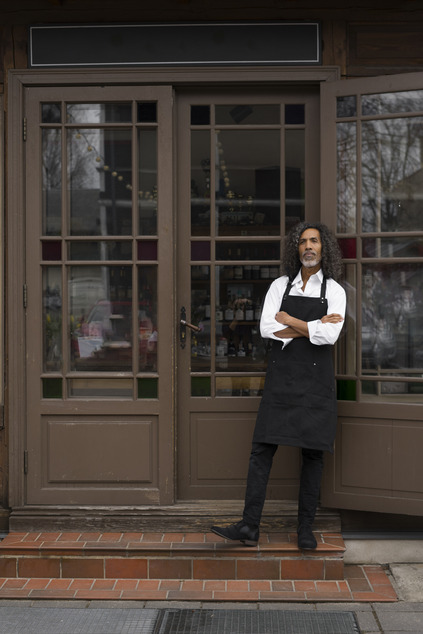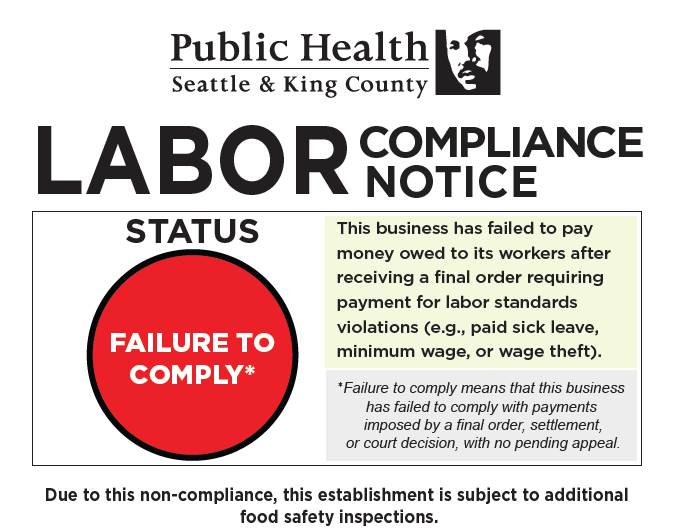
Since August 15, 2026, food businesses that haven't paid workers what they're owed after a final labor order could see that show up right at their front door.
Under King County Board of Health Rule 25-02, if a food business receives a final order requiring payment for a labor standards violation (like unpaid wages, not paying for sick days, or wage theft) that they have failed to comply with, Public Health will:
- Put a Labor Compliance Notice sign within 5 feet of the main entrance, next to the food safety rating sign
- Keep the sign up until the business pays what it owes
- Do an extra food safety inspection within 30 business days after we learn the business has not paid
How does Public Health find out? Public Health doesn’t investigate wage complaints. We get this information from the Seattle Office of Labor Standards, the Washington State Department of Labor & Industries (L&I), and the Washington State Attorney General’s Office.
Who does this rule apply to? Restaurants and other food service businesses, bakeries, mobile food businesses (like food trucks), meat and fish sellers, and caterers.
Are you a worker who is owed pay? You can file a complaint:
Every food establishment must have a PIC on-site during all hours of operation, not just during inspections.
A good PIC should:
- Know food safety basics
- Check that refrigerators keep food at 41°F or colder
- Test the sanitizer to make sure it is the right strength before using it on surfaces that touch food
- Make sure hand sinks have soap and paper towels, are easy to reach, and are only used for handwashing (not blocked by dishes or boxes)
- Fix problems right away, without waiting for an inspector to find them
PIC is more than a job title. Every PIC must have active managerial control and ensure food safety requirements are followed.
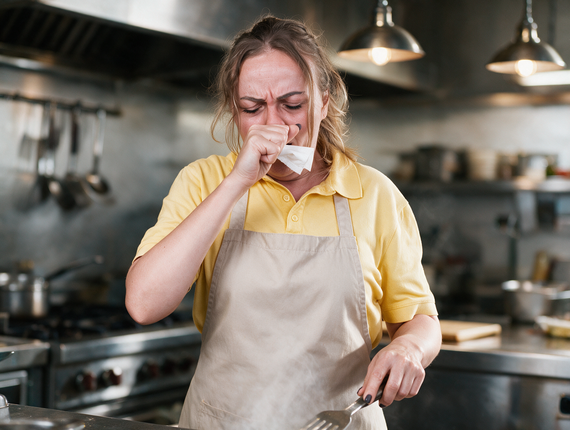
An Employee Health Policy protects your employees, your customers and your business, but only if it's written down, kept on-site, and followed.
At a minimum, your policy should cover:
-
Which symptoms mean a worker must stay home or go home: vomiting, diarrhea, yellow skin or eyes (jaundice), sore throat with fever, an infected cut or boil and diagnosed illnesses like norovirus or Salmonella.
-
How to write down the date, the symptoms, and when the worker can come back to work
-
Who is responsible for taking this information and deciding what to do next
Why write it down? Having this in writing means any manager on shift, not just the owner, knows exactly what to do when an employee calls in sick or a customer reports getting ill. This information should be reviewed with staff, so they know what to do.
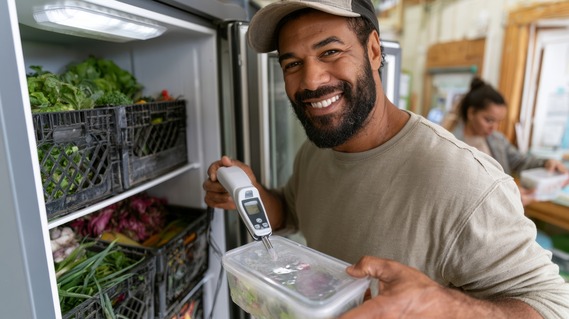 Cooling is one of the most common ways food safety goes wrong. Why? Because it happens quietly when no one is watching. A big pot of soup or a pan of rice cooling on its own can stay in the temperature danger zone much longer than you think.
Remember:
- Cool food from 135°F to 70°F within 2 hours. Then cool it from 70°F to 41°F within 4 more hours (6 hours total).
-
Use shallow pans: spread hot food in wide pans, 2 inches or less deep, instead of one deep pot. This is one of the fastest ways to cool food.
-
Other ways to cool faster: stir the food often, put the container in an ice bath, or add ice as an ingredient (when the recipe allows it).
-
Always check with a thermometer. Don’t guess.
Try this: Do you usually “put it in the walk-in and check tomorrow”? Test it. Use a thermometer to see how long your food really takes to cool. You may be surprised!
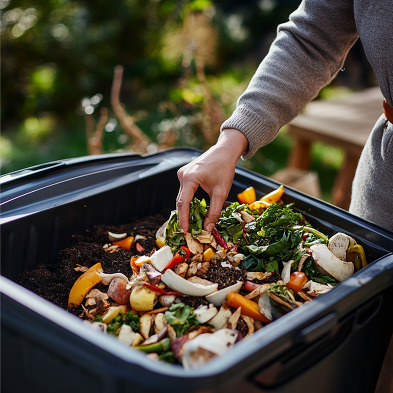
New state requirements are now in effect for businesses that generate food, yard, and other organic waste.
If your business is in a Business Organics Management Area (BOMA) and generates 96 gallons or more of organic waste per week—about the amount that fits in one large curbside waste cart—you may be required to keep that material out of the garbage.
For many businesses, the easiest way to meet this requirement is by using a curbside organics collection service.
Want to know if the law applies to your business? Visit the Washington State Department of Ecology’s Organics Management Law webpage for more information: https://ecology.wa.gov/2022-organics-management-law
Need help?
Our partners at the King County Solid Waste Division can help you determine whether your business is required to comply and explain what options are available.
For questions or assistance, contact Organics@KingCounty.gov.
Why did the pot of soup jump into the ice bath?
Because it only had 2 hours to chill out!
Want your food to chill out fast too? Try these tricks to get it out of the danger zone quickly:
-
Go shallow: spread food in pans 2 to 3 inches deep.
-
Make it smaller: cut big pieces of meat into smaller pieces before cooling.
-
Ice bath + stir: set the pot in ice water and stir every few minutes. An ice wand or cooling paddle works great too.
-
Give it air: in the walk-in, leave pans loosely covered or uncovered until cold, and don't stack them.
Check with a thermometer: 70°F in 2 hours, 41°F in 6 hours total.

|