 September 2026
Programs & News – Oregon & Washington
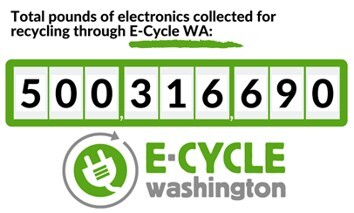 E‑Cycle Washington Surpasses 500 Million Pounds Collected
E‑Cycle Washington has reached a major milestone: more than 500 million pounds of computers, monitors, and TVs have been responsibly recycled since the program began in 2009. This achievement highlights what EPR can achieve to reduce electronic waste, recover resources, and keeping hazardous materials out of landfills. The program’s success is the result of WMMFA’s administration that ensures collaboration with manufacturers, Dept. of Ecology, local governments, retailers, collection sites, and processors. As electronics continue to play an ever‑larger role in daily life, E‑Cycle Washington remains an essential program for ensuring these products are managed sustainably at end‑of‑life.
Oregon DEQ Sends Back Electronics PRO Proposal
Oregon DEQ has rejected Electronic Manufacturers Recycling Management's (MRM) 2027 program plan to serve as the producer responsibility organization (PRO) for Oregon E-Cycles. MRM, which is operating the program in 2026, was the only PRO to submit a plan. DEQ cited insufficient detail on program education and public awareness and on environmentally sound management practices, outdated collection network information, and a lack of clear, measurable goals.
The decision follows public comment calling for clearer collection-site service standards, stronger performance measures, better collection-network analysis, and greater accountability for outreach and program operations. MRM has until Oct. 9 to submit a revised plan.
Bye Bye Mattress Opens First Crook County Drop-Off Site
Bye Bye Mattress, the Mattress Recycling Council's (MRC) program under Oregon's Mattress Stewardship Act, has opened a free, year-round drop-off site at the Prineville Recycling Depot (1751 N. Main St.), operated by Republic Services. It is the program's fourth site in Central Oregon and the first in Crook County. Residents can drop off mattresses and box springs Monday through Friday, 9 a.m. to 4 p.m.
Third Amendment to Oregon Packaging EPR Program Plan Open for Comment
A third amendment to Circular Action Alliance's (CAA) Oregon packaging EPR program plan is open for public comment. The amendment adjusts the plan to account for DEQ removing the specifically identified material designation for glass and shredded paper, and also cleans up plan sections on metric tracking and convenience zones. Send comments to RethinkRecycling@deq.oregon.gov by Oct. 19.
NAW Appeals Oregon EPR Ruling to the Ninth Circuit
On September 24, the National Association of Wholesaler-Distributors (NAW) filed a notice of appeal to the Ninth Circuit. NAW is challenging the U.S. District Court for the District of Oregon's August 27 decision in NAW v. Feldon, which upheld Oregon's Plastic Pollution and Recycling Modernization Act. A Ninth Circuit ruling would be binding on federal courts in the nine western states in its jurisdiction, including Washington and California. Oregon's program remains in effect while the appeal is pending. NAW is also challenging EPR laws in California and Colorado.
JLARC Releases Preliminary Sunset Review of Safe Medication Return
The Joint Legislative Audit and Review Committee (JLARC) released its preliminary sunset review of Washington's Safe Medication Return program. It recommends the Legislature continue the program with changes to address unresolved challenges, and that the Department of Health (DOH) prioritize its activities and set performance measures and goals. A companion JLARC report on DOH's program fee recommends amending the fee design so DOH can cover its program costs, and that DOH publicly report its oversight expenditures and activities. Drop-off locations and free mailers are available at medtakebackwashington.org, and free outreach materials can be ordered from MED-Project or DOH.
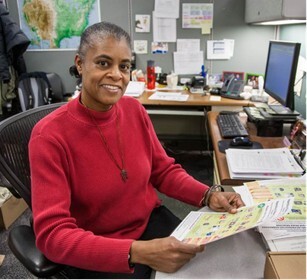 Congratulations, Julie Mitchell with the NAHMMA Ray Carveth Integrity Award!
Julie Mitchell, Hazardous Waste Programs Project Manager at King County, has been awarded the North American Hazardous Materials Management Association (NAHMMA) Ray Carveth Integrity Award for her exceptional leadership, professionalism, and commitment to public service. For nearly twenty years, she has managed residential and small business hazardous waste programs that protect communities and the environment. Julie is also a national leader within NAHMMA, serving on the Board of Directors and advancing the field through communications, advocacy, and professional collaboration. Her steady leadership and dedication have strengthened programs, policies, and partnerships across North America. NWPSC congratulates Julie on this well‑deserved honor.
Recap: NWPSC Lunch & Learn on E-Cycle Washington
Thank you to everyone who joined the August 20 Lunch & Learn, "How Local Governments and Producer Organizations (PROs) Can Work Together to Boost Outreach: A Case Study on E-Cycle Washington." Speakers from the Washington Materials Management and Financing Authority (WMMFA), Seattle Public Utilities, and King County Solid Waste Division shared how their partnership to raise awareness about electronics recycling came together, lessons learned, and practical tips for local governments of any size. The recording is now available on NWPSC's website under the 2026 event archive.
Programs & News – Other States
New Open Bibliography of EPR Research
An online, open bibliography of more than 1,300 publications on EPR is now available. Created by Reid Lifset at the Center for Industrial Ecology at the Yale University School of the Environment (and a rock star expert witness for Oregon in NAWD v. DEQ), and further developed and disseminated by the LIFE4EPR project, the database is open to all and supports the project's ExPeRt Hub. It includes academic, peer-reviewed articles and non-academic reports from governments, industry, consulting firms, and advocacy organizations.
What the U.S. Can Learn From Europe as Packaging EPR Becomes Operational
A commentary by Daniel Vaknine provides some lessons learned from decades of experience with packaging EPR in Europe that are interesting as more U.S. states are now moving into real-world practice. Oregon is already operating its program (Recycling Modernization Act), and Washington is in the implementation phase (Recycling Reform Act). While there are many similarities, each state operates differently. Fortunately, most of the states have the Circular Action Alliance (CAA) as the main PRO, which could help producers with standardized approaches to reporting their packaging data. The European Union is pushing for more harmonized reporting across countries. One of the intents with EPR is that it creates economic incentives for producers to reduce and / or redesign their packaging to be more reusable and recyclable. It has not been clear whether EPR actually has changed packaging design as there are many factors that drive packaging design, but if more EPR programs align themselves on fees and eco-modulation, the costs signals will be large enough for producers to notice and justify their packaging design choices.
House Passes BRACE Act on Lithium-Ion Battery Recycling
On Sept. 15, the U.S. House passed the Battery Recycling for America’s Competitive Economy (BRACE) Act (H.R. 9615), which would establish interim requirements for storing lithium-ion batteries at recycling facilities and direct EPA to issue a rule regarding lithium-ion batteries as universal waste within 18 months. The House also passed the CHARM Act (H.R. 9617), directing EPA to create a National Critical Mineral Recovery Strategy. Neither bill creates EPR requirements, but the BRACE Act could reduce regulatory and storage costs for battery recyclers. Both bills now go to the Senate.
Minnesota Seeks Comment on Draft Packaging EPR Needs Assessment
The Minnesota Pollution Control Agency (MPCA) is seeking public comment on the draft statewide needs assessment required under Minnesota's Packaging Waste and Cost Reduction Act. The needs assessment will inform the development of the state's packaging EPR program. Comments are due by Nov. 13.
California Carpet Recycling Rate Climbs to 37 Percent
The California Carpet Stewardship Program reached a 37% recycling rate in 2025, its sixth straight year of improvement, according to Carpet America Recovery Effort's (CARE) 2025 annual report. The program collected 78.5 million pounds of carpet and added 15 drop-off sites (174 total), but remains four points short of its 41% goal for 2026. CARE cited weak end markets, driven by oversupplied virgin plastics and high energy costs, as a key challenge.
The program is also in transition. AB 863, signed in 2024, shifts it to a producer responsibility organization (PRO) model and requires 5% carpet-to-carpet recycled content by 2028. AB 904, passed by the Legislature in August 2026, updates the program's governance and collection site requirements and is awaiting Gov. Newsom's signature.
The Recycling Partnership Releases "The Evolving Ton"
The Recycling Partnership (TRP) released The Evolving Ton, the latest installment of its State of Recycling Report. Although the number of U.S. households grew by 8.5 million since 2020, generation of traditionally collected recyclables fell by 3.7 million tons (8%). Cardboard rose 32% with e-commerce, while mixed paper and glass fell 34% and 28%, and plastics (31% of generation) now outweigh mixed paper (28%), resulting in a lighter, more varied, and more complex stream. TRP will discuss the findings in an Oct. 1 webinar (see Events below).
Events & Webinars
Resource Recycling Webinar: Used Textiles in the Global Circular Economy: Research, Realities and the Basel Convention
The Recycling Partnership Webinar: Recycling in America – The Evolving Ton
- Thursday, October 1, 2026 | 11:00 AM – 12:00 PM PT
- Explores the findings of TRP's latest State of Recycling Report and what the changing material mix means for collection, processing, markets, EPR programs, and future investments.
- More information here
Coast Waste Management Association (CWMA) Annual Conference
- October 7-9, 2026 | In-Person & Virtual
- More information here
NWPSC Annual Retreat (for Associate Members only)
- Thursday November 5, 2026
- Breakfast begins at 9:30 am; official program 10:00 am – 2:00 pm
- Venue: Center for Urban Waters (326 E D St, Tacoma, WA)
- Hybrid, with in-person attendance encouraged
- Registration required
Engage with the Northwest Product Stewardship Council (NWPSC). Join as an Associate, Steering Committee, or Community member.
The Northwest Product Stewardship Council (NWPSC) is a coalition of government agencies in Washington and Oregon working on solid waste, recycling, resource conservation, environmental protection, public health and other issues. Together with non-government agencies, businesses and individuals, we form a network that supports product stewardship and extended producer responsibility (EPR) policies and programs. For more information, contact us or visit us at www.productstewardship.net.
|