King County Office of Emergency Management is assessing damage from recent flooding. If your restaurant or food business experienced property damage, closures, or operational impacts, please complete the Business Impact Survey as soon as possible.
Your response helps the county understand the full impact and plan recovery efforts.
For the latest information, visit www.kcemergency.com.
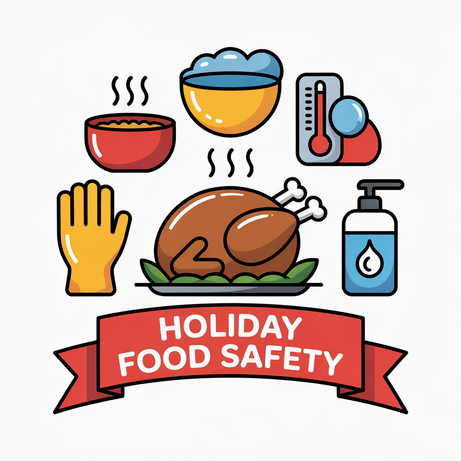
December is one of the busiest times of the year for restaurants, caterers, and mobile food businesses. With high customer volume, holiday parties, and colder weather, it’s the perfect time to refresh key food-safety practices. This newsletter brings you important updates, common issues inspectors are seeing, and practical tips to help your team stay safe and compliant this season.
Public Health—Seattle & King County is using a new system for permitting services, called the Public Health Permit Center.
To apply for any new food business permits, schedule inspections, submit plans, and to manage existing permits, you need to create an account in the Public Health Permit Center.
Even if you had an account in the previous system, you still need to make a new account in the new system.
For assistance with registration and other questions about the new system, see How to Use the Public Health Permit Center.
Public Health investigated 60 foodborne illness reports in 2025, including 45 linked to shellfish. We investigate when evidence connects illnesses to a specific food establishment or product.
Top causes we saw for foodborne illnesses
Outbreaks this year were linked to norovirus, Salmonella, E. coli, Shigella, Campylobacter, Vibrio, and bacterial toxins.
Common contributing factors to these outbreaks included:
- Sick food workers
- Bare-hand contact with ready-to-eat foods
- Improper handwashing
- Improper cooling
- Undercooking
- Poor temperature control
Key findings from recent investigations
-
Norovirus in a restaurant
-
Contributing factors: Unstocked handwashing sinks, bare-hand contact, and sick employees led to illness.
-
Prevention takeaway: Strong employee health policies and a solid food safety culture are essential.
-
Campylobacter in a workplace cafeteria
-
Contributing factors: The food was undercooked, and the illness was not reported promptly.
-
Prevention takeaway: Always verify cooking temperatures and report suspected foodborne illness to Public Health.
-
Bacterial toxin illnesses at three events
-
Contributing factors: Restaurants exceeded their kitchen capacity, cooled food improperly, and transported food without temperature control—resulting in 60 illnesses.
-
Prevention takeaway: Prepare only what your kitchen can safely handle, and keep food at safe temperatures.
-
Vibrio and shellfish
-
Contributing factors: Improper cold holding, consumption of raw shellfish, and contaminated sources led to 45 investigations.
-
Takeaway: Keep shellfish cold, choose safe suppliers, and communicate risks to customers.
Looking ahead: World Cup 2026
Restaurants near stadiums may experience high demand.
-
Recommendation: Consider simplified menus to avoid exceeding your kitchen’s safe capacity.
Closing thoughts
Foodborne illness is preventable when kitchens maintain strong systems, adequate capacity, and a culture that supports safe practices. Thank you for your continued commitment to keeping our community safe!
Our inspection team has noted several recurring issues across food establishments. Avoiding these common violations not only helps you earn a higher rating but also protects your customers and helps avoid spreading foodborne illnesses.
Top food safety violations and easy fixes:
-
Inaccessible handwashing sinks: Sinks must be clear, stocked, and free of equipment or other materials blocking access to the sinks.
-
Improper cold holding: Keep food at 41°F or colder. Check your refrigeration units multiple times a day, especially during peak service.
-
Cross-contamination risks: Store raw meats below ready-to-eat foods. Use color-coded cutting boards and utensils when possible.
-
Inadequate sanitizing: Ensure sanitizer buckets, wiping cloths, and test strips are available and used correctly.
-
Chemical storage errors: Store cleaners and sanitizers below food and food-contact items, never above.
Quick win: Assign one staff member each shift as a “Food Safety Lead” to double-check temperatures, sanitizer levels, and handwashing supplies.
The holiday rush can create the perfect storm for food-safety mistakes: more orders, faster prep, larger quantities, and seasonal staff.
Seasonal tips for a safe December:
-
Plan ahead: Short-staffed? Build in extra prep time and clear task assignments.
-
Temperature control: Keep hot foods at 135°F or hotter and cold foods at 41°F or colder.
-
Thawing safely: Only thaw foods in the refrigerator, under cold running water, or during cooking — never on the counter.
-
Leftovers: Refrigerate within 2 hours and cool rapidly.
-
Holiday catering: If providing bulk meals, label holding instructions for customers.
Winter weather reminder:
If power outages occur, follow emergency guidance on refrigeration, frozen inventory, and reopening procedures.
 These are real-life scenarios we’ve seen. Learn how to avoid these!
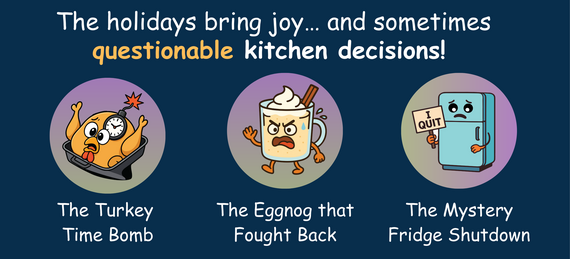
The holidays bring joy… and sometimes questionable kitchen decisions.
-
The Turkey Time Bomb: Thawing a 20-lb turkey on the counter overnight.
-
The Eggnog That Fought Back: Leaving dairy drinks out during holiday parties.
-
The Mystery Fridge Shutdown: “We didn’t notice the fridge wasn’t working for 10 hours.”
Avoid these holiday horror stories:
- Always thaw turkey in the fridge.
- Keep time-temperature logs during events.
- Check equipment daily — especially before and after busy weekend service.
A little humor goes a long way, and a little prevention goes even further.

|