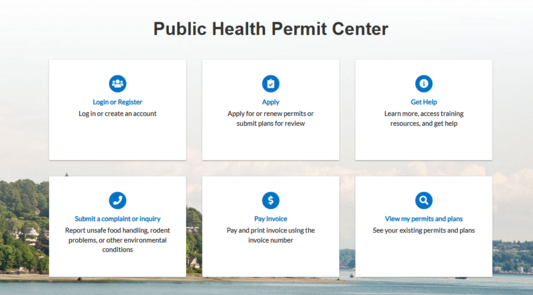
In October, Public Health will roll out a new online system for applying for food business permits, plan reviews, and other services.
To better serve our customers, we are launching a new Public Health Permit Center designed to enhance our business operations and improve customer service. This system will streamline the permitting process and make it easier to get information about your application.
What’s the Public Health Permit Center for?
With the new system, you’ll be able to:
- Apply for permits online (for restaurants and other food businesses, pools, pet businesses, septic systems, and more)
- Submit plans and track your application status in real time
- Report issues like rats, unsafe food handling, or other public health concerns with just a few clicks
- And more!
Who’s it for?
This is for anyone who:
- Runs or wants to open a food business, pet shop, water recreation site, or anything that needs a health permit
- Wants to report a environmental health concern in their neighborhood
What’s next?
We’re currently testing and finalizing the system and will keep you informed as soon as we have a final launch date. After the launch, we’ll have how-to guides and support ready to help you get started.
Stay in the know
Check out kingcounty.gov/PublicHealthPermits for the latest updates.
Got questions? Give us a call: 📍 Seattle office: 206-263-9566 📍 Bellevue/Eastgate: 206-477-8050
This new system is being built with your feedback in mind—thank you for helping us improve things for everyone.
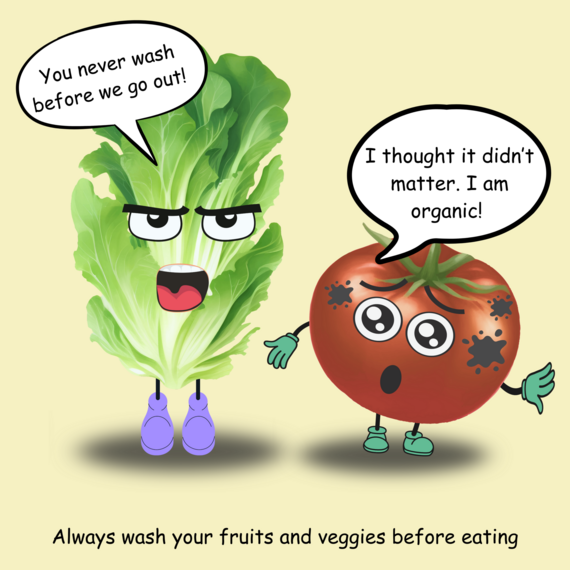
🧼 Why did the lettuce break up with the tomato?
😂 Because it kept forgetting to wash up before the salad!
- Wash produce under running water before chopping or cooking.
- Cut out signs of spoilage—such as soft spots or moldy areas.
- Store cut fruits in the refrigerator at 41°F (5°C) or lower.
- Use cut produce within 3–7 days for best quality.
— and what you can do to prevent it
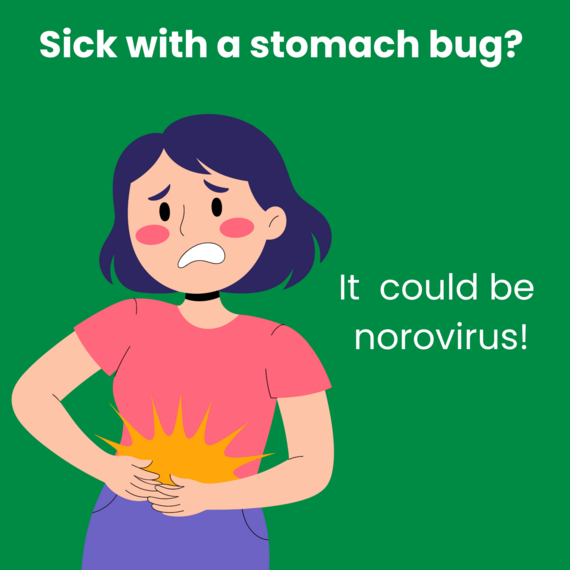 As the leaves fall and temperatures drop, you might think about colds, flu, and coughs — but another culprit often rises around the same time: norovirus, sometimes called the “stomach bug” or "stomach flu." Outbreaks of norovirus are more common in late fall through early spring.
Norovirus spreads very easily — just a few particles can make someone sick. It usually causes sudden vomiting, diarrhea, and stomach cramps. Because people spend more time indoors during colder months, it’s easier for the virus to jump from person to person or from surfaces to hands to food.
How to lower your risk
-
Wash your hands with soap and water (hand sanitizer doesn’t work as well).
-
Stay home if you’re sick — and wait at least 48 hours after symptoms stop before handling food for others.
-
Clean and disinfect surfaces with bleach or cleaners that are effective against norovirus.
-
Rinse fruits and vegetables thoroughly and cook shellfish until they are cooked through.
Norovirus may be common in the fall and winter, but taking a few simple steps can go a long way in preventing its spread.
How to report unpermitted food vendors in King County
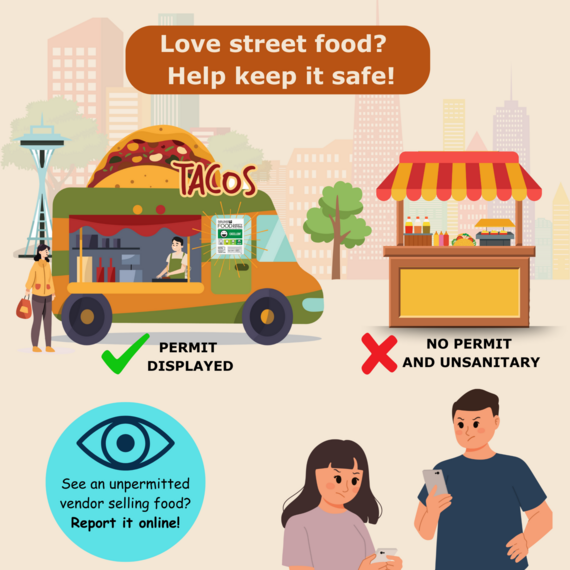
Have you seen someone selling food in King County without a visible Public Health permit (the green smiley face sign)? While most food vendors operate safely and legally, unpermitted food businesses can put people at risk of foodborne illness. Reporting helps protect our community and ensures a fair system for everyone.
What to look for
Signs that a food vendors doesn't have a permit include:
- No Public Health food safety rating (green smiley face sign) posted on the stall, cart, or truck
- Food is being sold from unapproved locations (such as street corners, parking lots, or private homes)
- Vendors who cannot show a valid permit when asked
How to report
The easiest way is through the King County Public Health website:
- Go to kingcounty.gov/foodsafety
- Select “Food complaint form”
- Choose the option for “Unpermitted Food Vendor”
- Fill out the short online form with details such as:
- Location, date, and time
- Description of the vendor or business
- What type of food was being sold
You can also include photos if you have them.
Why it matters
We follow up on every complaint. When we are alerted to an unpermitted food vendor, we visit to educate the vendor about the permitting process and suspend the vendor’s operations. This protects customers from getting sick and supports permitted vendors who follow the rules.
👉 See something? Say something. Reporting is quick, confidential, and helps keep our food system safe.
Does your facility use a septic system? Taking care of it ensures your food is safe, your kitchen runs smoothly, and your customers are happy. Annual septic system inspection is required by law*. Think of it like a yearly health check for your building.
1) Fall is a good season for a checkup (aka “Septic Inspection”)
- When the rainy season arrives, your septic system must work harder. Don’t wait for problems to show up:
-
Schedule your annual inspection. Call a King County–certified maintainer and ask for a couple of quotes (kingcounty.gov/septic/professionals).
-
Fix minor issues early. Inspection help catch issues now, avoiding big, messy, and expensive repairs later.
2) Keep your grease trap / Grease interceptor in check
Grease traps and grease interceptors stop fats and oils from clogging your septic system. But only if you clean them out on time!
-
Busy kitchens with lots of meat and frying: Clean about once a month.
-
Coffee shops & bakeries (less greasy food): Every 3–6 months is usually enough.
-
Reminder: Hardened grease goes in the trash, not in compost.
Quick self-check
- Slow drains? Gurgling sounds? Unpleasant smells? → Time to call your maintainer.
- Keep a simple log of service dates and the names of those who performed the work. Easy to track, easy to show inspectors.
- Leaky plumbing fixtures? Fix leaky faucets, toilets, or other plumbing fixtures immediately. A quick fix helps prevent septic overload during peak use.
Learn more / Got questions?
* Annual septic inspections are required by law (King County Board of Health Title 13.60.010E; Washington Administrative Code Chapter 246-272A-0275). Staying on schedule helps protect your business, your customers, and our environment.

|