July 2025
Programs & News – Oregon & Washington
 Oregon Launches Nation’s First Packaging EPR Program
The program development has involved major collaboration between the Oregon DEQ, Circular Action Alliance (the approved Producer Responsibility Organization (PRO)), service providers, local governments, end markets, the public, and others. The implementation of RMA has been referred to as “a dial, not a switch” with July 1 marking the beginning of the program’s launch. There are still parts that need to be figured out such as the provision calling for verification that recycled materials are sent to responsible end markets. While the road ahead includes key implementation milestones, Oregon’s strong regulatory framework and stakeholder engagement have laid a clear path forward.
Respond to the LightRecycle WA Annual Survey by July 22, 2025
The LightRecycle Washington program was launched in 2015 and allows residents and businesses to recycle unlimited screw-base compact fluorescent lamps (CFLs), up to 15 pin-based or linear fluorescent lamps, and up to 2 high-intensity discharge (HID) lamps per day for free, by dropping them off at the almost 200 authorized collection sites throughout the State. Find a collection site in Washington here.
The program has ensured that millions of used mercury-containing lights are managed responsibly and reduced the harm to human health and the environment. The sales of fluorescent lights are declining as LED lights are now more energy-efficient and less toxic. As the program is financed by an environmental handling charge on the sale of new lights paid by consumers, the program’s financing model was not sustainable. The program was due to sunset this month on July 1, 2025, but last year the NWPSC worked with others on HB 1185, which extends the program to December 31, 2035. HB 1185 also bans the sale of mercury-containing lamps effective January 1, 2029. Legacy producers will be required to fund the program to collect and manage the mercury-containing lights that are already installed, when they reach their end of life.
Help Shape Washington’s Litter Tax Update
Washington’s litter tax has not been updated since it was established in 1971. The tax applies to manufacturers, wholesalers, and retailers of commonly littered products. Today, nearly half of the litter that accumulates in Washington every year comes from items not covered by the litter tax, like construction debris and vehicle-related materials.
Ecology will be hosting two virtual listening sessions:
-
Session 1 on Wednesday, July 23, 2025, 11:30 AM - 1:00PM: General Information (Open to the public). Register here for Session 1.
-
Session 2 on Thursday, July 24, 2025, 4:30 PM - 6:00 PM: Overburdened Communities (Prioritizing input from overburdened and vulnerable communities). Register here for Session 2.
Two NWPSC Members inducted to the WSRA Recycling Hall of Fame!
Janine Bogar, Environmental Planner and Policy Specialist, and Megan Warfield, Product Stewardship Unit Supervisor, both at Washington State Department of Ecology were celebrated at the 2025 WSRA Conference for their outstanding, long-term contributions to recycling in Washington State. Both have been active members of the NWPSC for many years providing valuable technical assistance.
-
Janine has worked on waste reduction and recycling since 1995, in both local and state government. After 10 years working at Thurston County, overseeing drop-box recycling programs, training master recyclers, doing school presentations and newsletters, managing an earth-friendly demonstration garden created on a closed landfill, and piloting the building materials reuse center at the transfer station, she became the sustainability coordinator at the WA Department of Corrections where she helped prisons recycle, compost, and build green, including helping achieve LEED silver on a new building at the WA State Penitentiary. In 2008 she joined the Washington State Department of Ecology as the state’s Beyond Waste Plan lead. At Ecology she has written three state plan updates, worked on legislation and numerous waste reduction and recycling policy proposals, and led studies to identify more sustainable solid waste funding mechanisms. Janine will be retiring in August. We thank her for her years of service and in particular all her efforts working on the Recycling Reform Act.
-
Megan has been a lead in recycling, product stewardship, and litter prevention in Ecology's Solid Waste Management Program for 30 years. She originally came to Ecology originally as the statewide litter coordinator leading the effort for a long overdue Litter Prevention Campaign. Later, she became the statewide moderate risk waste (MRW) coordinator, facilitating annual MRW Coordinator meetings with county partners, revising MRW facility regulations, and sleuthing how to properly manage a variety of unique hazardous materials. The past few years Megan has overseen Ecology's Product Stewardship Unit where E-Cycle, LightRecycle, PaintCare, Solar Panel, and, soon Battery Stewardship, reside. Megan’s technical knowledge and expertise formed many of Washington state’s EPR policies and programs.
[The recognitions and profiles have been sourced from WSRA]
Programs & News – Other States
Connecticut Passes Battery EPR Law
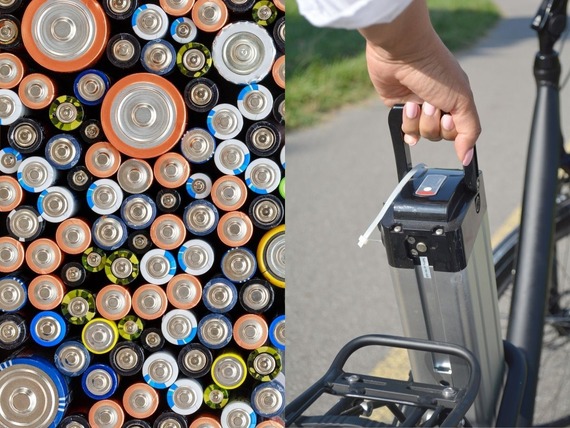
Producers must submit a recycling plan to the Department of Energy and Environmental Protection (DEEP), provide free drop-off locations, ensure safe handling, and conduct public outreach. The program will launch by January 1, 2027, making Connecticut the eighth state to adopt a battery EPR law.
explicitly adding e-bike and e-scooter batteries—a response to recent fires linked to these devices. The amendment A4641A requires manufacturers of these higher-risk, rechargeable systems to participate in an approved EPR plan ensuring safe collection and disposal. This move brings New York in line with growing concern over battery-related fire incidents and strengthens statewide safeguards under its EPR program. The bill is on Gov. Kathy Hochul’s desk waiting for her signature.
Maine Amends Packaging EPR Law
On June 28, Governor Mills signed LD 1423, updating Maine’s landmark packaging EPR law to align more closely with newer state models. The bill clarifies the definition of “producer,” expands exemptions for certain commercial, medical, and hazardous packaging, and allows eco-modulated fees based on recyclability. It also narrows the scope of regulated toxic substances to those “intentionally added.”
Events & Webinars
 Washington State Department of Ecology: Listening Sessions about proposed updates to Washington’s Litter Tax
-
Session 2 on Thursday, July 24, 2025, 4:30 PM - 6:00 PM: Overburdened Communities (Prioritizing input from overburdened and vulnerable communities). Register here for Session 2.
Circular Action Alliance (CAA) July Webinars on Colorado & Oregon EPR
-
July 21 – “Budgeting for EPR Fees”
Sustainable Packaging Coalition Advance
2026 Washington State Recycling Association (WSRA) Conference
-
Save the date 2026 WSRA Annual Conference will be held on May 4th - 7th, 2026, at Tulalip Resort.
Engage with the Northwest Product Stewardship Council. Add your voice and join the Northwest Product Stewardship Council (NWPSC) as an Associate, Steering or Community member. Follow the NWPSC on Twitter (@StewardshipNW) for product stewardship information from Washington, Oregon and elsewhere.
|