Before we get into the meat of this newsletter, here’s a quick appetizer to get you hungry—don’t worry, you can skip the handwashing for this bite!
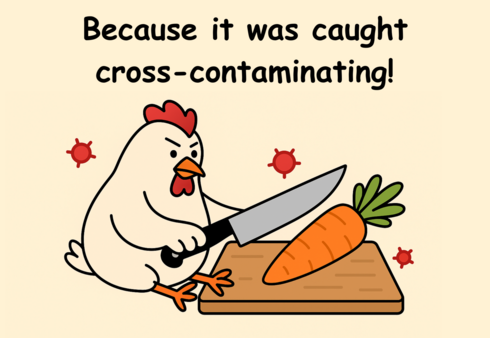
Watch out for cross-contamination!
 Using the same cutting board for raw meat or chicken and then chopping ready-to-eat foods—like fruits, veggies, or bread—can spread harmful bacteria. Always use separate cutting boards (or wash and sanitize thoroughly between uses) to keep your food safe and your stomach happy!
Starting September 2025, King County is rolling out a brand-new online system to apply for public health permits.
To better serve our customers, we are launching a new Public Health Permit Center designed to enhance our business operations and improve customer service. This system will streamline the permitting process and make it easier to get information about your application.
What’s the Public Health Permit Center for?
With the new system, you’ll be able to:
- Apply for permits online (for restaurants and other food businesses, pools, pet businesses, septic systems, and more)
- Submit plans and track your application status in real time
- Report issues like rats, unsafe food handling, or other public health concerns with just a few clicks
- And more!
Who’s it for?
This is for anyone who:
- Runs or wants to open a food business, pet shop, water recreation site, or anything that needs a health permit
- Wants to report a public health concern in their neighborhood
What’s next?
We’re busy testing the system right now and will keep you in the loop. You’ll start seeing it pop up more in the coming months, and when it officially launches in September 2025, we’ll have how-to guides and support ready to help you get started.
Stay in the know
Check out kingcounty.gov/PublicHealthPermits for the latest updates.
Got questions? Give us a call: 📍 Seattle office: 206-263-9566 📍 Bellevue/Eastgate: 206-477-8050
This new system is being built with your feedback in mind—thank you for helping us make things better for everyone!

Summer is packed with fairs, markets, and community events—and we love seeing so many local food vendors joining the fun! But if you’re planning to sell food at any temporary event in King County, there’s one thing you can’t forget: You need a Temporary Food Service Permit.
Even if you already have an annual food business permit, that doesn’t automatically cover you when you're operating at a temporary location like a fair, music festival, night market, or pop-up. Temporary events come with different setups and risks, so they require their own permit.
|
Why does this matter?
Temporary food booths often:
- Operate outdoors or in non-traditional spaces
- Use portable equipment and temporary handwashing stations
- Set up and tear down quickly, changing food safety dynamics
That’s why Public Health – Seattle & King County requires a temporary event permit: to make sure you're equipped to serve food safely in that specific setting.
What you’ll need to apply
To get your temporary permit, you’ll need to:
- Submit your menu
- Show how you’ll keep food hot or cold
- Set up a handwashing station with warm water, soap, paper towels, and a waste bin
- Provide a booth layout showing your food prep and washing areas
- Have at least one person with a valid Food Worker Card
Permits are issued based on complexity. For example:
-
Minimal (sealed prepackaged foods, simple setups)
-
Moderate (hot-holding, grilling, or reheating)
-
Complex (multiple steps, raw meat prep, cooling/reheating)
If you have a more complex setup, we are here to help you understand what planning and documentation you'll need to prepare food safely.
Don't wait—apply early!
-
Apply at least 14 days before the event to avoid late fees
- Late applications (3–13 days before the event) cost $50 extra
- Last-minute submissions (less than 3 business days before the event) cost $100 extra and may not be approved in time
Some larger events (like fairs or night markets) may have a coordinator permit. If so, you’ll still need to submit your vendor details to the event coordinator and meet all food safety requirements.
We are here to support your success!
Avoid common reasons for permit denial or on-site closure:
- No approved permit before setup
- No handwashing station
- Food prepped at home (not allowed!)
- Inadequate temperature control for hot/cold foods
- Cross-contamination between raw and ready-to-eat foods
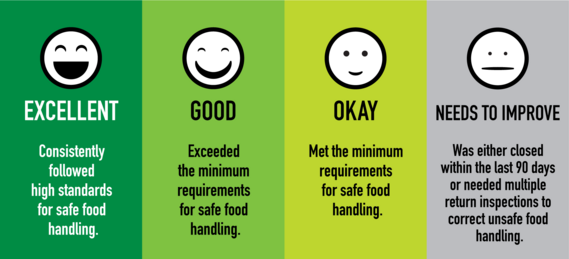
King County’s food safety rating system (the emoji signs 😊) has four tiers: Needs to Improve, Okay, Good, and Excellent. These ratings aren’t based on a single inspection. Instead, they reflect a trend over time—averaging scores from the last 2–4 routine inspections, depending on risk level. Watch this video to understand more about the ratings: Here’s how food safety ratings work.
-
Excellent: Consistently followed high standards for safe food handling.
-
Good: Exceeded the minimum requirements for safe food handling.
-
Okay: Met the minimum requirements for safe food handling.
-
Needs to Improve: Was either closed within the last 90 days or needed multiple return inspections to correct unsafe food handling.
Want to double-check a restaurant’s inspection history? Every inspection report is available online—search the restaurant or vendor on King County’s Food Safety Ratings website.
Why reporting illnesses helps keep your business (and customers) safe
Let’s be real—nobody wants their food to make someone sick. And if you run a food business, keeping your customers and staff healthy is just as important as serving great food.
That’s where we come in. The Food Safety Program at Public Health – Seattle & King County has two big goals:
-
Prevent people from getting sick with foodborne illnesses, and
-
Stop the spread when someone does get sick.
But here’s the catch: we can’t stop what we don’t know about.
According to the Centers for Disease Control and Prevention (CDC), for every 1 case of Salmonella that gets officially reported, there may be 29 more that go unreported. That means outbreaks could be happening without anyone realizing it—and we can’t investigate or help if no one tells us it’s happening.
That’s where you come in.
What you should be doing right now
As a food business, your best line of defense is training your staff to report symptoms to the Person in Charge. That includes things like:
- Diarrhea or vomiting
- Sore throat with a fever
- Jaundice (yellowing of the skin or eyes)
- Infected cuts or wounds
If someone reports these symptoms, they need to stay home until they’re symptom-free for at least 24 hours. And if someone is diagnosed with a foodborne illness like norovirus, hepatitis A, E. coli, or salmonella, they must stay home—and you must report it to Public Health.
We’re not here to shut you down—we’re here to help prevent others from getting sick and to support you through the process.
What if a customer calls to say they got sick?
Don’t ignore those calls—they’re important. It’s required that you pass that information on to Public Health. Our team of disease investigators will follow up with the customer, figure out what may have caused their illness, and help make sure everything’s safe moving forward.
Here’s what you should ask the customer (and share with us):
- Name and phone number
- Date and time they ate
- Symptoms they experienced (vomiting, diarrhea, fever, cramps)
- When their symptoms started
- How many people were in their dining party, and how many got sick
- What they ate
- Whether they reported it to anyone else
Reporting is easy
To report illnesses (whether it’s a food worker or a customer), call our Foodborne Illness Reporting Line at: 📱 206-296-4774
Your call helps us see the bigger picture of what’s happening in the community. The sooner we know, the sooner we can act—and the better protected your customers (and business) will be.
 Are dogs allowed in restaurants or grocery stores?
Generally, no—unless they’re service animals.
In King County, pets are not allowed inside restaurants or grocery stores, with the exception of service animals trained to assist people with disabilities. These animals are legally protected and allowed in customer areas.
However, some restaurants with outdoor seating may allow pet dogs if they have an approved plan from Public Health. In these cases, dogs must stay leashed, off the furniture, and out of food prep areas. Indoor access is still off-limits for pets—even if you’re just passing through.
Grocery stores are stricter. Public Health has cited stores for allowing dogs inside, especially near food counters. Unless it’s a trained service animal, pets should stay outside.
These rules exist to keep food clean, prevent allergies, and maintain health standards. If you’re unsure whether dogs are allowed, ask staff or check for signage. And if you spot a violation, you can report it to Public Health.
Learn more at kingcounty.gov/foodsafety

|